I’m enjoying all the fall blooms in the wildlife garden right now, but ones that have me particularly happy are the cheerful Silverleaf Sunflowers (Helianthus argophyllus) that are lining our dry creek bed in the front yard. They are grandchildren of the original plant I grew in the front yard a couple of years ago.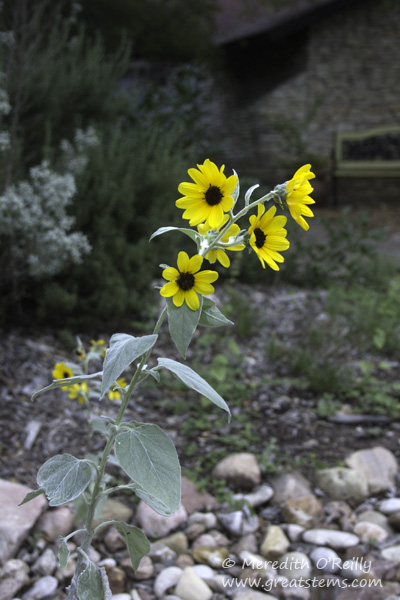
These delightful flowers of sunshine grow easily from seed. Admittedly, the flowers also happily spread wherever their seeds catch hold (or get dropped by hungry birds). Sure, I’m seeing more seedlings each year that I grow them, but this plant is so beautiful that I see it as a plus. Wherever I’m fine with them growing, I let them stay.
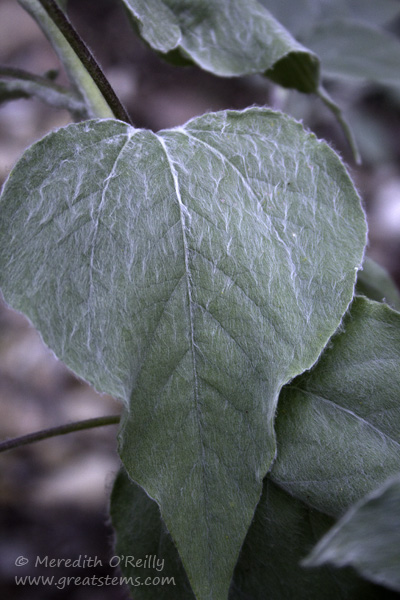
The fuzzy — nay, hairy — blue-green leaves are incredibly silky to the touch. Can you tell in the image just how soft those leaves are? I can’t stop petting them when I walk by. It’s easy, too, to understand how they got the name silverleaf.
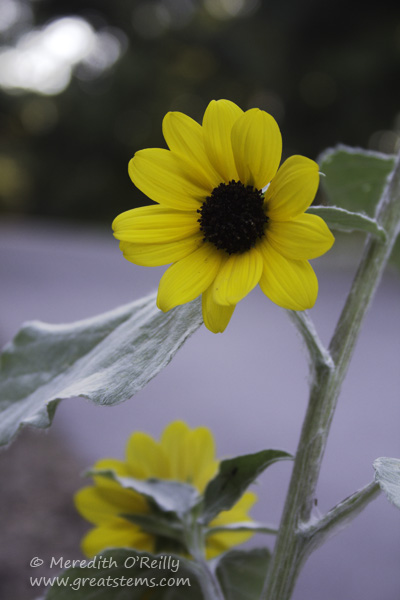
The flowers and their attractive foliage are even catching the eyes of neighbors — I’ve had people drive by, roll down their window, and ask what kind of flowers they are. Now that I’ve got so many blooms, I’ve been sharing the coveted seeds, too. I do the same with our bluebonnet seedlings and seeds — bit by bit, my little-big garden is spreading beauty into our neighborhood.
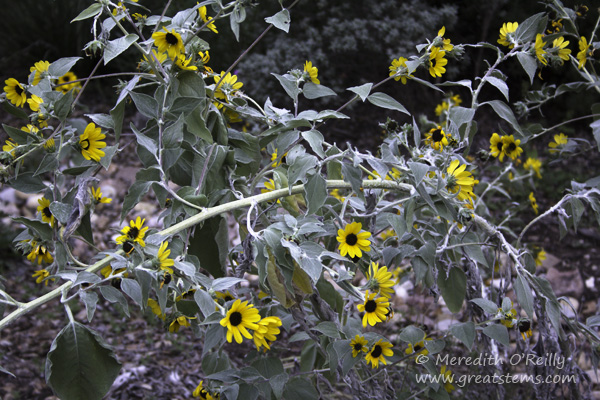
I will say this about the sunflowers — they get very tall, so tall that they might flop over, as you can see in the above photo. They are well over 7 feet in my yard, in fact. They also will lose their lower leaves as they grow, and in the hot sun they might look a little pitiful until you are kind and give them water (I’m kind enough to wait for rainfall). But they perk up quickly with that touch of moisture — just don’t over-water them. Because they can drop their lower leaves, it’s probably a good idea to plant them behind a small shrub or other perennial, something with a nice contrasting red, pink, or purple bloom, I’d say, or perhaps something with a harder texture. I’ll do that next year.
Oddly enough, this plant is shown to be found in Texas, Florida, and North Carolina. What about those states in between? I wonder. In terms of wildlife value, the plant provides nutritious seeds for finches and other birds, and it is a host plant for Bordered Patch and Silvery Checkerspot butterflies.
This season, I’m also taking some of the seeds and sprinkling them around my backyard. I’m going to surround us in happy plants!
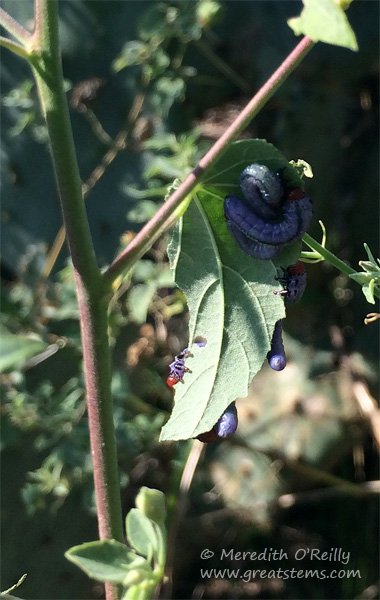
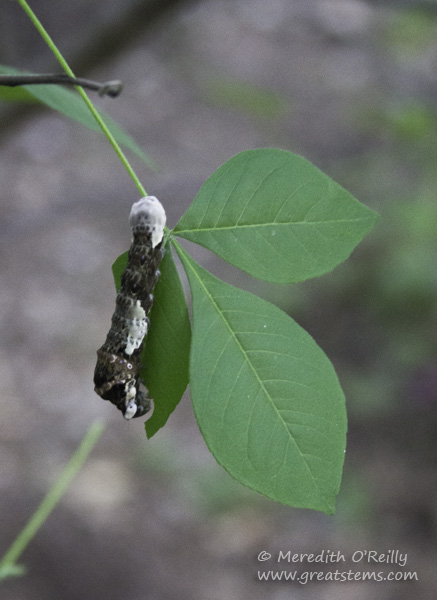
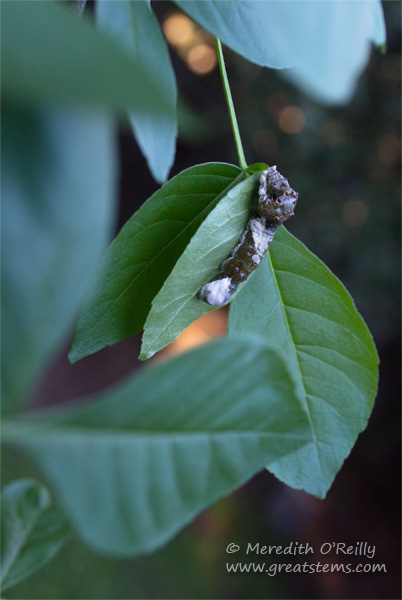 This year we had to transplant that now large Wafer Ash to the opposite side of the yard, and I feared that it wouldn’t survive. But amazingly enough it did, and we have our latest batch of bird-poop caterpillars. These little guys are making me so happy, and I really do feel at the moment like the garden has come full circle — I’m right back to seeing one the favorite fauna species I planted trees for all those years ago.
 Wafer Ash is a small deciduous tree found in much of the eastern and southern areas of the United States and into Central America. Because it prefers part shade to shade for its light, it serves well as an understory tree. It earned its species name trifoliata for its characteristic three leaflets. Small white flowers in late spring give rise to wafer-like seeds come fall, hence one of its common names.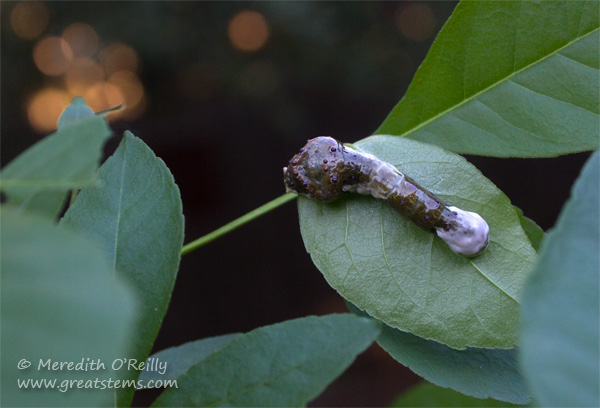
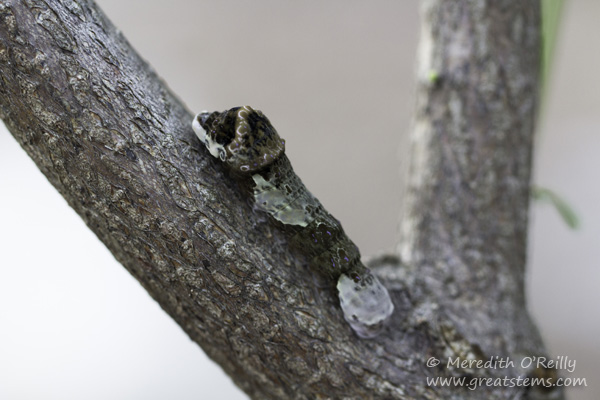 When these caterpillars take a rest, they are often found along the bark or branches of the tree, perhaps for camouflage or to simply avoid predators that might more easily locate them on the green leaves. As if that bird poop appearance isn’t enough to deter would-be munchers!