On our last full vacation day, and our last day to be on the Pacific coast, we headed to Cannon Beach, a picturesque town and shoreline in northern Oregon.
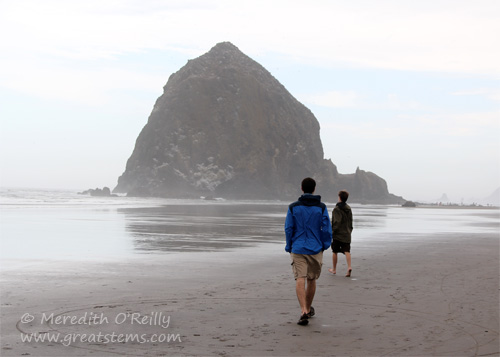
Cannon Beach’s most famous landmark is Haystack Rock, a towering monolith of 235 feet, surrounded by other rocks collectively known as the Needles. The rocks, or sea stacks, are volcanic in origin, formed millions of years ago from lava that flowed down the Columbia River valley and pushed up again through the sea floor. Haystack Rock is famous, too, for being in a few movies, including Kindergarten Cop and The Goonies. I’m going to have to watch those again now.
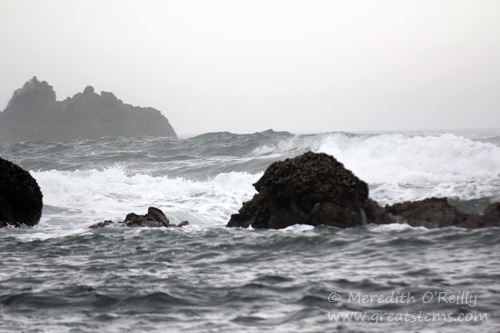
By this day on our vacation, not only had fog returned, but a storm out on the ocean was contributing to rough waves and looming dark skies.
I’m glad we arrived when we did, because we were able to get a few minutes of safe tide-pool viewing before the storm’s sea surges made it too hazardous. The tide pools are right in front of Haystack Rock, but of course you need to be there at low tide to experience them.
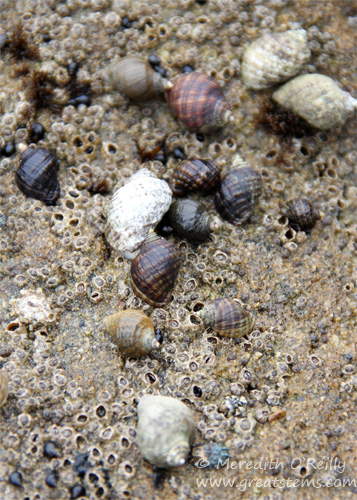
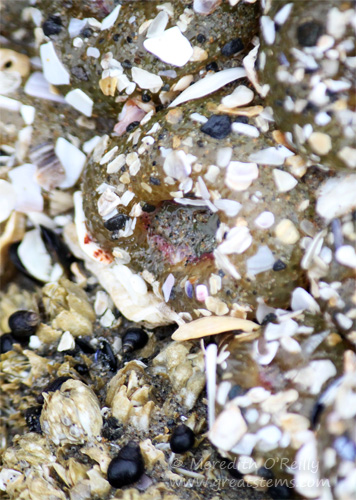 Aggregating anemones, closed up during low tide, were covered in sand and broken shell bits, which help prevent desiccation. Interspersed among them were barnacles and small sea snails, which had their own methods to handle low-tide exposure.
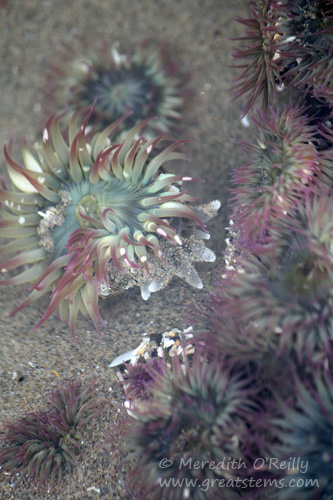 With fascination, we watched an underwater drama take place as this aggregating anemone actively attacked a nearby colony with its specialized stinging tentacles, called acorhagi. We had recently watched a similar attack at Gerstle Cove, but this smaller anemone moved very quickly and with purpose — the speed of movement was fascinating in its own right.
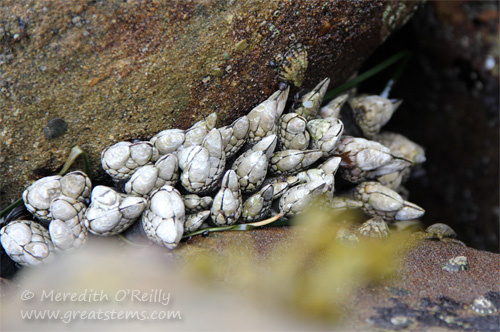
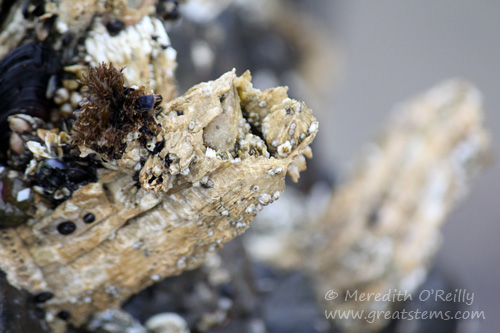 When acorn barnacles are overcrowded on a rock, they sometimes grow as a columnar formation, as you can see here.
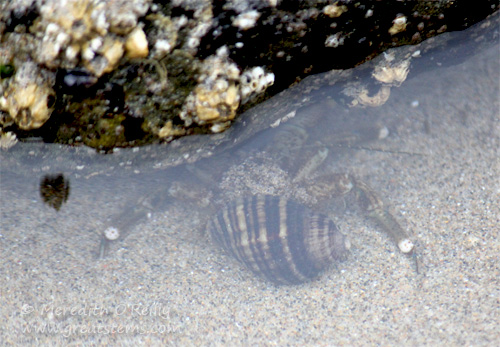 Just below, this hermit crab tried to quickly hide, but I snapped a picture just in time.
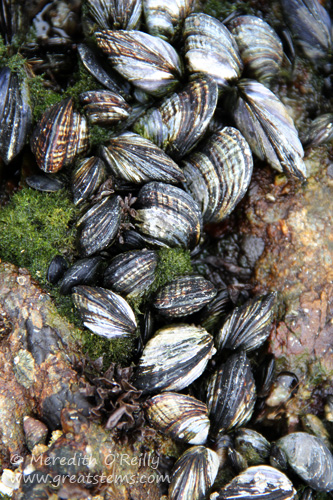
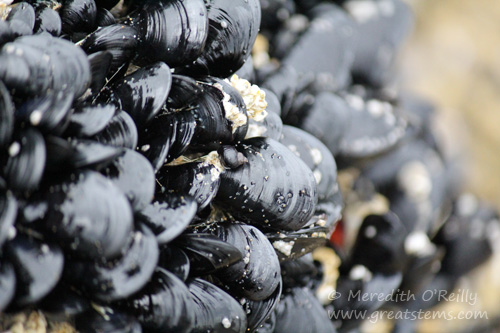 Present on other rocks were large aggregations of these beautiful dark Blue Mussels, also called Bay Mussels. They are relatively smooth in appearance, lacking the radiating ribs of the California Mussel.
FYI, as I wrote this post, I happened upon a great online guide to Oregon’s intertidal marine life and I feel obligated to share it. This guide provides a thorough look at many species one might discover at low tide along the Pacific Coast, whether in Oregon, California, or Alaska. Many of the them we saw at Cannon Beach, but the guide also makes me realize just how much we didn’t get to see!
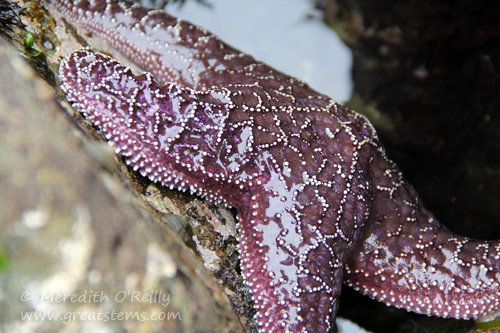
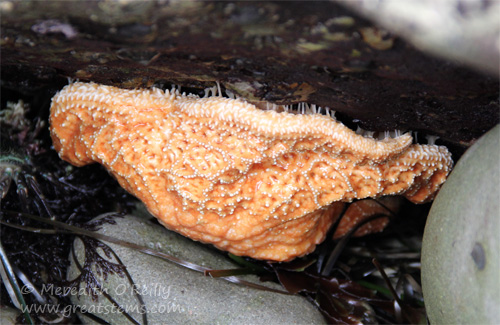
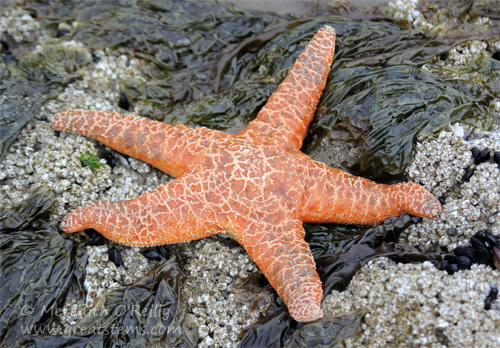 This beautiful ochre sea star was very exposed, but I hoped the surging waters would soon cover it.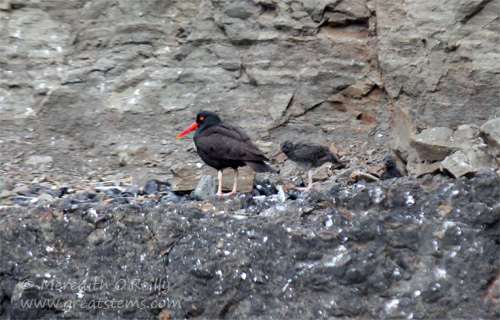
Aside from offering protective sites for a variety of marine species, Haystack Rock is also an important nesting location for 14 different kinds of seabirds, such as cormorants, auks, and gulls. Here is a family of Black Oystercatchers. Look closely — can you see both of the babies? Apparently Oystercatchers eat a lot of mussels and limpets but surprisingly very few oysters.
Seabirds such as these choose rocky islands for raising their young as a way to avoid most predators, because the birds are far more awkward and vulnerable on land. However, peregrine falcons, bald eagles, and other flying predators are still a threat, as are human disturbance and the potential plummet for young to the rough ocean waters below.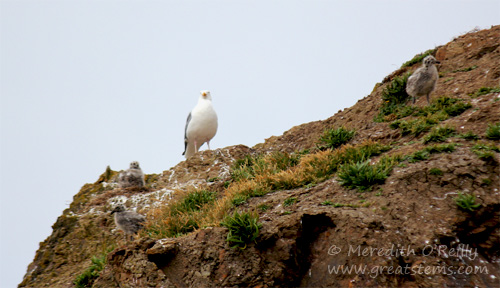
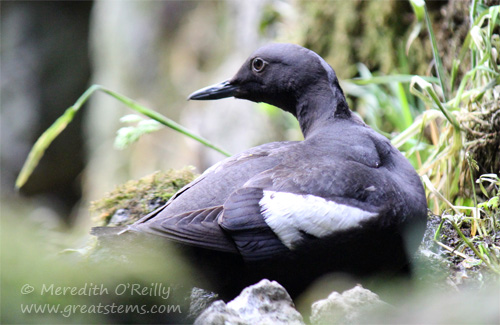
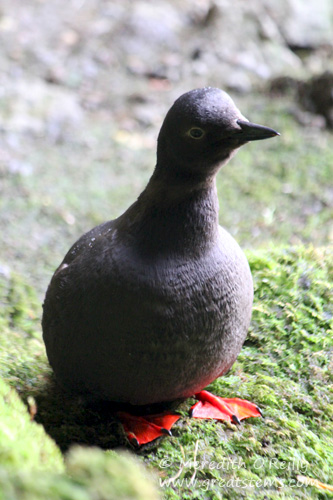
Even though gulls also nest on the rock (there are 3 young ones with their parent in the photo above), they can be predators, too, nabbing unattended eggs or baby birds.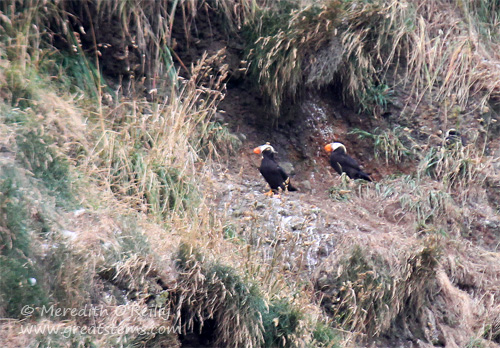 We saw Common Murres and Pigeon Guillemots on the rock, but we were particularly excited to see other members of the the auk family there — Tufted Puffins. We watched as they gathered fish from the sea and returned to their nesting spots on the rock.
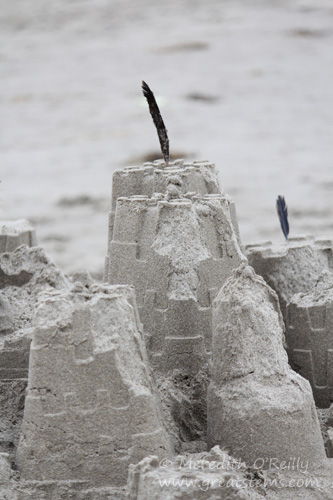 Cannon Beach is also great for good old-fashioned play, particular in good weather. But despite the looming storm and rough waves, some visitors still spent time building castles in the sand.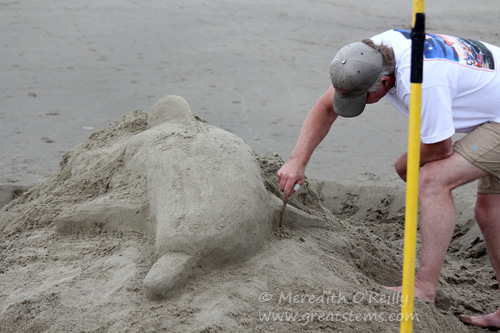
This gentleman let me snap a few pictures as he sculpted a dolphin in the sand. All he had for tools was a stick off the beach and a shovel he’d brought with him.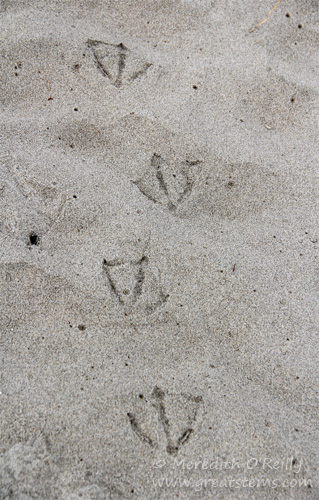
Birds don’t even need tools to make art in the sand. They just use their feet!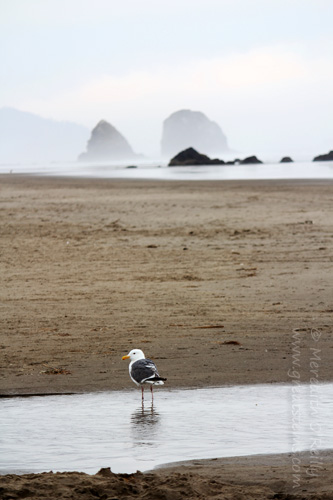
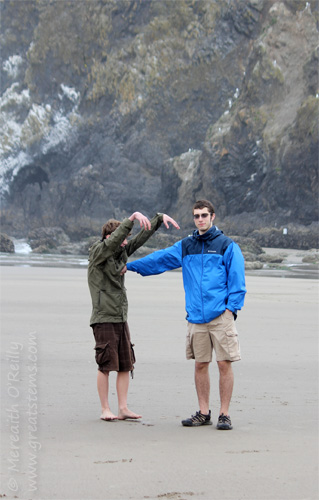
By this point Nolan apparently had turned into a zombie. We supposed that was our cue to get going, and so we did.
Our long Pacific journey of 2013 was finally over. From Seattle to Alaska, then down to Big Sur and back up the Pacific coast, we had a very fulfilling vacation. Though we knew we were heading home, it felt, too, like we were leaving another home. The boys and I had seen so much beauty and gained so much knowledge of our natural world during the trip, and our memories will last a lifetime. The Pacific is already calling to us to visit again, and we hope to do so as soon as possible.
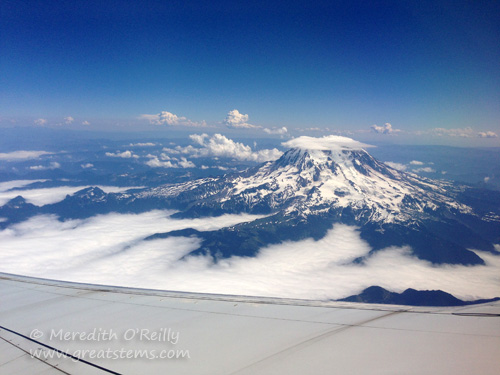
We reached Seattle that afternoon, ate a delicious seafood dinner near the bay, then prepped for our flight home the next day. Mount Rainier gave us a beautiful send-off from the airplane — nice closure, Rainier!
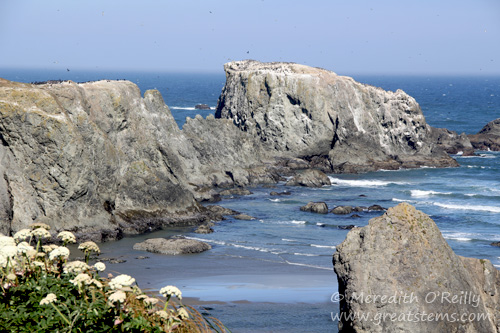 It is so nice being on vacation with only a minimal schedule to follow. Until that morning, we’d never heard of Bandon State Park, yet there we were, and it was blue and beautiful. I’ll admit, however, that it was also very chilly and very windy. We actually broke out socks (which we wore ever so attractively with our Keens) and added long-sleeved shirts under our jackets.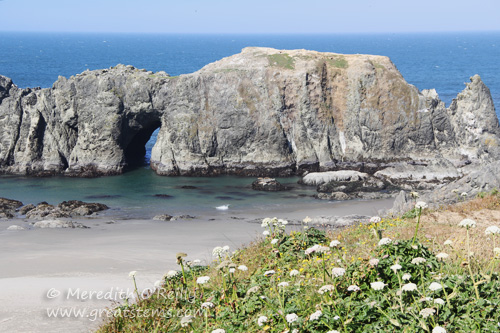
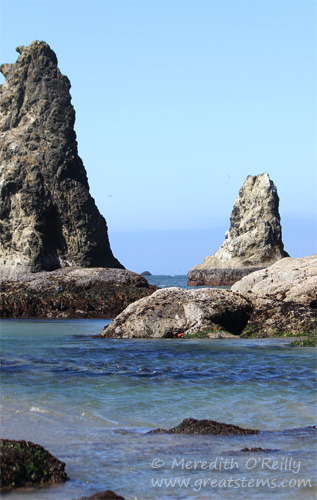
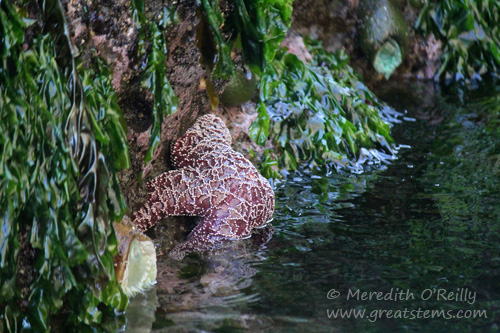
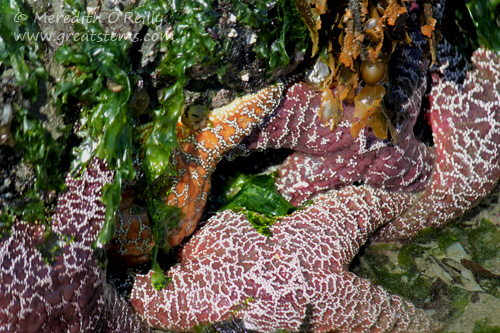
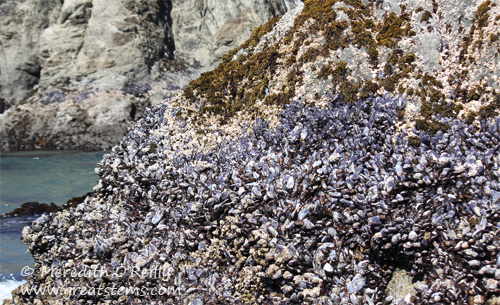 Where there were sea stars, the mussel population was very much in control. This rock, close to the beach, shows how mussels can form massive aggregations when sea stars aren’t around. Mussels often dominate rocks between high and mid tide levels, but this rock was excessively covered, even in the lower areas where sea stars should have been happily feasting. I wonder if this rock is too close to easy human access and destruction — could this be why there weren’t any sea stars there to counter the imbalance?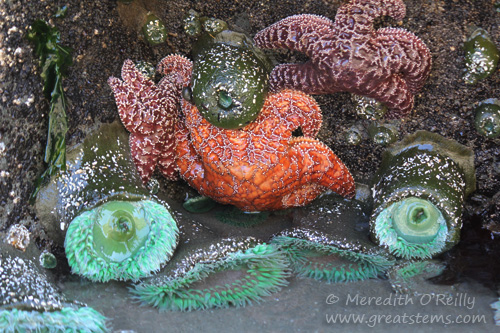
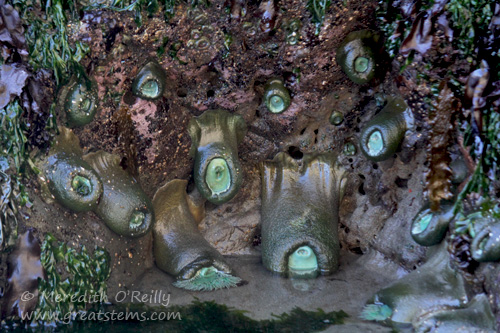 On yet another rock, these sea anemones were drooping so much as the water receded, they gave the appearance of melting.
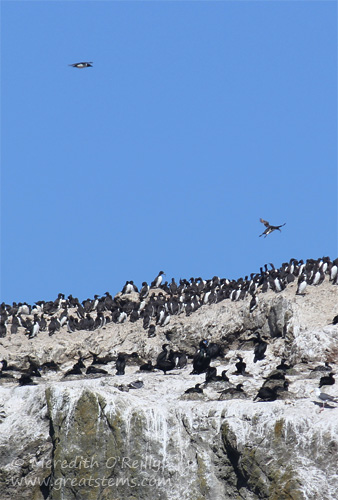 Far above the water, large colonies of Common Murres, also called Common Guillemots, nested at the top of the massive rocks. Normally, these birds spend most of their lives at sea. But they come to shore to breed. The parents don’t build nests up there — they incubate their single egg directly on the rock. Common Murres’ take-offs and flights are awkward; they are much better divers than flyers.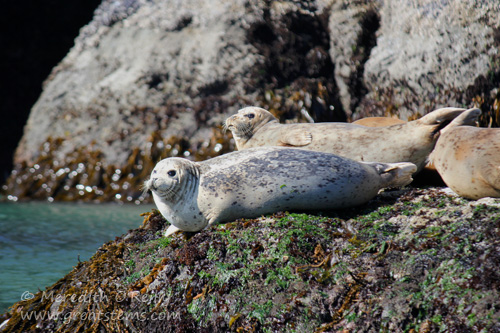
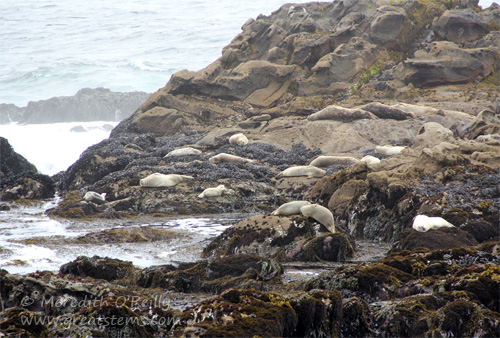
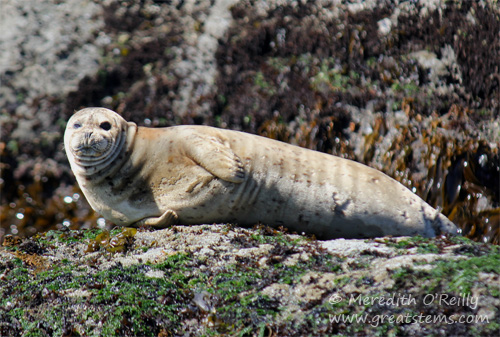 This seal was one of the last couple that remained after the other seals were frightened away. Even though at this point the first offensive people had gone, while we were looking at tide pool life, a new family had arrived, complete with a dog running loose on the beach and a child throwing a tantrum — you can see the seal was watching them with a wary eye. I’m sure that it wasn’t long before this seal finally departed for a safer, quieter environment.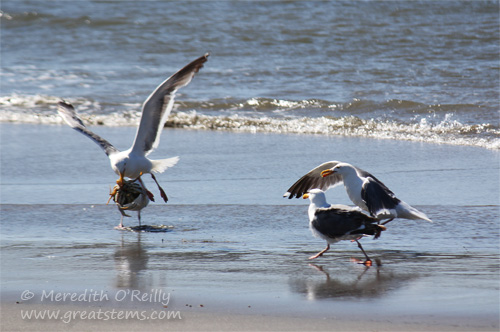
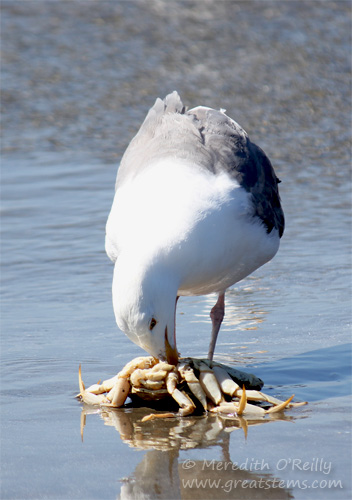
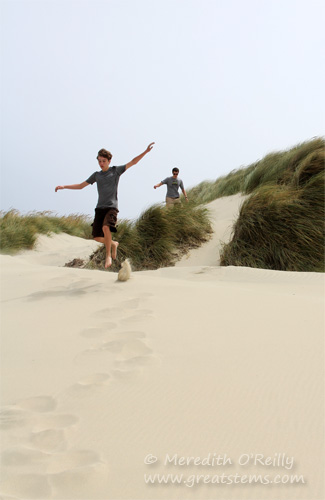 Continuing north, we stopped at an area of Oregon Dunes National Recreational Area. The dunes were tall and a blast to climb — I’d be in great shape if I could climb those every day.
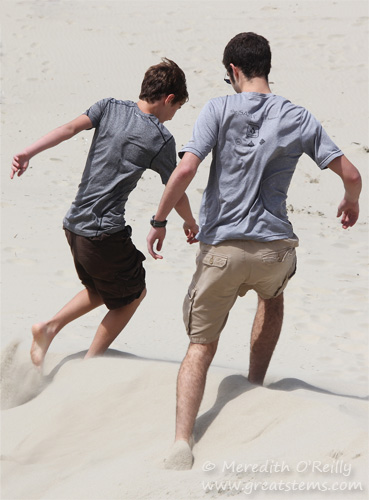 I couldn’t get the boys to roll down — they are apparently too big for that now — but they still had fun sliding, jumping, running, and chasing each other.
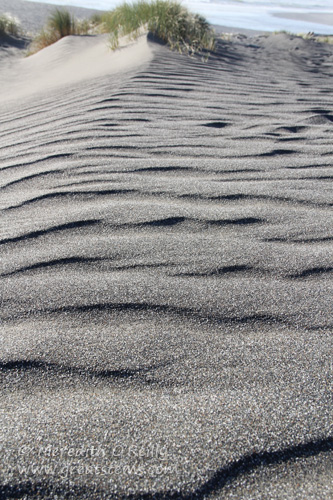
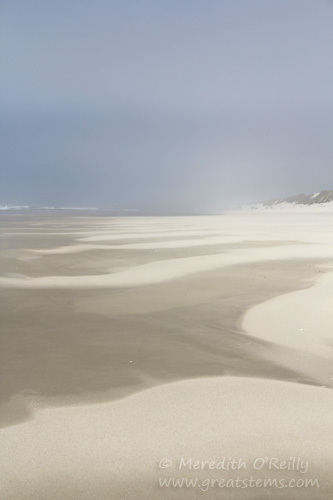 Down at the shore, the wind was impressively strong. It was easy to see how the dunes were built and shaped over time.
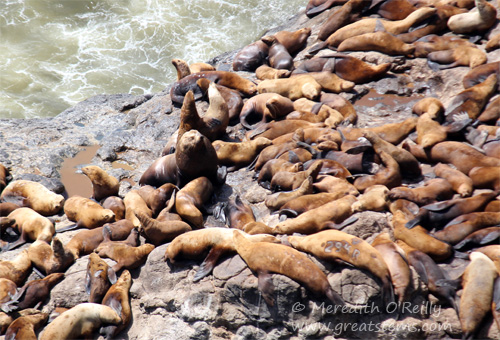
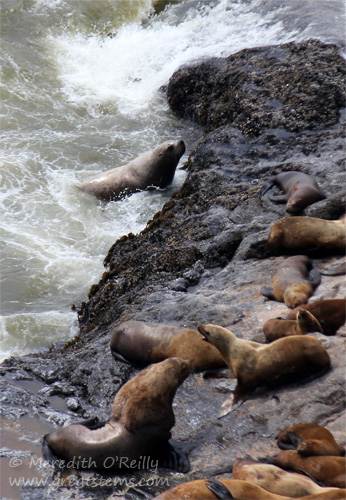
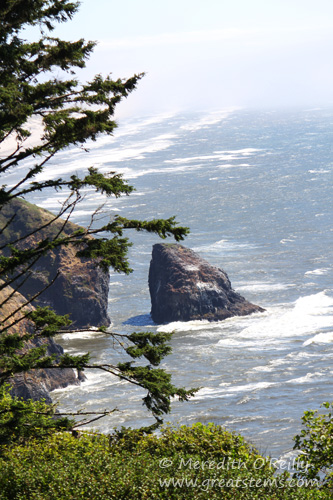 Leaving the dunes behind, we continued our northern trek, stopping just past Florence to visit the Sea Lion Caves.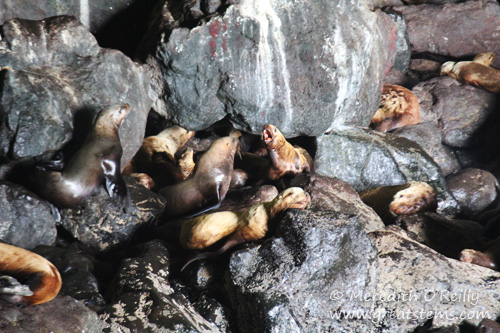
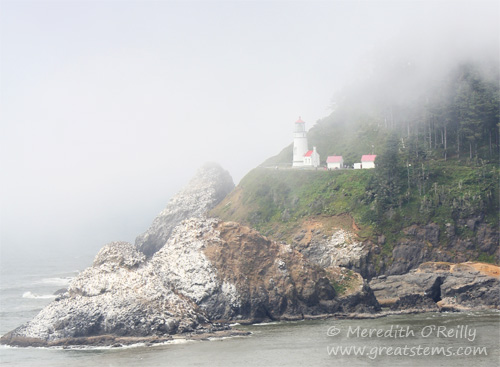 Two miles north of the caves, we pulled into an overlook to take pictures of the famous and highly-photographed Heceta Head Lighthouse. Our old vacation nemesis, fog, returned just in time to affect our pictures. Likewise, powerful wind gusts shoved against my zoom lens — it was a challenge to walk, much less take pictures.
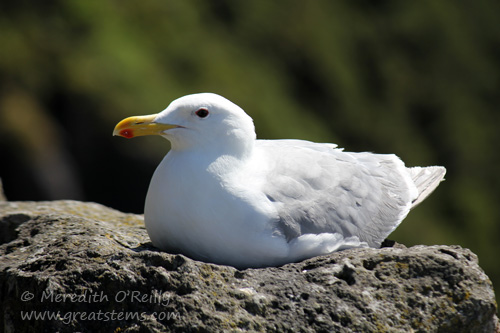 This gull and I shared moments of struggling to stand in the wind — the bird fared better when it nestled into a resting position. I had to take several pictures to ensure that at least one would be in focus, given how hard the wind shoved my camera around.
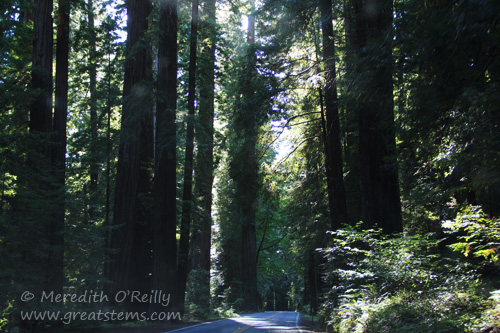
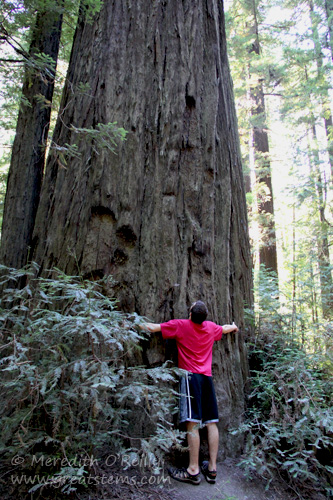
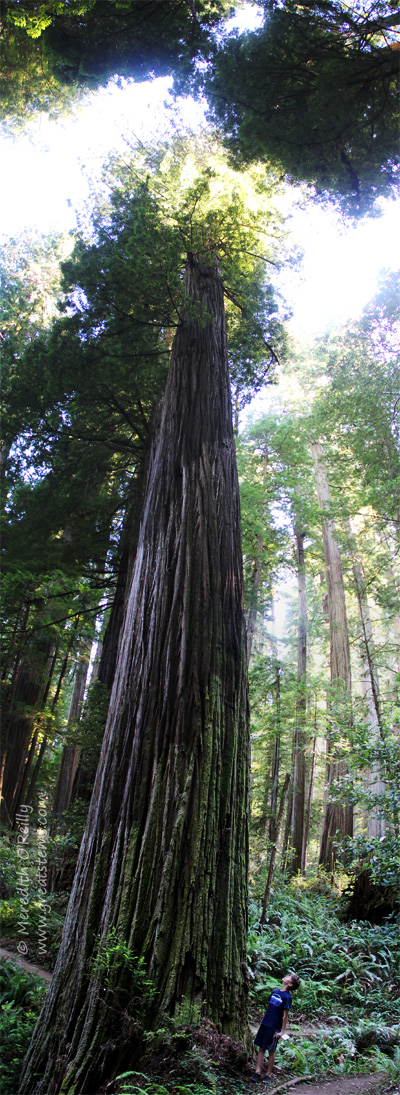
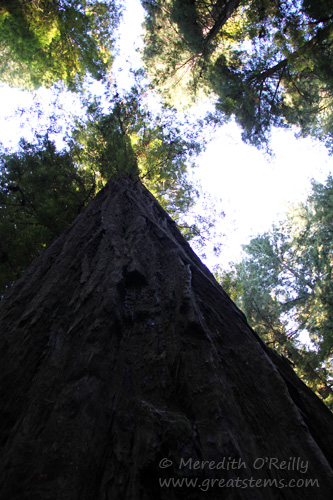 These old trees had much to say, and we tried our best to listen.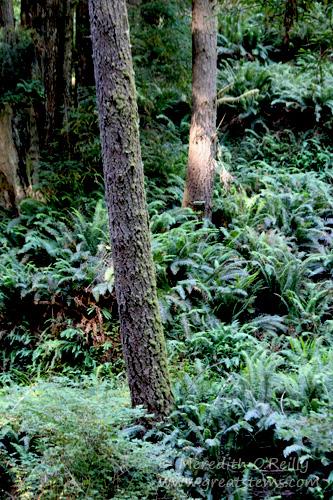
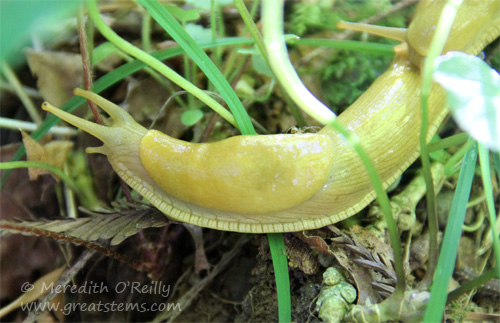 Plus, there were lots of banana slugs, the second-largest type of terrestrial slugs in the world. Those alone made it our kind of place. Expanding our vacation’s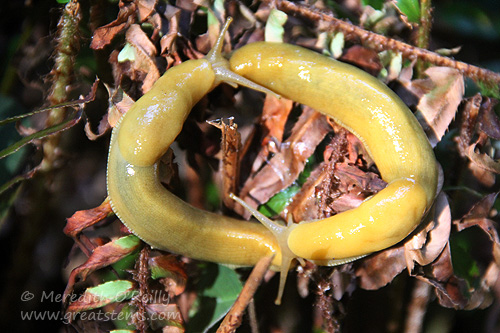
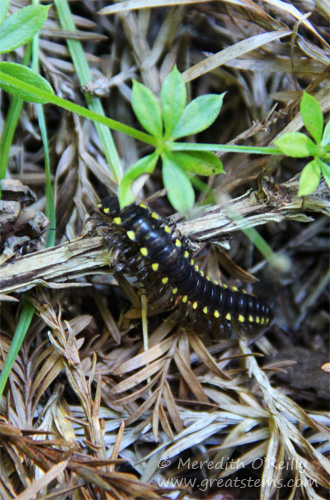 Yellow-spotted millipedes are also important for forest ecology, consuming leaf litter and freeing up the nutrients.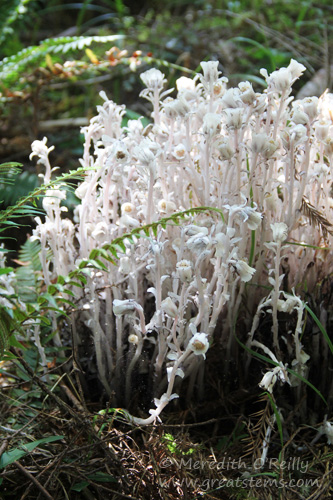
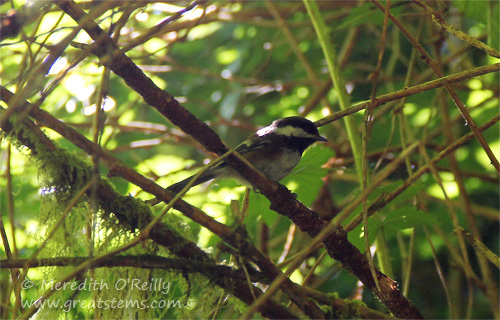 This little Chestnut-backed Chickadee was as feisty as its Carolina cousins.
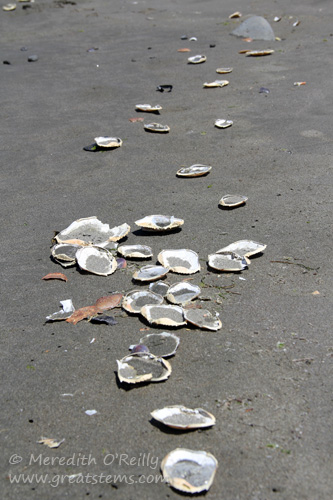 After our morning hike, we headed into Crescent City to get some laundry done, then we drove up Pebble Beach to Point St. George, a northwestern coastal headland of California and a protected site of the ancestral home of the Tolowa Indians. There coastal bluffs are covered with native grasslands and trails lead down to the shore.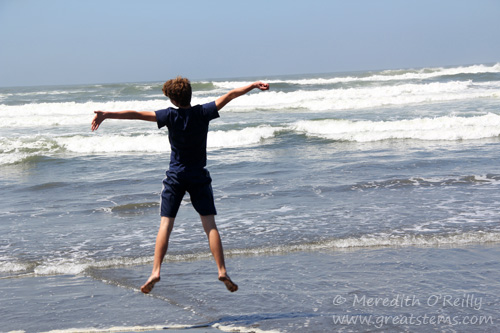
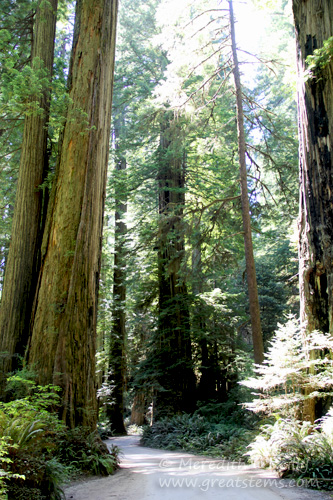
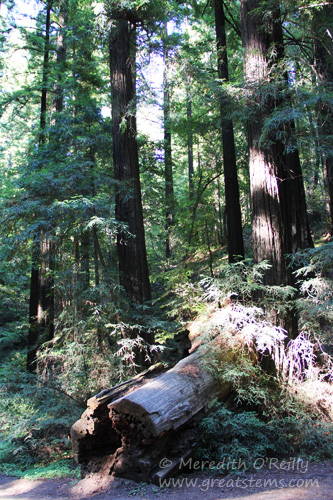
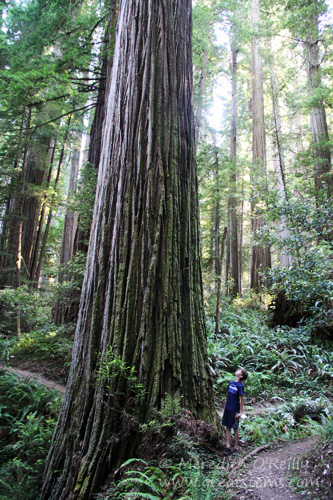
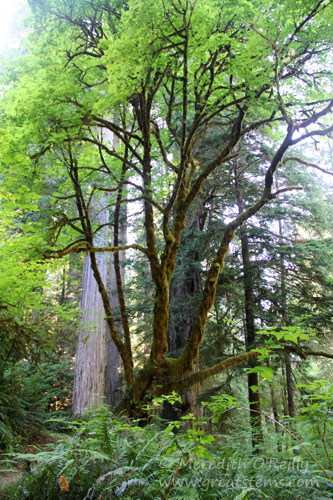
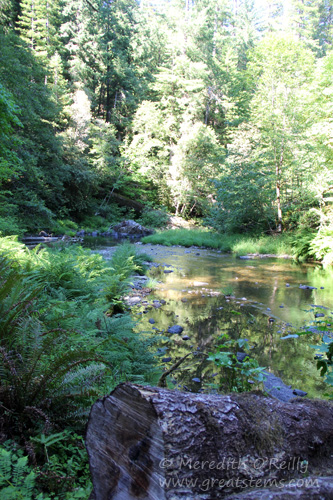
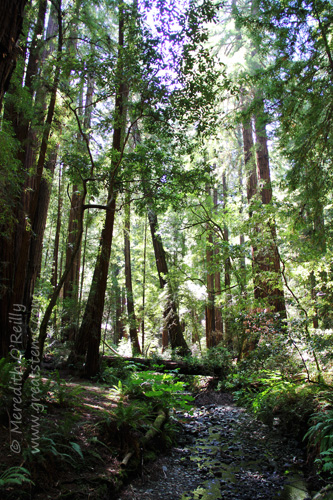
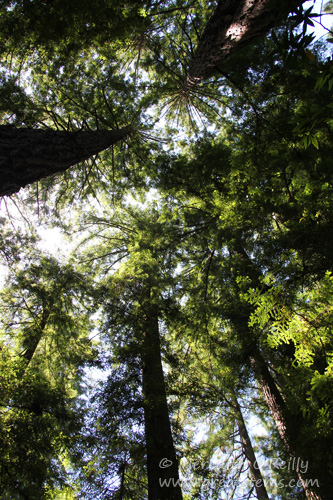
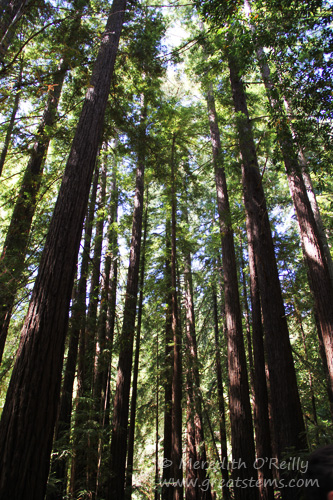
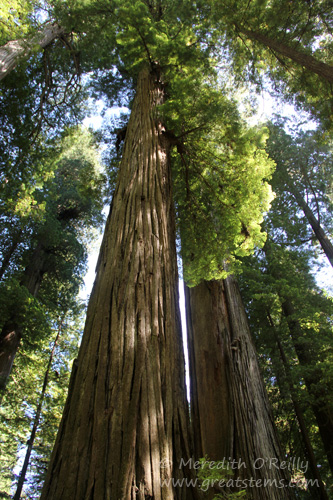 The tranquility of the redwood forest touched our souls. We were very sorry to leave behind these majestic trees, but it was time to move on.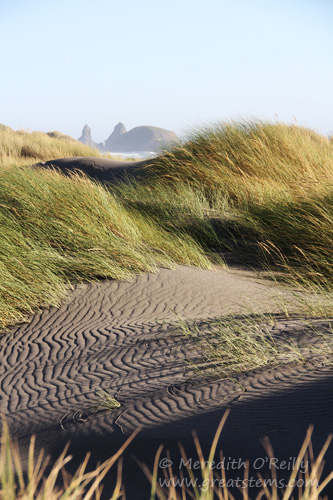
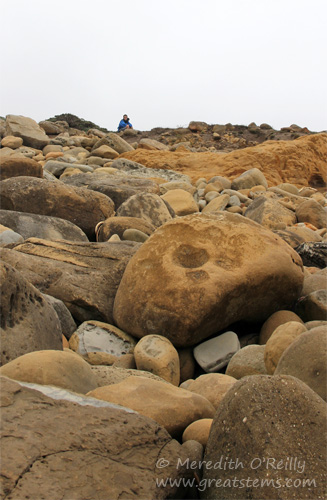
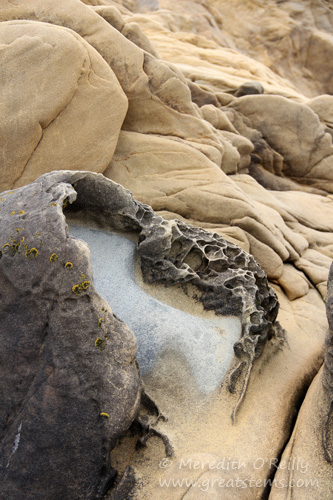
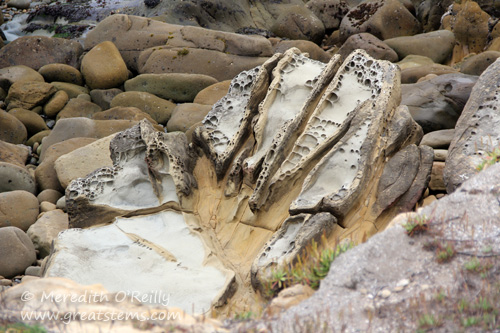
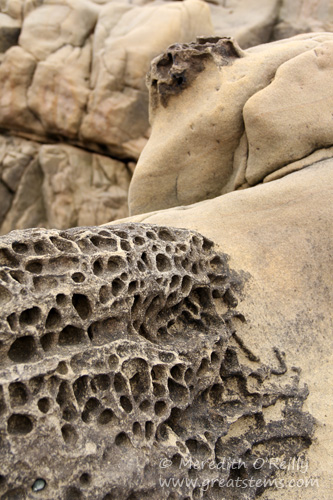 The landscape of Salt Point is formed primarily by two major processes. Plate tectonics are responsible for the terraces along the shore, while wave action creates coves, shapes rocks, and moves rocks or carries them away. Some of the rocks are sculpted into knobs, bowls, or ribs. Others display remarkable tafoni, honeycomb-like features created by biological, chemical, and physical weathering.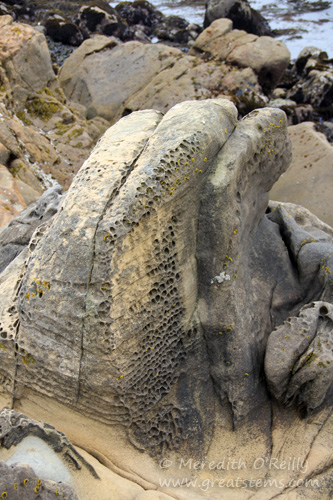
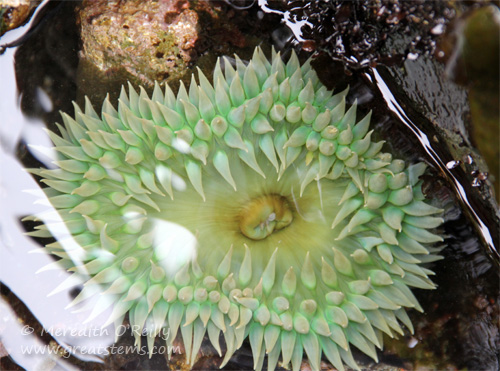 The giant green anemone, Anthopleura xanthogrammica, has a green oral disk, with only faint radiating lines, and green tentacles. As its name implies, this anemone can get quite big. While often found alone, it will sometimes be seen in a group with other anemones without aggravation.
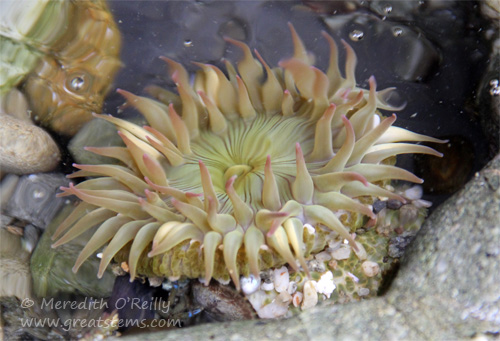 In contrast, a sunburst anemone, Anthopleura sola, is a solitary anemone with distinct radiating lines and pink-tipped tentacles.
 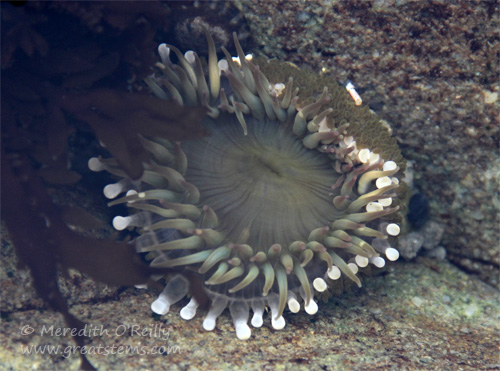 The sunburst anemone does not play nicely with others. Here is one displaying its acrorhagi, specialized stinging tentacles used when fighting with a competing anemone. I suspect the other anemone is hidden under that kelp.
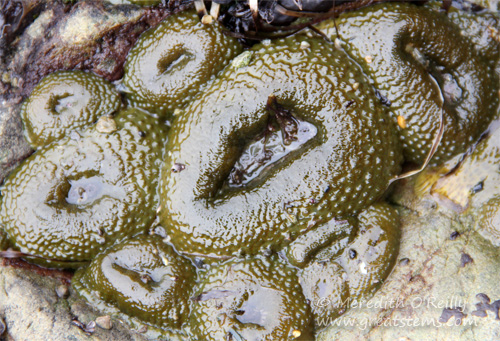 Sunburst anemones are very similar to aggregating anemones, Anthopleura elegantissima, so much so that they were once considered the same species until molecular study proved otherwise. “Aggregating” refers to the tendency of these particular anemones to form colonies. The anemones in the colonies are actually clones, genetically identical polyps formed asexually through fission. But like their solitary cousins, an aggregating colony is still territorial and will actually engage in a battle with any encroaching anemones that don’t have the same genetic makeup. That’s why the colonies are always seen spaced apart from each other.
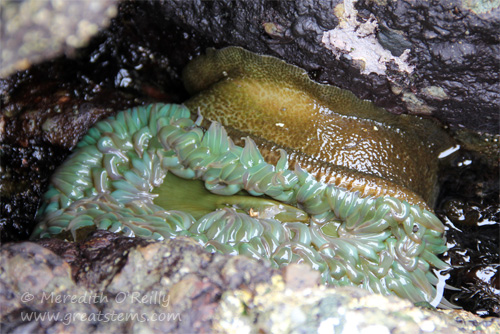 As the tide recedes, sea anemones expel water from their column, retract their tentacles, and fold inward in order to retain moisture within their body cavity.
 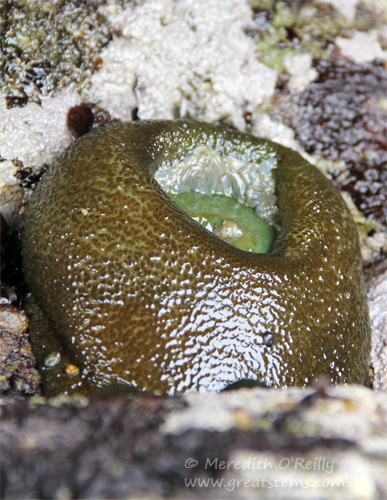 In addition to looking like an odd lump during this process, their size can be misleading.
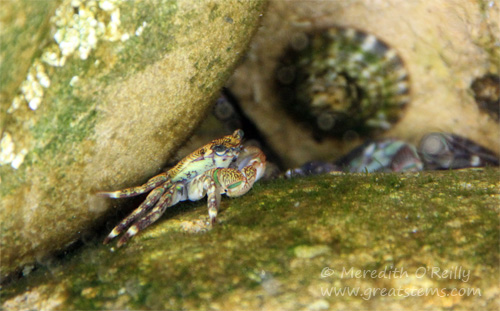
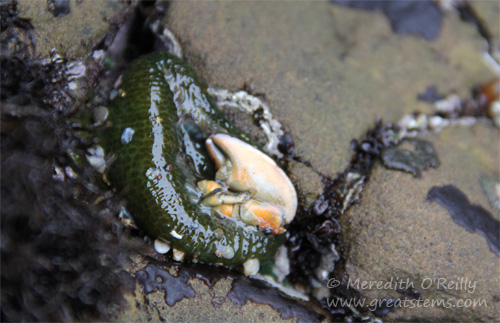 Here an anemone is still in the process of consuming a crab, despite being interrupted by low tide. It will expel any parts it can’t digest.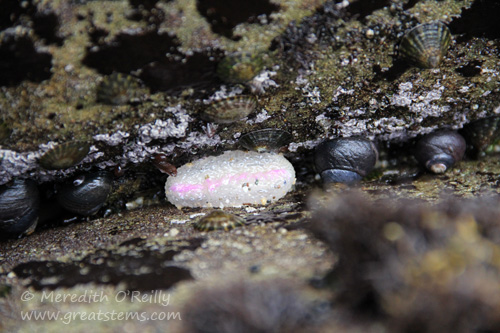
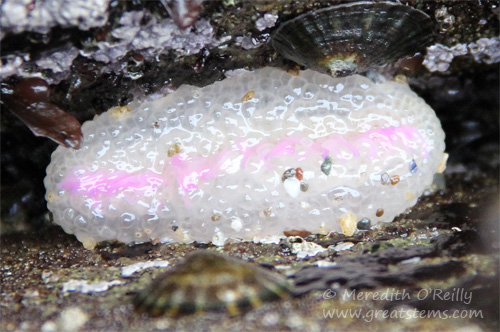
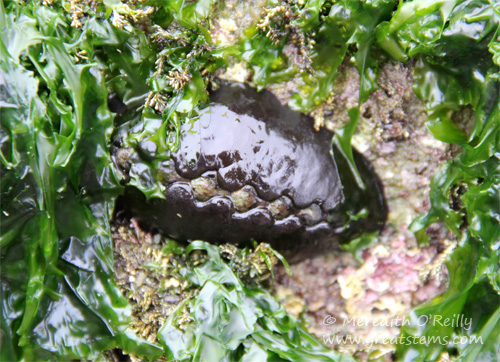 Black katy chitons, also called black leather chitons, are slow-moving grazers of algae and small barnacles, scraping them off with rasping, tongue-like appendages. They are effective at eroding rocks, as well.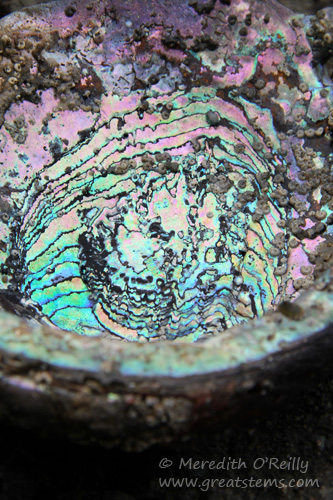
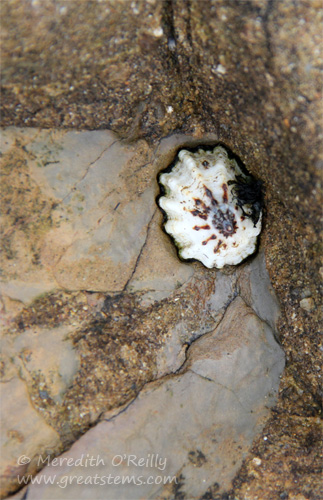
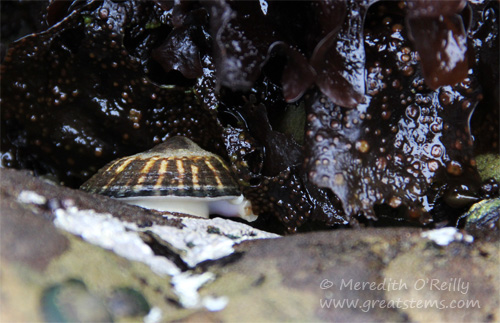 This limpet was actively moving about, and I felt quite lucky to get this picture at low tide. You can see its muscular foot, its mouth, and one of its tentacles.
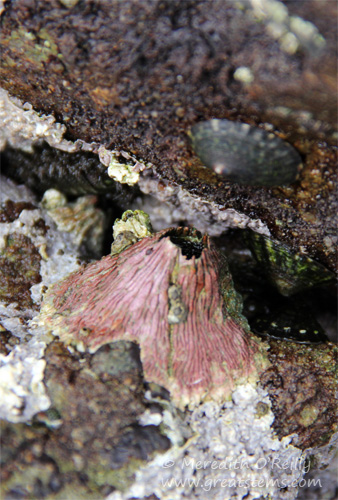 Lastly, this is a pink acorn barnacle (Tetraclita rubescens). Unlike the aggregating barnacles of the higher intertidal zones, the pink acorn is a solitary barnacle, typically living in the mid to low intertidal zones. Note that other barnacles are actually growing on it.
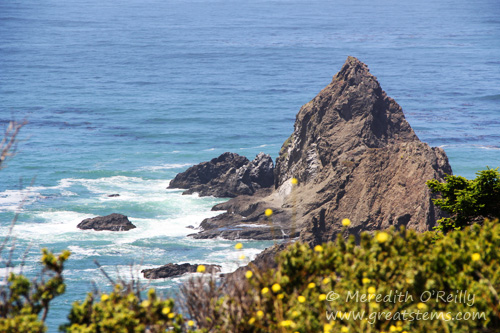
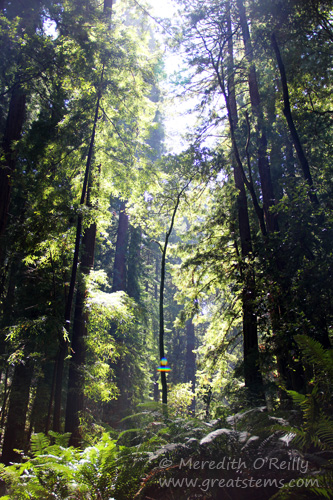
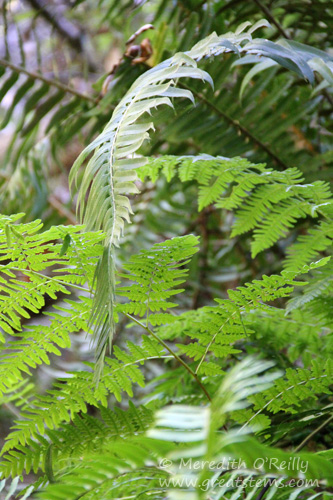
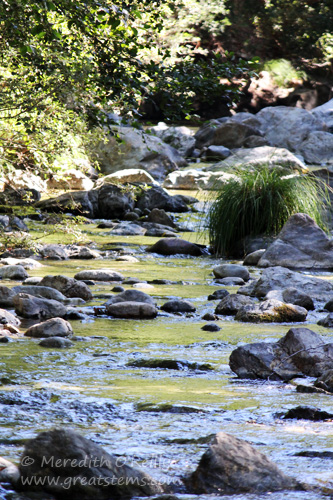
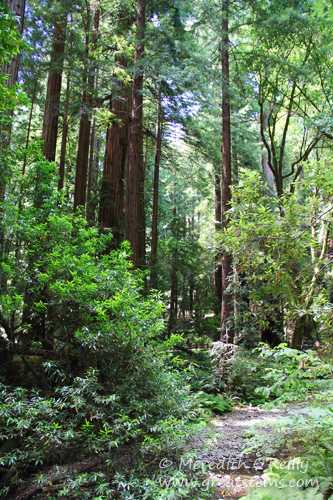 I adore Muir Woods. Sunlight filters through the tall trees to highlight patches of the forest floor below. Gentle creeks flow past. Fallen logs give homes to small critters. Birds call in the distance or flutter nearby, and fresh air fills one’s lungs. Moss, soft to the touch, and numerous ferns create a green garden below the canopy. It’s magical.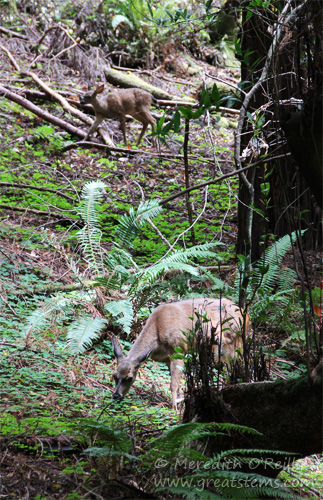
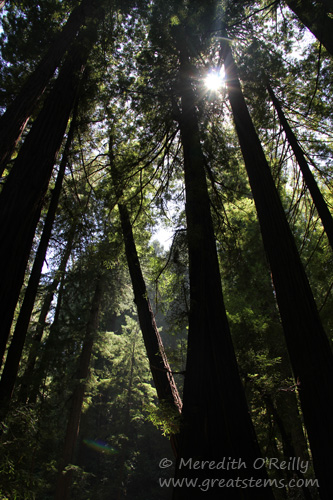 The first time I went to Muir Woods was with my mother while we lived in the San Francisco area years ago. There were few people in the park that day, so we found ourselves truly immersed in the sounds and beauty of the woodlands without disturbance. In contrast, the park was quite crowded during my visit with my boys. I’d encourage my sons to tread softly and to whisper, letting the sounds of birds, running water, and rustling leaves reach our ears… then suddenly loud stomping children would race past us, or people would chat loudly on their cell phones, families would call down the path to each other, etc.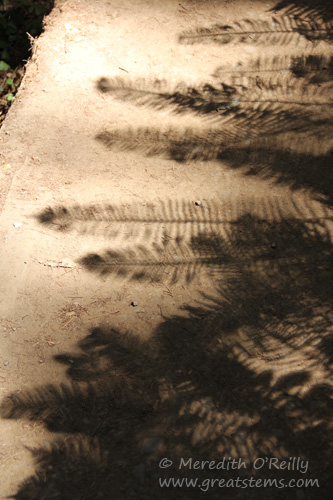
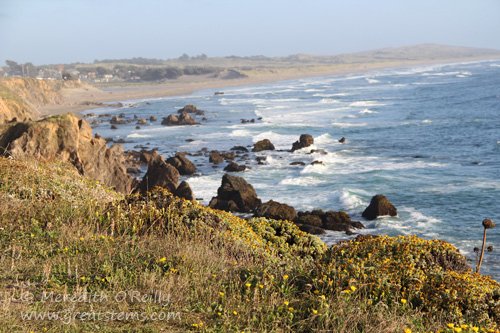
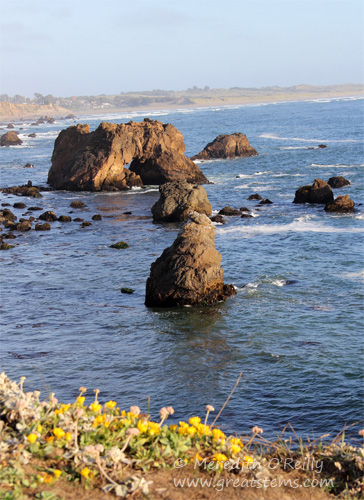
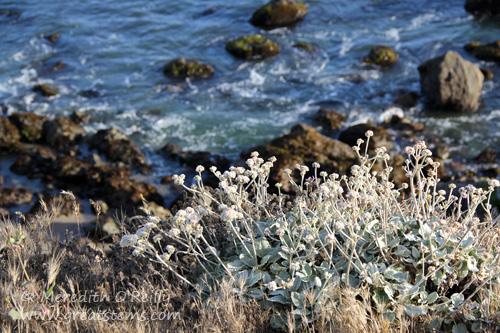
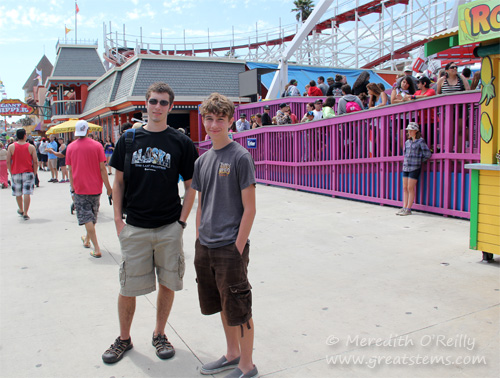 We started, however, with a quick trip to Santa Cruz’s famous Boardwalk. We didn’t ride any rides, but I wanted the boys to experience the crowds, music, beach scene, and atmosphere of this fun seaside park. Besides, it’s the site where some parts of the American teen vampire film “The Lost Boys” were filmed in the 1980s. Each time I see that movie, I remember the feel of being at the Boardwalk from when I was a teen living in California. That soundtrack still rocks, by the way. All right, too much info about my youth — moving on.
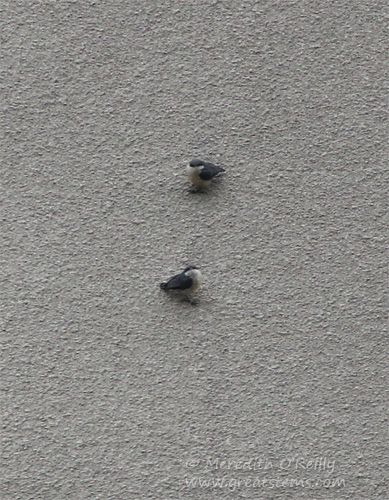
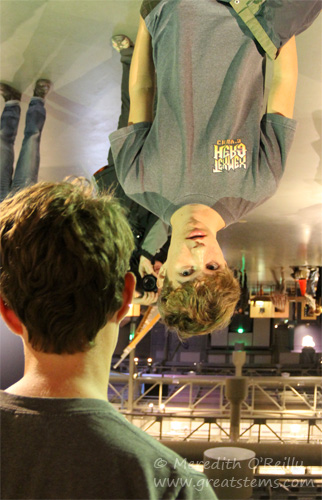
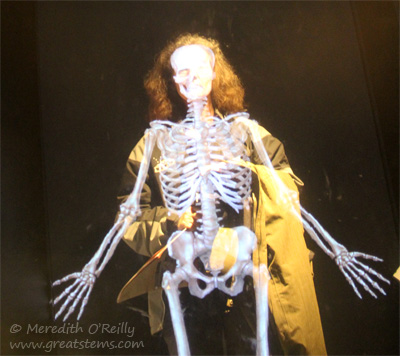
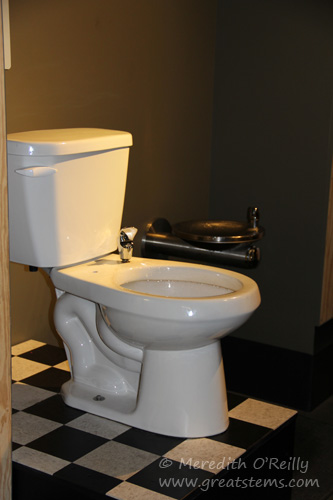 At the Exploratorium, there is even an experiment involving guests. If you see two water fountains side-by-side, one a classic metal style and the other created from a nice, clean toilet, which fountain would you be willing to drink from? I find this a fascinating study.
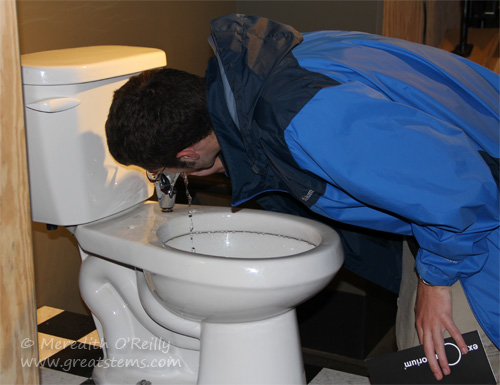 Well, the answer for our family was obvious.
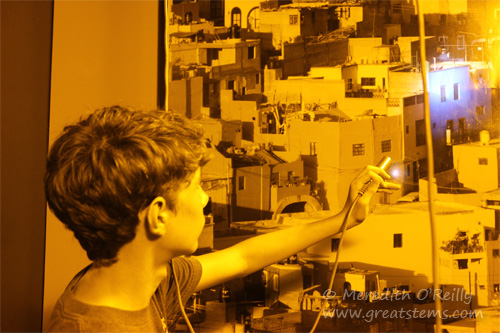 My favorite place at the Exploratorium was the monochromatic room, a room lit by lamps that only emit a single wavelength of light. But with special flashlights, you can shine white light on photos, toy cars, clothes, and other objects in the room to discover their “true colors.”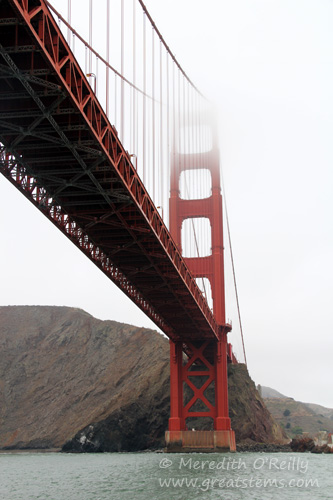
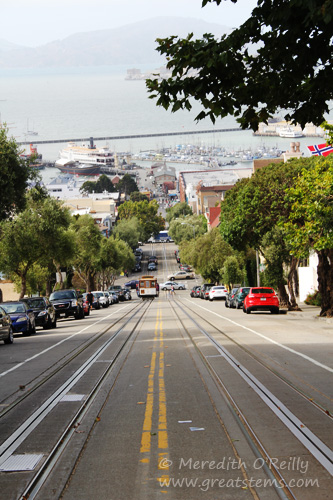
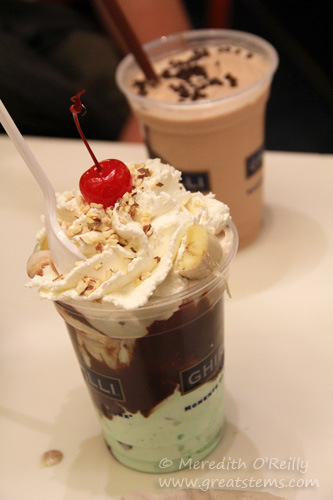
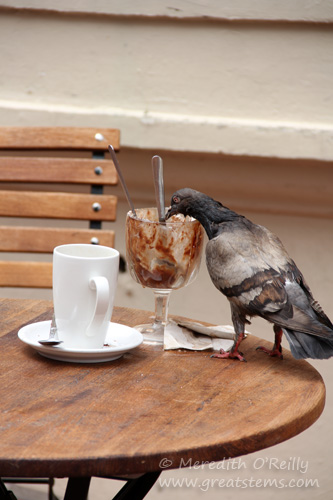 Not the healthiest of pigeons — perhaps it should wean itself off of leftover hot-fudge sundaes. I’m sure there is a lesson to be learned there about nutrition, but I admit we did later have our own Ghiradelli treats.
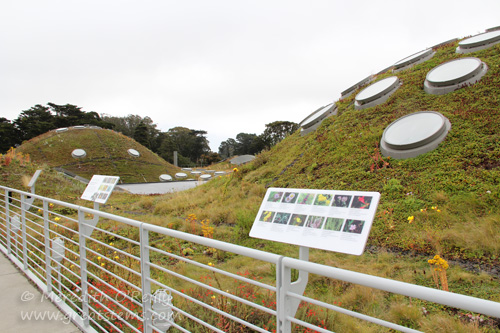 Over at the California Academy of Science in Golden Gate Park, visitors learn about different subjects with overall more visual learning than the hands-on approach of the Exploratorium. The building houses a planetarium, a multi-story rain forest, and an aquarium. I really liked the 197,000-square-foot Living Roof, covered in specially-selected native plants that thrive on little water and can handle the salty air and wind. This eco-friendly roof keeps the interior building 10 degrees cooler than a typical roof would. For younger kids, this science museum might be the way to go, especially with the aquarium and rain forest, while older kids really get involved over at the Exploratorium. At least, that’s my take on it.
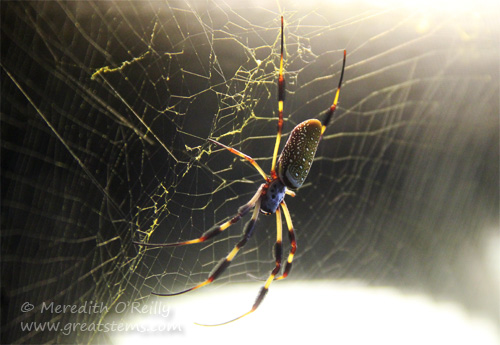 You know me, my favorite subject in the rain forest was a spider, the Golden Silk Orbweaver. These spiders weave their giant webs both in displays and openly in parts of the rain forest area.
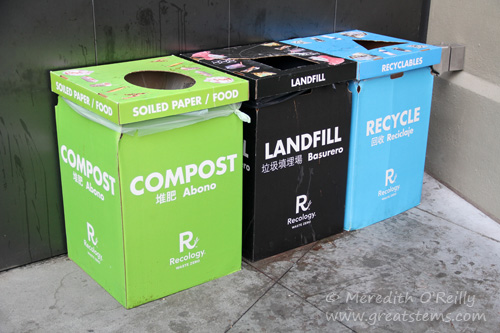 Around town, I admired the waste bins enough to take a couple of pictures. While many cities have separate trash and recycling, San Francisco takes it a step farther and has bins for composting. It also labels the trash bin as “Landfill” — this helps people keep in mind what waste truly is and where it is going. I hope Austin gets to this point.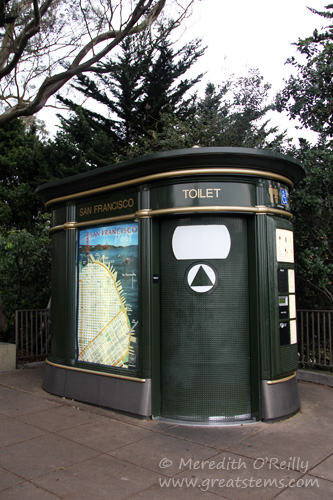
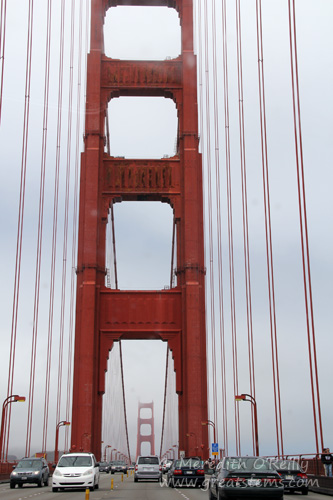 Our short city visit over, it was time to cross the Golden Gate Bridge and get back to the coast, to redwoods, and to nature in general. Muir Woods is next!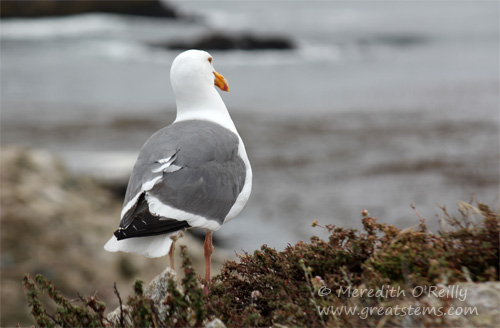
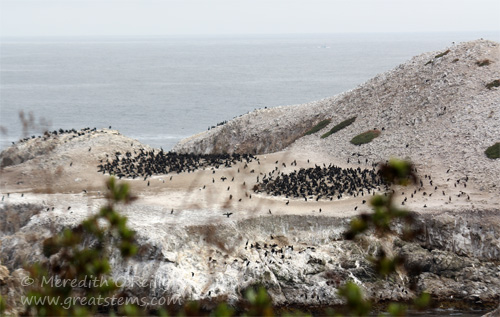
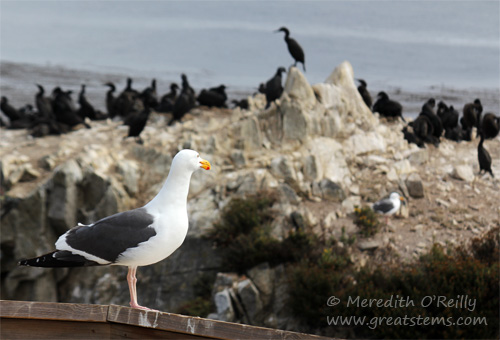
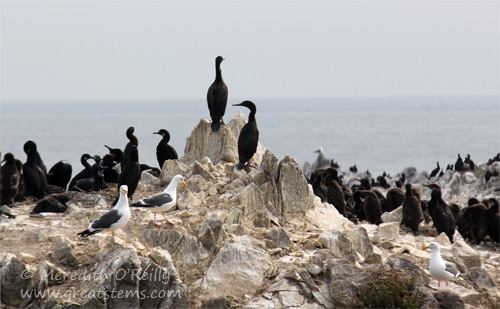
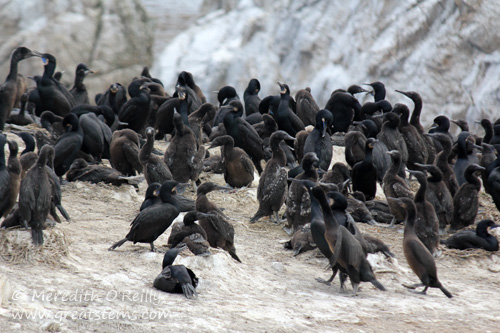 The Cormorants were in various nesting stages while we were there, but most of the juveniles were already as large as the adults. Look closely and you will see the dry circular nests many are sitting on. It’s amusing to see the large juveniles still trying to squeeze in those nests to be pampered by their parents. Also, look at the adult Cormorant in the upper left corner of the photo and you will more clearly see the blue breeding foliage that the adults have.
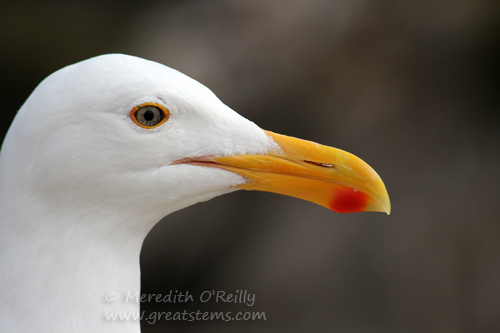
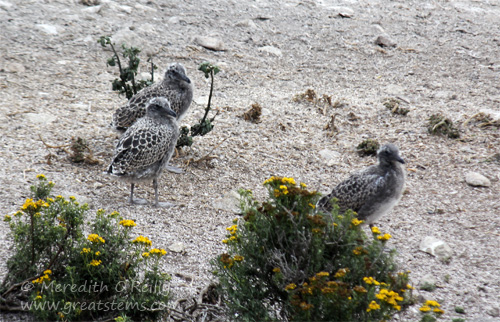 Western Gull juveniles spent time flapping and strengthening their wings, socializing, and pestering their parents for food.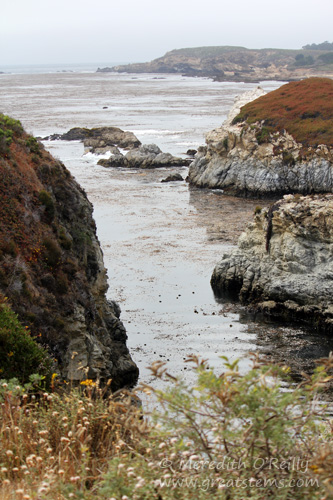
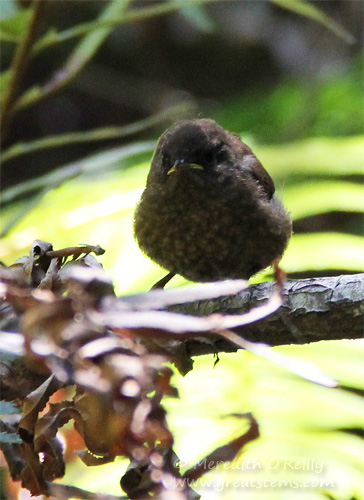
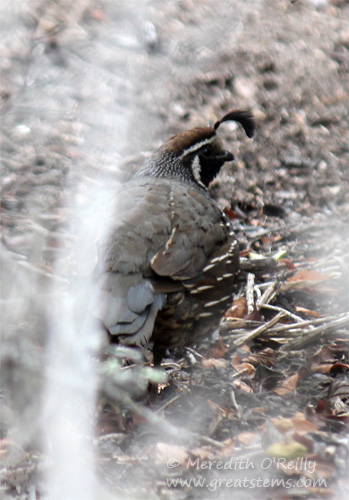
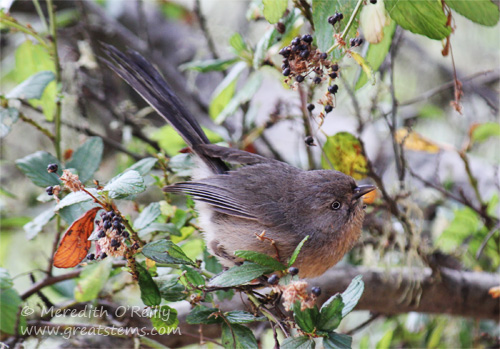 As I walked along the trail, I caught a glimpse of this small bird and managed to get a few pictures. I am undecided whether this is a Wrentit or a female Bushtit. I’m leaning toward the former, but I’d appreciate birder input.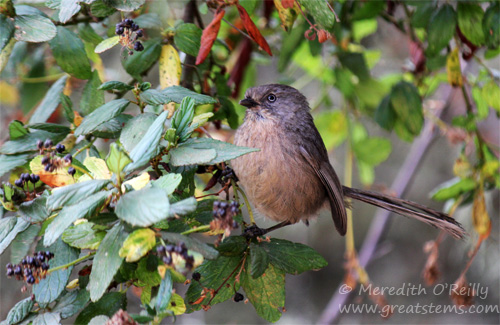
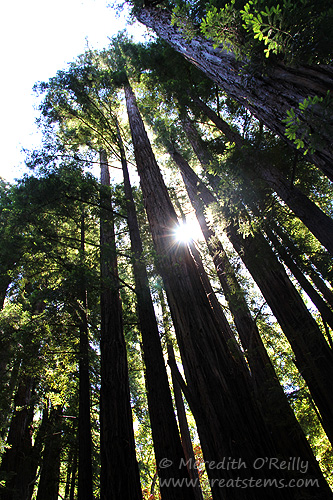
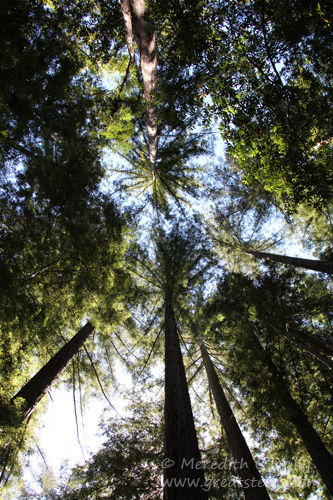
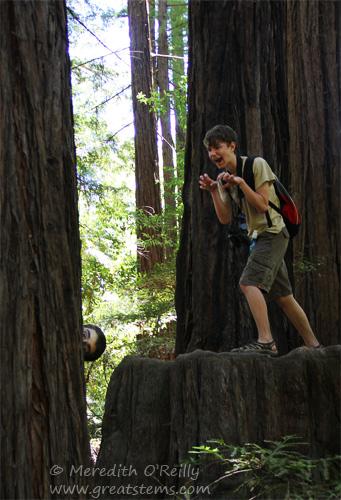 Sometimes we got a little wild ourselves.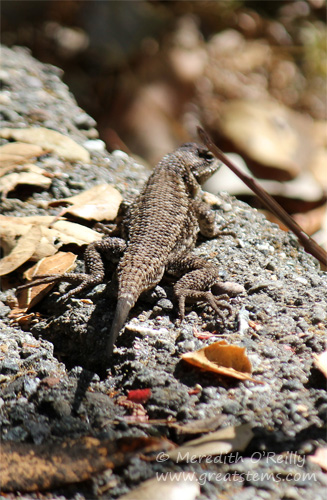
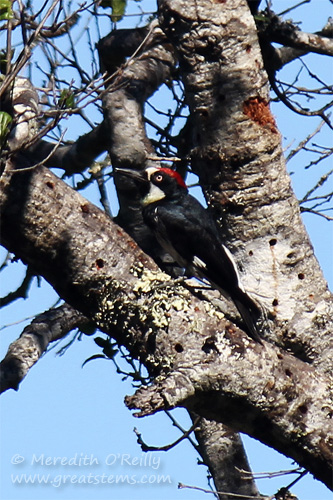 Acorn Woodpeckers are social, busy birds. Their coloration is striking. We also spotted a Northern Flicker and some Downy Woodpeckers during our stay.
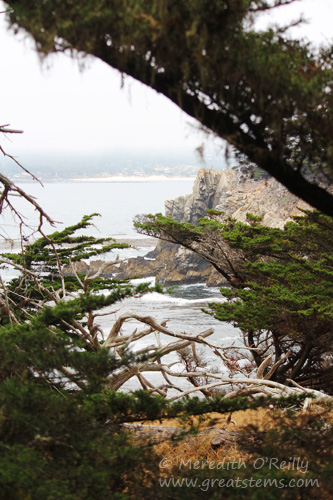
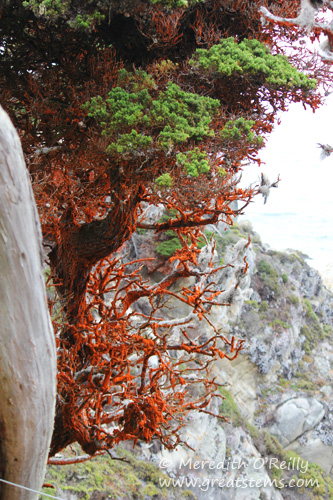
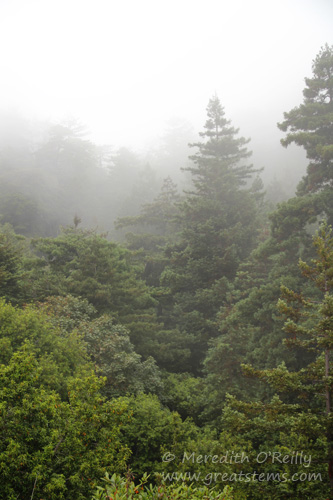 Within the forest, down at the base of the trees, one feels a little sheltered from the fog, but as you drive along the coast, fog can come and go and come right back again quite suddenly. Fog was our friend during our vacation — well, it sure seemed to like us because it visited a lot during our stay.
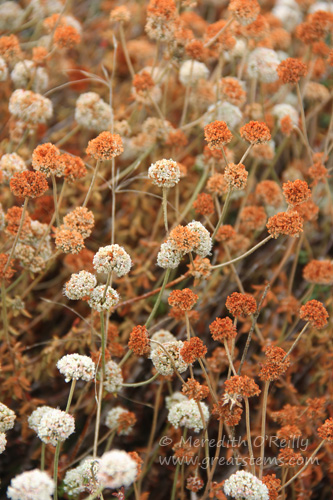
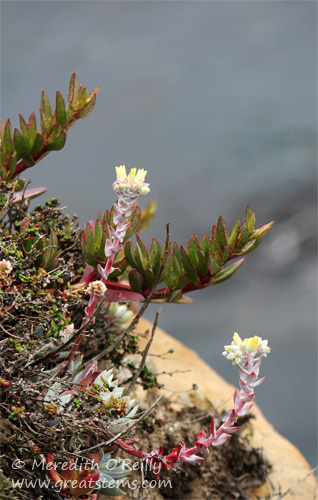
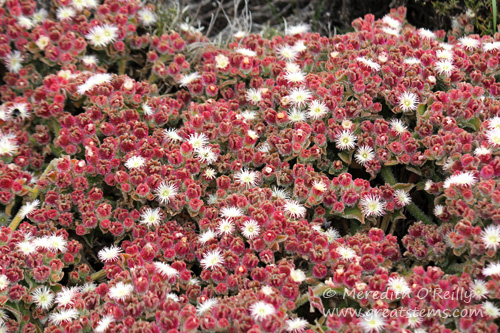
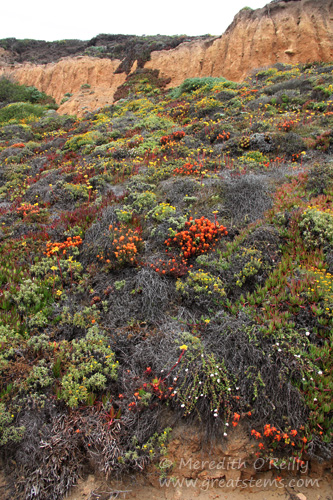 But even the side of the highway is gorgeous. My son snapped this picture of coastal sedums and other plants while we waited for our turn on a one-lane section of Highway 1 that was being repaired.
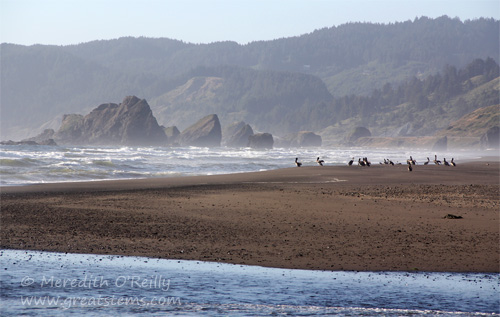
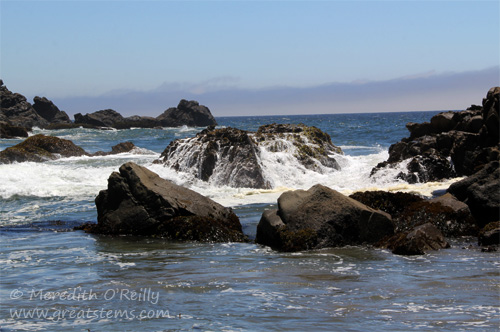
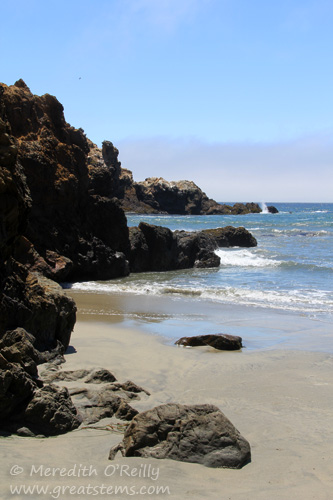 Not too far from Pfeiffer Big Sur State Park is Pfeiffer Beach, one of my favorite coastal spots along the Pacific.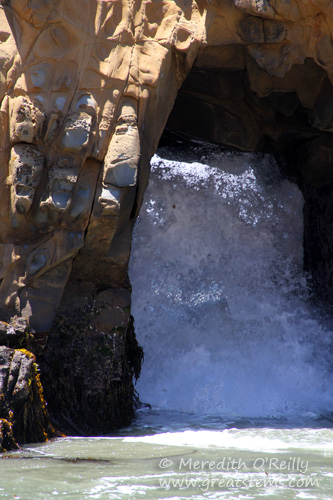
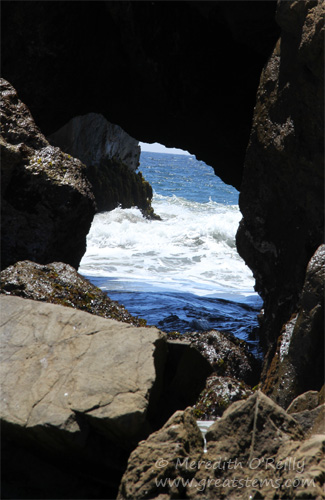 We were there mid-day, and Pfeiffer is gorgeous all day long, but let me tell you that if you really want to see something spectacular, visit Pfeiffer at sunset.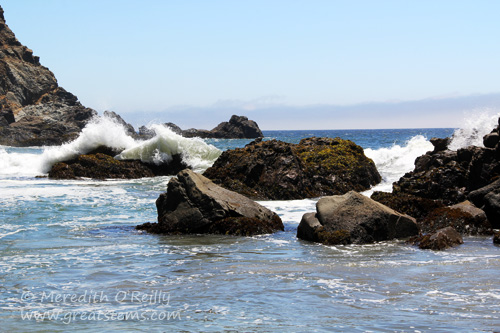
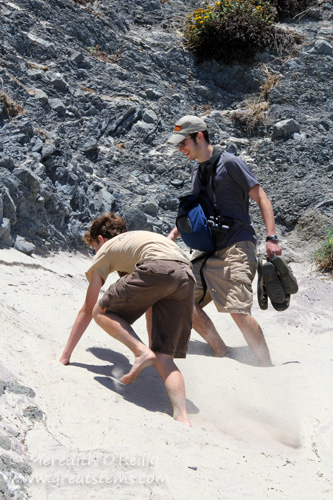
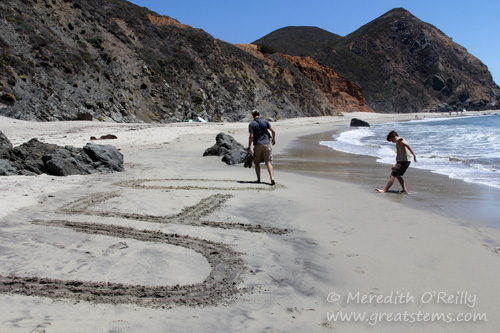
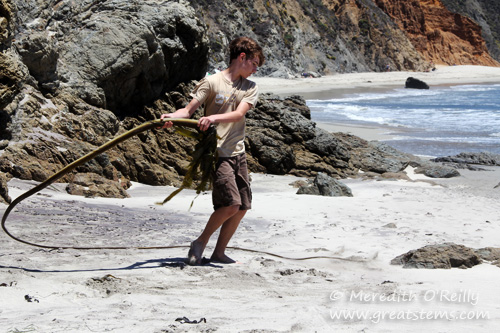 It’s all fun and games until you whip yourself on the butt.
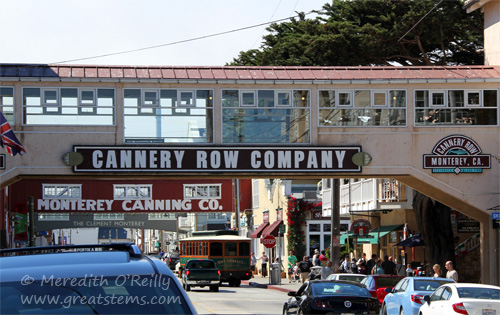 We drove past Stockton, then cut over to the coast, coming out right at Monterrey. We would be camping down at Big Sur, but since we were ahead of schedule we stopped in to enjoy this historic and beautiful town.
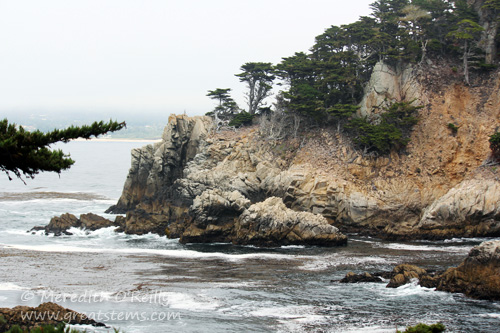
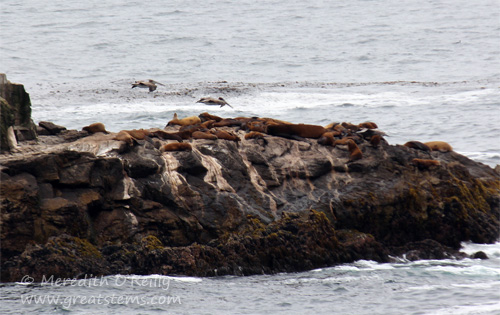
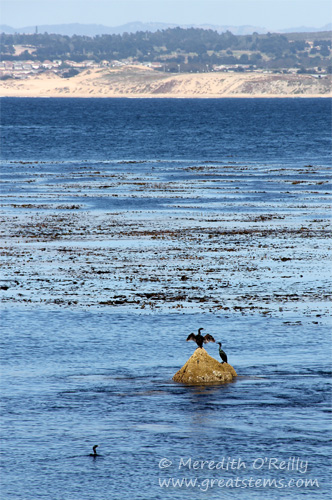 The Monterrey Peninsula is known for its beautiful scenery and wonderful wildlife. The coastal waters are home to harbor seals, sea otters, visiting whales, and many, many birds.
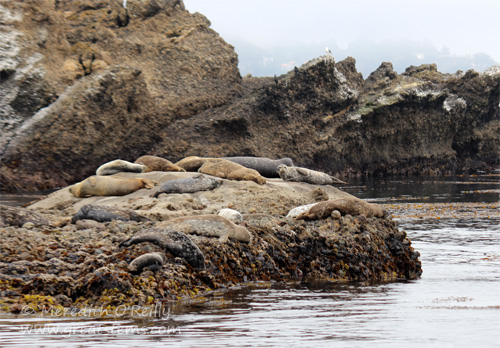
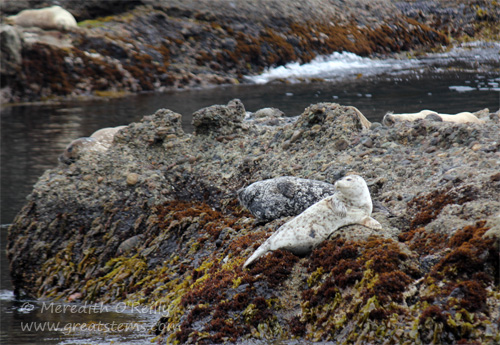
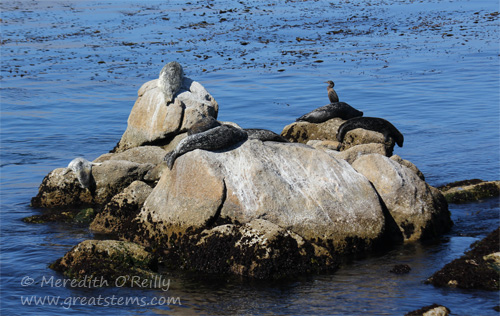 It always amazes me that harbor seals can flop themselves up onto such high rocks.
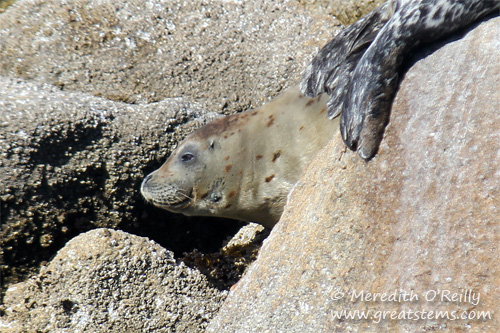 This little one was well camouflaged among the rocks — one had to look closely to see it (compare to photo above).
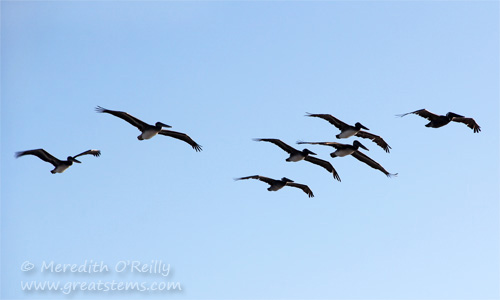
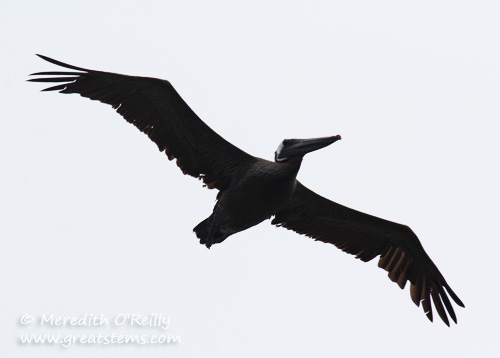
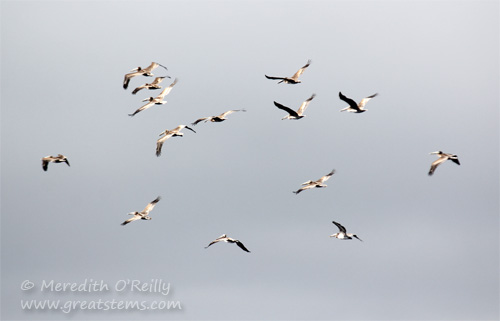 When you are pelican-obsessed like I am, it’s remarkably better to have a digital camera in your hand than a film camera. Brown pelicans always seem to be in migration when I visit California, and I love watching them fly by. Usually they are in a long line as they fly, but this group got a little wild and crazy.
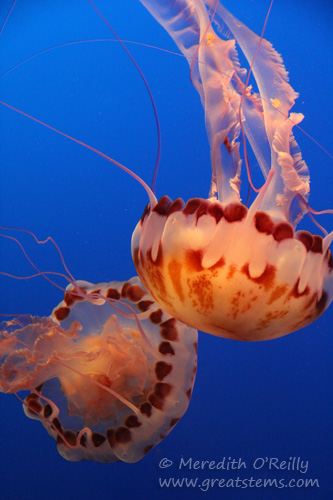 At the Monterrey Bay Aquarium, we oohed and aahed over marine life such as Purple-striped Jellyfish.
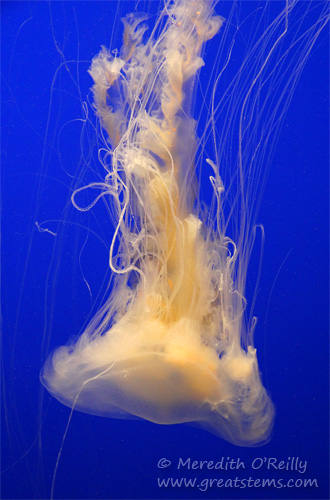 This is an equally beautiful Egg Yolk Jellyfish.
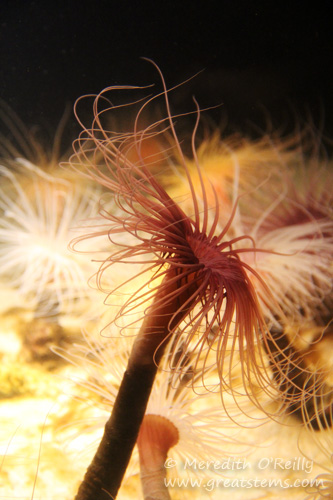 Likewise, a tube anemone. I have to admit, Monterrey Bay Aquarium really is a good one, especially for families.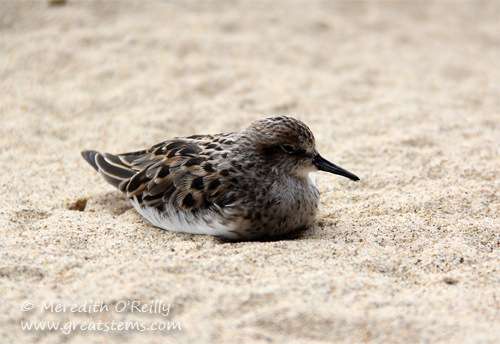
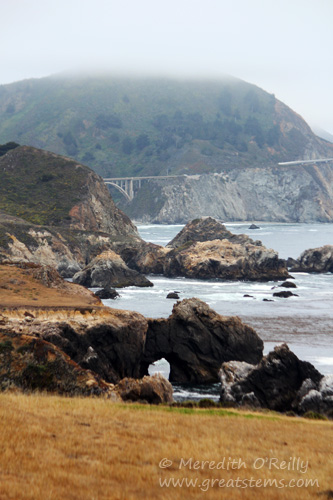 As our true destination was Big Sur, we headed down the beautiful Highway 1. As is always our luck, the fog rolled in just in time for our drive.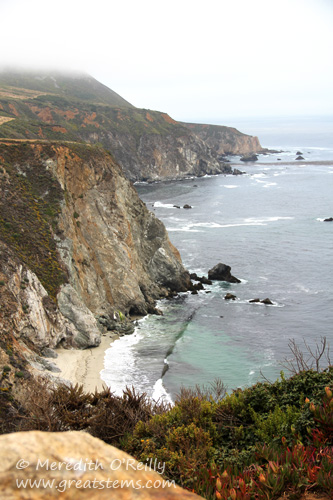
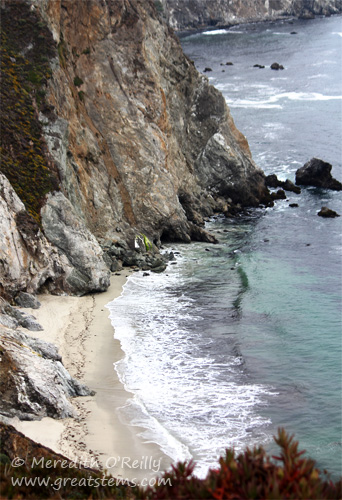
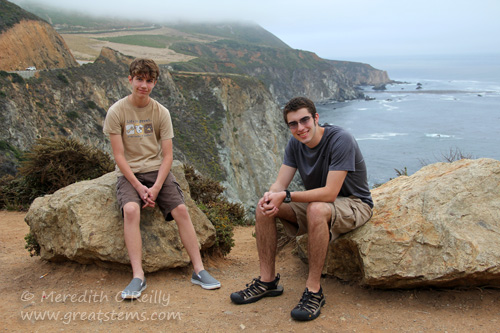 But no worries, we loved it just the same.