This morning I headed south to join a group of birders at the Wildflower Center. Since I don’t have a dedicated set of binoculars (yet), I can’t officially call myself a “real” birder, based on my personal definition, but given that I got up at 6am to drive across town to trek along trails and into woods to find our avian friends, I guess I might as well stop fooling myself. Our guide Travis loaned me a set of binoculars, though — thank goodness, because my zoom lens only goes so far. Note to self: Add birding binoculars to my wish list. Might as well add a bigger zoom to that list, too.
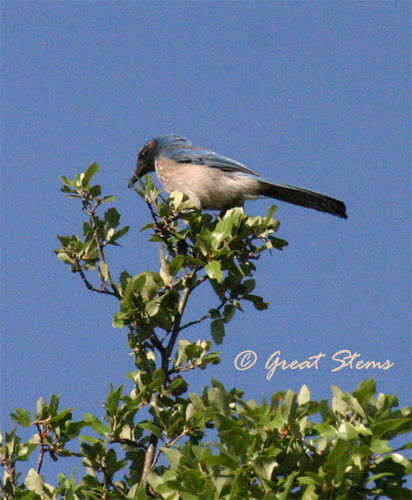
Western Scrub-Jay
Today we hoped to see the Painted Buntings that have arrived at the Wildflower Center, but of course we took a full walk around to see as many birds as possible. The key to finding a bird on a wildlife walk among trees and shrubs is to keep a keen eye watching for movement and a careful ear listening and distinguishing bird calls. Even then, there’s no guarantee you’ll see what the person next to you caught a mere glimpse of, and there were several birds we never saw at all but only heard. There’s a whole trick to finding birds through binoculars, too.
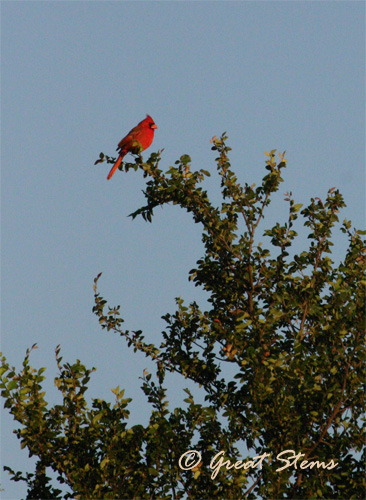
Northern Cardinals and Northern Mockingbirds greeted us the most with song, though I suspect it had far less to do with us and far more to do with their mates.
Among the 30 species of birds we caught glimpses of or recognized the sounds of were White-Eyed Vireo, Bewick’s Wren, Downy and Ladder-Backed Woodpeckers, Brown-Headed Cowbird, Lesser Goldfinch, Cooper’s Hawk, Estern Phoebe, Bobwhite Quail, and oh so many more.
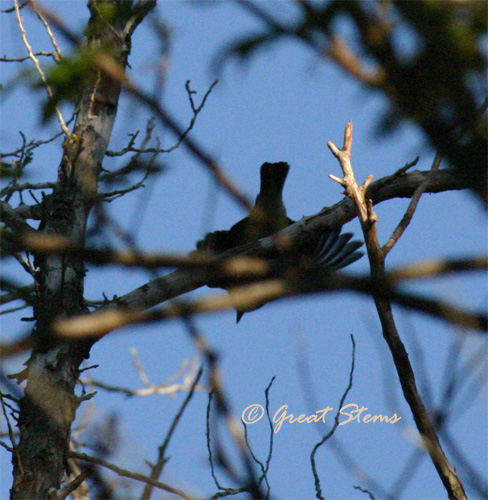
As hard as it was to find the birds, even with binoculars, it was even harder to get a picture with the camera. Here is the only evidence I have of the Black-Throated Green Warbler we saw — it moved just as I got into position to get a photo:
This next pitiful picture hides a Yellow Warbler. See it?
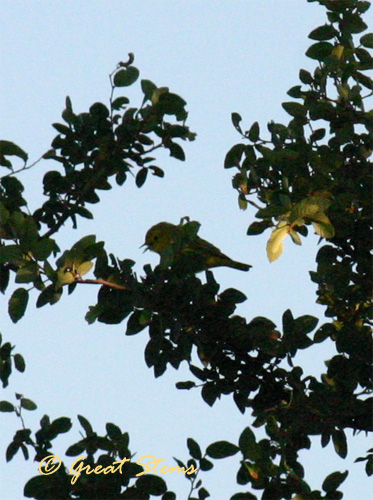
Alas. At least the nearby flowers cooperated. You know me, I couldn’t help but appreciate the beauty of the flowers while I listened to the birds.
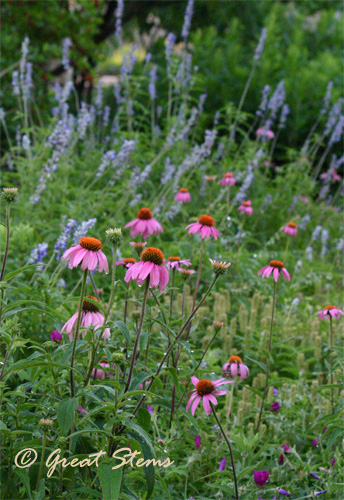
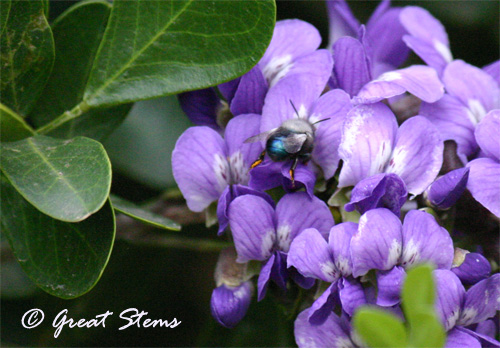
Above, the ever-beautiful Purple Coneflowers commanded attention from their blue backdrop of Mealy Blue Sage, and below, a bee took a pollen bath in a Winecup.
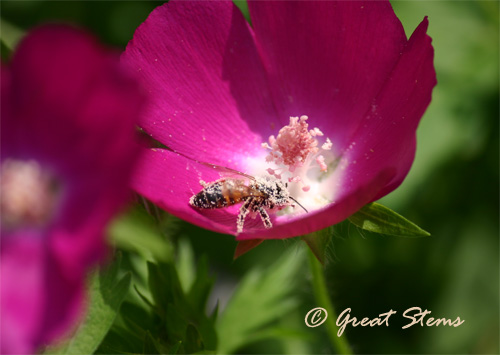
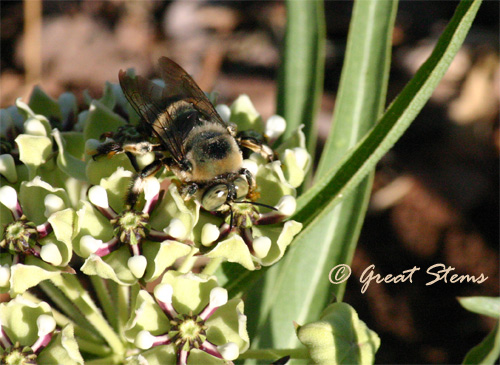
A Carpenter Bee took a rest on Antelope Horn Milkweed.
 But I digress.
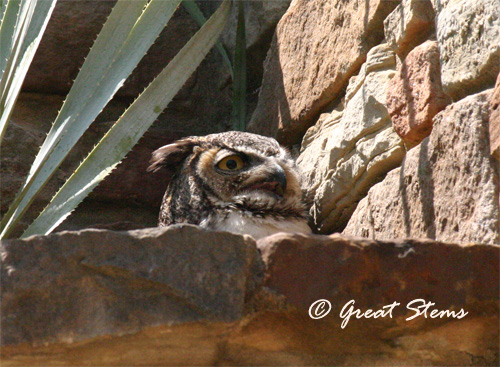
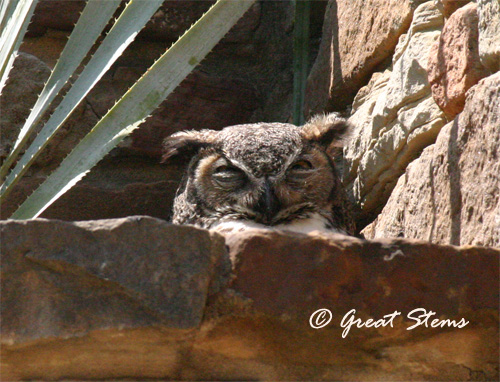
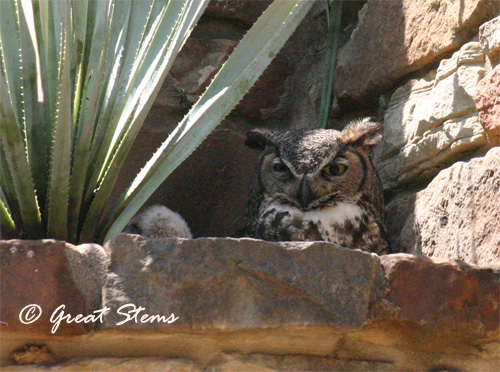
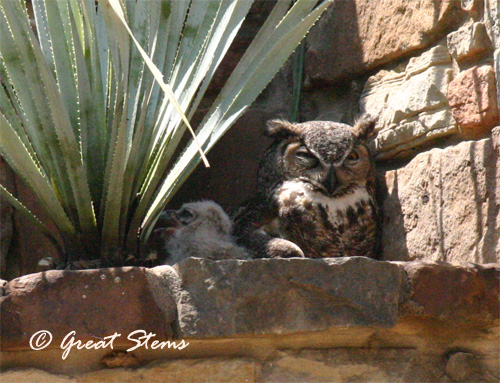
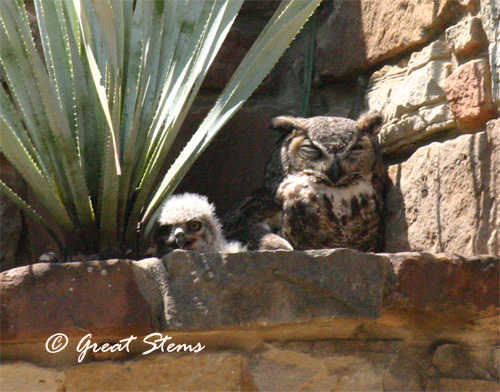
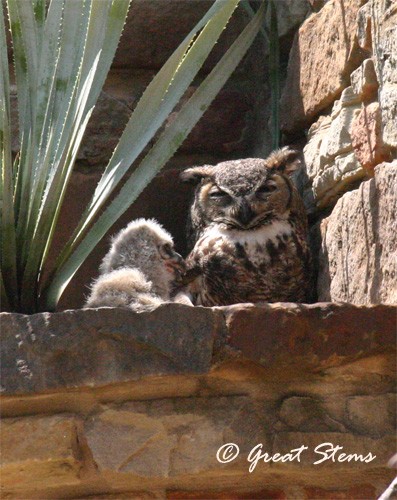
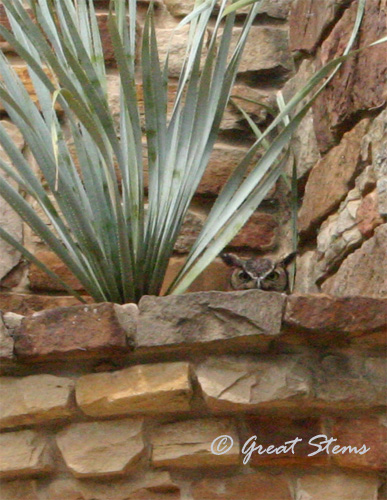
The Great Horned Owlets continue to do well, and we took a few moments to visit them, being cautious not to linger too long.
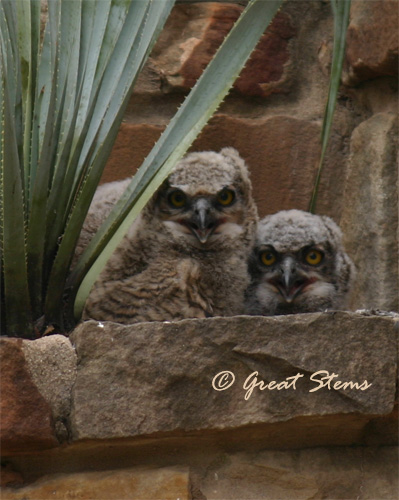 There are three of them, but the prime hiding spot is behind the sotol, so capturing a picture of all three at once was a challenge. I felt lucky to get “the eye” of the third.
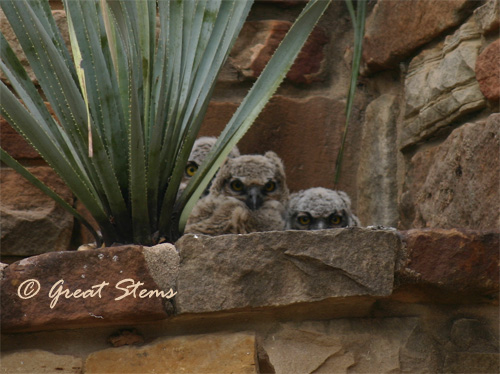 I’m cheating here — the above images and the one below I actually took two days ago during another visit to the Center — look how big the owls are growing. I think the one standing tall in the image below might actually be the youngest baby — see how the others are farther developed in their plumage? The Center’s staff is keeping an extra watch on it.
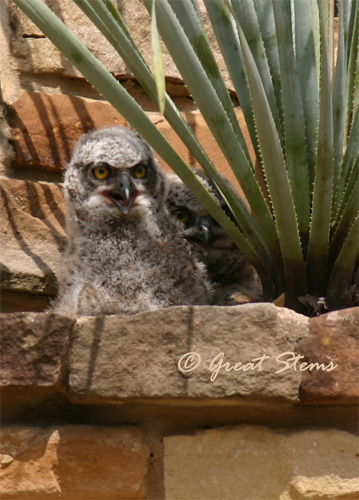 Now take a look at the owls this morning. With the cooler temperature, they were fluffed up, but what a difference in plumage two days can make.
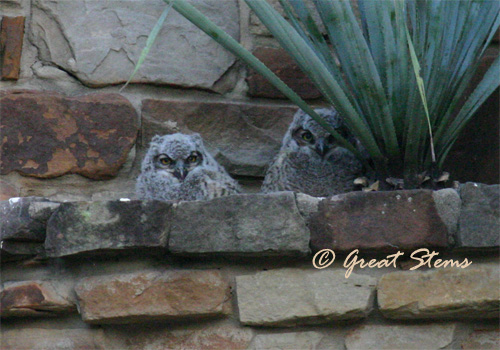
We didn’t see Mama Owl (or Papa Owl, for that matter), but I’m sure she was watching us from afar. She no longer stays in the nest with her babies — they are so big! — but she continues to feed them during off hours.
As for Painted Buntings, we heard several but only saw a couple from quite far away. They just didn’t care to let us get close. This very-zoomed-in photo, my friends, is the best I have to show you.
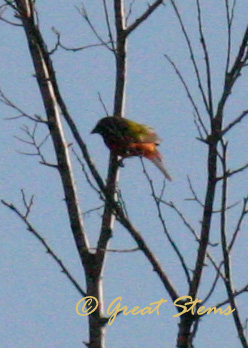 But we saw them — that’s what counts!


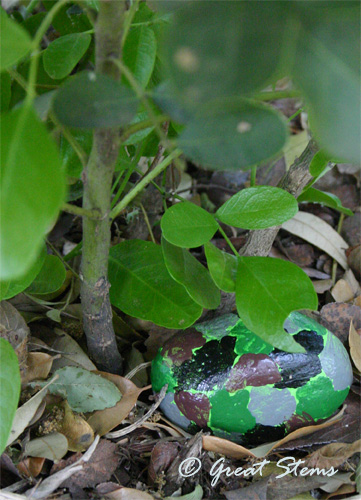
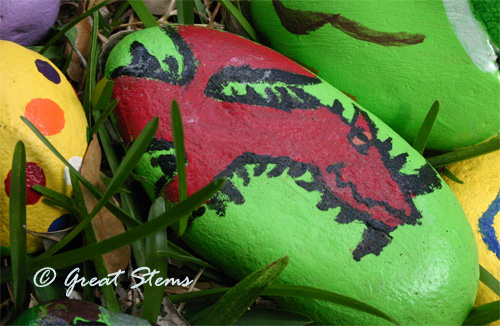
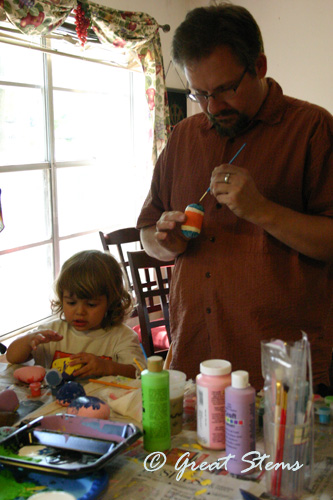
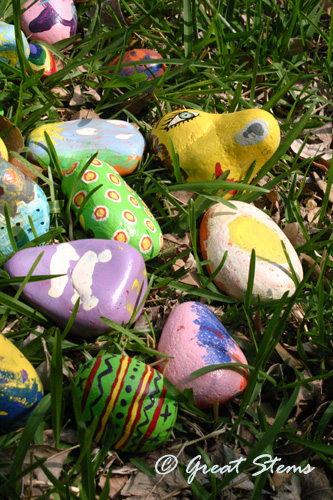
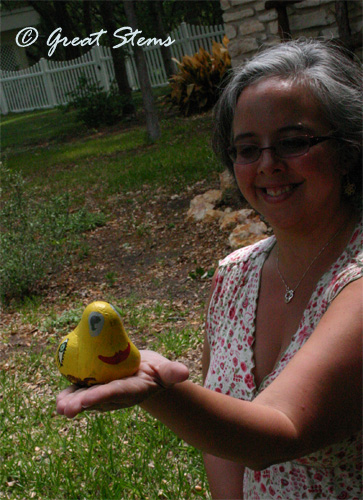
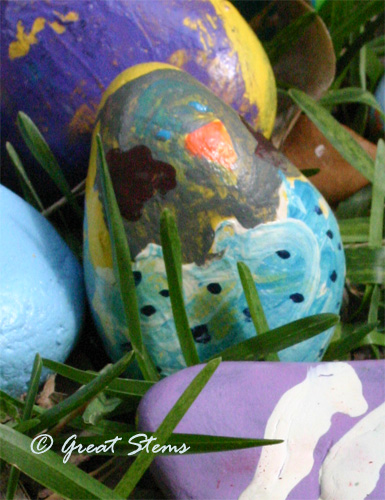
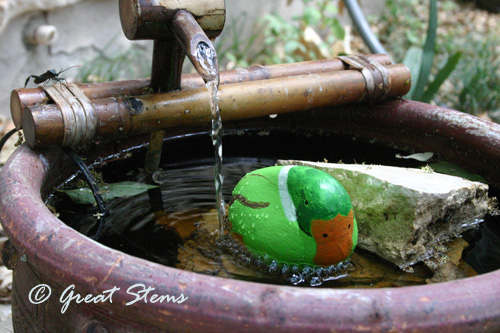
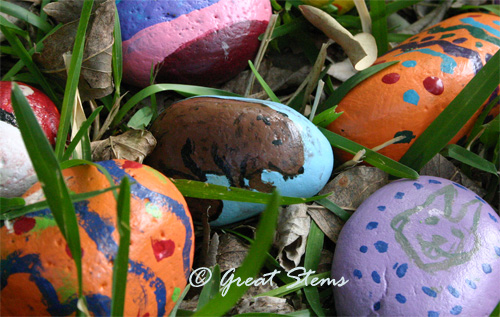
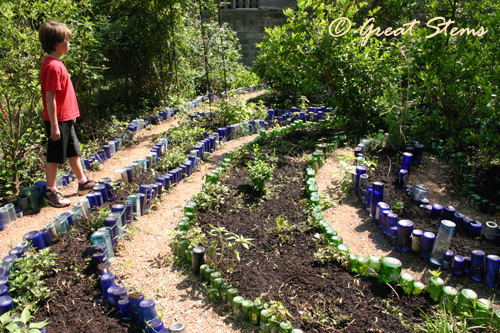
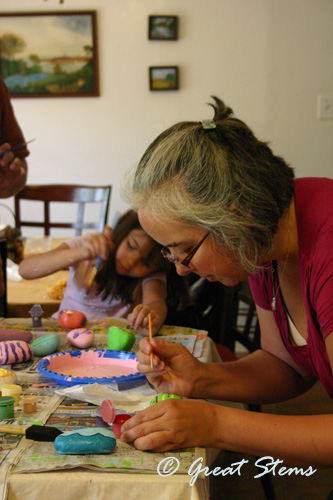 Between our two families, we painted 77 rocks. That’s only a mere bucketful, mind you!



 As many know, native plants and wildlife gardening are my passion. But I do more than garden — I lead multiple environmental projects, I volunteer often, and I speak about wildlife habitats and native flora to groups of all ages. I do this because I believe that we can make things better for Earth and protect its threatened species. Education is the first step, and actions are the next. That’s why I share what I can, because believe it or not, it’s easy to live sustainably and protect the environment — it just takes awareness and a desire.
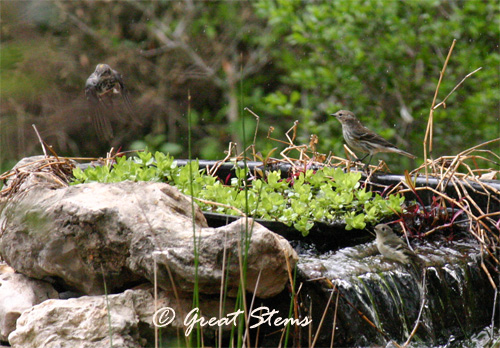
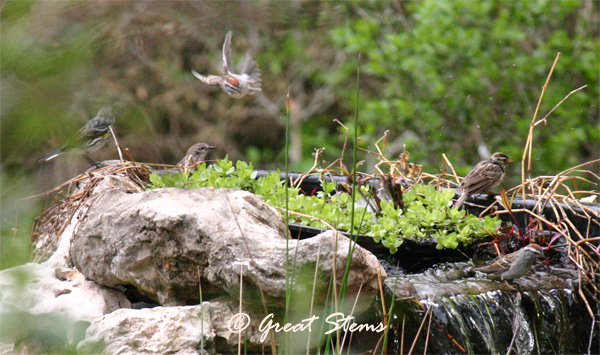
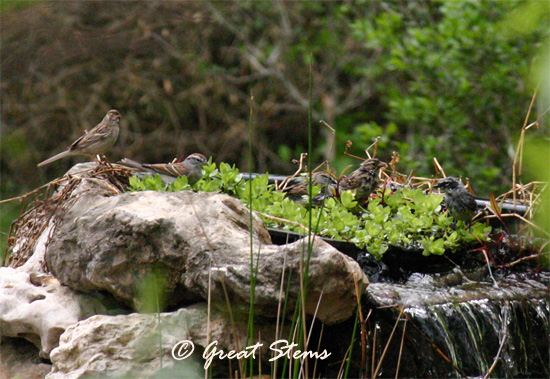
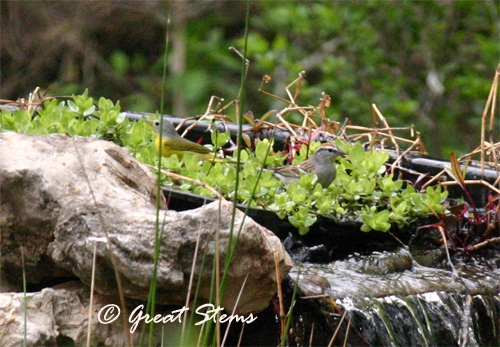
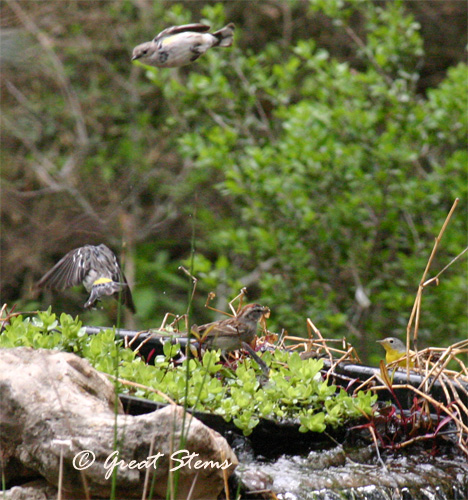
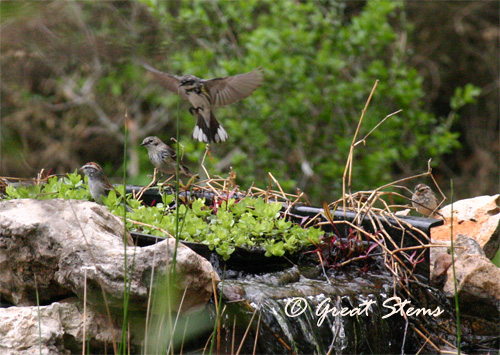 The flock was only here but briefly, but those few minutes made us so happy that we had a waterfall to offer them.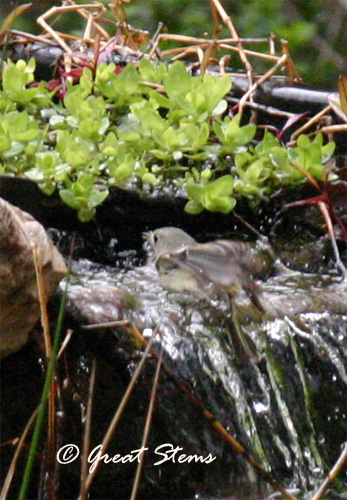
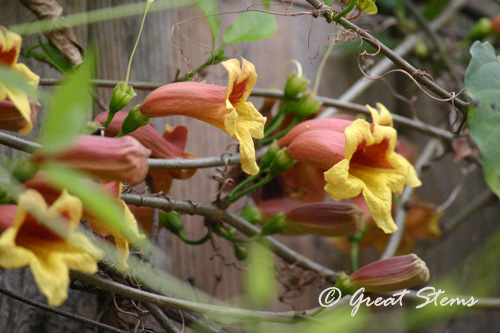
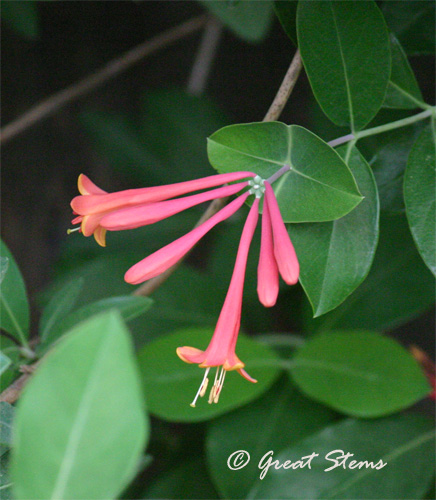 The vines are all abloom, and those that aren’t yet are at least exhibiting major growth spurts. The Coral Honeysuckle is becoming a bit of an octopus — I keep trying to train it to go over the fence, and it keeps sending out more arms to reach for the pathway instead.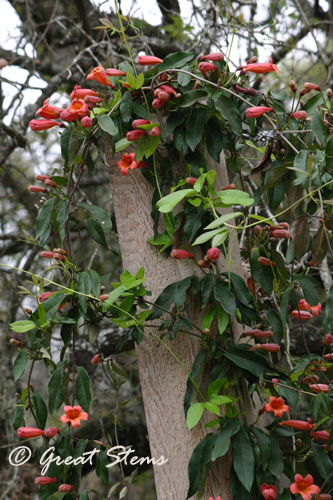
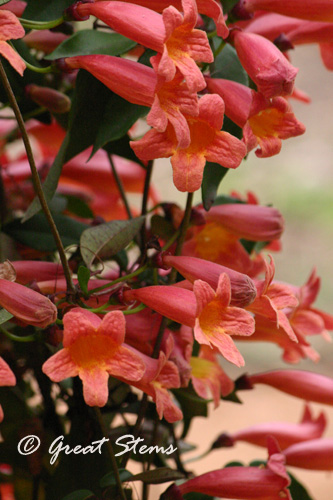 Even though it’s considered a hummingbird vine, I have yet to see one of our hummingbirds visit a crossvine bloom — they go to other plants or the feeders instead. But the bees sure went crazy for the Crossvine this year, so it must have plenty of nectar! Those finicky hummingbirds…
 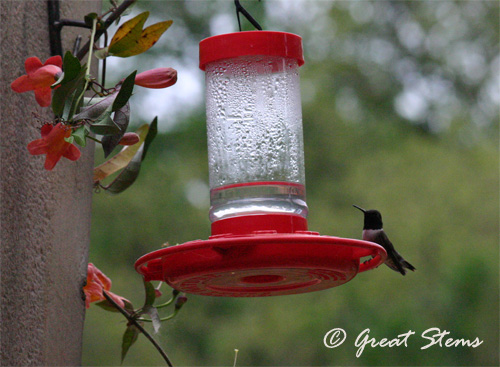 So far we’ve had male black-chinned hummingbirds this year — I’m sure they are awaiting the arrival of the females even more than we are. I wonder why I haven’t seen any Ruby-Throats yet — they are our usual visitors.