 Continuing with the story about our Florida trip, Destination Everglades, we couldn’t help but fall in love with the Anhinga Trail, located near the Royal Palm Visitor Center, which is a few miles from the Ernest Coe entrance to the national park. The trail consists of a short boardwalk over a sawgrass marsh, where an abundance of alligators, turtles, snakes, and countless species of birds feed and nest.This trail is the must-see spot if you only have time for a short visit to the Everglades. I also recommend that if you can, stay until dusk.
Although we visited the Anhinga Trail on two different days, I’m going to combine images here.
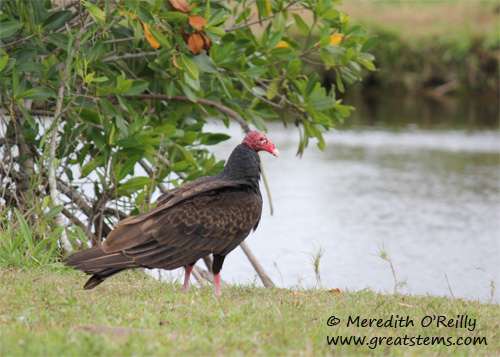
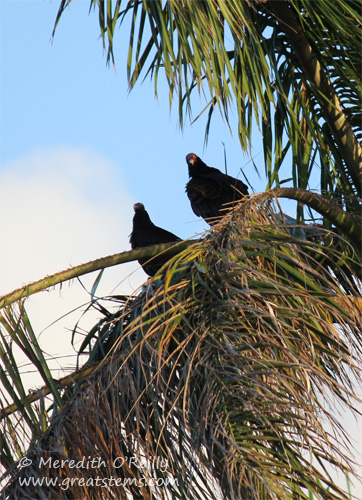 If the vultures that greet you as you arrive seem ominous, there’s a reason for it, but it’s not what you might think. I’ll explain in my next post — yes, more suspense!
I wasn’t so clever as to get an overall shot of the boardwalk itself, as I couldn’t draw my eyes away from the plentiful fauna.
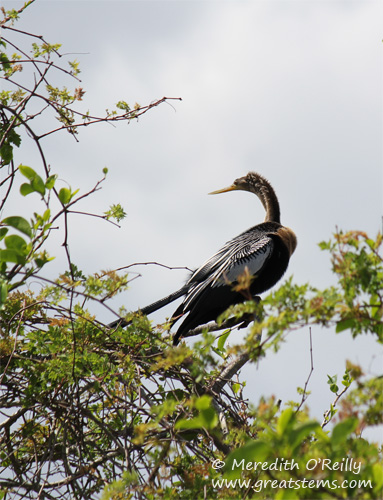 Anhinga
The popular trail is named after this bird, a diving and swimming bird called the Anhinga.
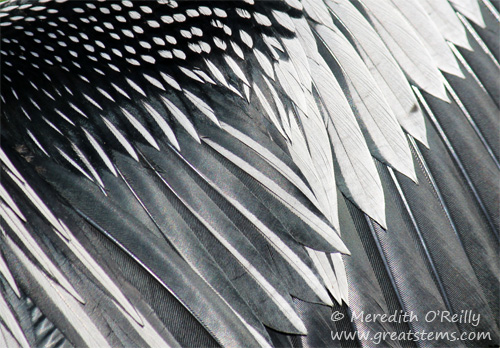 The Anhinga typically swims with most of its body submerged and only its neck and head above water, but it can also dive under the surface to search for fish. It is unable to use oil to waterproof its feathers the way ducks do, and as a result the feathers become waterlogged when it swims.
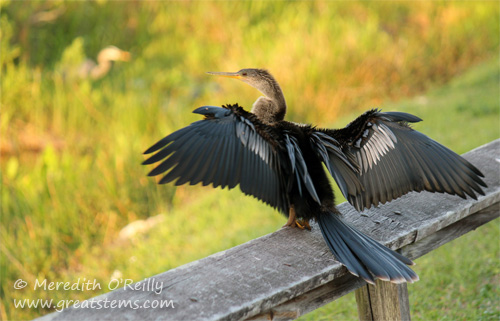 This is why Anhingas are often seen with outstretched wings drying in the sun.
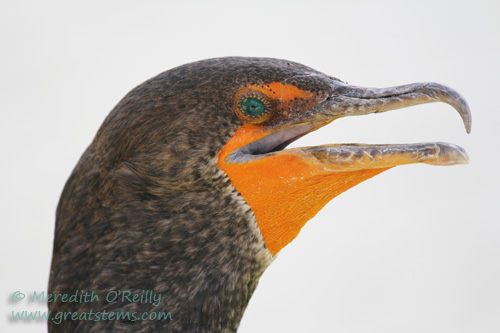 Double-crested cormorant, above and below
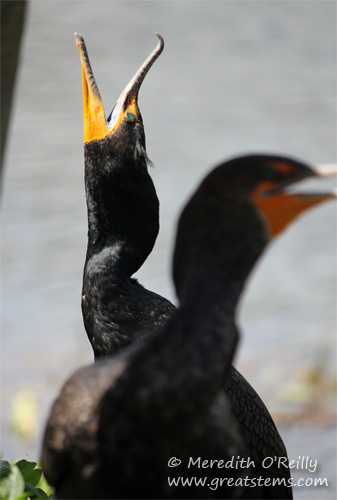 Another great underwater swimmer is the Double-Crested Cormorant, shown above. I got a glimpse of one swimming below the surface, but alas, I was too mesmerized to take a picture. Like the Anhinga, the cormorant often stretches out its non-waterproof wings in order to dry them.
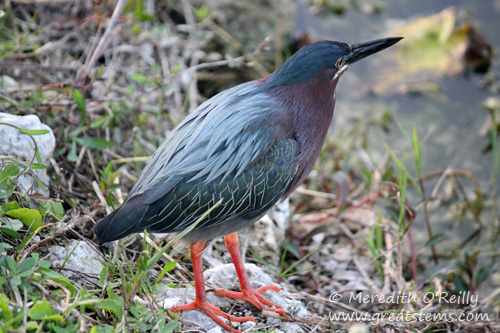
Green Heron
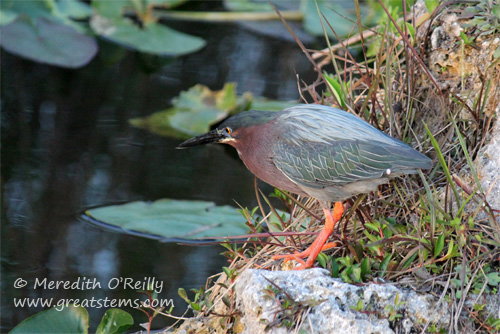
I think my favorite Everglades bird, if I were forced to pick one, was the Green Heron. The muted earthy colors of this gorgeous bird really aren’t well represented by the words “Green Heron.” The feathers were so uniquely stunning, I didn’t even realize how brightly orange the heron’s legs were until I got home to the computer. But I was just as fascinated by the way it stalked its food, crouching down low to study the water for any slight movement and being ready to quickly nab its prey.
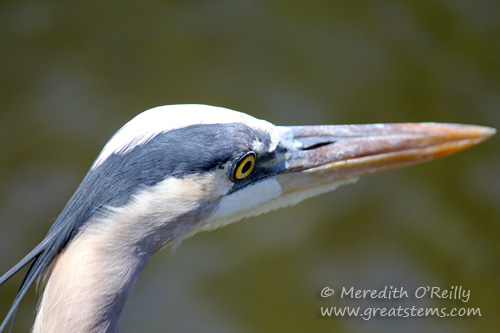
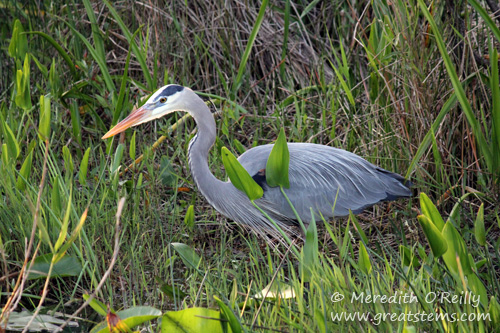
Great Blue Heron (also seen at top of post)
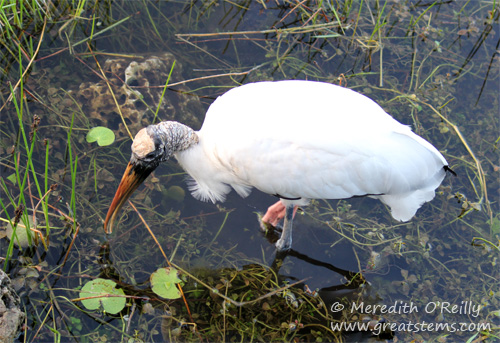
Wood Stork (Endangered)
During our first visit to the Anhinga Trail, an endangered Wood Stork graced us with its presence. The animals along the trail are remarkably complacent, and the Wood Stork was no exception. Off in the distance, we could see three more in a tree.
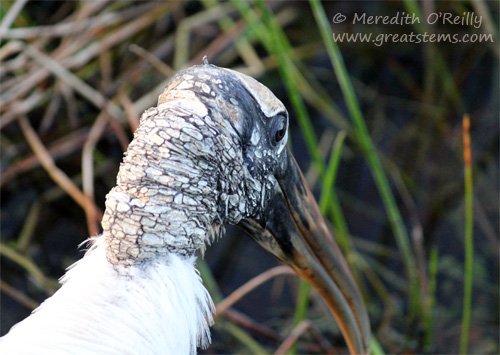 I was surprised at how many people considered this bird unattractive. I found the lack of head feathers simply that which makes it unique. Baldness can be quite a sexy feature, you know. (Side note: For the record, I was totally Team Picard, not Team Ryker.)
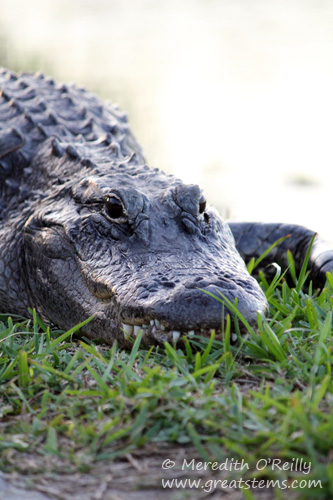
Of course there were plenty of American Alligators, big and small.
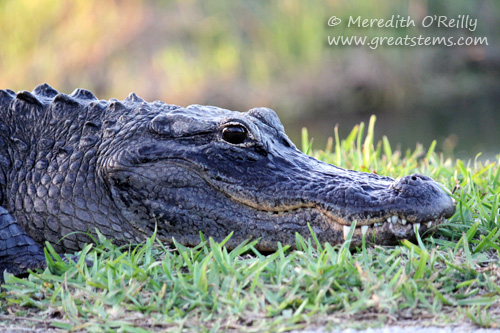 We were even witness to the stealthy attack one made on a bird that was preening in the water. Poor bird. Happy alligator.
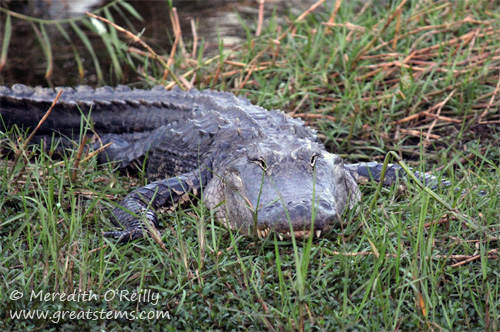 It wasn’t this large alligator, which didn’t move… at… all. I suspect, given its size, that at other times it moves quite fast.
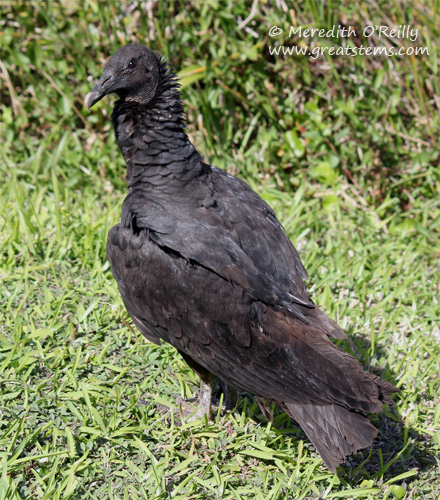
Black Vulture
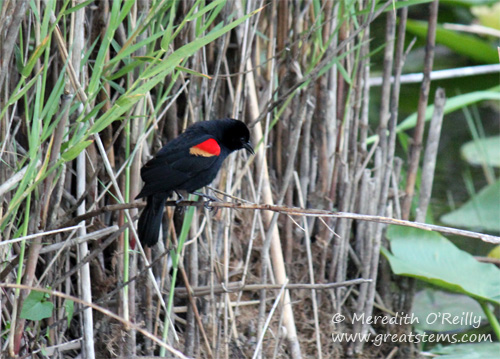
Red-Winged Blackbird
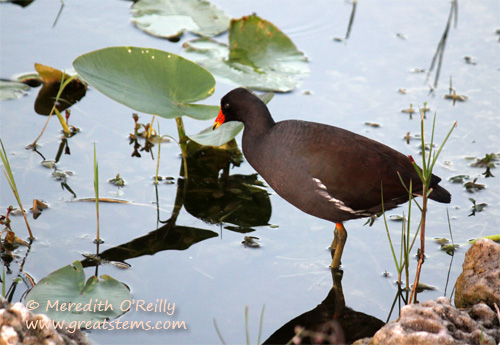 Common Moorhen
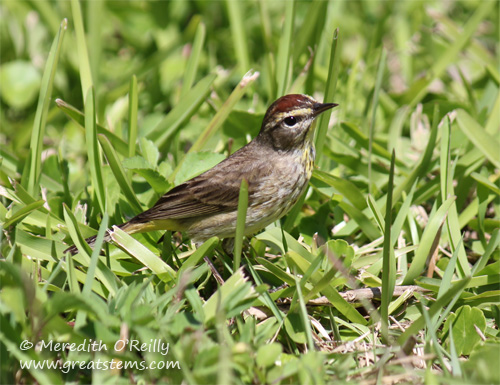
Palm Warbler
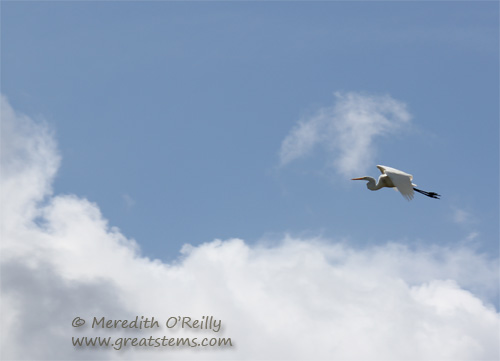
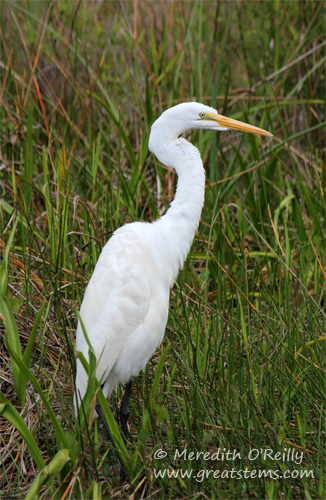
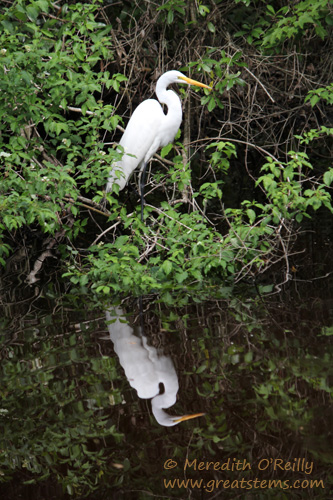
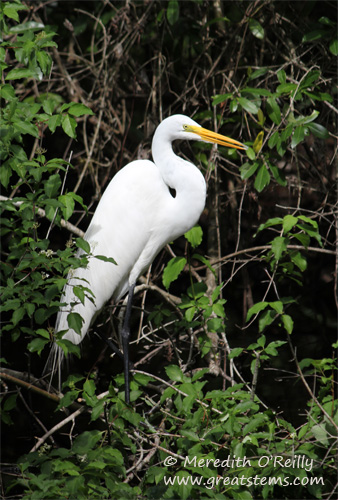
Great Egret, above and below
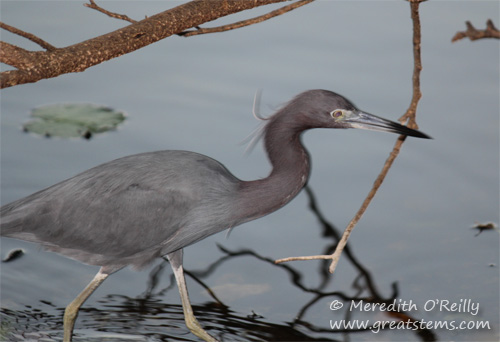 Little Blue Heron
We saw lots of other birds, including Tricolored Herons, ibises, sparrows, and several that I’m still trying to accurately identify.
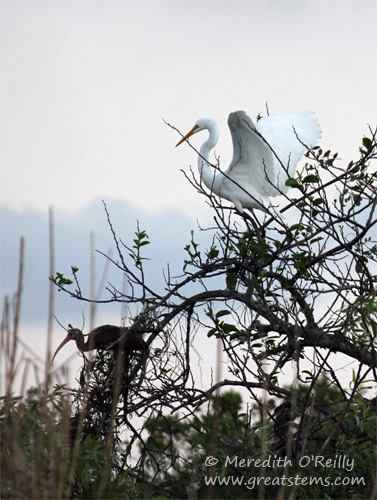
As the sky darken, birds came in to roost, like the White Ibis (juvenile) and Great Egret above. Parents settled in with their younglings in their nests, and multiple species decorated the trees like ornaments.
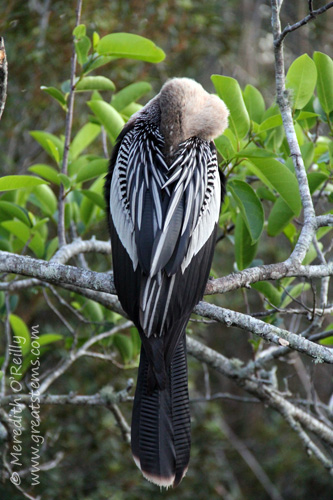
Sleeping Anhinga
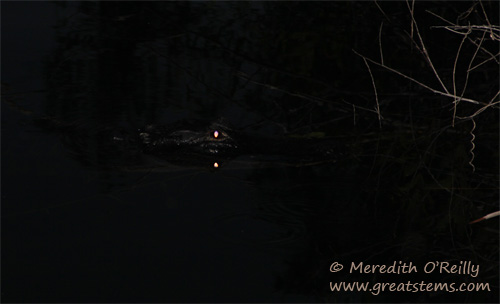 As it got dark, I took one final picture for the evening — I wanted to see the eyes of an alligator on the water. I was rewarded with the reflection, as well!
Next tale to come, our canoe trip at 9-Mile Pond!
 North of the Everglades is Big Cypress National Preserve, 729,000 acres that include a variety of habitat types — swamps, hardwood hammocks, pinelands, mangrove forests, prairies, and marsh. Considered a buffer between development and the fragile Everglades, it is also an important watershed for the Everglades. The preserve is filled with some of the most diverse tropical and temperate flora and fauna found anywhere in North America. Unfortunately, being a preserve doesn’t fully protect it — off-road vehicles, hunting, trapping, and even oil drilling can be found in places within the preserve — but overall it is a beautiful and valuable wildlife haven that is home to countless animal species, including the endangered Florida Panther and the threatened American Black Bear.
 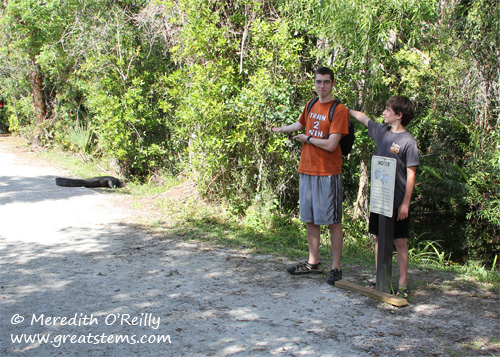 Walking toward the boardwalk, we encountered the first of many wildlife sightings along the trail.
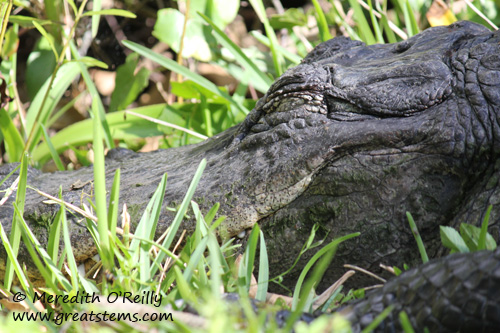 Since I was uncertain whether I’d have a chance for another great photo opportunity, I took a lot of photos of this American Alligator, especially because she was sleeping (until she was not… that story follows).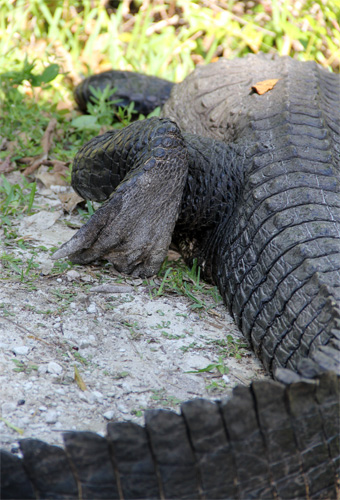
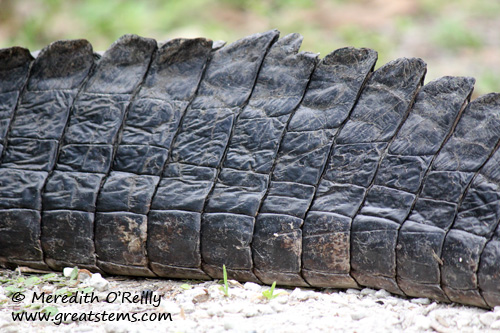 I’m utterly fascinated by crocodilian skin (alligators are part of the Crocodilia family). Of course, these images also bring to mind some of the longterm Floridian residents I saw at the beach. Their skin, damaged from decades of spending time in the sun, had wrinkles much like those you see here on this reptile. I find reptilian skin beautiful — wrinkled, sun-damaged human skin not so much.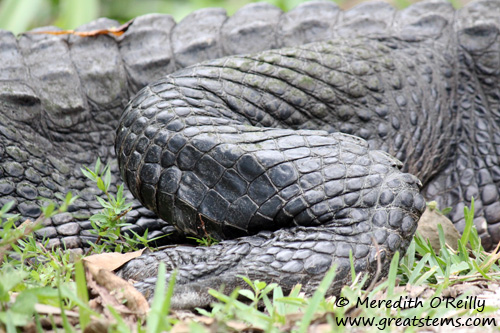
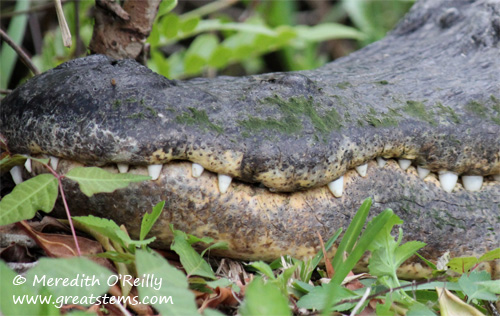 Those visible upper teeth are one way to tell an American Alligator from an American Crocodile. The latter have more of a zippered jaw look to their mouth.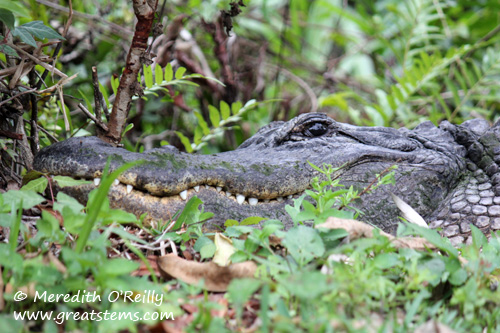
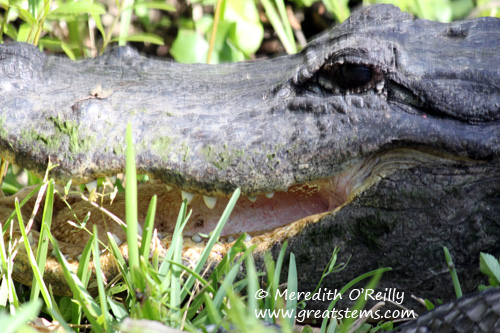
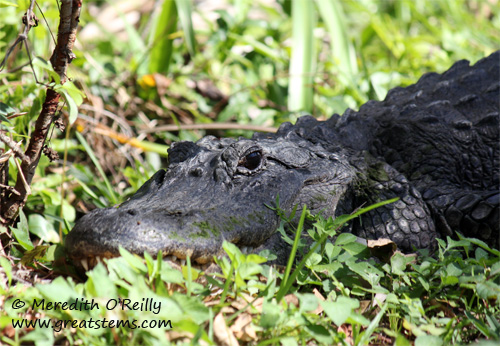
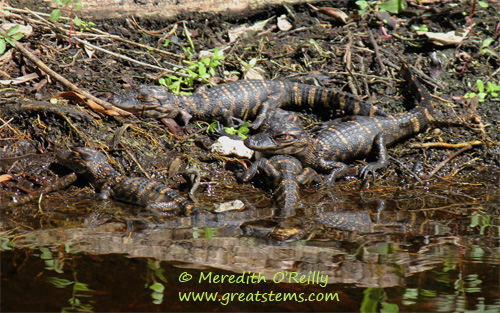 A little ways away was a little ‘gator pond of sorts. Across the pond were 6-month old alligators snoozing by the water’s edge. There were nine in all, apparently, but I could only see seven that day — the image shows four of them. I don’t know whether the big alligator on the trail was their Mama, but I called her that. Or maybe I called him that.
 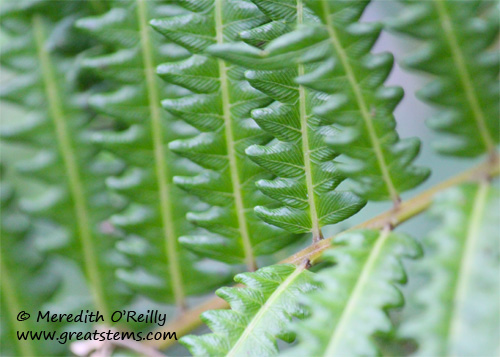 The boardwalk led us along swampier portions of the trail, with beautiful and unusual plant life, lots of ferns, and even a giant Bald Eagle nest that has been in yearly use since 1991.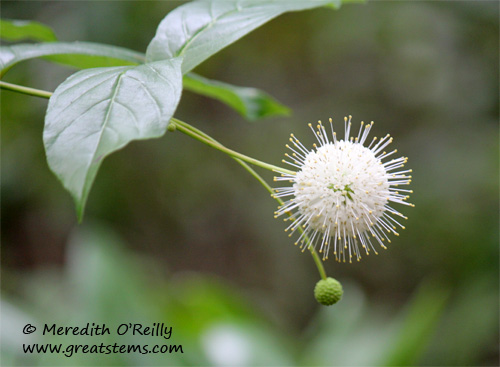
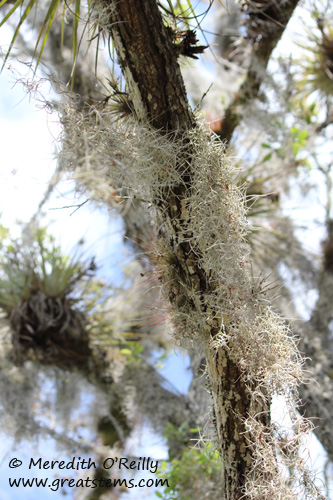
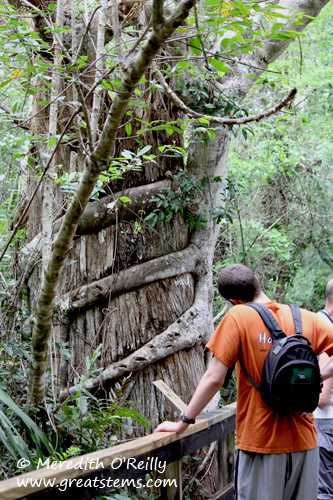 Another type of air plant that in time can cause the decline of a host tree is the Strangler Fig, and we saw examples of it along the Big Cypress path. Though it looks at first like a vine, it is actually a tree.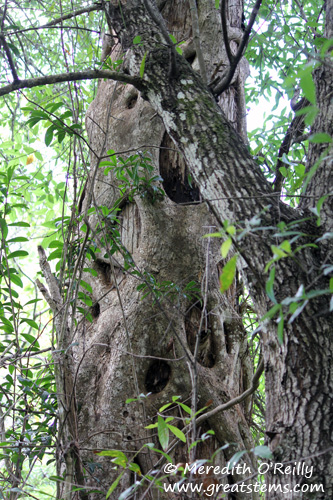
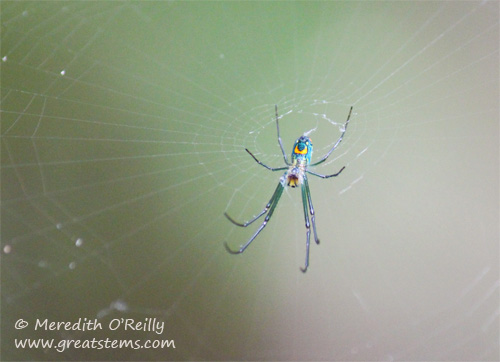
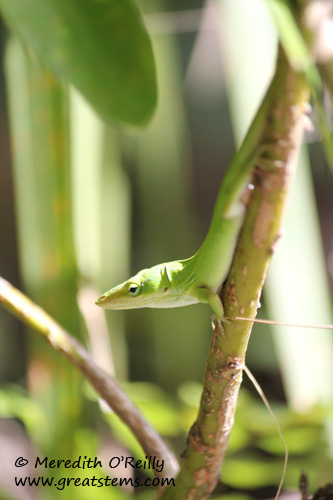
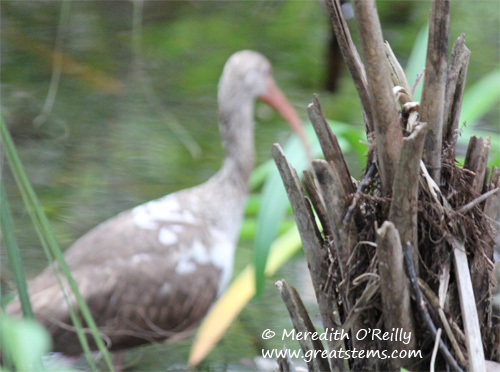
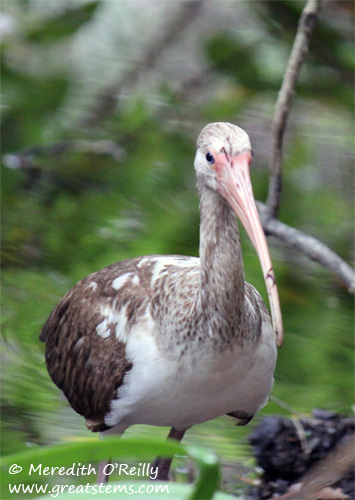 Specifically the bird is an immature White Ibis — in time almost all of its feathers will be completely white.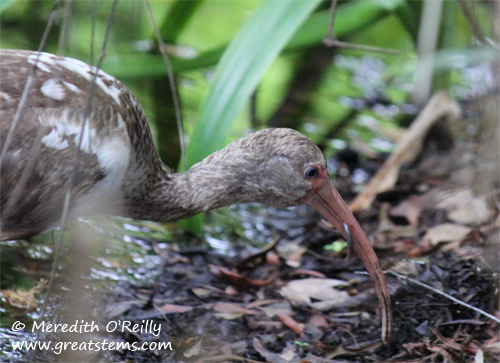
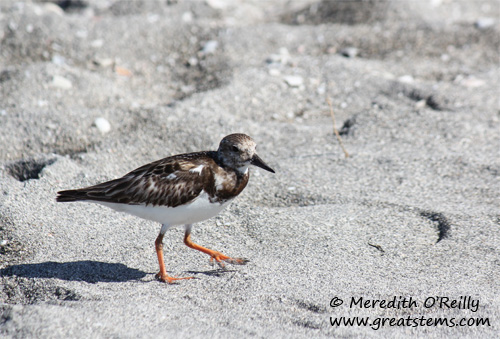
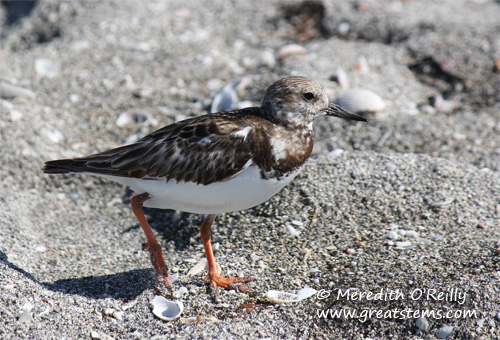
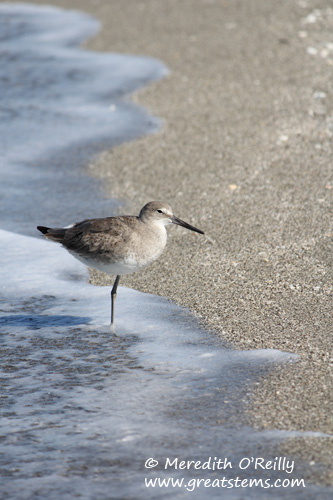 Continuing our journey south through Florida, we started our day with a trip to Turtle Beach, near Sarasota. Blue waters, near pristine yet gritty sand, plentiful birds, and few people — our kind of beach. Just down the road was the more popular white-sanded Siesta Key Beach, but we opted to avoid that, especially since all we wanted was a quiet walk along the water and not a lengthy stay in the sun.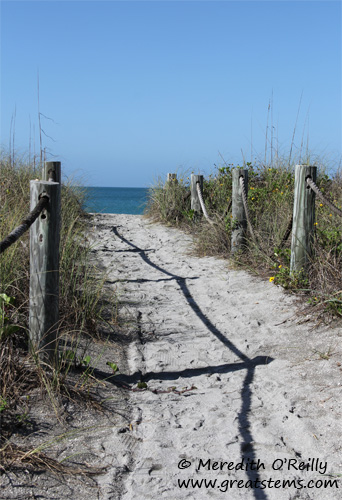
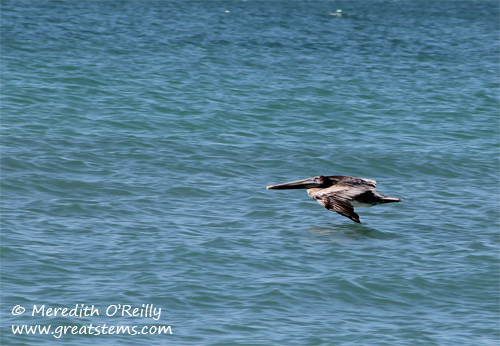 The waters were stunningly blue.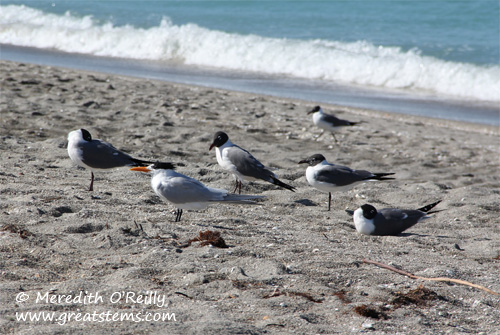
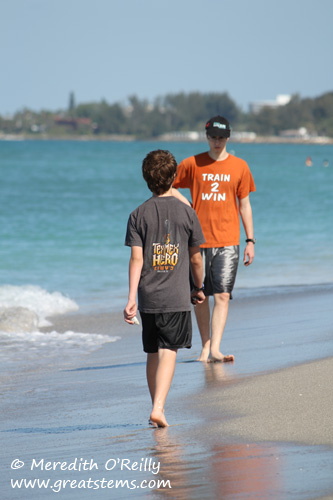 The water was cool and refreshing, and while the sand might not have been what one would consider soft, it was quite comfortable to walk on.
 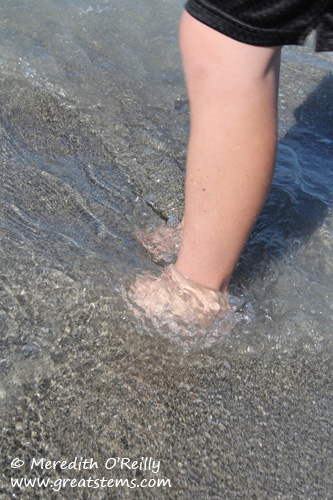 We left our flip-flops on the shore and walked barefoot for a good distance, looking for small shells and feeling the sand between our toes. It felt oh so good.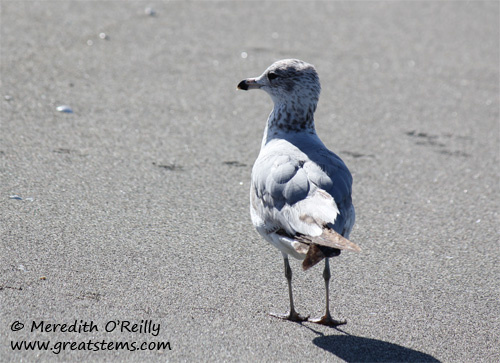
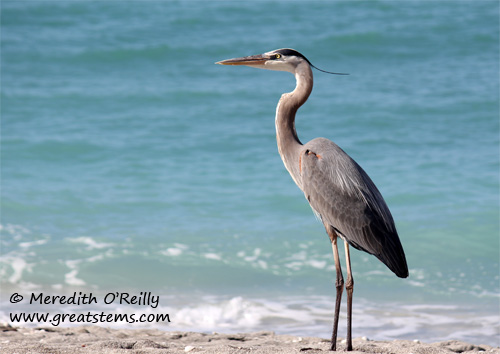
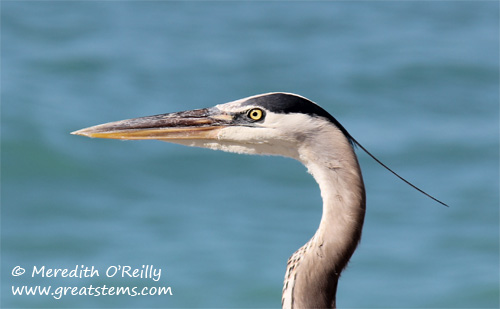
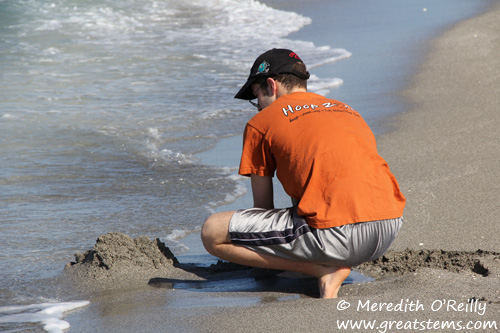 The sand wasn’t good for castles, of course, but it was good for digging.
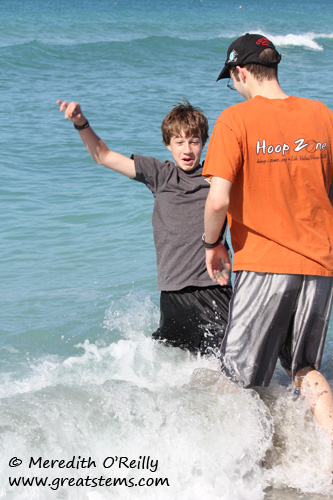 Just barely into the water, the level dips down quite a bit, and the undertow is immediately apparent. Add to that a brother ready to push you in, and you’ve got a wet splash in the making.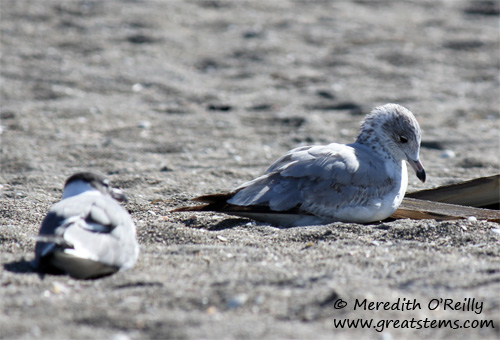
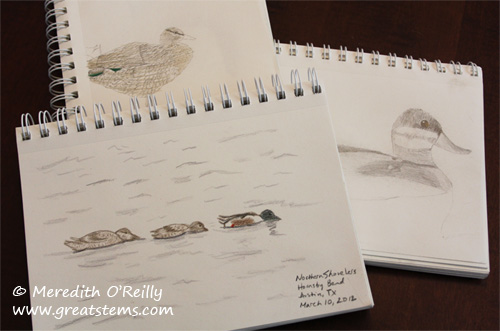
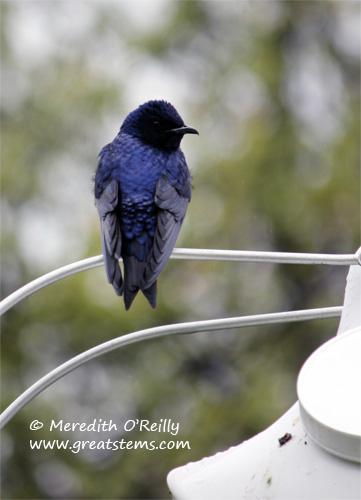 We actually set out from Austin’s own Hornsby Bend, where the CAMN class and I were having an afternoon of birding, and the boys joined in for the fun. Not just birding, mind you, but birding in the rain. This is how you encourage resolve and determine determination — and prove to your kids that they won’t melt in the rain. It was chilly, too — see how the male Purple Martin has fluffed up his beautiful iridescent feathers?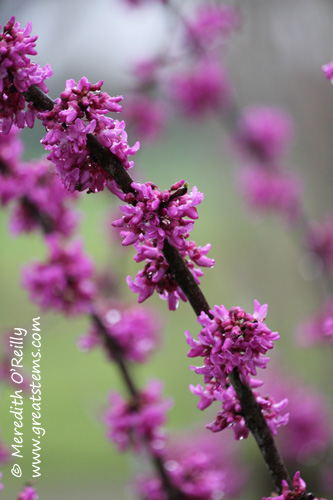
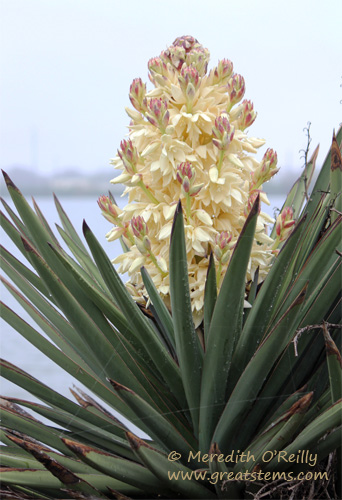 The dreary weather meant that I didn’t take many pictures that afternoon, but I couldn’t resist the lovely blooms of this yucca. Dreary, by the way, is one of my favorite words, not because of what it means but because of how it feels to roll the word off your tongue. Say it with me now: dreary. Dreary.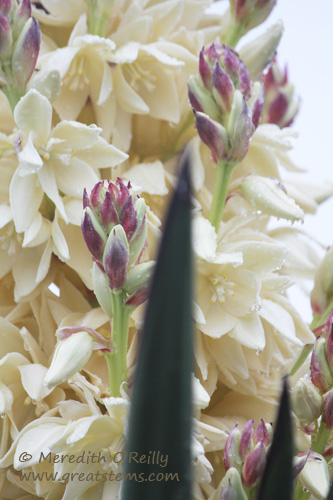
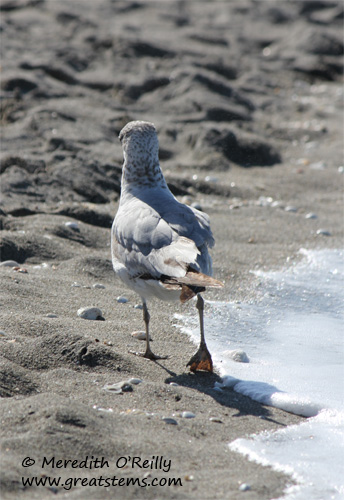
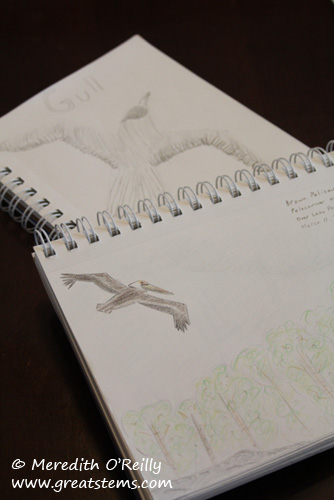 We spotted the first pelican of the trip as we crossed over Lake Pontchartrain, and gulls were plentiful, as well.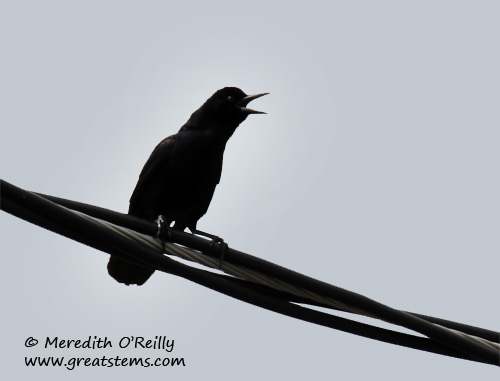
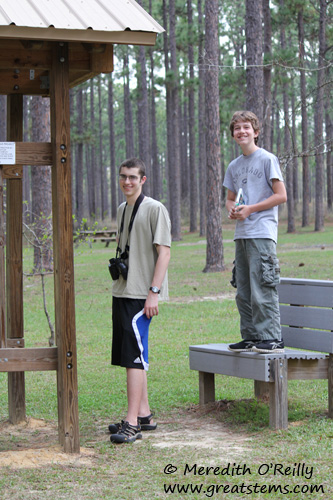 For our afternoon adventure in northwestern Florida, we stopped at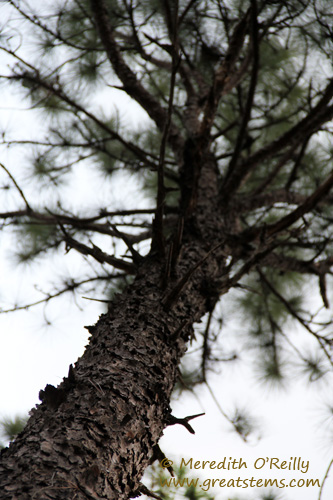
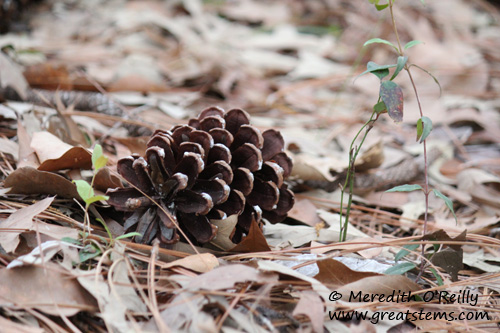
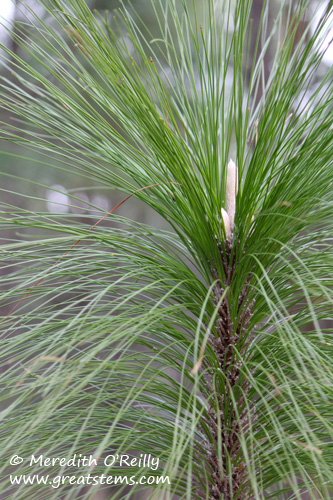
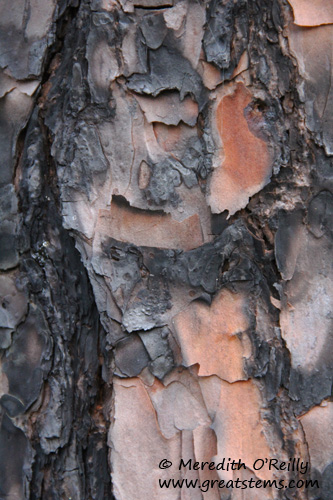 In order to protect the pine forest ecosystem, the park staff and volunteers work to control invasive plants and provide educational signs about native plants along the trails. They also regularly perform controlled burns, following nature’s method of using fire to encourage plant diversity and limit overgrowth.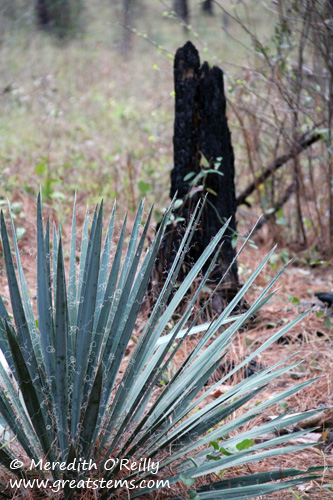
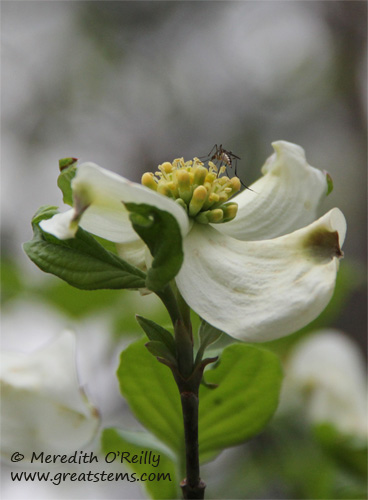
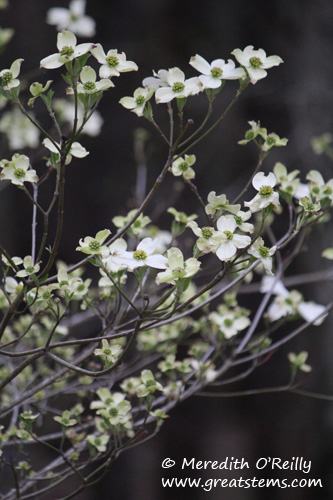 Understory plants like Flowering Dogwood, Redbuds, Buckeyes, and more have the chance to grow.
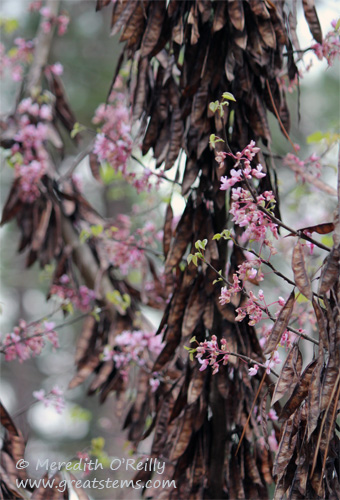 Compared to the Redbud we saw at Hornsby Bend (scroll back up to see the image), this one at Falling Waters was loaded with more seed pods than I have ever seen.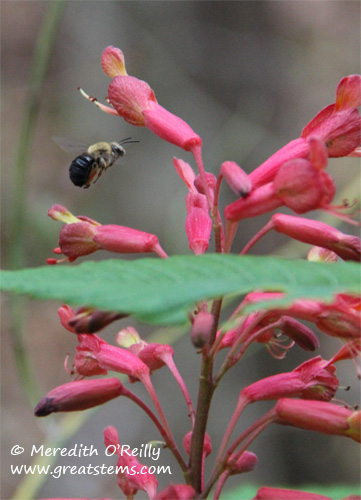

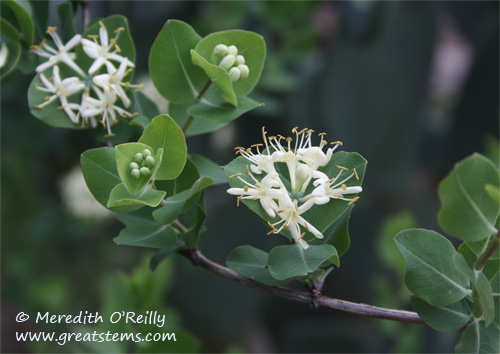
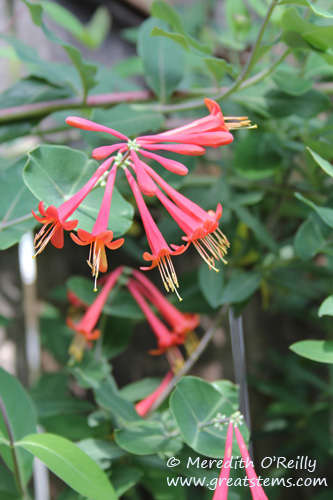
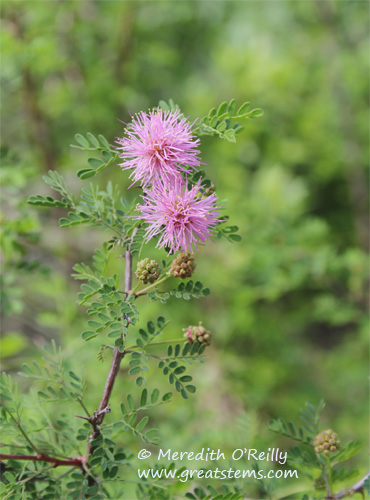
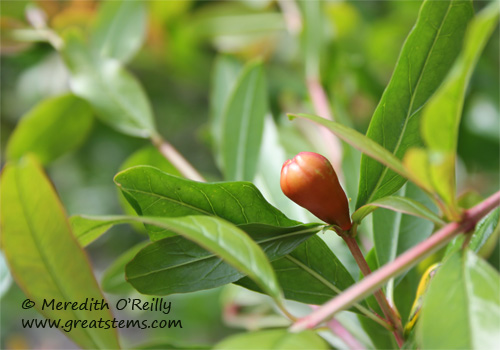
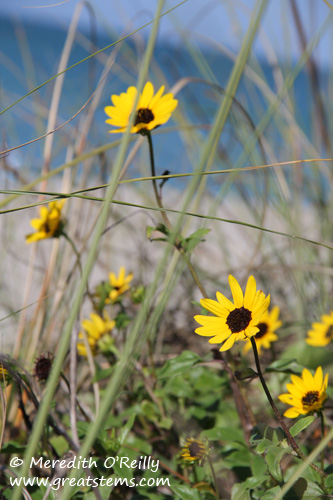
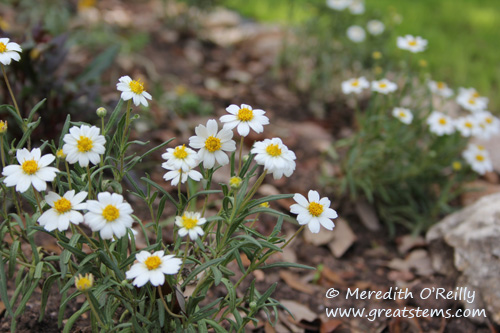 What about the Blackfoot Daisies, twice as big as when I planted them before our trip?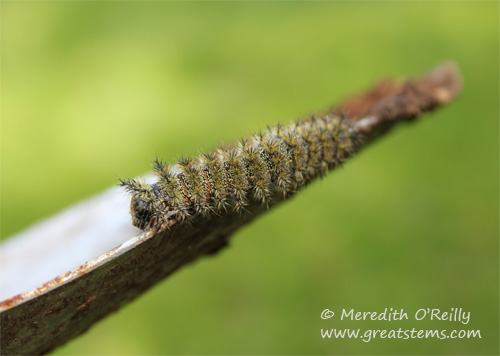
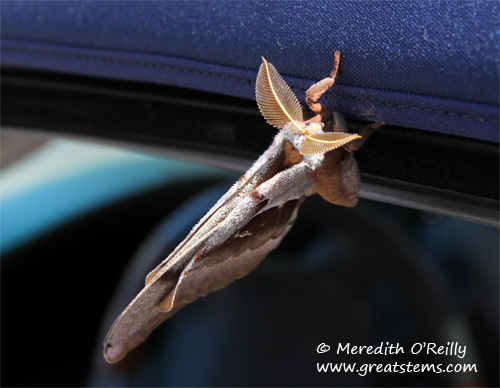 As we were getting ready to leave, my husband called me over to see a creature hanging upside-down from the car of a volunteer. It turned out to be a gorgeous Lepidopteran.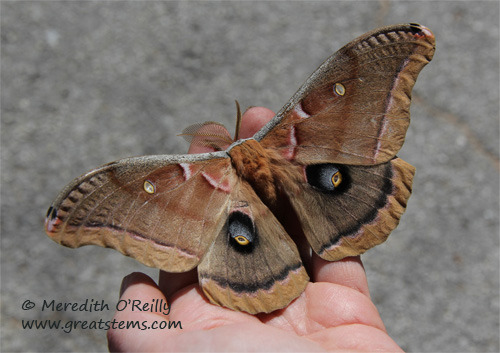
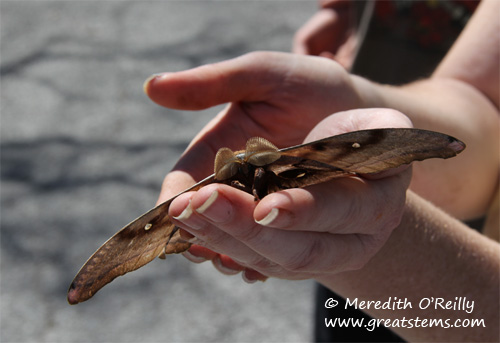 Polyphemus moths have an average wing span of about 6 inches. As adults, they also have reduced mouth parts, meaning that they can’t eat, so they have one job to focus on: reproduction. The feathery antennae of the males are used to detect the scent of unmated females. Whether the antennae also make the male moths look sexy to females, I cannot attest. But for this female, I think they look pretty cool. Not getting to eat means something else — the moths have a short lifespan of less than a week.
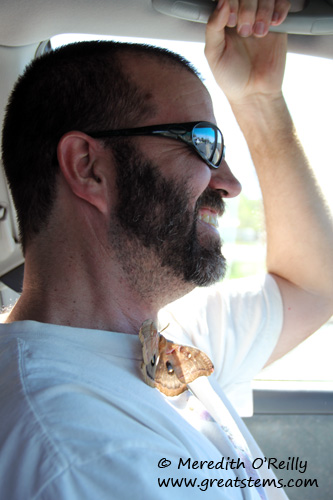 Perhaps because it was darker in the car, the moth came to life once we got moving on the road. By the time we were on the highway, it was fluttering all about, making for quite an interesting drive home. At one point, the Polyphemus moth decorated my husband as a bowtie.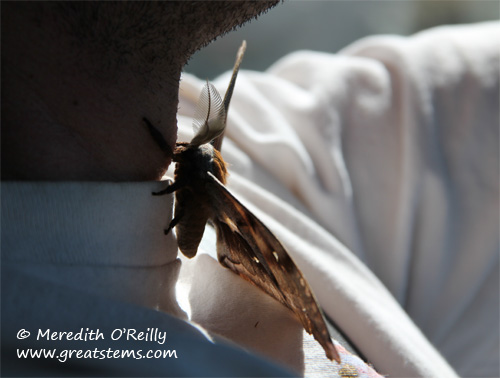
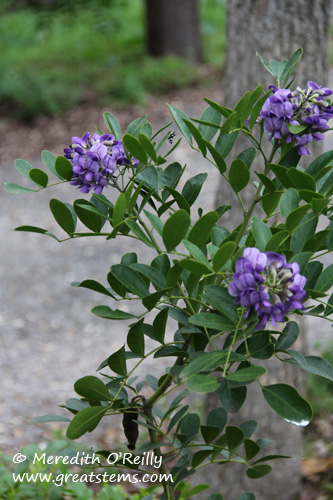
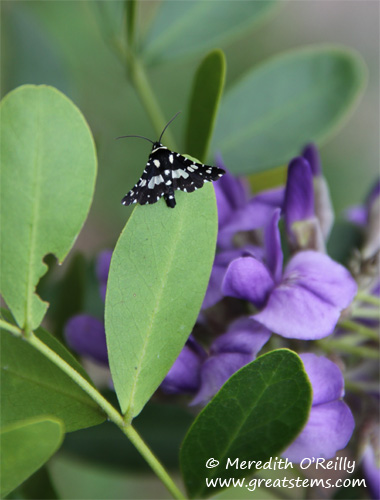
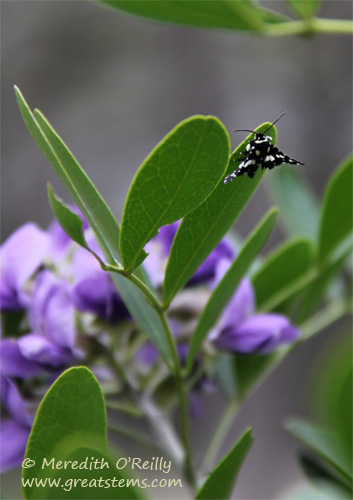 While I was out there admiring our happy little bloomer, I noticed this black-and-white Lepidopteran.