October 2009 Archives

Distinguishing Queens, Monarchs, and Others

| 18 Comments

The butterflies this fall have been utterly delightful. The number of species visiting our garden have been hard to count, but it's been fun trying. Monarchs, Skippers, Sulphurs, Swallowtails, big, little, striking, camouflaged -- you name it, we seem to have it. The Monarchs, always a happy presence, keep skipping off when I bring out the camera, usually because the dogs like to visit the garden when I do. But without a doubt this year the Queen butterflies have put on the biggest show, fluttering about, dancing with each other, visiting all the flowers in the garden, taking a rest, then going at it again.
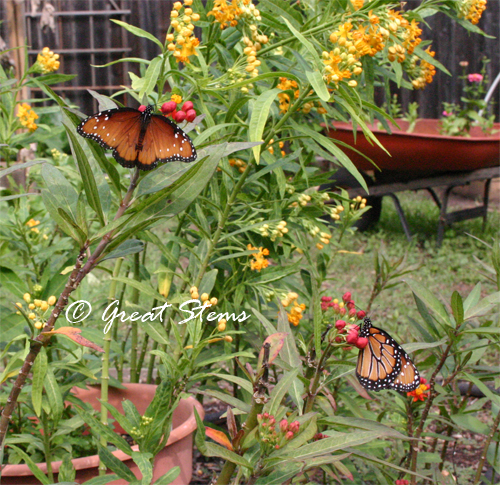
queens10-30-09.jpg

Queens, Monarchs, Viceroys, Soldiers -- these butterflies are very often mistaken for one another in the United States, so how does one tell them apart? The fact that they often follow similar regional migration paths certainly doesn't help.

The Queen butterfly (Danaus eresimus) and its lookalike cousins, the Monarch (Danaus plexippus) and the Soldier (Danaus eresimus) butterflies, are all from the same genus. They enjoy the same larval food, the poisonous Milkweed, which in turn makes all the butterflies unpleasant to predators, and their resemblance to one another helps protect all of them. The fourth lookalike is the Viceroy butterfly (Limenitis archippus), from a different genus. At a quick glance, to me, Soldiers and Queens look very much alike, and Monarchs and Viceroys are most similar to each other. But fortunately there are easy ways to distinguish them all.

But first, butterfly terms. It's important to know these when identifying or describing features on a butterfly. The four areas typically described are upperside, seen when the wings are opened; underside, or "side view" when the wings are upright; forewings (upper pair); and hindwings (lower pair).
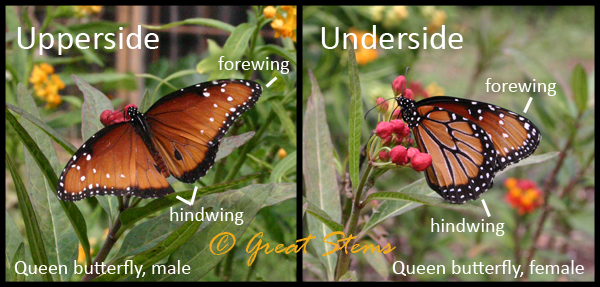
  butterflyterms10-30-09.jpgSo let's take a closer look at the Queen butterfly. From the underside, the most noticeable marker is the lack of black veins in the forewing; the Queen's are pale. The Queen also does not have a series of pale spots along the hindwing found in the similar Soldier butterfly (shown in link farther in post). 
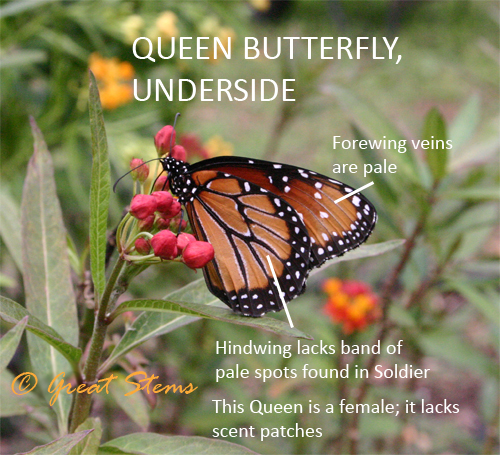
queenfemalea10-30-09.jpg

The upperside is also distinctive for the Queen, with its chestnut color and noticeable lack of black veins found in the other species.
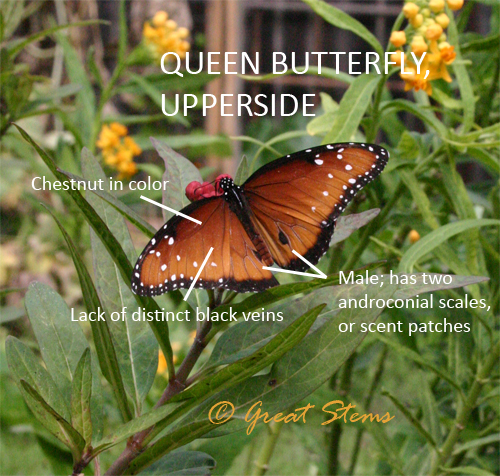
queenmalea10-30-09.jpg

Note in the above two photos that one is a female butterfly and the other is a male. The male Queen butterfly, as in many butterflies, has two scent patches called androconial scales, which distribute the pheromones it uses to attract the females. Here is an underside view of a male Queen.
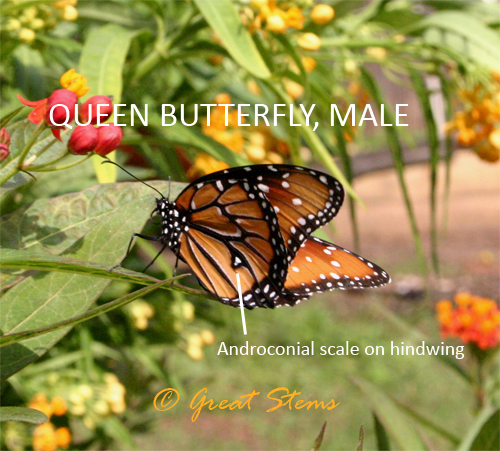
queenmalec10-30-09.jpgThe familiar Monarch butterfly is typically larger and more orange than the Queen butterfly.
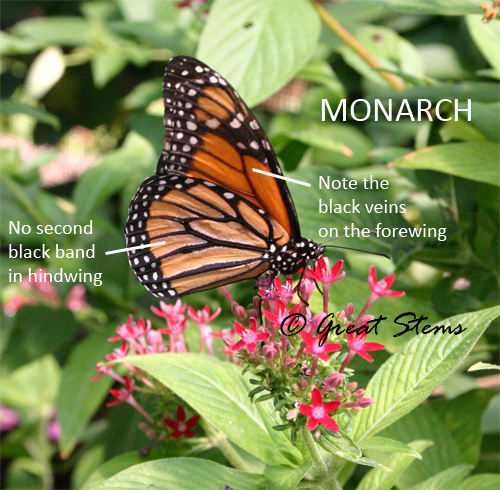
monarchc10-30-09.jpgThe upperside of a Monarch shows a wide black band along the edge of the forewing. The bold black veins on this Monarch indicate that it is a female; male monarchs have thinner black veins, along with their androconial spots. Monarchs lack a secondary black arc found on the hindwings of Viceroys.
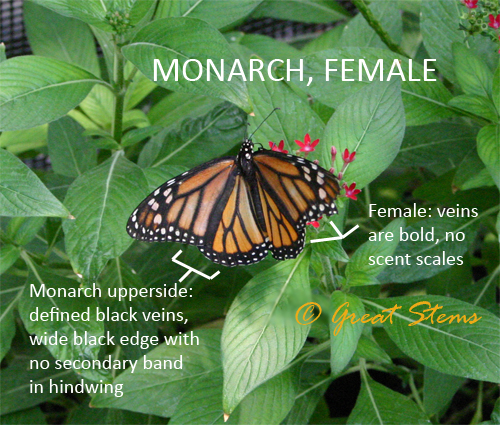
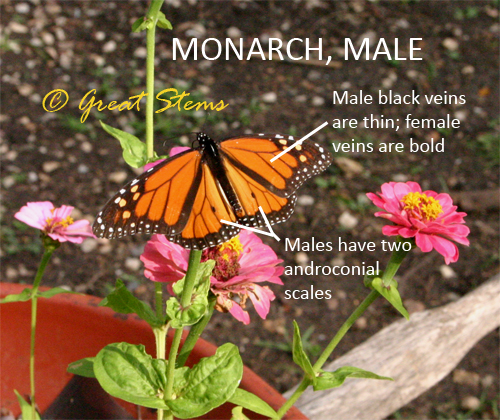
monarchfemale10-30-09.jpg

  Soldier butterflies are fairly similar to Queens at first glance, but they have black veins on the underside of the forewing and pale spots visible on the underside of the hindwing. The veins of the upperside are also more defined on a Soldier butterfly than on a Queen. Their distribution range is more limited than that of the Queen, typically farther south into Mexico. 

And finally, the Viceroy. The Viceroy butterfly (Limenitis archippus) is not a member of the same genus as the Monarch, Queen, and Soldier butterflies, but it looks remarkably like them, particular Monarchs. If you click on the link, you'll see in the picture there that the primary distinguishing mark of a Viceroy is a secondary black line arching through the hindwing on both the upperside and the underside -- as mentioned above, Monarchs do not have this.

The Viceroy is an example of Müllerian mimicry because its orange and black markings are like that of whichever Danaus species is local to its area, and all are unpalatable. In this way the four species having similar markings and a bad taste provide them all with added protection from would-be predators. 

Did you know that there are other butterflies with similar markings, including one called the Common Tiger in India? It's a beauty -- in addition to the orange and black coloring of Monarchs, the Common Tiger has beautiful white stripes on the forewings. Others are found in Africa and elsewhere in Asia. The animal kingdom sure is fascinating.  
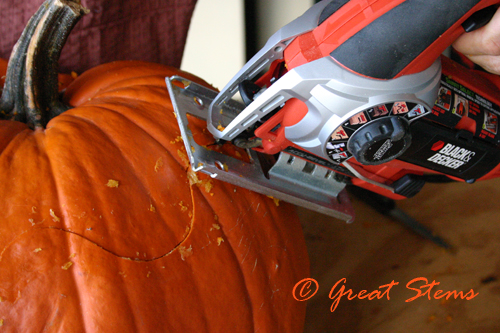
The New Trend in Pumpkin Carving

| 8 Comments

Don't try this at home. Best to do so at your friend's house, using HIS jigsaw.

pumpkinjigsaw2009.jpg

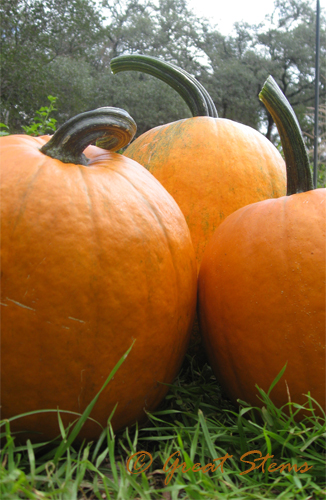
The annual party at Stepan and Jennifer's was a blast, and our three little pumpkins were big in spirit. They were small but mighty!

Sometimes size matters, but apparently not in pumpkins.

pumpkins2009.jpg Here's the before.

pumpkins10-26-09.jpg

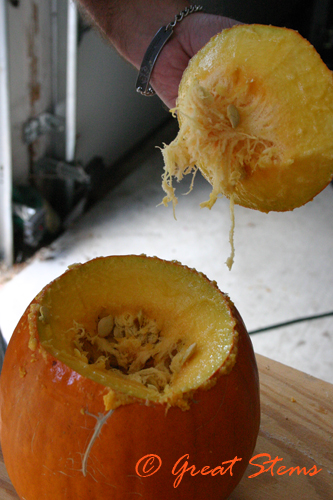
The small pumpkins had remarkably thick rinds, but scooping out the guts was quick and easy.

pumpkinguts2009.jpg

And here our little pumpkins are joined by all their pumpkin friends who are all clearly compensating for something.

pumpkinsb2009.jpg Here's where I should point out that Stepan's pumpkin was the biggest, but that's just not like me.

The boys like their pumpkins with ham.

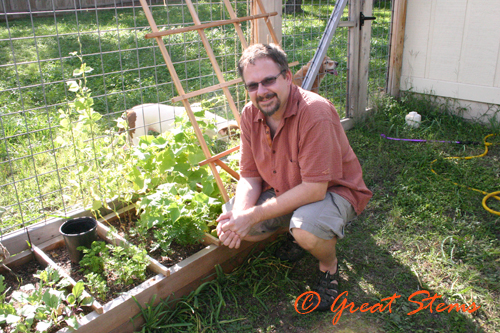
pumpkinsc2009.jpg I have to show off Stepan's young garden. Like our family, his family just can't keep their hands off the sugar snap peas. I noticed there weren't any available for me to sneakily munch on.

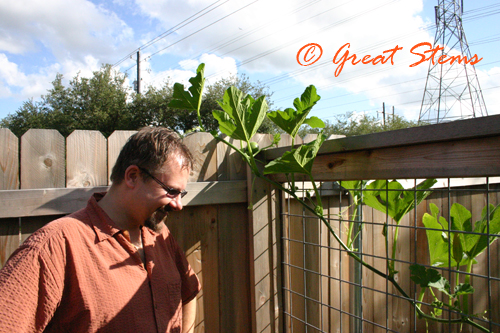
stepan10-26-09.jpg The rampant sugar pumpkin vine attempted to escape to the other side of the fence. See the young pumpkin in the corner? Stepan got to do the hand pollination thing. It's just so fun.

stepanb10-26-09.jpg

Thanks for another great party, Stepan and Jen! Oh, to follow up on the pumpkin cheesecake -- it was yummy, and we returned home with only a single piece. I took a picture of it, and the next thing I knew it was consumed by one of our naughty dogs.  ><

Headless Horseman Strikes the Garden

| 9 Comments

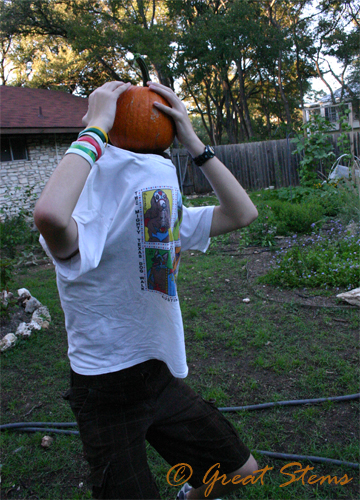
With Halloween around the corner, we all know that monsters might appear at any time of day or night, but the mere picking of our first orange sugar pumpkin brought to our garden...duhn Duhn DUHN... the Headless Horseman!

headlesshorseman10-26-09.jpg

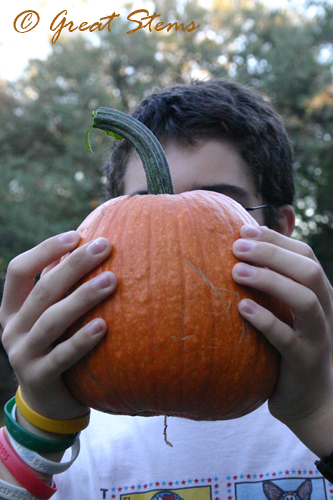
There it is, our first orange sugar baby.   sugarpumpkin10-26-09.jpg

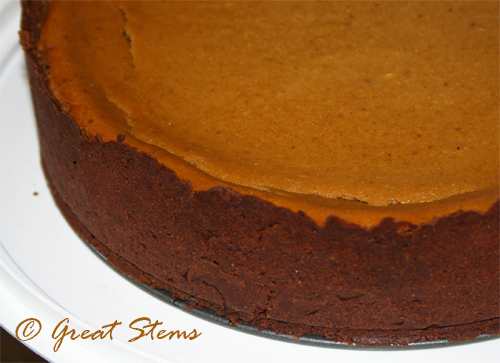
I spent the evening creating this Pumpkin Cheesecake with Chocolate Crust using a fantastic recipe I found at The Hungry Mouse. It's made with cognac. Enough said. Well, not enough -- I want to add kudos to Jessie for her detailed photos and instructions on the making of this yummy and divine dessert.

pumpkincheesecake10-26-09.jpg

But alas, I confess that I resorted to canned pumpkin to make it. Here's what happened: When I cut open that little sugar pumpkin that passed all its tests on ripeness, I found that there was a fair amount of green mixed in with the orange inside. I honestly didn't know whether a little green was okay, but as the pumpkin was already cut open, I went ahead and scooped out the seeds and pulp and baked it. I figured I'd give it a taste test after baking and decide then what to do, all the while feeling pretty much like a pumpkin murderer knowing that there was a good chance I wouldn't use it.

Well, the baking went fine, but when I tasted it, my first sugar pumpkin, I couldn't tell whether it tasted the way it was supposed to, so I erred on the side of safety and decided to open a can of pumpkin. Well, it turns out that the canned pumpkin tasted exactly the same, so I could have used my little sugar pumpkin, but it was too late!

But the good news is that I remembered that pumpkin is good in a variety of ways for dogs, so the little orange-greenish pumpkin will not go to waste. I've already given some to the dogs, and tomorrow I hope to try my hand at making pumpkin dog treats, perfect for the holidays. I might also try making some muffins or other yummy human treat.

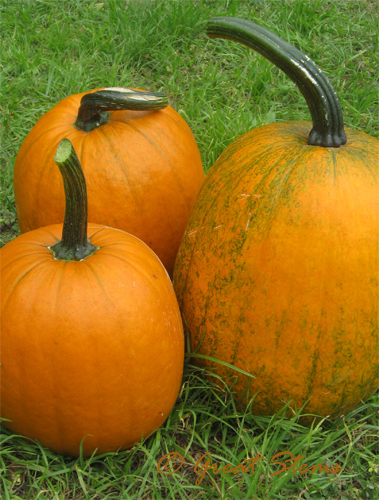
pumpkins10-26-09.jpgThe cheesecake is for today's annual pumpkin carving party at our friends Stepan and Jennifer's house. It's our first year growing our own jack-o-lanterns, which have been behind schedule due to the hot summer and fall rains. But we chose three of our 10 growing pumpkins for early carving. Two are small, and one is still a bit green, but we grew these for carving, so carve them we will! The other seven pumpkins still on the vine will be for carving later in the week or for fall decorating.

pumpkinsb10-26-09.jpgMy yard is going to look so empty after I have to remove all these pumpkin vines... 

Inside Austin Gardens Tour 2009

| 14 Comments

Yesterday, my boys and I did a whirlwind tour of the beautiful yards of this year's Inside Austin Gardens Tour. There was something special about each and every home, and we thank the homeowners for opening their yards to the community. Each yard was a certified wildlife habitat, and we even got to see some wildlife at a few of them!

iagtour2009c.jpg

We zoomed through so very fast due to our overbooked afternoon schedule. But even in our few minutes of touring, we found inspiration. From mixed yard/habitat homes to luscious looming tropics to sheer vastness in variety of plant species to pure folly, we saw it all.

As is typical of me, I was drawn to the use of native plants and whimsy in the garden, as you can see in these select photos. But without a doubt, I saw some very unique and beautiful plants at all the homes. I greatly appreciate the lists of plants available at every location! And there was such creativity in layout and design and decor.

iagtour2009f.jpg

iagtour2009g.jpg

iagtour2009e.jpg   iagtour2009d.jpg iagtour2009a.jpg iagtour2009h.jpg

These little glimpses don't give much in the way of overview, I know. I regret that I'm posting so few pictures, but  I encourage you to visit Pam's blog at Digging, MSS at Zanthan Gardens, Jenny at Rock Rose , and Linda at Patchwork Garden for exceptional details and photos of the tour (so many of our pictures are of the same plants and garden wows, and I shamelessly admit that I'm taking advantage of the fact that they beat me to the blogging punch). I've got so many projects looming over me at the moment, but if I don't get something out, I'll get nothing out, if that makes sense. Life just isn't stopping still and letting me catch up! What's up with that?

First Official Harvest

| 13 Comments

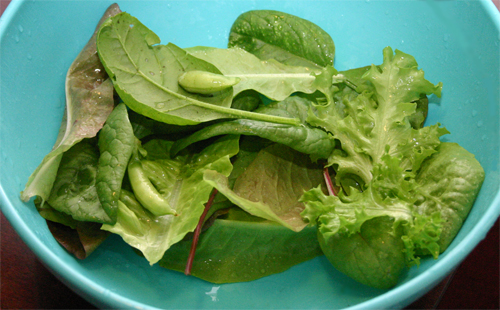
Tonight my family enjoyed our first ever salad from our garden. I didn't pick enough, but I treaded through mud and rain with a flashlight to get what I did. Tonight we enjoyed mixed lettuce, two kinds of baby spinach, and sugar snap peas. Everything was delicious, but by far my favorites are the sugar snap peas. I look forward to more garden variety as the other veggies grow.

harvest10-15-09.jpgAllright, I confess. I've already been munching on the snap peas. Perhaps I should have called this the "first official harvest photograph." But it is true that tonight was the first time the rest of my family tried them. It counts, right?

It's Texas Native Plants Week! Oct 19-23

| 3 Comments

I'm still sorting through my photos of my San Miguel trip, but in the meantime, all you Texans start whooping and hollering, because it's Texas Native Plants Week! Get out there and give special happy attention to your native plants, or go get your garden a new Texas-native flower, tree, shrub, vine, or grass just to celebrate! In my garden, lots of Monarchs and Queen butterflies are loving on my blooming natives right now, so I'm having double the fun visiting the garden this week.

Want to learn more? Read the Statesman's article, visit the Wildflower Center, or check out Austin's TX Native Plants Week page for listings of this week's special events, great native plant sources, or other information.

wildflowerorgb10-09-09.jpg

Yay, native!

Hola and Hi

| 5 Comments

I've been in Mexico enjoying several days of celebration, culminating in my sister's beautiful wedding outside of San Miguel. And today I begin the process of working my way through all the pictures I took, so hopefully I'll have a few good ones to share. Aye, las flores y otras plantas de México son muy magníficas.

Thank you for all the comments you've sent in my absence. I have a lot of catching up to do!

Reflections on the First Year

| 20 Comments

Has it really only been a year? So much progress has been made in our first year of gardening that it's hard to believe it happened in a mere 365-ish days. Hey, I only about destroyed my back and my husband had to have knee surgery, but what does that matter when our yard is such a pleasant place to be now? (Ok, my husband just pointed out that we can't really blame gardening for our failing bodies, but it sounded good.)

What started it all? The felling of one very dead hackberry that was dangerously leaning over our house.

reflections2009x.jpgWhen that tree fell, I had no idea that I was about to embark on a gardening endeavour of massive proportions. But I looked around my yard and hated what I saw. It was time, after 13 years of doing nothing, to do something. Even if I had no clue whatsoever about what to do. 

But apparently I figured a few things out. The rest will come when I figure those out.

Here are a few tidbits of how our outdoor world has changed. Now be warned, the overgrown state has to do with all the rain we've finally been getting -- I haven't been able to clean anything up. At least things look more green...

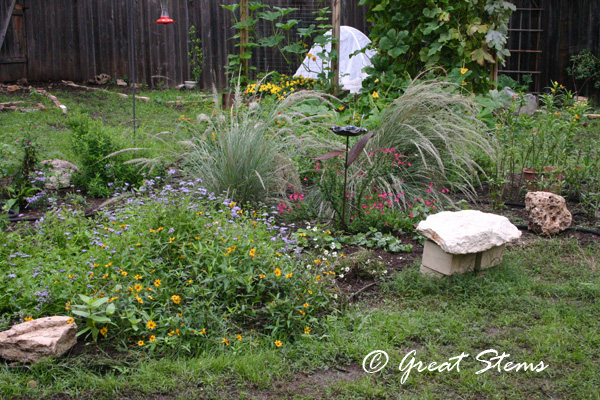
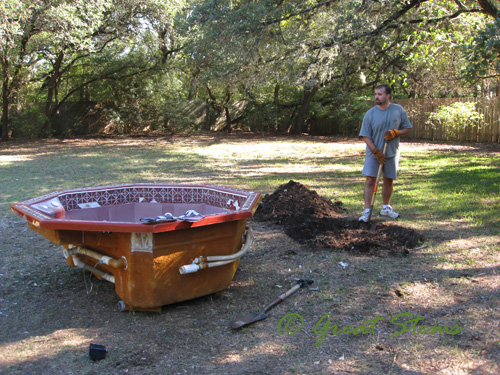
The backyard, before and after:

reflections2009a.jpg

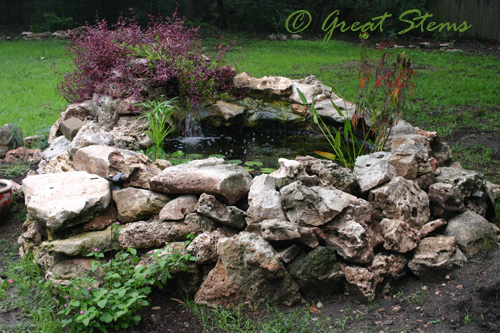
reflections2009zh.jpg The pond, before and after:

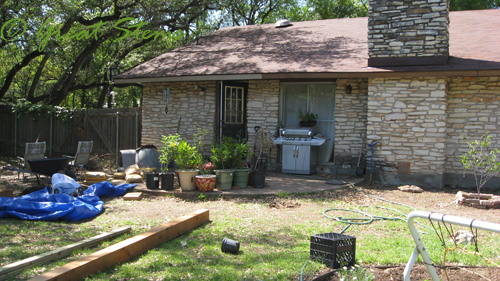
reflections2009zc.jpgreflections2009zg.jpg The back porch, before and after:

reflections2009f.jpg reflections2009zl.jpg The front garden bed, before and after:

reflections2009v.jpg reflections2009zza.jpgThere's a lot more to our yard than what you see here, and I invite you to see more. We have a long way to go, but it's fun to take a look at how far we've come. You can also hear more about the story that got us on our gardening journey.
A Visit to Mesa Verde

| 11 Comments

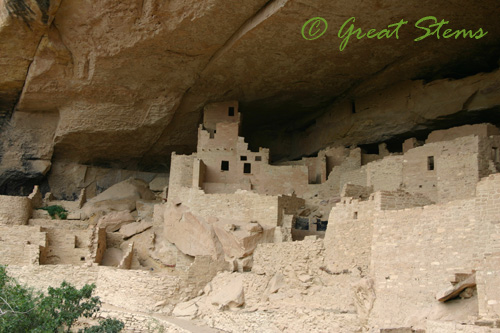
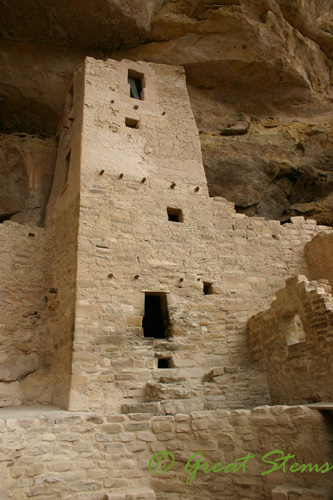
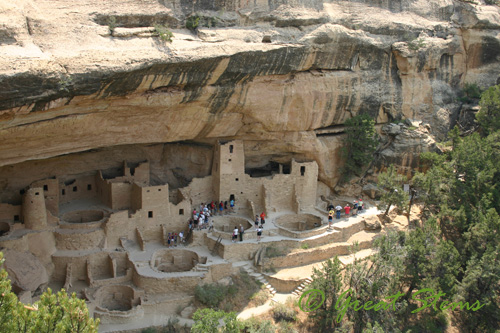
A couple of years ago my boys and I went to Colorado with their grandparents, and we snuck out for a side-trip to beautiful Mesa Verde, a National Park in far southwestern Colorado, near the Four Corners. Mesa Verde is one of the most unique archeological sites in the world, for it was once the home of the Ancestral Puebloans who built hundreds of spectacular cliff dwellings along the mesa tops and within sheltered alcoves of the canyons. The Ancestral Puebloans lived there from A.D. 600 to A.D. 1300 and then mysteriously abandoned their homes at Mesa Verde.
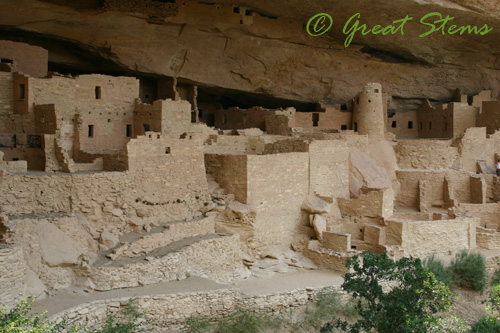
  mesaverdea2007.jpg

Cliff Palace is the largest cliff dwelling at Mesa Verde and in North America, and it is aptly named. Not only is it huge, with about 150 rooms, it was quite a trek down the cliff to reach it. There were many kivas, or ceremonial rooms, along with storage rooms.

mesaverdec2007.jpgThe temperature was very comfortable, and it's easy to understand why the Ancient Puebloans took shelter in the cliffs, out of the hot summer sun and cold winters.The doorways of the buildings were quite small. At 5'5", I would have been as tall as the tallest man. 
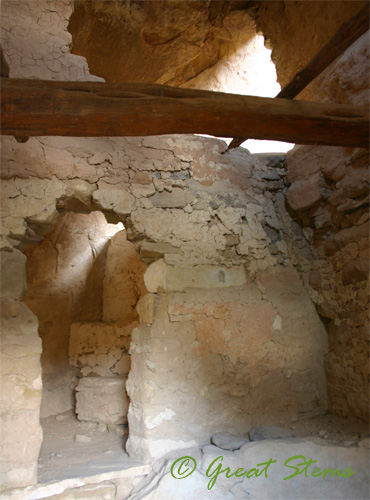
mesaverdeb2007.jpg The Ancestral Puebloans were skilled masons, creating buildings of stone and wood that were sometimes two- or three-stories high. The wood is one of the ways the scientists dated the dwellings to about A.D. 1200.

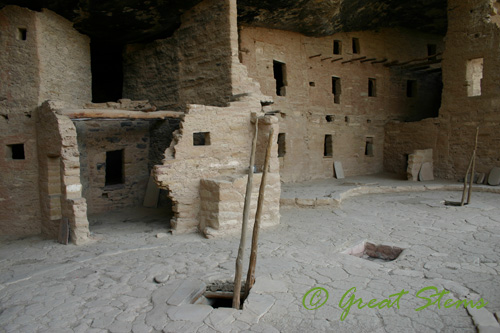
mesaverded2007.jpg Spruce Tree House was named for a spruce tree climbed on by explorers when they found the ancient site. The ladders led into reconstructed kivas.

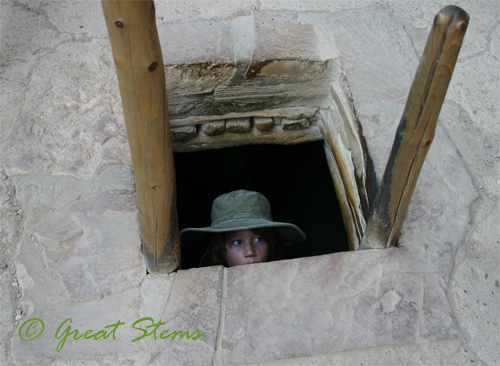
mesaverdef2007.jpg Park visitors are allowed to go in the reconstructed kivas at Spruce Tree House, but I found out later that kivas are very sacred to the Pueblo Indians. I rather wish the park had closed off all the kivas out of respect to the Pueblo people. Our entering it was only because we didn't know better and it's part of the park tour. I'm showing this image simply because it's one of my favorites of my son, poking his head out from darkness into the brightness above.  

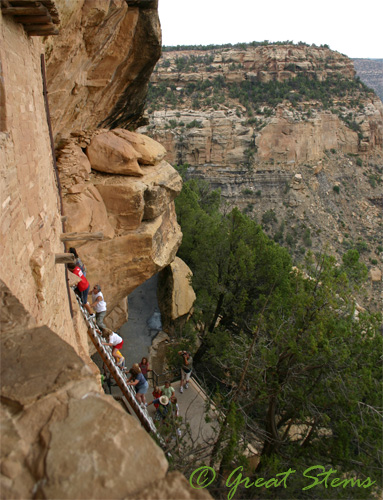
mesaverdeh2007.jpgAnd then there is the Balcony House. This remarkable dwelling is only reached by climbing down stairs along a cliffside and then up a 32-foot ladder to get to the actual dwelling. Actually, it was one of three ladders we had to climb at Balcony House. If you think it sounds easy, then take a look at the picture below. 

mesaverdeg2007.jpg

For those with a tendency toward acrophobia, climbing a tall ladder with what seems like only a small ledge keeping you from falling into the deep, deep canyon below definitely requires some incredible will and an ability to master one's fears. I should add that we had waited out a thunderstorm with strong winds on the cliff above before the tour finally began, so I was already fairly alarmed that we were about to attempt such a climb with winds such as those blowing (it turns out the Balcony House was actually sheltered from the cliff winds). But because I was wanting my sons to enjoy something unique and spectacular without developing any of my awful fears, I kept my desire to panic very quiet and seriously practiced some breathing techniques to keep my calmness in check. But the ladder you see here will forever be known to me as the White-Knuckle Ladder. I actually don't have a fear of heights per se -- I love being up high -- it's just being at the edge of a cliff that gets me wobbly. And Mesa Verde is ALL cliffs, haha. 

The trip will always be a memorable one for me -- from the drive in to the drive out. For those with a strong fear of heights, it might not be the best park for you to visit. Even the 23-mile drive in was along the mountainside, with narrow turns and tight switchbacks, and while the views were incredible, I couldn't take my eyes off the road to even glance at them. Add to it that I made the mistake of not getting gas in nearby Durango, and I was rather inwardly freaked out that we were going to run out of gas or fall off a cliff to the canyon far below. We did neither. Phew. But despite my racing heart, I'd go back there in a flash to visit again.

This glimpse back at my Mesa Verde trip was inspired by Pam at Digging who is hosting a bloggers' tribute to national parks. Thanks for sending me on this trip down memory lane, Pam!

Oh Deer

| 8 Comments

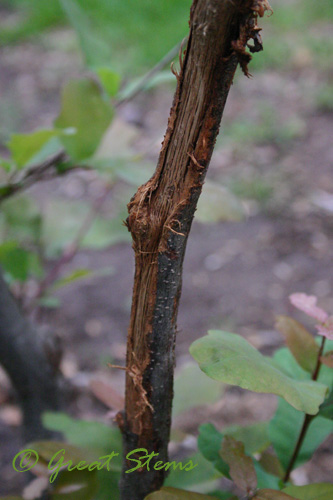
Well, we'd been warned. Deer will rub antlers on young trees.

deerdamage10-09-09.jpgBut they seemed to leave our Lacey Oak alone all year -- well, as it turns out that's because it isn't until fall that they do the antler rub thing! We noticed the damage while planting our new Anachacho Orchid nearby. Cry. I haven't had a deer incident this major since they ate my beloved Spotted Squill, a.k.a Alien Tentacle Plant! Well, there's also the pineapple sage, but I can't be 100% sure on that one, as it was closer to the house.

I think the tree will be ok. The damage isn't all the way around, and it's on only one of the three main trunks. But I'm also very glad we noticed it today and not tomorrow, because tonight more damage might have occurred.

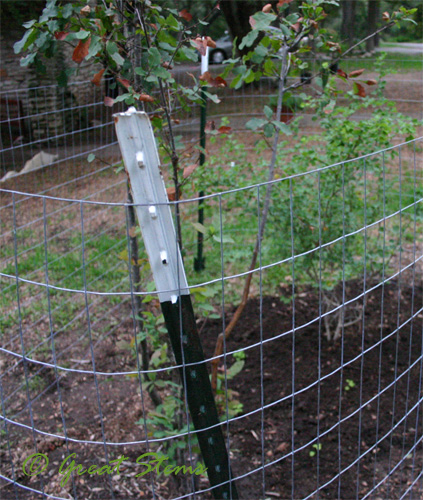
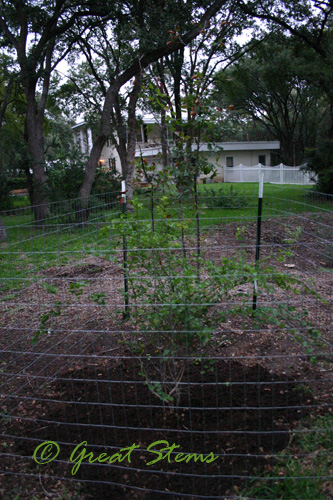
deerfence10-09-09.jpgAnd luckily when we planted the Lacey Oak, I also bought the materials to protect it with. Perhaps actually using said materials might have been the wiser path... But we at least had them in the garage and didn't have to go shopping.

So now we have one of those yards with the goofy fences around the trees. We decided to put the Anacacho behind bars with the Lacey Oak to protect it, too. It's the first understory tree to go under the story of the Lacey Oak. This would be more impressive were the trees, say, bigger. But they will grow!

deerfenceb10-09-09.jpgNow for some good news -- the disappearing fountain is back and functioning again! We never did solve the mystery of the shifted rock, which led to the unexpected emptying of our new disappearing fountain and potential pump damage. But happily the pump still functions, and our fountain still remains the $40 disappearing fountain! We changed up the rock structure, so hopefully it will be harder for some creature to displace the tube. That little rock is only there for interest, not for directing the water flow.
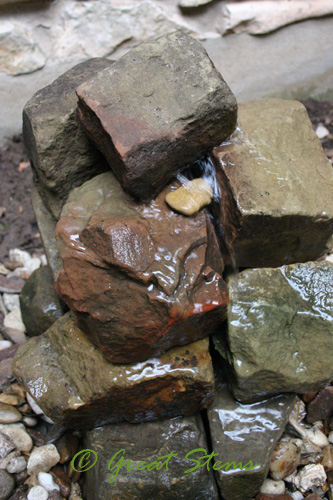
40fountain10-09-09.jpgWhether it was cat or deer or rain or human or Sasquatch that caused the tube to shift, we'll never know. But I still think a deer is likely responsible for the removal of the nearby pineapple sage. And the nursery didn't have any the last time I was there. I was sad. Oh deer.


Fall Plant Sale at the Wildflower Center

| 9 Comments

We're very fortunate that Texas is home to the truly special Lady Bird Johnson Wildflower Center, and we Austinites are particularly thrilled that it's right here on the edge of our beautiful city. The center is dedicated to the conservation of native plant species across North America, providing an incredible online database of information about thousands of plants and giving visitors to the center a first-eye glimpse of the beauty of Texas plants. 

Throughout the gardens lovely sculptures and other art complement the natural beauty of the Texas flowers, shrubs, and trees.

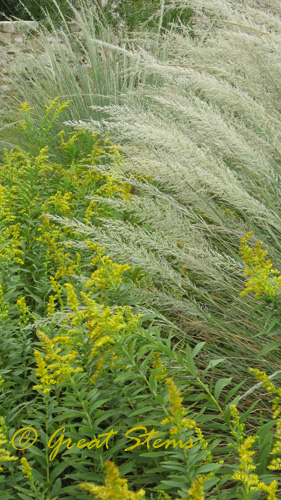
wildflowerorga10-09-09.jpgSpectacular combinations of colors and textures bring unconscious serenity to the viewer. Here the majestic Goldenrod really stands out against the wispy seeds and grasses of Big Muhly.

  wildflowerorgb10-09-09.jpg All around the center are fantastic displays of plant diversity, with settings typical of our state: prairie, pond, woodland, meadow, and more. Even a few coastal plants are represented, minus the ocean and the sand.

wildflowerorge10-09-09.jpgIt was my husband's first time to the Wildflower Center, so we did a quick little walkaround, but there wasn't much time to take a thorough tour. There is so much more the center offers, from truly impressive rain collection systems to walking trails to green roof research to continuing education courses, and more.

 wildflowerorgd10-09-09.jpgBut twice a year, Texan gardeners get very excited about a special event that takes place at the Wildflower Center. The center hosts an outstanding native plant sale each fall and spring, and gardeners from all over the state converge to seek and buy plants they might not be able to get at any other time. I know that there are always plants I've never seen before, and it's hard not to get carried away with purchasing. People line up with their wagons and lists. 

wildflowerorgc10-09-09.jpg

Even the rainy day couldn't keep the buyers away, though fortunately the rain came the night before and in the morning, but not during the actual sale. The crowds were a little smaller than is typical of the opening day of the sale, but it might be chaotic this weekend instead.

Here you can see some of the plants set aside for the rest of the weekend, so that plants would be available throughout. You can still see the mini-lake left over from the heavy rains.

wildflowerorgh10-09-09.jpgUp near the front of the line, my husband and I chatted with our friendly line neighbors.

(I had great fun trying to figure out where to put the copyright on this image of my husband. He wouldn't let me plaster it right across his nose, though.) 

2mo10-09-09.jpgOf course, when the ribbon was cut and the sale actually opened, we all said something along the lines of "It was so very nice talking to you! Now stay away from my plants!" (And at this point I stopped taking pictures, because the mad rush to find all coveted plants began. In fact, if you couldn't tell from the images -- these are from my pocket camera instead of my regular camera. I had to make sure I wasn't overburdened when plants were at stake! Yes, at first it can seem like a frenzy, particularly for the rarer species. I didn't start taking pictures again until all our plants were chosen, and by then many buyers had already cleared out, so this crowd looks small compared to the earlier blockade of people all trying to get their carts through the aisles while collecting as many plants on their list that they could).    

wildflowerorgf10-09-09.jpg Now, this being Texas, even though there is definitely a mad rush at first, people really are friendly about it. And I think the biggest rush is for trees and shrubs, and perhaps some succulents and water plants. The perennials can go fast, but in general there are plenty available.

wildflowerorgg10-09-09.jpg I  should mention that two Native Plant Society groups and Native American Seed were also there as vendors, and I made sure to visit their tents.

My special purchases of the day were Rusty Blackhaw (there was definitely a crazed rush to find these, and even then, only very small plants were available; I consider myself very fortunate to be able to buy any) and Anacua, or Sandpaper Tree. I also got a gorgeous Anachacho Orchid, an Evergreen Sumac, and a few other smaller plants. I even got a Lizard's Tail plant for my pond. My husband was a trooper about it, despite the money being spent. But I'd been preparing him for several months that by gosh we were going to the Fall Plant Sale at the Wildflower Center, no matter what! :)


The One Good Thing About Fire Ants

| 14 Comments

Pouring boiling water on them is oh so therapeutic. Ahhhhh, satisfying. (Edit: I don't kill normal ant species, but fire ants are a dangerous invasive non-native species that swarm and sting en masse, so they are not welcome in my garden. Ever.)

I tried to get in a quick mow of the weed yard before tonight's thunderstorms and found fire ant mound after fire ant mound. Turning over rocks and bricks led to all sorts of surprise ants scurrying about in angry fashion. I think I boiled about 5 large pots of water, and that wasn't enough.

Under some bricks, though, we found good guys. Like this young centipede. Yes, it's a good guy. Eats grubs and bad pests in the soil. My friend. My friend with venom claws and poison glands. (EDIT: Apparently it's a millipede, based on the numbers of legs per segment. Good to know! Thanks, Amanda. Eats organic matter and also a good guy.) 

centipede10-08-09.jpg

Pollination Fascination

| 9 Comments

While taking a stroll near the butterfly garden, the sound of busy bees caught my attention, and I realized that my little pollinating friends had moved from the pumpkin flowers over to a nice big batch of native plants, and my gardener's heart did a little pitter-patter.

But in observing them, I realized something I'd never noticed before. Gregg's Mistflower produces white pollen.

beeonmist10-07-09.jpg

My mind was boggled. In all my years watching wildlife, I never knew that pollen could be anything but yellow?

beeonmistb10-07-09.jpg

beeonmistc10-07-09.jpgIn the same patch of flowers, the honeybees on the Zexmenia had bright orange pollen baskets on their little legs.

beeonzex10-07-09.jpg beeonzexc10-07-09.jpg This little bee has been to both Mistflower and Zexmenia. His pollen is pale orange.

beeonzexb10-07-09.jpg

I was fascinated. Today was a day where nature just had me reeling.

When I could tear my eyes away from the bees, I noticed a beautiful male Queen butterfly keeping me company.

queenb10-07-09.jpg

And on the Fall Aster, newly blooming just on the other side of the Gregg's Mistflower, little hoverflies enjoyed a feast without getting the attention of the bigger bees nearby.   

hoverflyb10-07-09.jpg hoverflyc10-07-09.jpg Sure enough, these little flies can hover. Someone sure came up with a brilliant name for them! (Hey, guess what hoverflies eat? Aphids! Yay!)

Pollination inspiration, here's my poem for the day:


Flyby

© Great Stems


Fly little fly

Fly little bee

Queen be flying

But not Queen Bee


Upcoming: Inaugural Texas Native Plant Week Oct 19-23

| 1 Comment

I'll try post about this again at the appropriate time, but I wanted to announce that the third week of October is now being recognized as Texas Native Plant Week. Here is the information passed on to me from Keep Austin Wild; more details can be found on the City of Austin site at the link below. There will even be designated Plants of the Day throughout the week, with certified habitats hosting activities.


Texas Native Plant Week October 19th-23rd

In June 2009 Governor PerrOn June 16, 2009 Governor Perry signed a bill into law that will recognize the third week in October as Texas Native Plant Week. The bill is intended to emphasize the role of native plants in conservation efforts and to be used as incentive for the Texas education system to teach school children about the importance of native plants. The Native Plant Society of Texas teamed with State Representative Donna Howard to present the bill to the State Congress. The bill passed unanimously in both houses.

To mark this inaugural Texas Native Plant Week the City of Austin, in partnership with State Representative Donna Howard's Office, the Lady Bird Johnson Wildflower Center, and the Native Plant Society of Texas, will host activities and educational opportunities for the public to learn more about our amazing Texas native plants.


Thursday, October 15th, 5:30pm
Event: City Council Proclamation to announce Texas Native Plant Awareness Week. Mayor Lee Leffingwell will present Native Plant Society of Texas with proclamation.

Location: Austin City Hall Council Chambers, 301 W. Second Street Austin, TX 78701


Monday, October 19, 10:00am:
Event: Austin Parks and Recreation Department (PARD) demonstration habitat garden certification ceremony and media kick off for Texas Native Plant Week. Habitat Garden Tour to follow press conference.


The Parks and Recreation Department's main office demonstration habitat garden will be recognized by the National Wildlife Federation and Texas Parks and Wildlife Department as a Best of Texas Habitat site.  This is the highest level of wildlife habitat certification in Texas and is bestowed upon landscapes that use a majority of native plants, provide wildlife food and water sources year round, and practice at least six resource conservation measures.  PARD's main office habitat is the first City of Austin habitat site to receive this more stringent level of certification.


This demonstration habitat garden serves as a place people can come to learn about what wildlife habitat is and how to create a place for butterflies, songbirds, and hummingbirds at their own homes using beautiful native plants. Austin Mayor Lee Leffingwell, State Representative Donna Howard, Parks and Recreation Department Director Sara Hensley, Lady Bird Johnson Wildflower Center Executive Director Susan Rieff and others will participate in the habitat certification ceremony and native plant week kick off celebration.


Location: City of Austin Parks and Recreation Department Main Office, 200 S. Lamar Blvd, 78704.


For more information visit http://www.ci.austin.tx.us/parks/nativeplantweek.htm or call the Parks and Recreation Department's Wildlife Austin Program at 512-327-8181x29.


Please help us spread the word about Texas' first Native Plant Week!


If you live in Austin, consider attending one or both events, and if you live in Texas, support our beautiful state by planting native plants!


Corn Flakes

| 8 Comments

Don't be fooled by good looks...

corn10-06-09.jpg

cornb10-06-09.jpg'cause this bud's a dud.

I'm 0 for 2 on harvests so far. I'm hoping that I can blame it on bad luck rather than bad skill. Everything was going fine until the rains came -- the winds kept blowing the pollen away from the corn, and with the heavy downpours the corn stopped growing tassels. And then there was the occasional worm, and toward the end the aphids hit the corn, too. Basically everything was great, and then corn just stopped doing anything. And yes, the kernels are supposed to be tri-colored. That part's normal!

cornd10-06-09.jpg But I'm not giving up. One of these days I'll get something pretty to eat.

And I'm kind of fond of this little deformed baby. There's a movie in this somewhere, I'm sure. 

cornc10-06-09.jpg

So guess who is NOT entering the Bountiful Harvest photo contest over at Gardening Gone Wild this month? (But I'll be cheering for those who do!)

This Garden Rocks

| 13 Comments

This garden rocks! Why? Because it has rocks. We love rocks here at Great Stems. They add character, they add unity, they can be used as benches or stepping stones, they edge garden beds, they prevent erosion, they support plants or other objects that need it, they fill up gaps in the plant areas, they make water features look natural, they provide shelter for little creatures, and they are just plain cool. 

Take this fossil, for instance.

fossil10-05-09.jpg

Or this giant quartz rock, of which we found two or three on the property. I guess it's quartz -- I'm not really up on my geology. I love the way it looks surrounded by pigeonberry.

quartz10-05-09.jpg

A few days ago, I removed the massive dwarf papyrus from the pond, partially for aesthetic reasons and partially because it was working on creating several new root systems. But removing it also lets me show off what is perhaps my favorite rock on the whole property. It is this rock that earned our pond the name "Gator Pond."

gatorrock10-05-09.jpggatorpond10-05-09.jpgThe rocks forming the back wall of the waterfall actually look like the back of an alligator -- I forgot to get an angled shot to show you that a little better, but I'll do that another time. Now I just need to figure out where to put my dwarf papyrus.

Removing the dwarf papyrus also let us see our fish better -- they love to frolic under the waterfall. The waves don't make it easy to take a picture of the fish, however.

fish10-05-09.jpg

And of course, we love all the rocks forming our raised pond's exterior and falls.

Sand is basically pulverized rock, and here is a big pile of it. It might look like a sandbox, but it's the sand that was under our shed before we moved it on Saturday. The kids and the dogs have been playing in it. We'll be using this sand elsewhere in the garden.

sand10-05-09.jpgAnd the dogs seem fine with the change in location of the shed. They chase one another around, past, and behind this shed. We moved the shed to make room for our next three raised veggie beds.

shed10-05-09.jpgHere are some temporary stepping stones marking the path to the bench on the raised pond. At some point this will be a real path, probably made of decomposed granite.

stepstones10-05-09.jpg

We use some rocks to line paths and to edge garden beds. We also use them around the base of the little backyard trees in a lame attempt to keep the dogs from charging across and breaking the trees. It works as long as they don't get crazily energized in their playing. Here's a firebush and aloe in one garden bed. Ignore the weeds. I do.

  firebushbed10-05-09.jpg And here's our newest addition, another find off of Craigslist (which is where we got the rocks for the pond). I stuck my foot in for a size comparison because this is one big rock, but I think it just managed instead to make my foot look big. I look forward to choosing plants to go around it.

boulder10-05-09.jpg

And of course, our latest rock creation. Looks different without water flowing, doesn't it?

  fountain10-05-09.jpgNotice the water is turned off now. Well, it's even worse than that. We had to dismantle it to figure out why the pump started screeching yesterday. Turns out the water was gone from the basin, and we checked it for leaks, but there were none. We thought that maybe an animal drank some of the water from the top and shifted the rocks covering the tube, causing the water to splash or spray out of the basin. Or maybe a visitor moved the rocks. Or maybe yesterday's downpour shifted something. In any case, now we're worried the pump might be damaged. Only ran one day, bringing our $40 fountain to about $60 if we have to replace it. So when we rebuild it tomorrow, we're going to have to be really careful that the tube cannot shift. I'm crossing my fingers that the pump is ok.

But what's odd is that next to the fountain is a little plant stub, the remains of my pineapple sage, as if it was chewed off. Do deer eat pineapple sage? Is it possible they licked at the running water and shifted a rock? And would they come that close to my front door, especially if there's so much water available around the neighborhood right now? It could have been broken by a human, but I couldn't find the rest of the plant, if so. A mystery!

sagenub10-05-09.jpgSo I still love my rock fountain, but I will love it more when we rig it so the tube is super secure. And I might need to place a sign that says, "Deer and humans, please don't touch! Our neighborhood deer can read, I'm sure. Or perhaps eat the sign, at least. And I'm by gosh getting another pineapple sage. 

The $40 Disappearing Fountain

| 16 Comments

fountaing10-03-09.jpgFor some time, we'd been wanting a little fountain in one of our front entryway beds, a sort of zen moment of trickling water as one approaches our front door. But getting a classic planter-style container with reservoir would have cost us more than $500, and it wasn't really my style anyway. So I wanted to see how cheaply we could make a disappearing fountain using as many materials from home as we could. We could have probably made it for $21, but we decided to be "practical" and buy a couple of other items. It actually cost us less than $40 -- I rounded up for the sake of the title. I'm not counting the cost of the electrical outlet, as we were going to be putting one out there anyway, not just for a fountain, and we already had a bunch of those parts anyway.

fountainh10-03-09.jpgMoney spent: We bought a large tub normally used for mixing cement ($11), as well as a small 130 gph pump (about $21). We also ran out of window screen, so I bought some more aluminum screen material ($7), but the rest will be used for plant containers, so I'm not really sure whether to add the cost in -- regardless, that's still less than $40. We seriously considered not using the basin and using other items we had at home, but in the end, we decided this might be best. 

Materials gathered: An old grill from our neighbor's uncle's junk he was having hauled off, leftover block-style rocks from our other neighbor that we had used to circle a tree in the backyard, a concrete block, and little colorful rocks we found in the backyard.

At this point, I have to give out kudos to my 12-year-old son. This was more or less his pet project, and while I gave some guidance in regard to the plan (he had some rather far-fetched ideas and I had to bring him back to Earth a bit), he did the bulk of the work.

The first step was to dig out the plants from the area and give them new homes in the front yard (that really did a lot to make our front yard better, too). And then the hole for the basin was dug. The basin we chose turned out to be ideal for the job -- the rock under the soil would have prevented the use of a deeper reservoir. (Please ignore the plastic edging in these photos -- it came with the house, and at some point it will go away, because I can't stand it.)

fountaina10-03-09.jpg

The concrete block is there to support the weight of the rocks on top of the grill, and we stuck some rocks underneath to let water flow. The ones we settled on are in the leveling picture below.

Dad helped with the leveling (and he also got to play electrician to put in the outdoor outlet).

fountainb10-03-09.jpgWe wrapped the window screen around the grill and cut a little hole for the pump tube.

fountainc10-03-09.jpgThen we poured in some water collected from the recent rains (the change in rocks in the images had to do with some adjustments we made regarding the pump placement).

fountaind10-03-09.jpgAnd the rest was just building the rock feature and collecting the little rocks for the base. Simple as that! Here's a picture of the rock work in progress...

  fountainf10-03-09.jpg

I love that it's a little rock statue, and while I envisioned something like it, it came out even better than I imagined. Now I just need to choose some plants to go around it! I'll probably end up spending more on those than I did on the fountain itself...

fountaini10-03-09.jpgThank you to my son for all his hard work and dedication to getting the job done, and thank you to my husband for the electrical work that I'm sure he'll get finished soon (hint, hint).

Now, I should point out that disappearing fountains are technically a no-no during our city's Stage 2 water restrictions. We'll turn it back off when water is an issue again, but right now we have so much rainwater gathered that we actually have to find a place to put it all -- the grounds are saturated and the bins are overflowing. This fountain is only going to be filled with rainwater from the roof or gray water, NOT hose water. And I think it looks wonderful whether water is flowing or not, so when it has to be turned off, it's still going to make me happy. The water just gives that nice trickling sound, and I'm hoping we'll see some wildlife visit on occasion, too.

 fountaine10-03-09.jpg

Love It or Leave It: Horseherb

| 27 Comments

Ah, Horseherb (Calyptocarpus vialis), also called Straggler Daisy. There doesn't seem to be much of a gray area on this one. People either truly love this little groundcover or hate it with a passion. I'm of the former variety. I adore this little plant.

horseherba10-02-09.jpgWhy do I love it? If you've ever walked past a field of horseherb, you are presented with an incredibly lush sea of green, with the daintiest of little yellow flowers throughout to catch your eye. I've seen some gorgeous fields, and each time I was mesmerized by the beauty and serenity of the scene. 

horseherbc10-02-09.jpg

Field of horseherb at Hornsby Bend

I almost don't want to walk on it -- it's so pretty in appearance -- but for a non-lawn groundcover, it can withstand some foot traffic. It only needs water in the worst of droughts, and it loves shade and sun.

Horseherb is also native to the southern U.S. on into Central America, and it makes a great alternative to the exotic and water-hogging Bermuda and St. Augustine grasses. I'd love to see it replace Asian jasmine, as well -- now THAT is a plant that will take over a garden bed and yard. Horseherb is considered semi-evergreen, blooming most of the year except in cold winter areas, and if you like you can mow it, or you can let it grow to its typical max height, which is about 8 inches. But as bonus, horseherb also attracts small butterflies, including sulfurs and skippers. And think of all the happy little lizards that will zip underneath the foliage!

horseherbb10-02-09.jpg

It's an eco-friendly solution to having a lawn without having to resort to heavy chemicals or fertilizers or ridiculous amounts of water to sustain it. Lawn irrigation tops the list on where our municipal water goes, and the time for water conservation is now, especially in Texas.

Why do some people want to leave it? Well, in some yards it can be a big nuisance. For those who keep a grass lawn, horseherb is a competitor, and it can be difficult to get rid of. And it can spread into garden beds, though I've found that so far it doesn't bother much with my well-mulched beds. In fact, one of the characteristics of this plant is that it supposedly doesn't do well in areas that have heavy leaves that take a long time to decompose. It spreads by both seeds and runners, which means that if the goal is to remove all of it, you're going to have a challenge. In a wildflower field, I have to imagine that it would be another competitor, but it's going to depend on the goals you have for your yard or area.

But for now I prefer to embrace its desire to spread. What I loathe is the Bermuda Grass and St. Augustine in my yard. I loathe the unnamed weeds that dominate my backyard. I love my buffalograss in the back, but it too is losing to the weeds, and in the drought, the buffalograss was dead most of the time, so I didn't end up loving it as much as I wanted to - I loved it when I could see it.

horseherbd10-02-09.jpg

What would you choose: spotty grass or spreading horseherb? 

Will I regret it? Some gardeners are going to shout out an absolute yes to that question. But I do regret having Bermuda and St. Augustine (not that I planted it; that was the previous owners), so it's not a big deal to switch from frustration with the grasses to frustration with another groundcover, unless I've got all three to deal with at the same time. At least horseherb is native. But I'm going for the complete wildscape, and I have a lot of ground to fill and a lot of grass to get rid of. In those bed areas I want to keep maintained, I'll do my best to keep horseherb in check. And love it everywhere else!

So how about you? Do you prefer to love it or leave it?

O Alien Seedpod

| 16 Comments

alienseedpoda10-01-09.jpg

O Alien Seedpod

© Great Stems, 2009


What creature lurks within this alien seedpod

That attached to the limb of this passerby

Have you tentacles or tendrils

Cloning slime or plasmic goo

Kind heartlight or superior intellect

With mal-intent, malevolent

Or cautious curiosity


Was it accident or enterprise

That those unearthly hooks grabbed hold

Not taken to my leader but to my home

My galaxy within our universe

The day this earthling then stood still

And kept you upon windowsill

Am I Bilbo to your Precious?

An unexpected foil

To the mission of your star trek

The light side to your dark side


Are you from twinkling star or battle star

What led you on your space odyssey

To our forbidden planet

Do you come in peace

Or were you lost in space

Or sent by evil empire

To make a deep impact

When our worlds collided


Does your presence herald an incoming invasion

A pending war of the worlds

A scout passing through the atmosphere of our sphere

To an obscure landing site in dusty field

Far from human occupation

Those claws the right stuff to hitchhike unobserved

Into the galactic center of our empire

And set the stage for Armageddon


Do you watch us, voyager, from within that protective shell

A wasteful race, a ravaged planet

A vengeful, violent species

Bent on destroying ourselves

Do you pity us or laugh at us? Or do you wait

While we do your work for you

Takeover is imminent, the countdown begins

Will we be assimilated? Or annihilated?

Or already absent when your star fleet lands


O Alien Seedpod

I ponder your existence

And then I ponder my own

Two strangers from distant planets meet

Whether it was fate or force or mul-ti-pass

You found me, and I gave you welcome

Whether that means that I'm ambassador

Or first to be devoured when at last you make contact

And I wonder if you can tell me, before my body is snatched:

Is the meaning of life really 42?


alienseedpodb10-01-09.jpg

Background to my poem: This seedpod is from the Devil's Claw plant of the genus Proboscidea (without the original plant I hesitate to try to identify the species). It hitched a ride on my shoe while I trekked through ranch land near Uvalde, Texas, some 14 years ago. Since then, my family has enjoyed referring to it as the alien seedpod and enjoyed talking about how it would snatch our bodies or our brains in the night and/or take over Earth. It wasn't until yesterday that I decided that because I'm now a gardener I should actually find out the name of the plant it came from.


The plant itself, although I don't have a picture of it, is a somewhat low-growing sprawling plant with beautiful yellow or pink orchid-like flowers. Apparently it's stinky, too, due to its slimy leaves. The genus name Proboscidea is shared with the animal order which contains only one family, the elephants. In fact, Devil's Claw is sometimes referred to as elephant tusks, as well as unicorn plant, ram's horn, and even devil's snot, depending on the species.


For you veggie gardeners out there, apparently Devil's Claw works as an excellent trap for tomato hornworms!


Meredith
Meredith is green-blooded
and gardening in northwest
Austin, TX, Zone 8b. She's proud to be a volunteer
Habitat Steward.


Powered by Movable Type 4.21-en
OpenID accepted here Learn more about OpenID