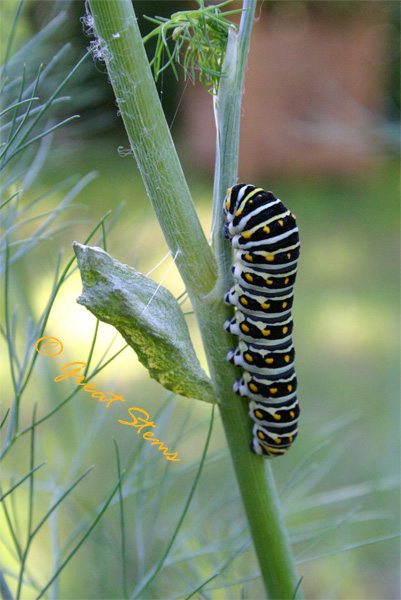
 How considerate of this swallowtail caterpillar to give me such a great science shot with its buddy in chrysalis stage!
Side by Side
6
How considerate of this swallowtail caterpillar to give me such a great science shot with its buddy in chrysalis stage!
Knowing how the monarchs are struggling after yet more habitat loss combined with a very damaging winter, I felt incredible hope when I saw this female monarch in my yard this morning. I think she was laying eggs on a few of the leaves, but I need to take a look at the milkweed tomorrow morning to be sure. I really hope she was.
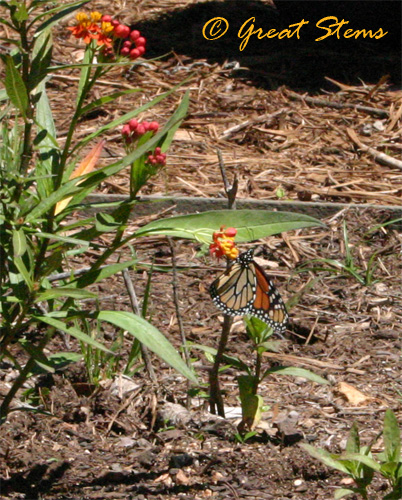 I couldn’t get a closer image, because she zoomed away in our busy backyard, but at least I have documentation!
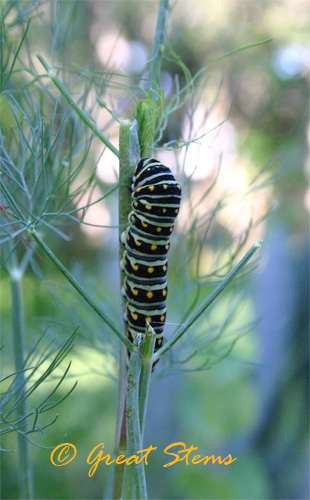
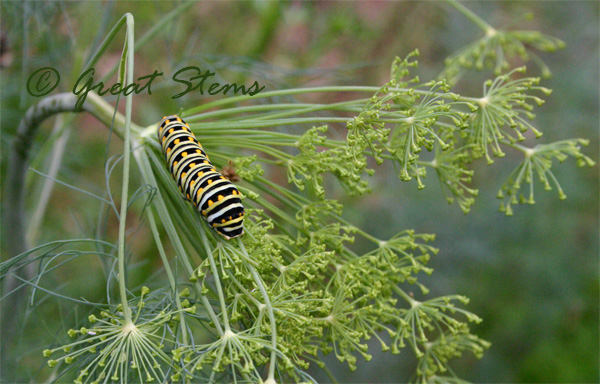
So far this year, I’ve seen an enormous number of butterflies, including several species I hadn’t seen before in my yard. Our dill and parsley are great fun at the moment. My son counted 20 black swallowtail caterpillars, but I have a feeling there are more. They are so much fun to photograph — no wonder they are probably the best known caterpillar next to the monarch.
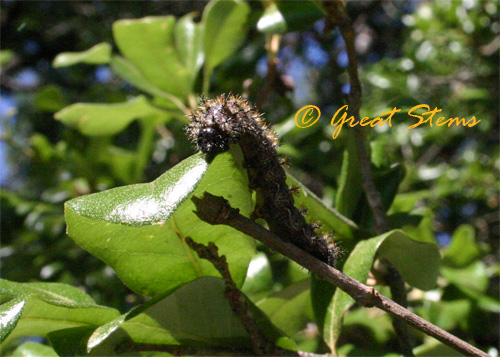
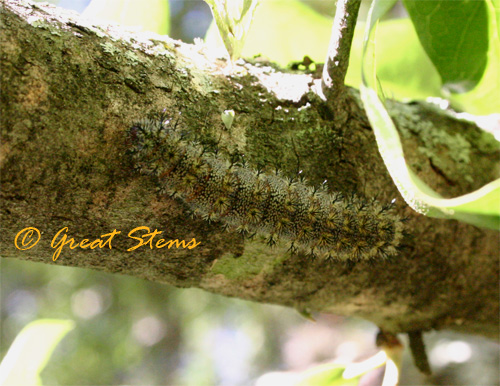
 We found two of these next caterpillars today — I think they are some sort of moth of the silkworm family, but I couldn’t narrow it down. They were both under oaks, so that’s what I returned them to.
 Here’s another view. Look at those cool white spots between all the spines — I didn’t notice them until I looked at the photographs. Can anyone ID it?
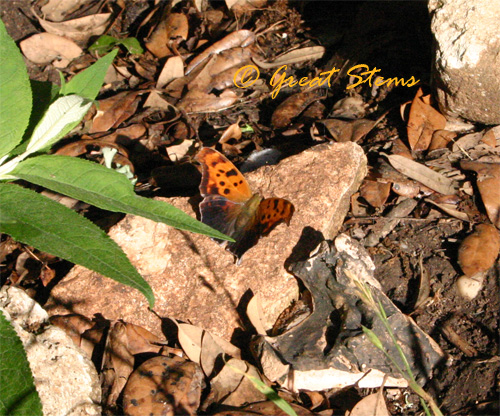
And look, our first Question Mark butterfly! I thought this was a leafwing for awhile, but I couldn’t ID it as one. Finally I realized it was a Question Mark, making its name very appropriate, in my opinion. But it’s apparently been given the name because of markings on its hindwing. Personally, I find the markings as a “?” a stretch, but oh well!
So far it’s already been a great wildlife year. I’m so looking forward to the months to come. The dragonflies have been amazing, not that they wait around for me to get my camera. And I saw a large swallowtail, possibly a tiger swallowtail, but my dog ran past and scared it off the lime tree it was interested in. DRAT.
That was a saying on one of the Earth Day posters at my son’s school. Loved it.
Today was a very special Earth Day, marking the official dedication of our new butterfly-hummingbird garden at school. We were proud to be officially recognized by National Wildlife Federation as a certified habitat and by Texas Parks and Wildlife as a Texas Wildscapes Schoolyard Habitat Demonstration Site. It rained, but it was a perfect gift for Earth on Earth Day (here in Austin, rain is always precious), so we didn’t mind having to move the ceremony indoors.
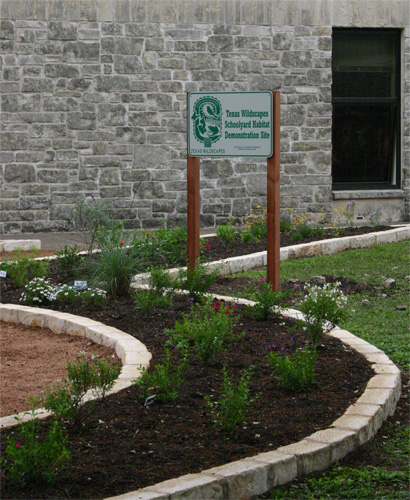

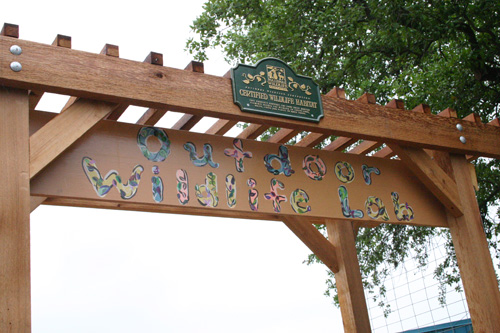 And our students presented community and organization representatives with fantastic 3-D murals that teach about creating wildlife habitats at home.
Oh yeah, I got to be on the news. I even managed to speak coherently.
It was a good day. Happy Earth Day, everyone.
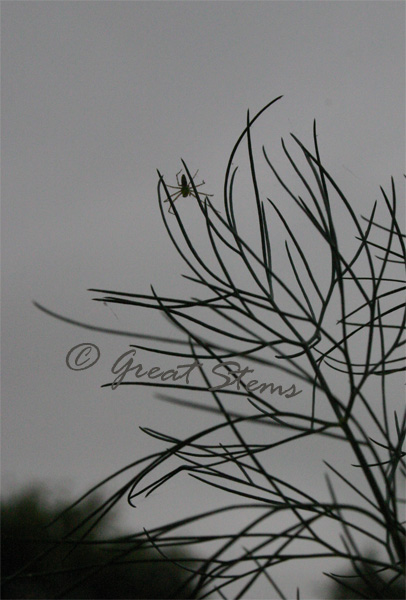
A bit of camouflage today.
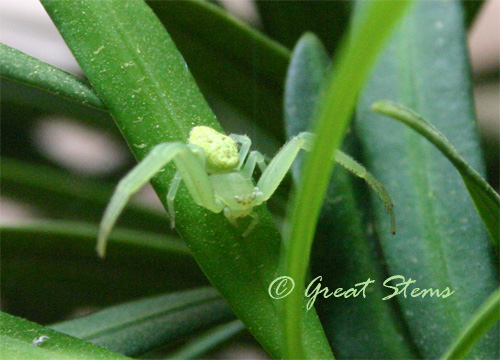
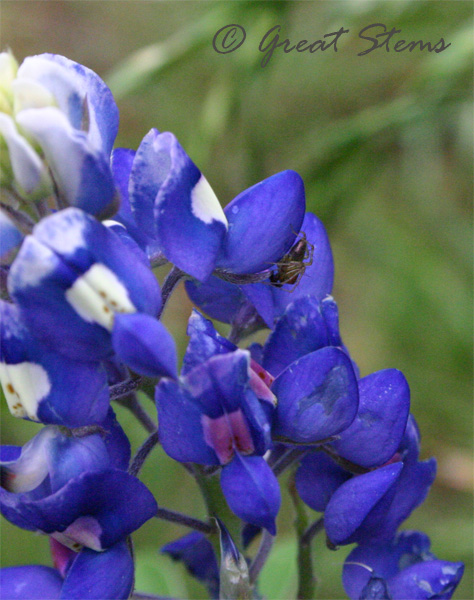
This spider was not happy with the photographer. Bad hair day? Most likely mine.
And hidden in our shed, a nest with at least three baby birdies. The nest was just out of reach of any decent light (had to use a flash), and I really didn’t want to disturb the babies for too long just to try to get a better picture. They’ve grown so fast — I wish I had documented the stages.
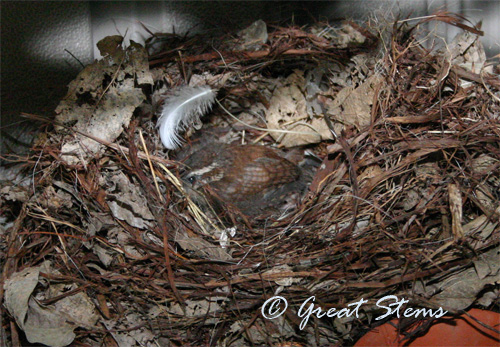
If you look really closely and use your imagination, there’s evidence of three baby wrens in the nest. That big one on top is playing mama and keeping the other two warm, I guess!
Speaking of Mama Bird, she also was not happy with the photographer. Bad hair day strikes again!
I suppose technically that this post should have been Fourteen Legs and Three Beaks. Or Sixteen Legs and Four Beaks if you count Mama Bird. Papa Bird was around, too — now we’re up to Eighteen Legs and Five Beaks. Then there’s the photographer… Twenty Legs and Five Beaks and Two Lips. There ya go.
It’s been a little while since I entered a photo in Gardening Gone Wild‘s photo contest. Here’s my green pick of the month! I love green, every shade. It’s been my favorite color for as long as I can remember. Is it the feeling of peace it brings? Its healing qualities? Its symbolism of nature and life? The feeling of rejuvenation, youth, spring?
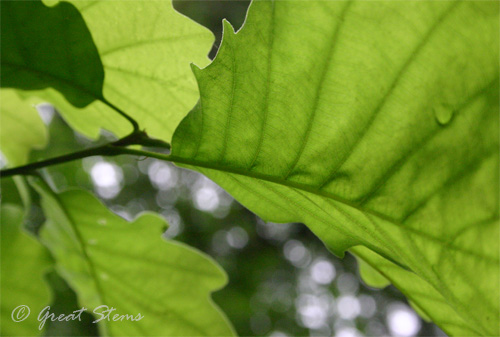
Yay for green. And happy Earth Day, coming up soon!
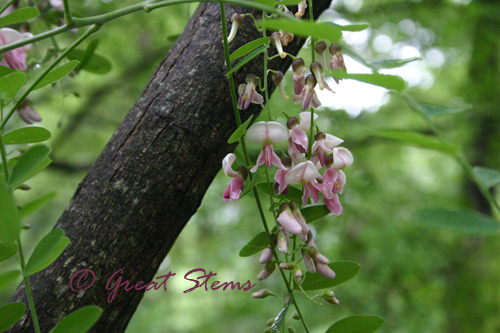 Eve’s Necklace, Styphnolobium affine/Sophora affinis, also known as Texas Sophora. I once underappreciated this small native tree growing wild in my sideyard, because as a young and small sapling dominated by the cedar elms above it, it was hard-pressed to grab my attention.
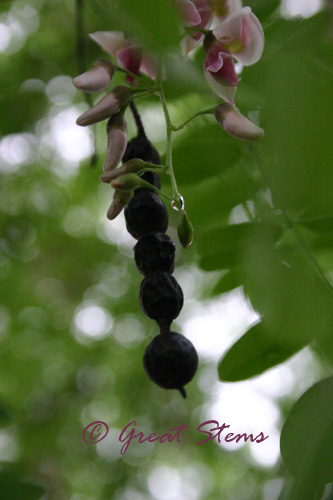
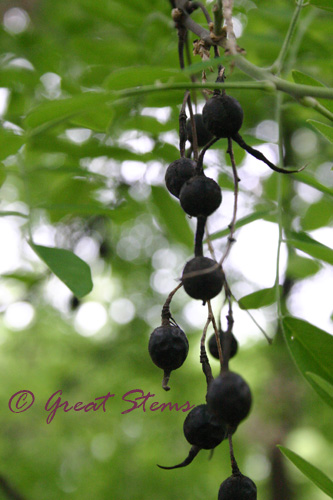
As the small saplings became bigger, however, I began to notice the black string of pearls — its seed pods — for which it earned its name.
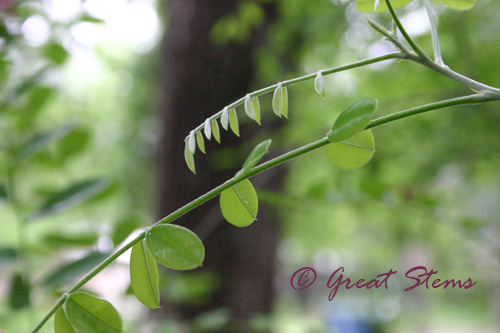
And its light to dark green leaflets I always dubbed as “cute.” I’m so technical.
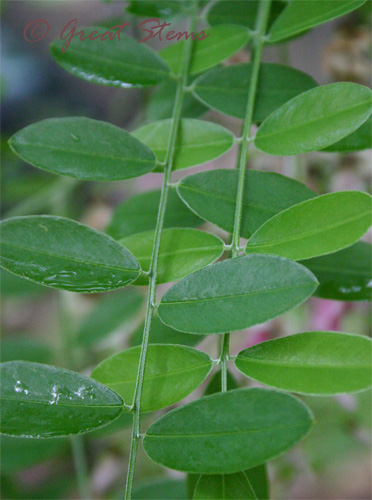 This spring, however, the pink wisteria-like blooms finally caught my eye, and I have been spending many a morning gazing up at the somewhat wispy understory trees.
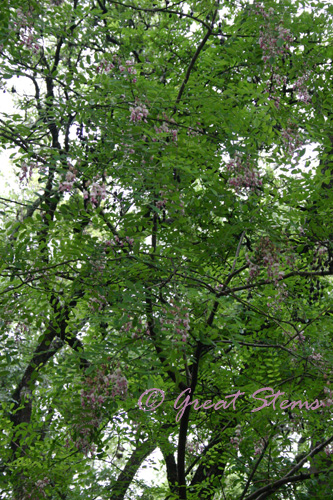
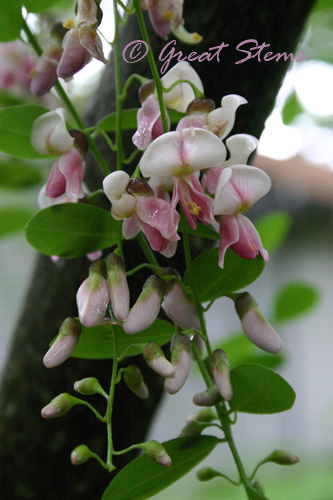 With more available sun, I know, it gets much denser and takes on the more classic tree look. It can also eventually reach 30 ft, but my tallest is about 15 feet, and I suspect it will always stay less than 25 feet tall due to its location under the much larger shade trees.
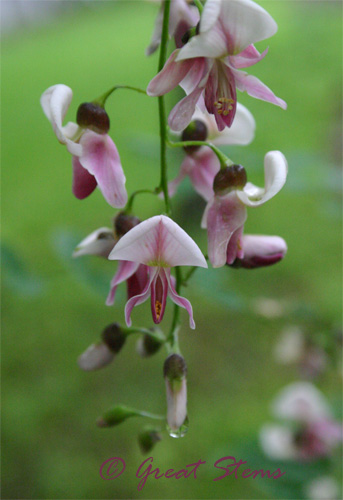 Eve’s Necklace loves alkaline soil, of which I have plenty, and it is quite adaptable as long as the earth is well-drained. It’s fairly fast-growing and germinates well on its own. It’s native to Central Texas and hardy to Zone 7.
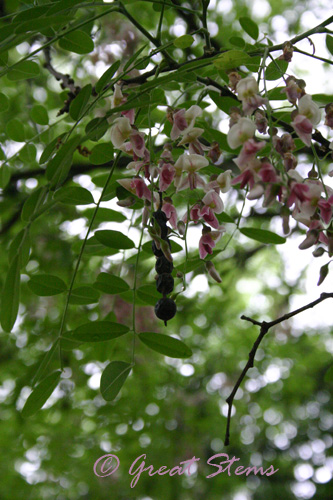 The tree has moderate deer resistance, but the deer in my neighborhood have left the saplings alone. It serves as a pollen and nectar source, and when dense enough it’s a good nesting and cover site.
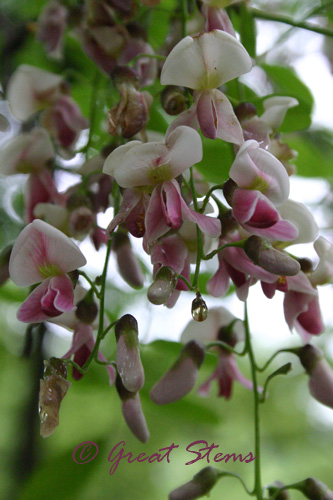
There’s an advantage to living in a place for years and not doing anything with it — one is that sometimes you get to find gems like Eve’s Necklace coming up naturally. I think that I’ll scatter the seeds about to get some growing in other places around my yard. I won’t eat them though (not that I would) — they’re poisonous!
EDIT: My husband’s response to reading this was “Huh.” Turns out he had no idea we had Eve’s Necklace in our yard (he’d probably never heard of it either). It’s a good thing I write this blog, so he can learn about our yard!
Anyone recognize this big caterpillar? EDIT: The mystery caterpillar of the day is a kind of Underwing moth, Catocala ilia. I feel pretty lucky to have found it, actually. Here’s more info at Butterflies and Moths of North America. It’s about 2.5 inches long, looks like bark, and when it flips upside-down to play dead, it’s got a purple banded underside. It’s pretty cool.
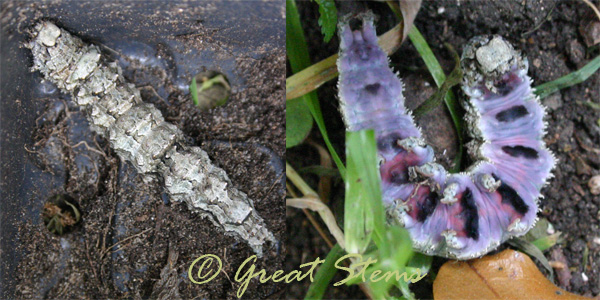
I’d like to help it make it to its next stage, but I don’t know what its larval plant is. I’m going to start with Oak, as that’s what I found it under. EDIT: This species is an eater of Oak leaves, so that’s where I returned it to.
By the way, the picture on the left is of the caterpillar in a plastic 4-inch planter — I know it looks like water, but it’s dry, I promise.
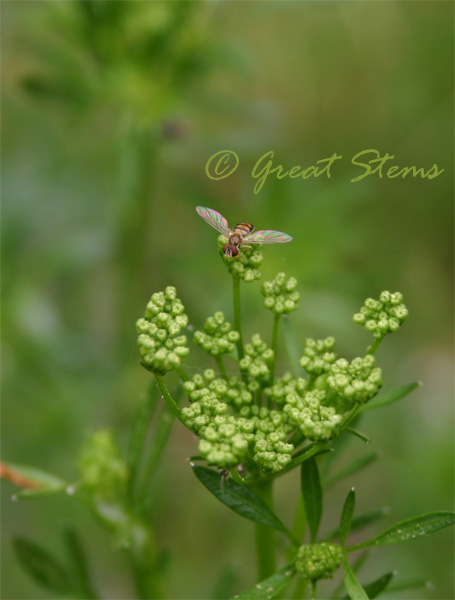
 One morning, and a fine one at that.
All right, someone explain this one to me. My Carolina Jessamine for years had such beautiful bright yellow flowers every spring. This past winter, however, it suffered some during the winter freezes, and ended up looking a little sparse in the leaves but alive, at least. Some of the leaves became rather spotted, as I recall.
This spring I have this:
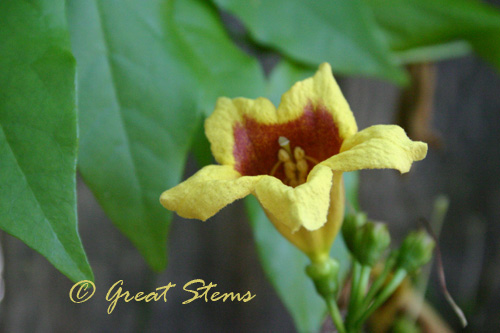
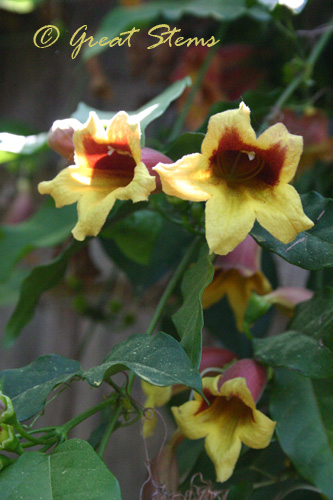
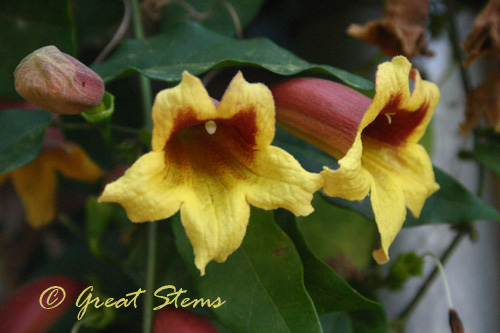 It’s a crossvine, though opposite in color pattern to my other crossvines. Totally snuck up on me. Whatever happened to my Carolina Jessamine? I apparently completely missed its demise.
A spontaneous pond cleaning turned me once again into the Creature from the Black Lagoon, or barring that, at least the Swamp Thing. Six hours spent mostly in a pond cleaning out winter sludge and muck, with the remaining time spent repotting water plants, turns one into a rather disgusting and smelly abomination. And no, once again, I did not take a picture.
It was time for a spring cleaning of the pond, that’s for sure, but what really prompted it today was yesterday’s trip to the Wildflower Center Plant Sale. I didn’t quite get there at my normal early time, so I now know what it’s like to be at the back of the line (note that everyone is admiring the bluebonnets off to the side of the path).
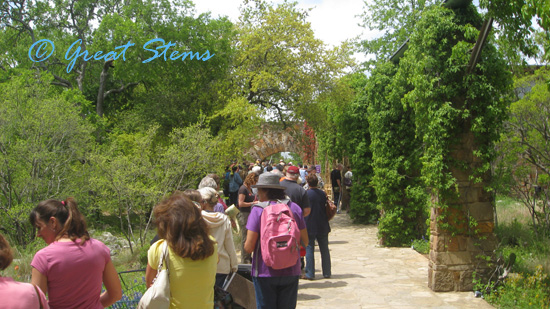
Not only that, but I had to park way off in a neighborhood close to the highway, so it was quite a trek with my little wagon. But this line is nothing compared to the one at check-out. I’ve never seen it go to the back of the sale area before (comparable to a full block or two distance), and the wait was so long — I think for some it took close to an hour just to check out!
But I enjoyed myself, and I did get to visit with a couple of fellow Austin garden bloggers and other friends. I controlled myself and only took a wagonful home, and this time it included some pond plants — hence my venture into sludge and slime! Had it not been dark by the time I got everything done, I might have taken a picture after all… but only of the pond, not of the Creature.
Happily six of our nine goldfish made it through the winter. I’ll find out in the morning whether I managed to kill any of them with my massive pond cleaning.
And now it’s time to go enjoy a margarita and help my back recover from my day in the swamp…