On KLRU’S Central Texas Gardener this week, I get to talk about one of my very favorite subjects, wildlife. Tom Spencer and I discuss ways to help wildlife during the blazing hot summer. Despite our brief bit of rain this week, the South continues to suffer from heat records and drought, and wildlife can be hit pretty hard by the severe conditions.
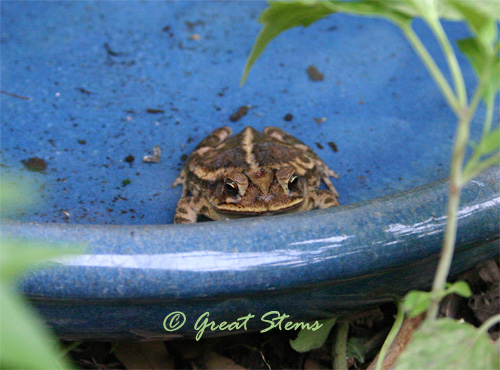
Low saucers of water are great for toads.
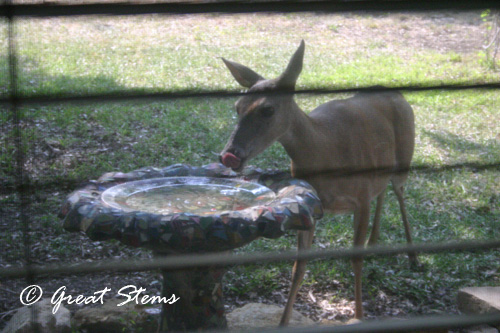
Water sources, of course, are priority one, and they don’t have to be big, fancy, or expensive. A saucer (or several) of clean water will do. We’re in the process of building another one of our budget-wise small ponds, so hopefully I’ll be able to report on it soon (and by typing this, I hope to ensure that it WILL be soon).
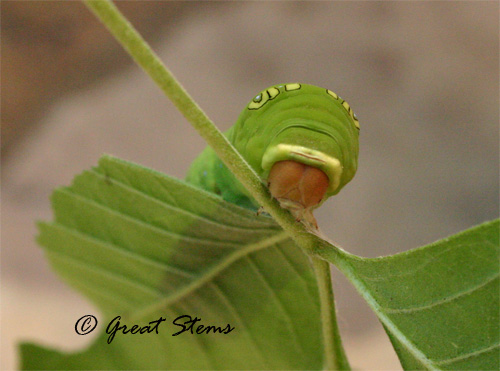
Caterpillars have specific host plant needs, like this Two-Tailed Swallowtail caterpillar munching on Wafer Ash.
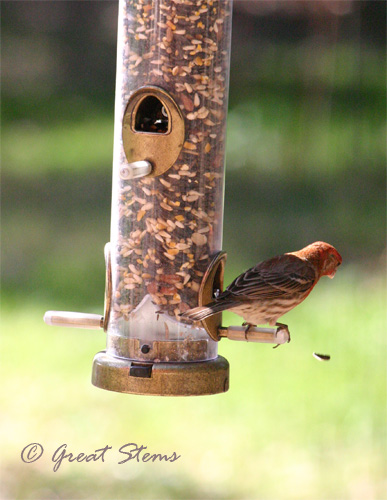
Native plants are another priority, ones that serve as caterpillar hosts and/or offer seeds, fruits, pollen, nectar, nuts, or berries for the wildlife. I also supplement with birdfeeders, some with mixed seed and others with thistle, and I have several hummingbird feeders, as well. This gives birds all sorts of options to choose from.
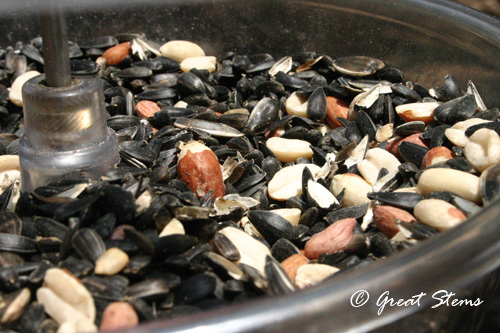
Songbirds love black oil sunflower and safflower seeds, peanuts, thistle, and other nutrient-rich foods. Just leave out milo and millet.
To invite songbirds, I like to use a mixture of black oil sunflower, striped sunflower, safflower, thistle, and peanuts. Sometimes I add cracked corn, but if pesty English House Sparrows start to show up, I leave out the cracked corn to discourage them. I generally create my own mix, and I don’t buy milo or millet because of the birds they attract.
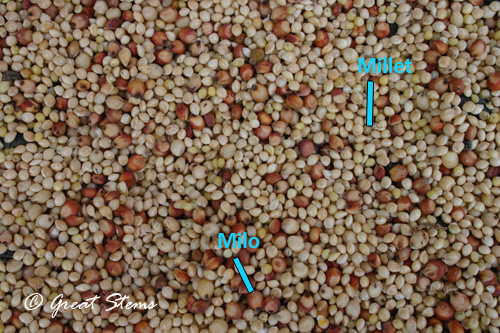
Milo and millet attract pest birds like English House Sparrows and Starlings.
Milo and millet are favorites of English House Sparrows and European Starlings, two non-native, invasive, and aggressive bird species. By aggressive, I mean that they will kill native birds such as Purple Martins or Bluebirds, drive birds out of their nesting areas, and destroy their eggs or young. Not only that, but they’ll eat all your birdseed before other birds can get to it! I’ve seen them get territorial at feeders, too. It’s very important to discourage these pest birds (and don’t let them use your nesting boxes or gourds).
White-winged Doves also love millet and milo. They are native birds, but they will quickly share the news that you are providing those seeds, and the next thing you know they and 30 other dove friends will be at your feeder all day long, taking turns with the English House Sparrows and Starlings and never letting any other birds have any.
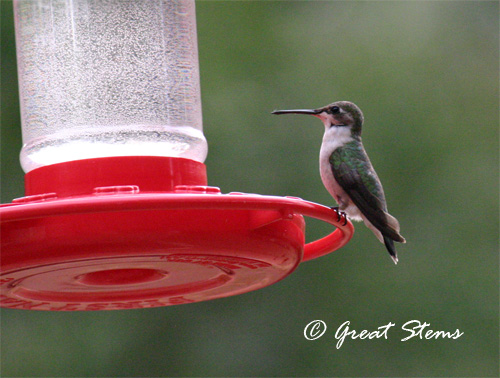
Just the feeder should be red, not the sugar-water mixture inside.
With hummingbird feeders, I recommend easy-to-open, easy-to-clean plastic hummingbird feeders that are all red in color. Glass is okay, too, but the feeder can break easily if it falls.
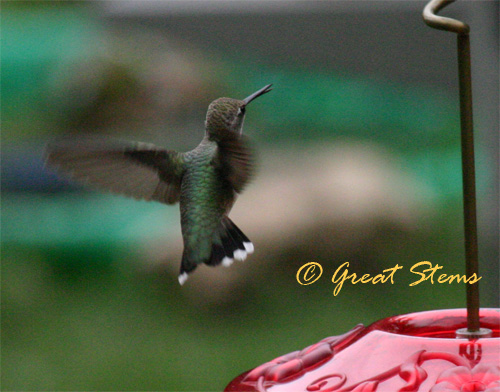
This saucer-style Hummzinger feeder has a moat for water to keep ants away.
You should be able to see every spot you are trying to clean — no nooks or crannies, and for your own ease, the fewer steps necessary, the better. Often, little bee guards (which are considered ineffective) or decorative flower attachments are a pain to clean, and that makes it more likely mold will grow.
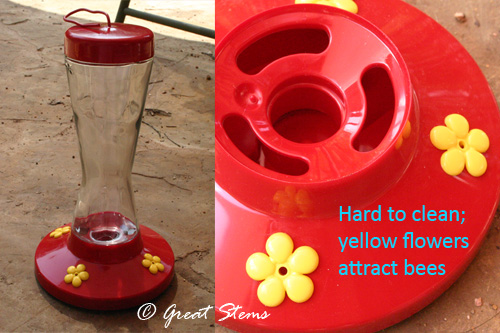
This feeder is seen at many stores, but it is difficult to keep clean, and those yellow flowers attract bees and wasps that might sting or chase off hummingbirds.
Why are all-red feeders the best choice? Those feeders with yellow and/or white flowers or other decorations sometimes bring in bees and wasps that are attracted to yellow and white colors. But bees and wasps can’t see the color red! Hummingbirds, on the other hand, love red. Bees and wasps also sometimes act aggressively toward hummingbirds and will even chase them off. My dad once witnessed a bee sting a hummingbird, and the hummingbird could not fly for several minutes. My dad watched over the bird until it was recovered enough to fly away.
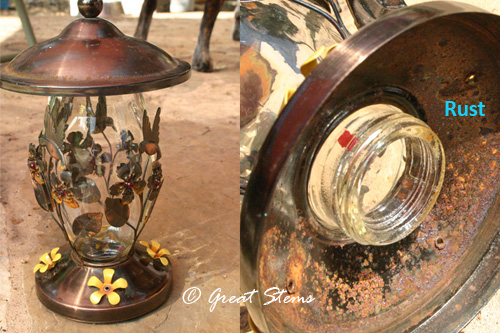
Iron from rusty feeders can build up in a hummingbird’s body and lead to its death.
I know that there are a number of pretty metal feeders out there, but stay away from them, please. Metal rusts, and the iron from the rust gets into the liquid and is consumed by the hummingbirds. However, they can’t get rid of the iron in their tiny little systems, and it can build up to the point of causing death. The hummingbird feeder in the above picture not only has rusty metal, but it also has yellow flowers and breakable glass. A triple threat!
The recommended mixture for hummingbird feeders is 4 parts water to 1 part ordinary white table sugar. Please don’t add red food coloring or buy red “nectar” mixes or use any other kind of sweetener.
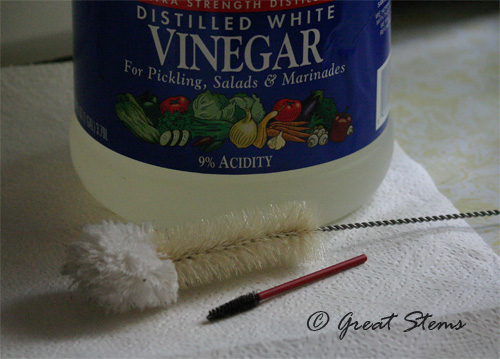 To keep feeders clean, I use water and vinegar, cleaning the feeder holes with a tiny brush and the inside of the feeder with a baby-bottle brush. I also make sure to replace the sugar mixture about every 3 days. Even with my five hummingbird feeders, the clean-and-refill task is quite fast.
The same goes with birdbaths — keep them clean (a kitchen scrub brush with some vinegar works great) and replace the water every 3 days. This not only helps keep the birds safe, but it keeps mosquito larvae from completing the cycle to adulthood, at which point the little flying vampires would look to you for their next meal or meals.
My thanks to Linda, Tom, and the friendly CTG crew at KLRU for making me feel at home on the show. And thanks to everyone watching out for wildlife this hot summer!
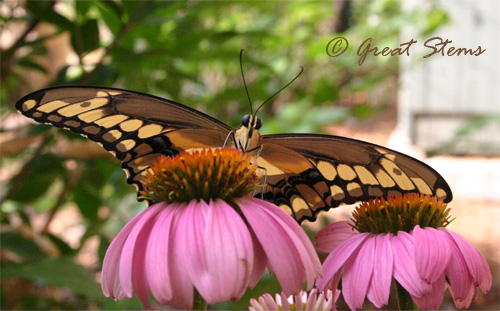 Giant Swallowtail on Purple Coneflower
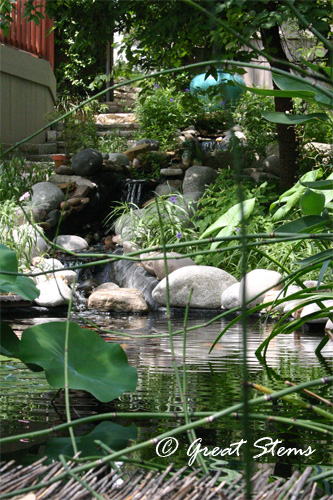
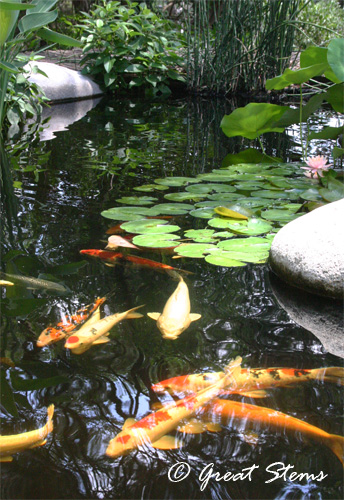
 Just before the pond tour, my son and I visited a lovely
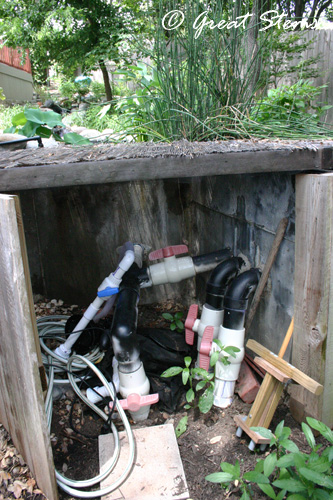 The owners made the four-chamber gravity-flow filter available for tour-goers to view.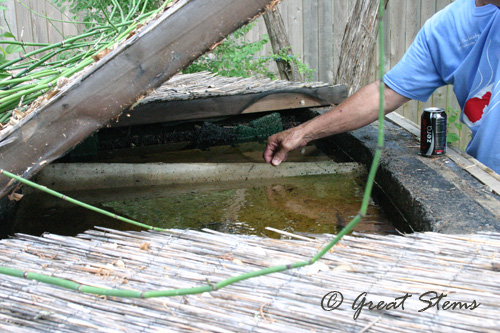
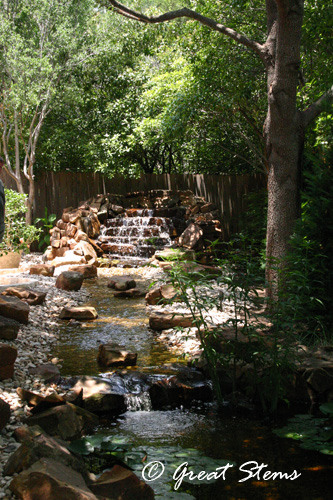
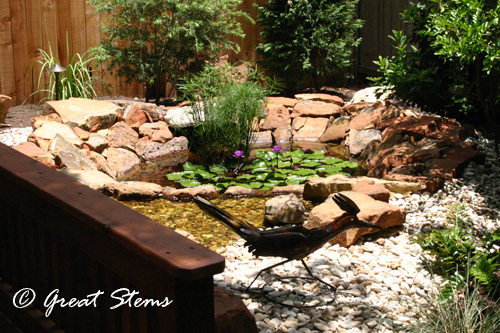
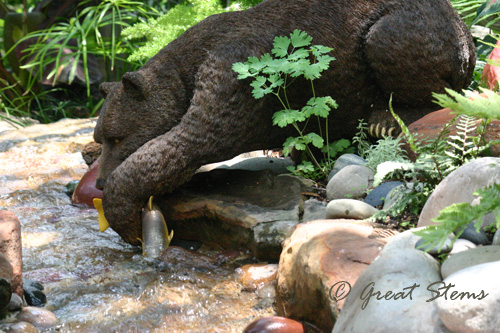 I don’t think the bear wants to share its catch.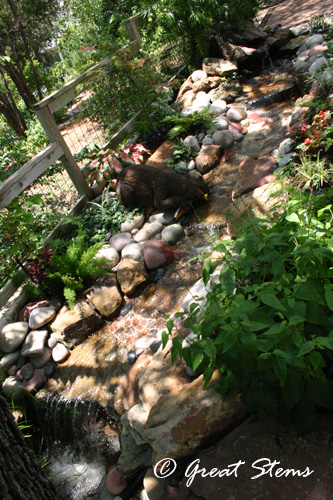
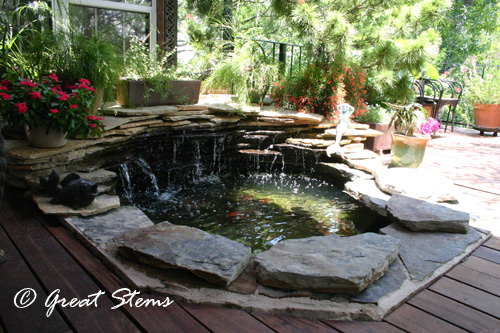
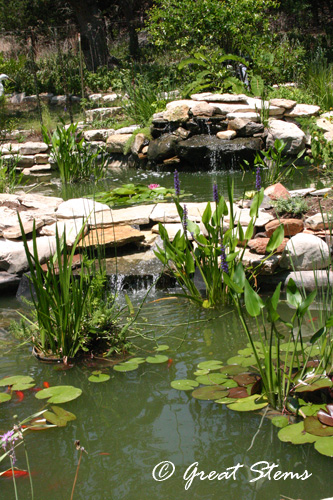
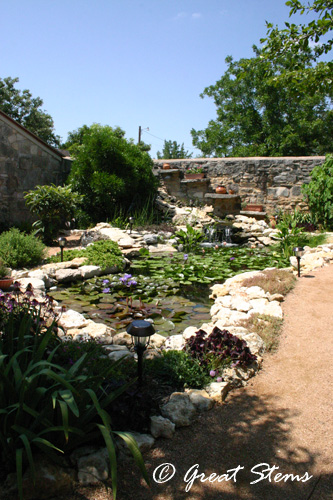 A walk into the courtyard led us to a large, beautiful pond. Take note of the planter shelves on the back wall — what a nice touch.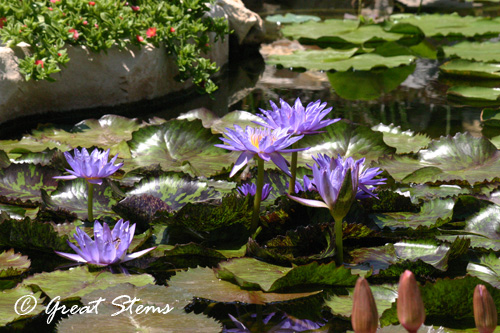
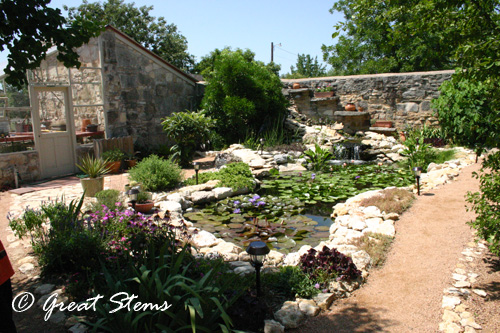
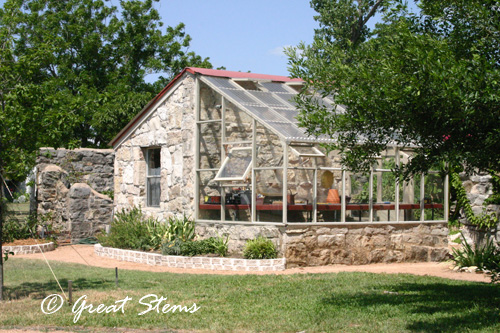

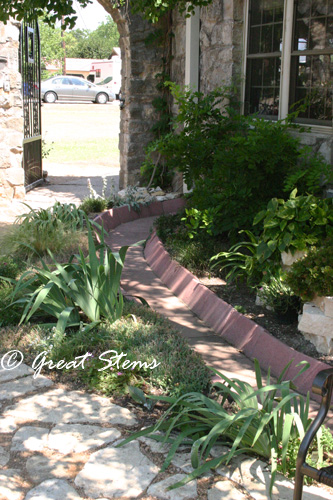 Here’s where the water would flow from if we ever had any rain — a drainspout up at the house. Oh look, just beyond is my car baking in the hot, hot sun.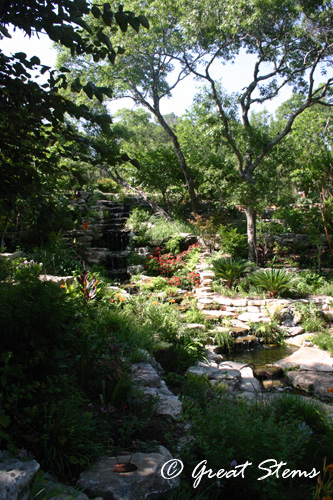
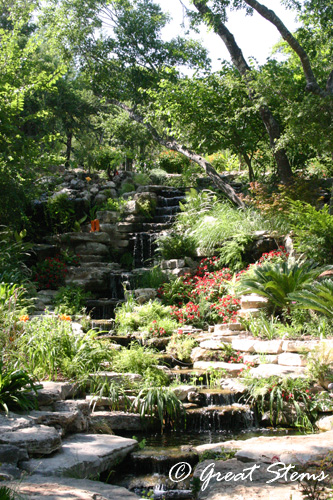
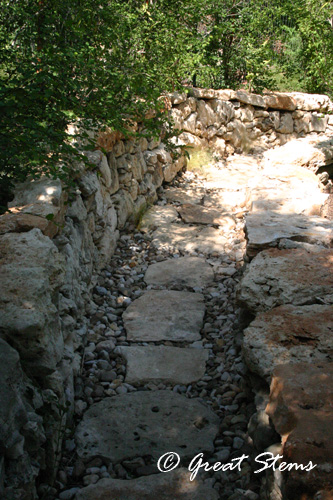
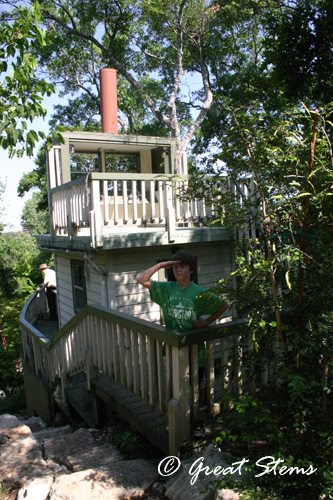
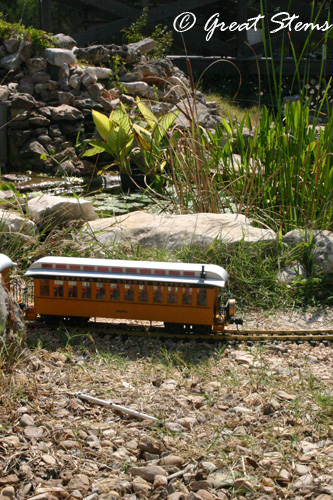
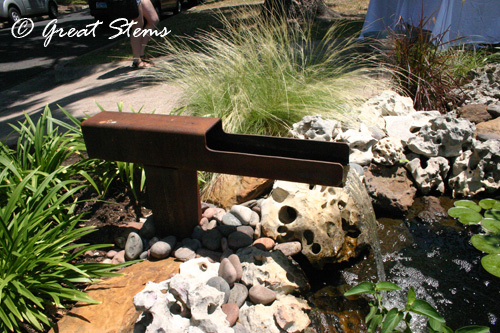
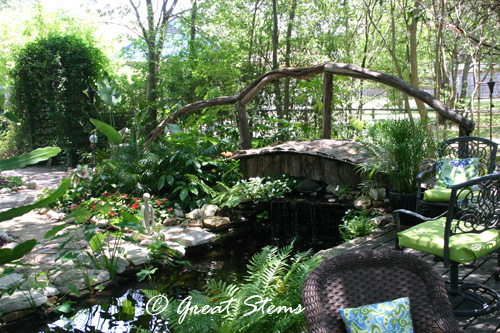
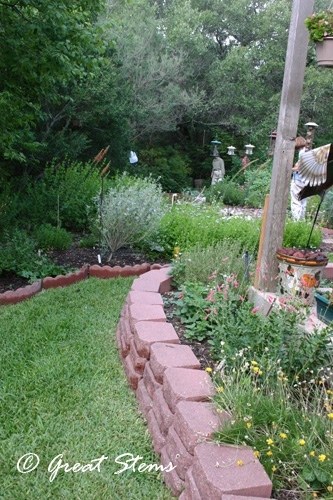
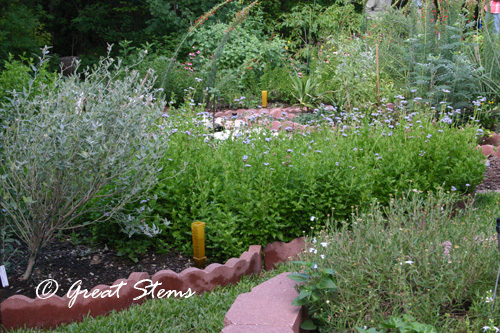
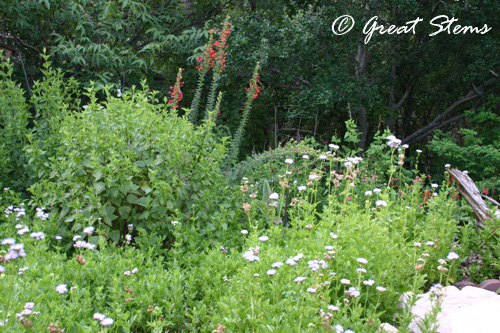
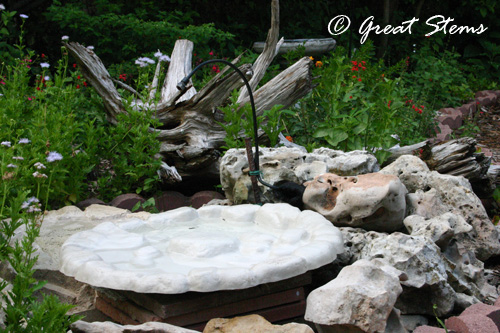
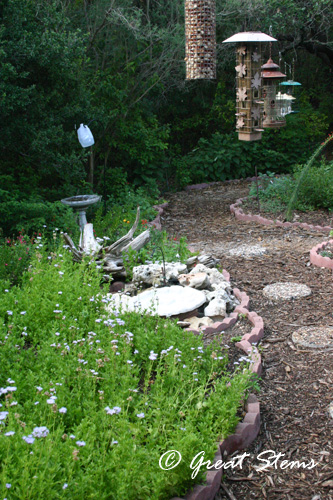
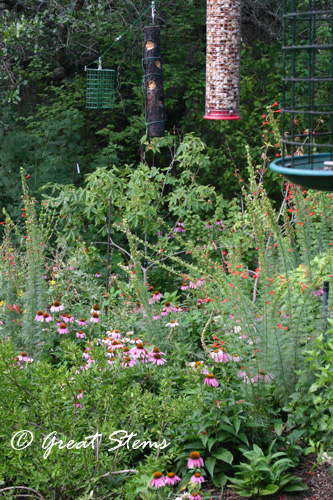
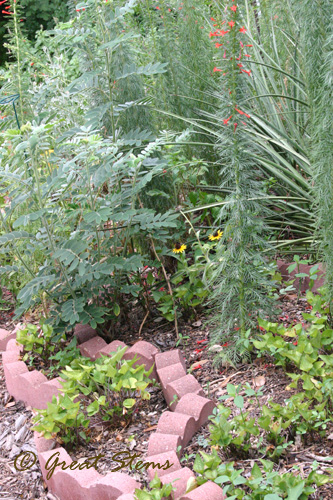
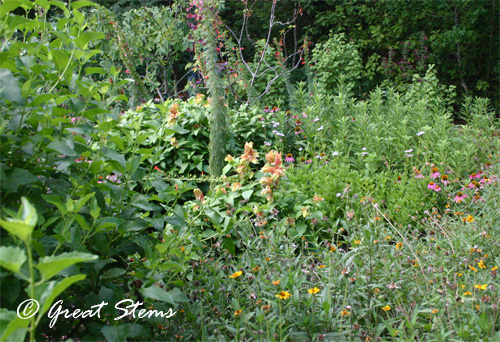
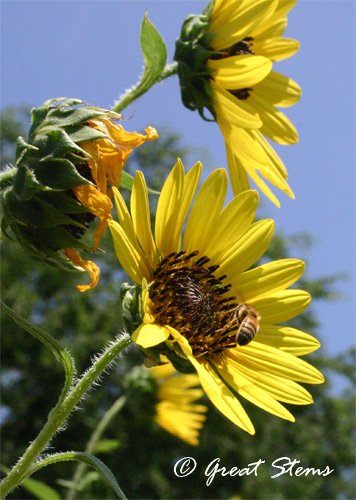
 Frankly, I loved the effect, and visiting hummingbirds and bees said the same thing. Two-dimensional images just can’t do it justice.
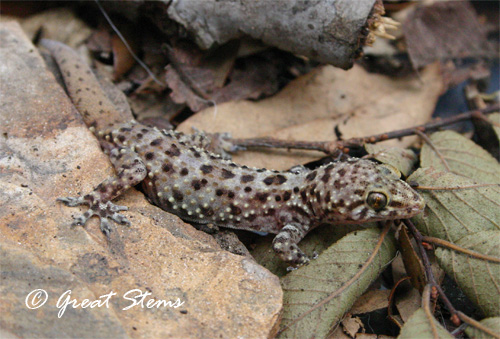
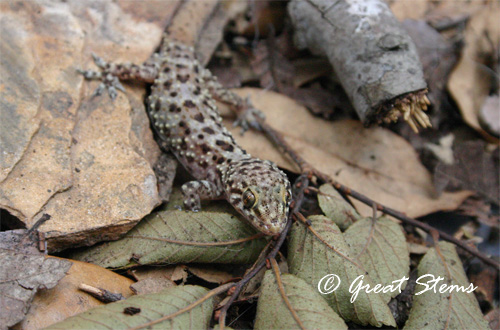 As far as invasive animal species go, this one is currently listed as having “minimal impact” on the native wildlife populations. But there are plenty of invasive species muy malos out there — European Starlings, Zebra Mussels, Japanese Beetles, Wild Boars (a.k.a. feral hogs), and a long list of other insect, aquatic, and vertebrate species. Starlings and English House Sparrows, for example, kill or push out Purple Martins and take over their nesting cavities. Feral hogs spread destruction and disease across the countryside and in many urban areas. Introduced earthworms are affecting northern forest ranges. Red-Eared Sliders, turtles native to Texas and considered friendly sights here, are problems in many other states and countries because they adapt easily to the local environmental conditions and affect native turtle populations. I’m not even listing some of the worst offenders.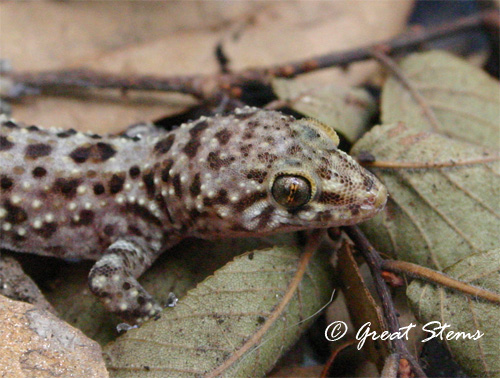
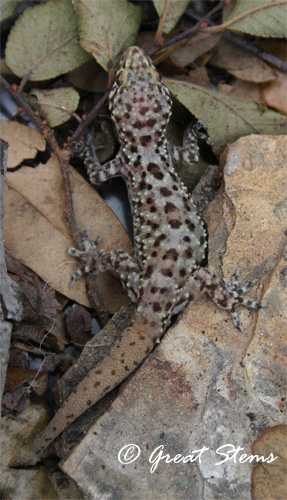 One of its more fascinating aspects is that it can lose its tail to escape a predator and then regenerate it– such regeneration takes about three weeks. I wonder whether this gecko went through that process — its tail looks distinctly different from the rest of it.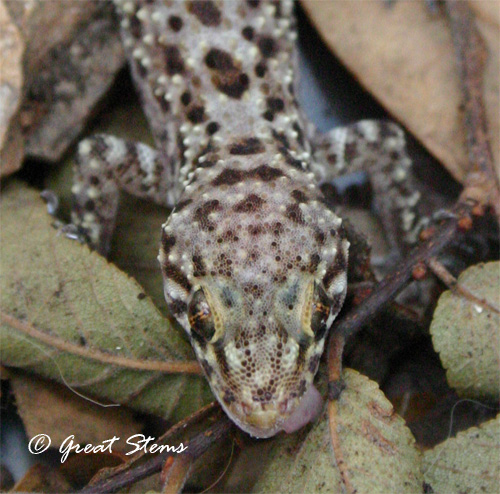
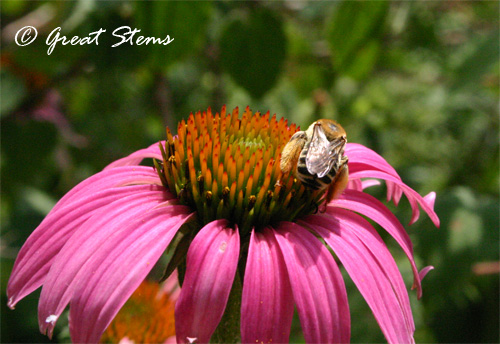
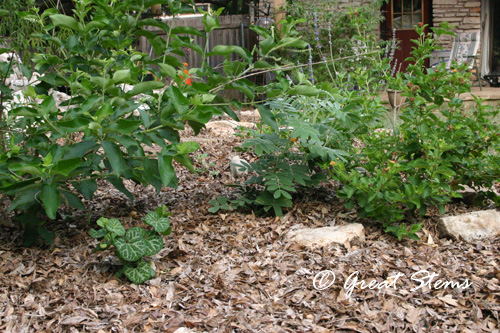 We’ve been adding plants around the raised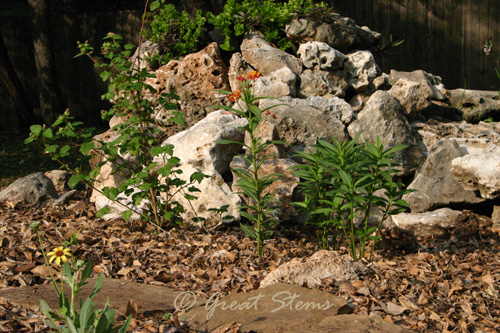
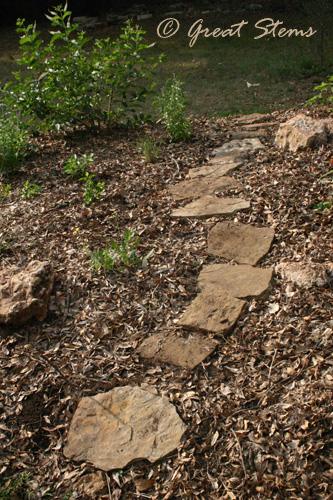
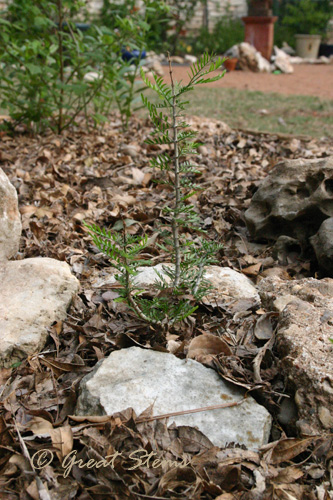 Above is a young Soapbush, Guaiacum angustifolium. It was a treasured find at the last fall Wildflower Center sale, but I didn’t get it in the ground right away and I’d almost given it up for dead by the time we made it to spring. However, just look at it now. It seems quite happy in the berm. Someday it will have the most adorable purple flowers.
 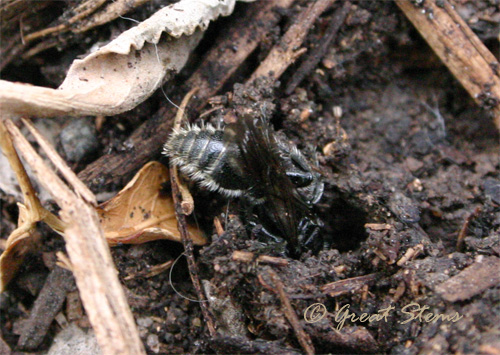 And look, a little mining bee began to work on a nest in a patch of bare earth.