Thirteen days. Twelve states. Six national parks. Two important monuments. Three state parks. 5,330.2 miles. 2,832 photos. Zero tire flats. Seven nights camping in tents. One glorious lightning-loaded rainstorm. One night spent sleeping in a car. One lovely evening at a farm with friends. Four happy family members. Countless memories.
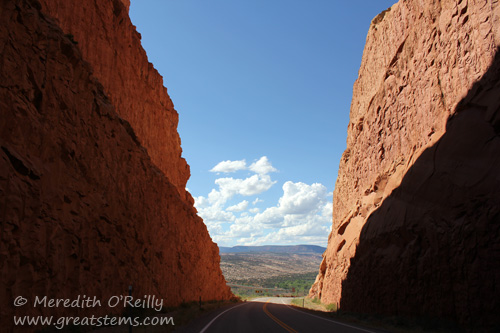 We just returned from our 2012 summer vacation, in which the boys and I left Austin and headed west to Utah, north to Grand Teton and Yellowstone (where Michael joined us via airplane), east to the Badlands, south to our friends’ farm in Kansas, and then all the way home again. It was our longest road trip to date. Combine that with our trip to the Everglades in the spring, and we have really managed to tour a big chunk of the United States in this year alone!
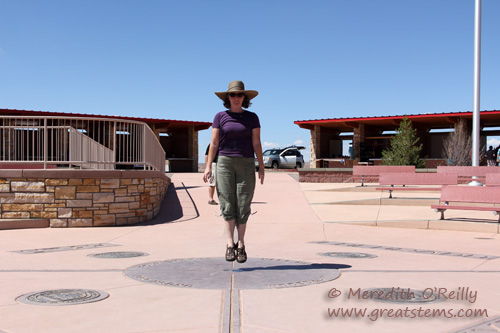
Jumping over Colorado, Utah, Arizona, and New Mexico at the Four Corners Monument
Our first primary destination was the area of Bryce Canyon National Park in southern Utah. But we took a slight detour along the way so that we could stand at the Navajo Nation’s Four Corners Monument, where Colorado, Utah, Arizona, and New Mexico meet. I decided that jumping over four states at once seemed better than just standing there. Yes, in fact, I am a goddess.
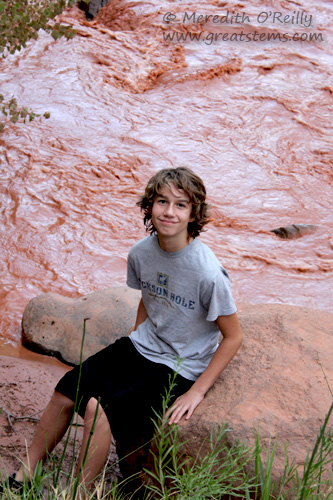
The Fremont River flows red when summer rains wash red silt from the surrounding landscape.
From there, we emerged ourselves fully in the grand beauty that is southern Utah. Just when you get used to one spectacular mountainous view, you drive around a curve and suddenly everything looks completely different, as seen in the top photo of this post.
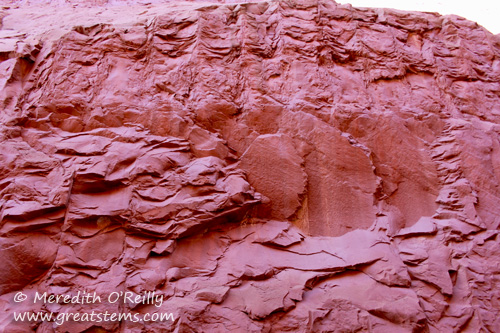
There’s a reason why this area of Utah is called red rock country.
Our first night in Utah, we camped at Escalante Petrified Forest State Park. It’s a relatively small but scenic state park located along Scenic Byway 12. There’s a lake near the campground, but it’s decidedly swim-at-your-own-risk, and not for the usual reasons. When we arrived at the park, the ranger handed us a detailed info sheet about something that sounded appalling — an aquatic parasite that causes something called swimmer’s itch. It turns out that this parasite is in Escalante’s Wide Hollow reservoir as well as in some of the other lakes in Utah state parks during the summer. No, thank you — we’ll just hike, we said. And hike we did.
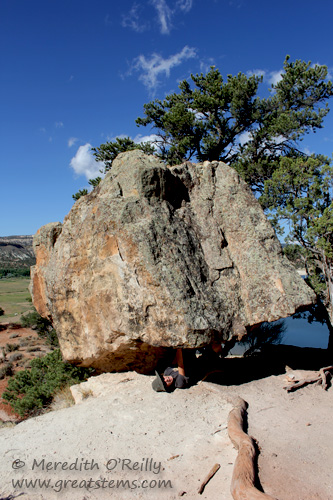
Balanced Rock at Escalante Petrified Forest State Park
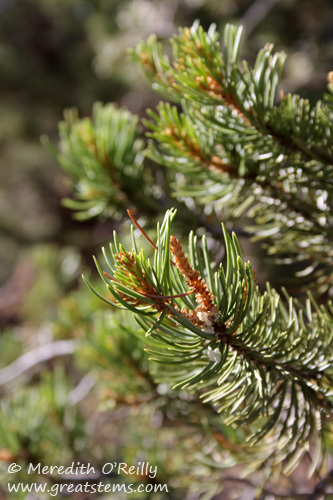
Pine at Escalante Petrified Forest SP
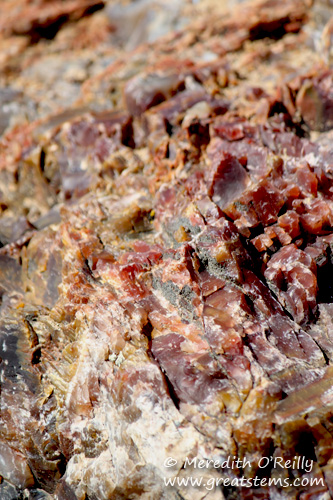
Petrified wood at Escalante
The park is named for colorful petrified wood logs and thousands of petrified wood bits located within the hiking area.
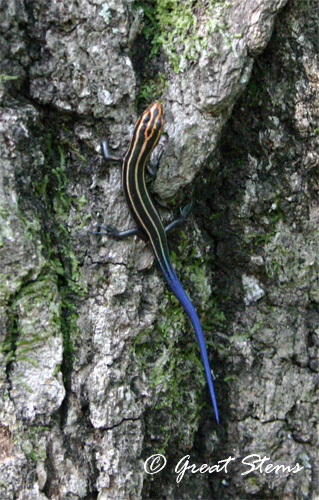
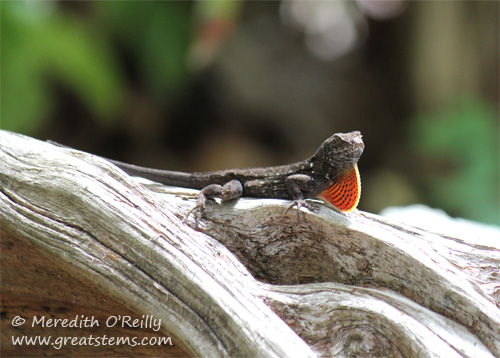
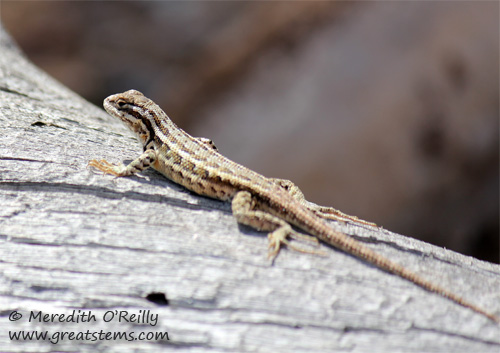 But we were just as enthralled with the many skinks and other lizards we saw as we walked along the trails. In fact, we got a little competitive about it, seeing who could find the most lizards, some worth two points if they were less common than others. Snakes were worth 15 points, but alas we didn’t find any.
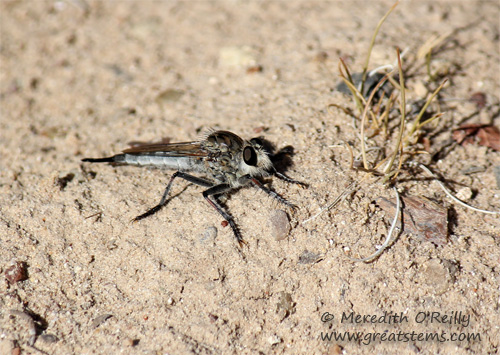
Robber fly
Interesting wildlife like robber flies had their own category.
From Escalante Petrified Forest State Park, we headed west along Scenic Byway 12 to Bryce Canyon National Park. Our first taste of Bryce began with Mossy Cave, a short hike at an area within Bryce Canyon National Park but well before you arrive at the visitor center and park entrance.
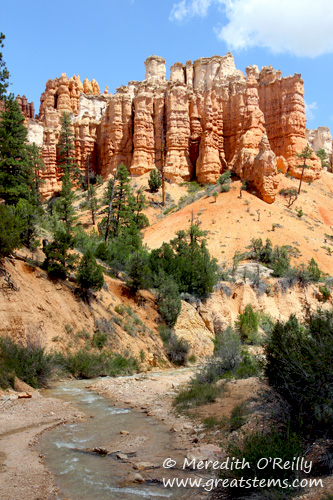
View at Mossy Cave trail, Bryce Canyon, UT
Here one can already see the hoodoos for which Bryce is known, and which I’ll explain about shortly, and a scenic waterfall, stream, and small cave add additional beauty.
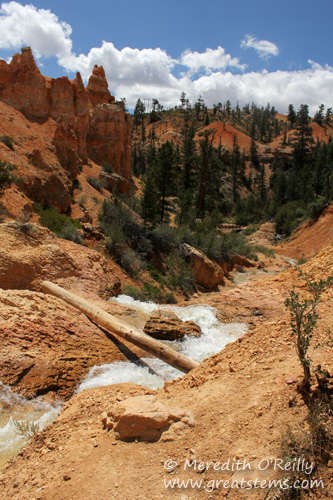
View from above the waterfall at Mossy Cave, Bryce Canyon, UT
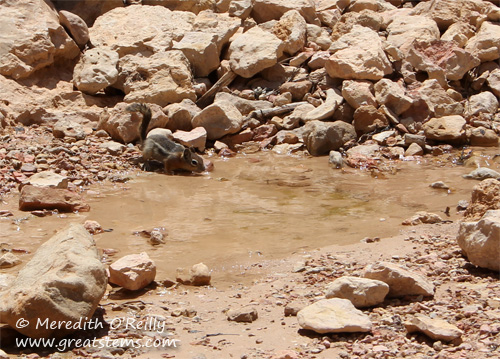
Golden-mantled ground squirrel getting a quick drink
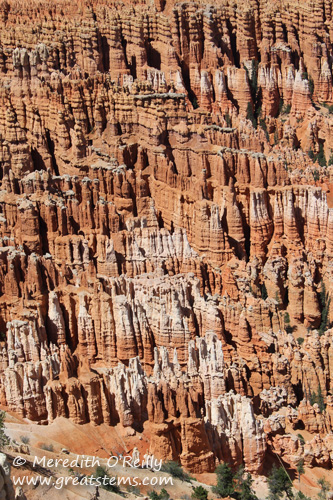
Bryce Canyon National Park really has to be seen in person to be believed. It’s unlike any place I’ve ever traveled. It’s not a true canyon, where a flowing river shapes the landscape. Instead, ice and rainwater have eroded away limestone and other rock to form vast amphitheaters of tall heavy-topped spires called hoodoos.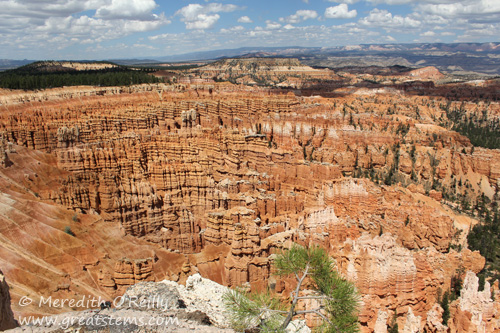
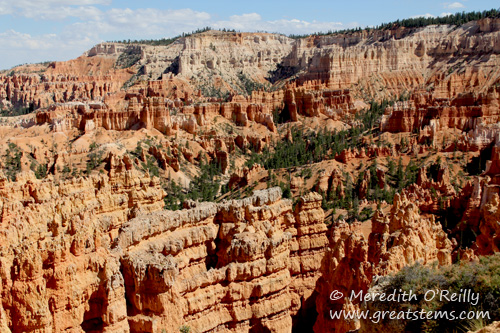
There are many different scenic viewpoints accessible via a driving tour or by hiking along the rim, and other trails take you down below the rim.
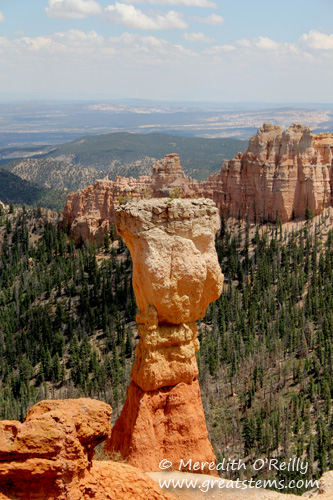
A hoodoo, a tall limestone-topped spire formed by erosion
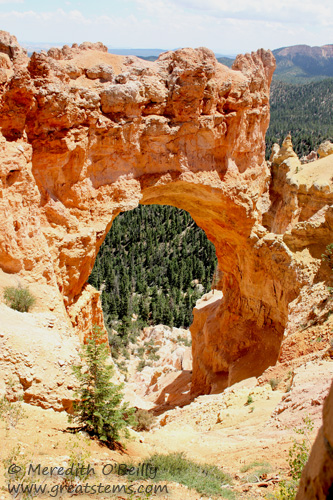
An arch at Bryce Canyon, though its name is Natural Bridge
I fell in love with Bryce. How could one not?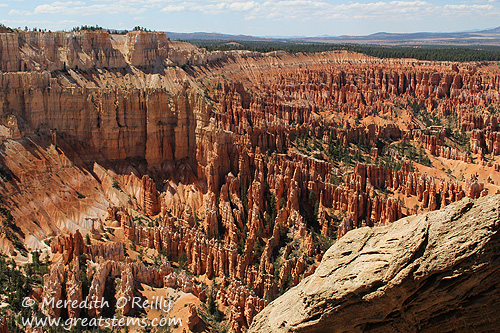
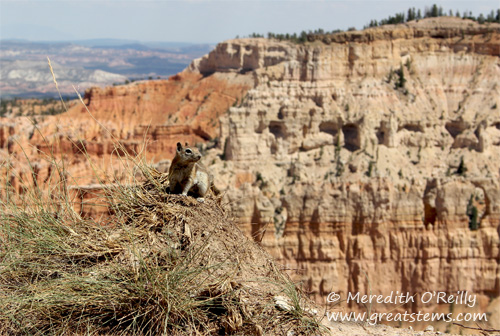
A Golden-mantled ground squirrel on one of the points of Bryce Canyon, UT
We saw birds and many a squirrel at Bryce. Surprisingly, we didn’t see a single lizard, compared to the dozens we’d counted at Escalante Petrified Forest just a few miles away.
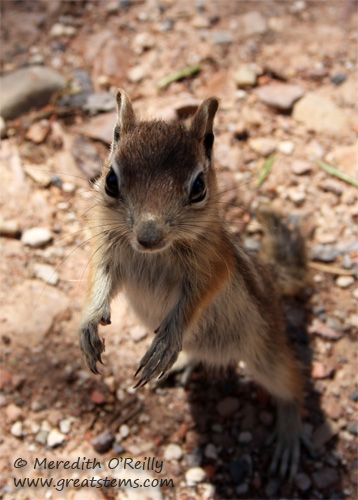
This young squirrel came looking for food, but when we didn’t offer anything, it moved away quickly.
At Sunset Point, we took a trail down below the rim, one called Navajo Loop.
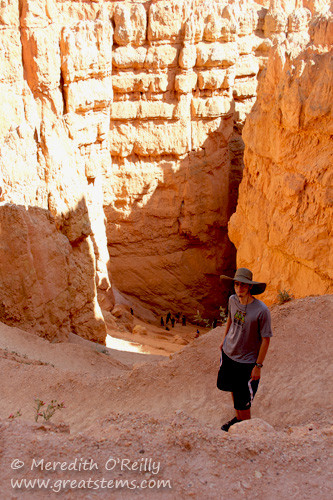
Navajo Loop, Bryce Canyon
Look into the depths, and you’ll get an idea of the downward trek.
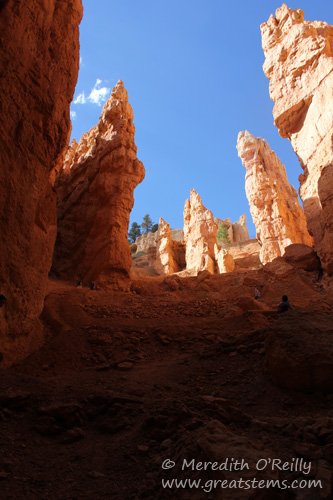
View from the bottom of the rim at Bryce Canyon’s Sunset Point
It was worth it.
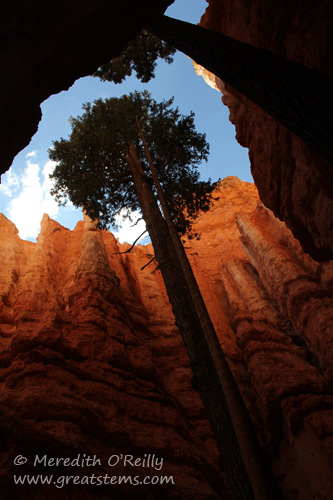
A tree grows tall in a sunlit nook of the Navajo Loop at Bryce.
Trees appear in sunlit spots within the narrow canyon, and before you know it…
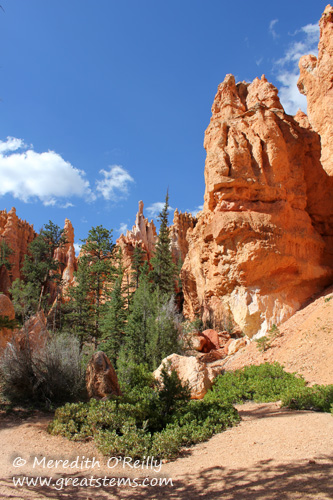 it opens out to a much bigger and colorful scene, where the trail continues.
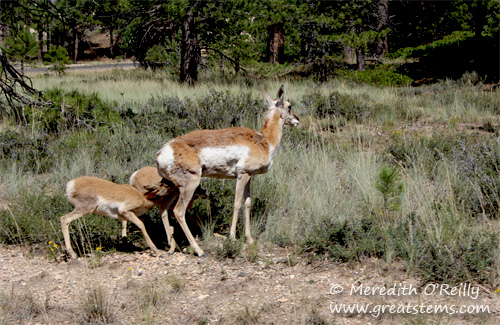
Pronghorns
As we were leaving, we saw this pronghorn family slowly crossing the road, a park ranger protecting them from moving cars. The young fawns nursed the whole way.
From beautiful Bryce, we headed toward Zion, camping overnight before starting the next day’s adventure.
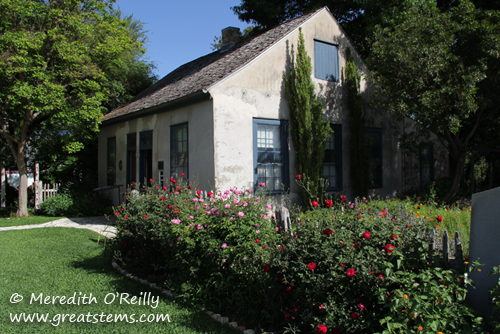
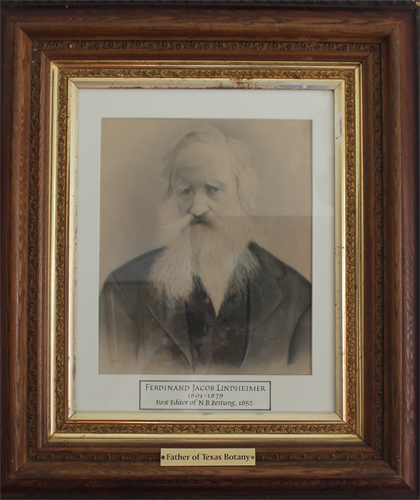
 Ferdinand Jacob Lindheimer was born on May 21, 1802 (some sources say 1801), in Frankfurt, Germany. Immigrating to the United States in 1834 during a time of political unrest in Germany, Lindheimer traveled first to Illinois and then to Mexico by way of New Orleans. For a short while, he worked on a couple of plantations in Mexico, collecting plants and insects in his spare time. Upon hearing about the Texas Revolution, however, he returned north to enlist in the army, missing the Battle of San Jacinto by a day. After completing his time in the army, Lindheimer farmed for a short while in the Houston area, all the while studying Texas plants and insects.
 Through Lindheimer’s letters, we learn of his fondness for sweet native grapes and how pecans and persimmons were regular food sources. We learn of different wildlife he encountered, his attention to physical fitness and health, his understanding of local Native American tribes, and just how many species of cacti and yucca there really are in Texas.
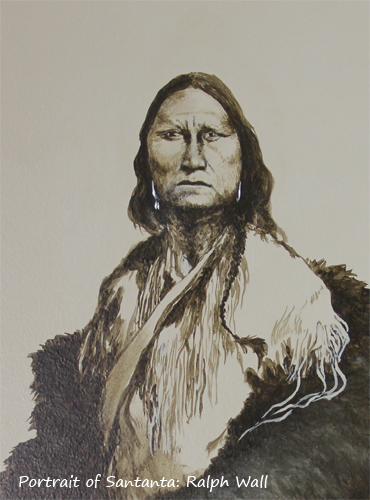 Lindheimer was known for his mild voice but strong opinions. He was an active supporter of freedom and justice.
  For 20 years, Lindheimer served as the first editor of the Neu-Braunfelser Zeitung, a bilingual German-English newspaper that lasted more than a century. He published the newspaper from his house and included his own sometimes controversial writings. He was involved in local education and served as the county’s first Justice of the Peace. After his retirement, Lindheimer returned to his passion for Texas plants, until his death on December 2, 1879.
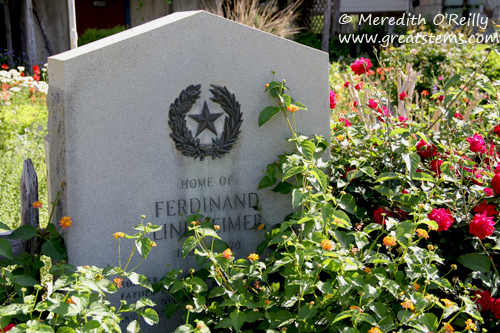
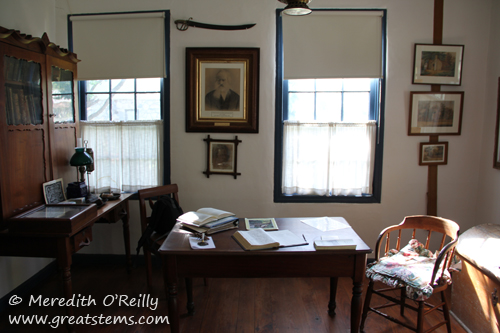 Today the Lindheimer Home is under the care of the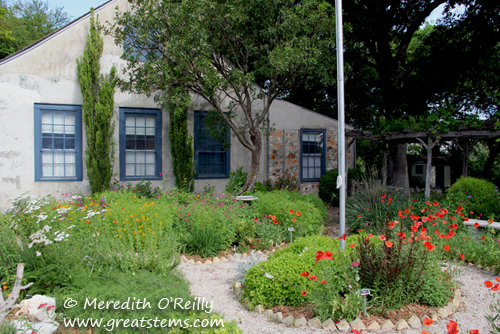
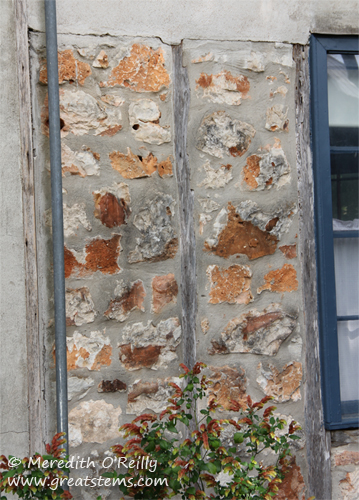 Stucco covers three sides of the main building, with the remaining surface exposing the fachwerk, or half-timbering, technique employed by German settlers, with rocks or brick filling space between the timbers.
 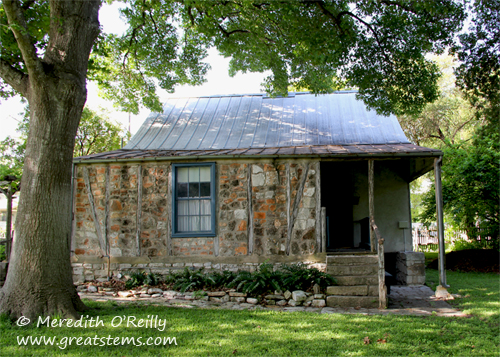 The house has a second-story loft, as well as a cellar, and a second building sits where the former outhouse had been.
  Inside, one sees much of the original furniture used by Lindheimer and his family.
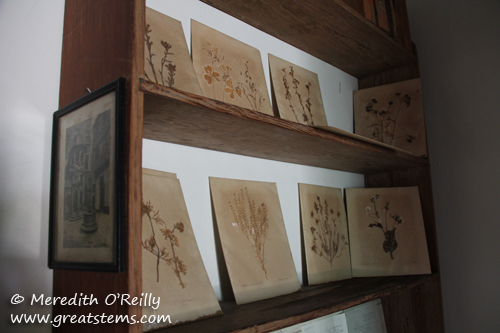
 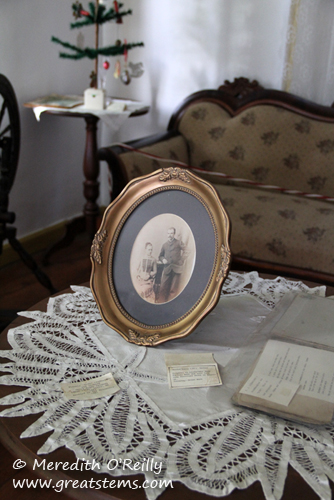 Original newspapers and plant specimens, as well as photographs and other items, are out on display. The image above is Lindheimer’s granddaughter Sida and her husband.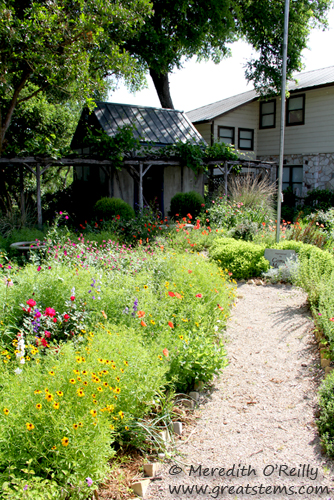
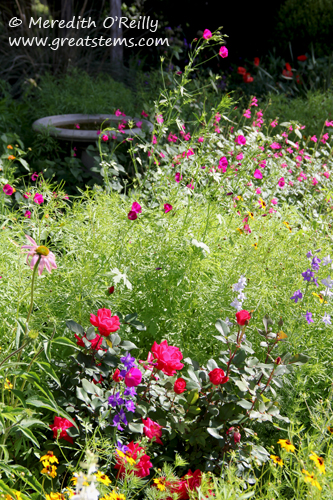 The
The 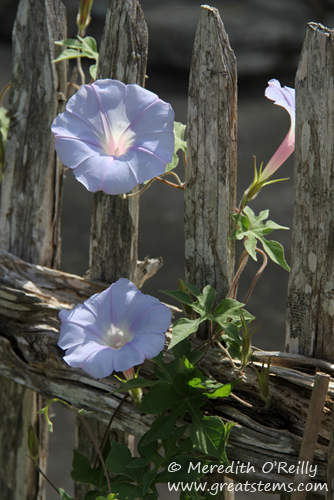 Lindheimer Morning Glory (Ipomoea lindheimeri)
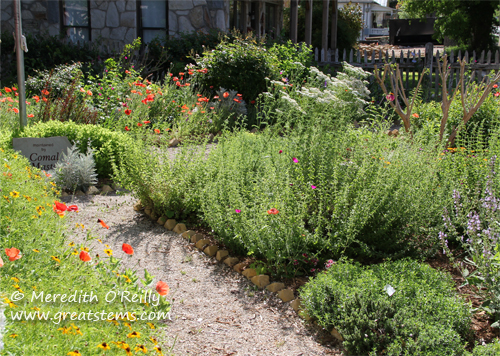 The Master Gardeners visiting with us said they hope to continue increasing the Lindheimer plants, especially those well suited for a garden (for not all of the Lindheimer plants would qualify as being ideal choices). After reading Lindheimer’s letters that accompanied his plant specimen shipments to Engelmann, I’d like to also suggest continuing to add native plant species that Lindheimer particularly loved collecting from the Texas wild – what fun it would be to research those! For it cannot be questioned that Lindheimer’s true passion was Texas flora, not just collecting it but experiencing adventure along the way.
 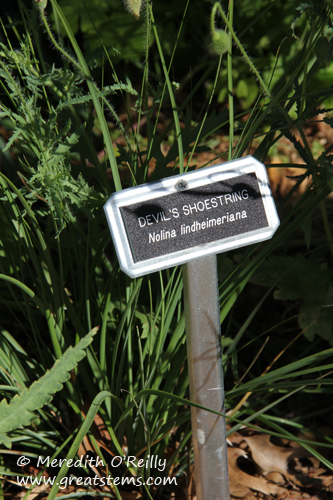 Today, many plant species (and one snake) bear the name Lindheimer in their scientific name. Depending on the source, there are at least 30 such species and possibly more than 40, but with taxonomic changes happening all the time, there is no way for me to confirm an accurate number. But after touring the Lindheimer Home and gardens and knowing that I intended to write this article, I decided to increase my personal collection of plants named for Lindheimer, and so far I am up to at least 7 (there might be others on the property):
 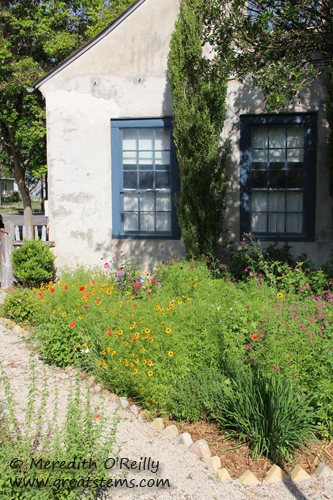 Thank you to John Turner of the New Braunfels Conservation Society and to the Comal Master Gardeners for sharing a moment in time with Lindheimer with me. The friendliness of my tour guides, my love of Texas botany, and my being a former resident of New Braunfels made my visit just like coming home. Plus I had a great time speaking to the 2012 Master Gardener class. On the way home, I viewed wildflowers in the Texas Hill Country. What a great day!
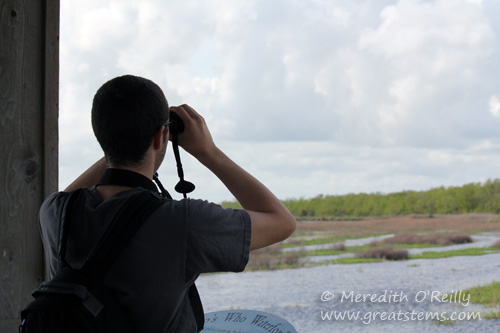 We wanted to visit a wildife refuge in Louisiana to get an idea of environmental differences between it and Florida — and if we had an opportunity, to sneak in a glimpse of the coast. The answer — the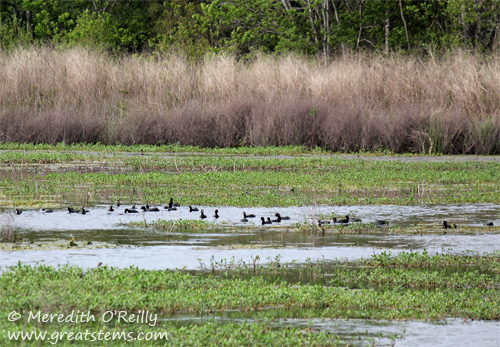
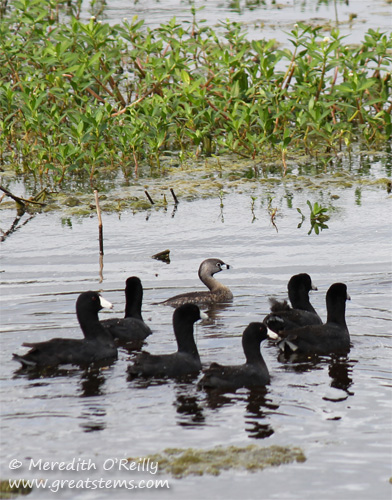
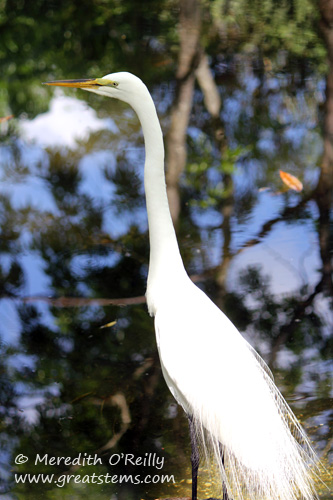
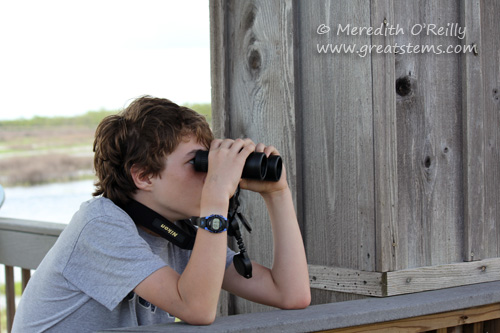 A boardwalk and observation deck make it easy to look search for water-loving birds, and we observed White Ibises, different species of ducks, Great Egrets, Coots, Grebes, Great Blue Herons, and others.
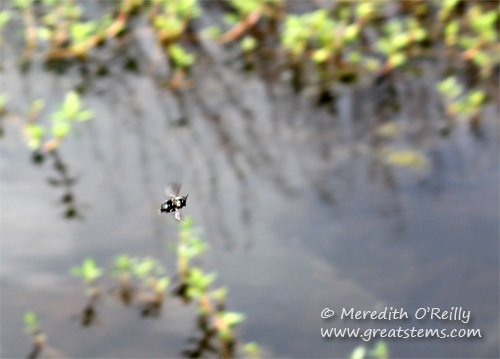 Carpenter Bee — it’s very difficult to capture an image of this fast-flying insect!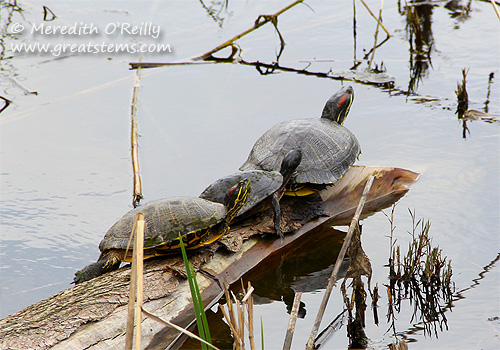
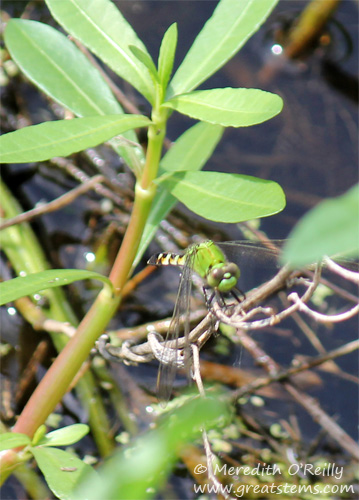
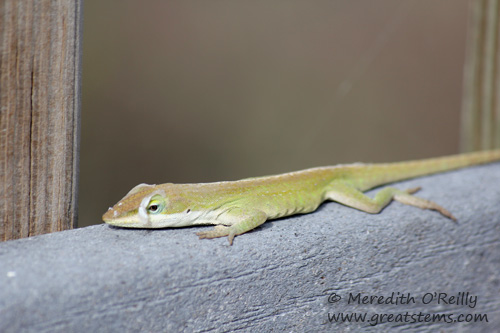
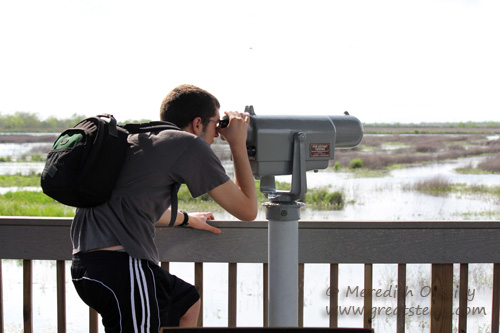 The boys, throughout our entire trip, were quite the naturalists, and they were excellent at both finding and IDing wildlife species — Louisiana was no exception.
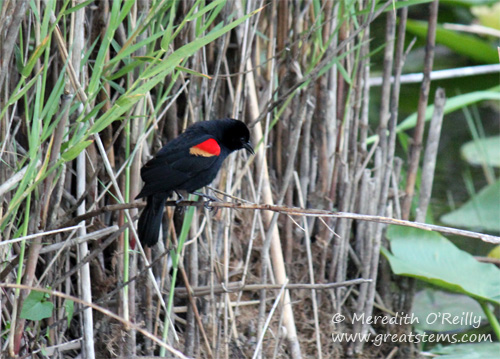
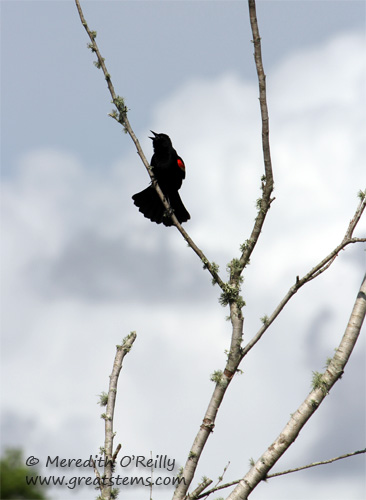 The Red-Winged Blackbirds were the most plentiful birds we saw in southwestern Louisiana. Great numbers of large flocks were spotted time and again throughout the marshland and agricultural areas we visited.
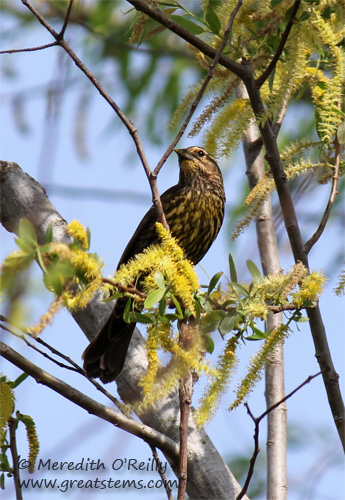 Female Red-Winged Blackbird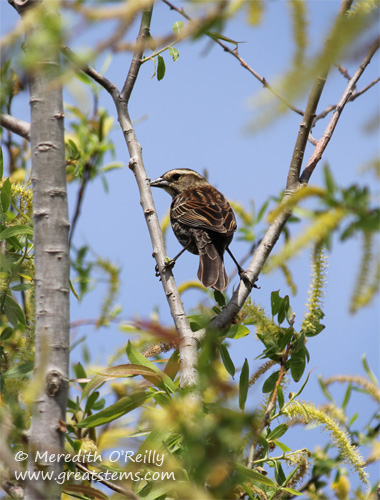
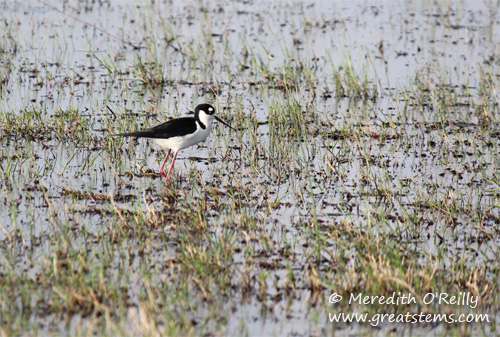
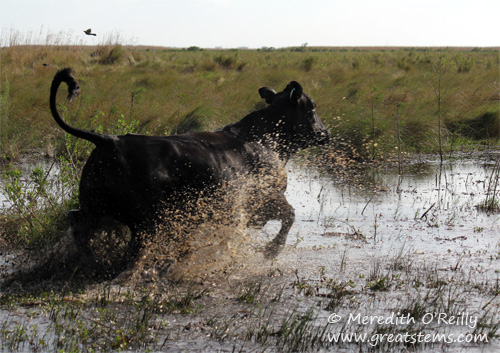 Ah, but we had adventures yet to come. We found that the maps we had and the roadway signs left something to be desired as we traveled that day in Louisiana. Trying to visit a particularly spot along the trail, we made a wrong turn, through no fault of our own (seriously), and after driving a bit we found ourselves on a road lined with curious cattle who splashed through the marshland to come over to see us. In moments lots of cows surrounded our Civic Hybrid, and those big cows made our little car seem smaller than ever.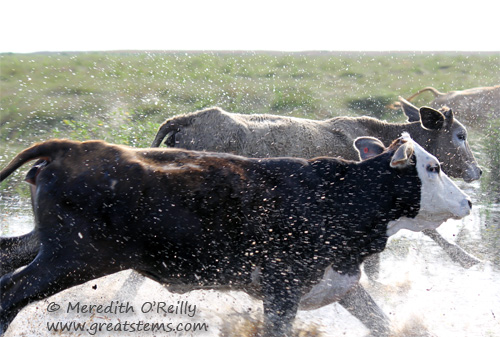
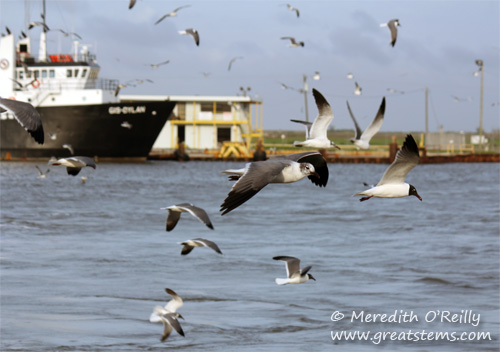 Back on the proper road, we continued to discover more reasons to gripe about the maps and lack of decent road signs, but eventually we found ourselves at a ferry, which takes cars across a ship channel to another portion of the highway. Even there at the ferry, we had sign issues. There was a sign and painted road marks showing where to stop to await the ferry, but there was no sign telling us that after 5pm you needed to drive over to another place in order to get on the ferry. So the driver of the car in front of us waited at the posted place, and we waited behind him, and time tick-tocked and tick-tocked, until a local resident drove up and said, “Hey, after 5pm you have to go over THERE to get on the ferry,” pointing to some place not visible from where we sat. Thank goodness he said something or we might still be at that stop sign waiting for the ferry.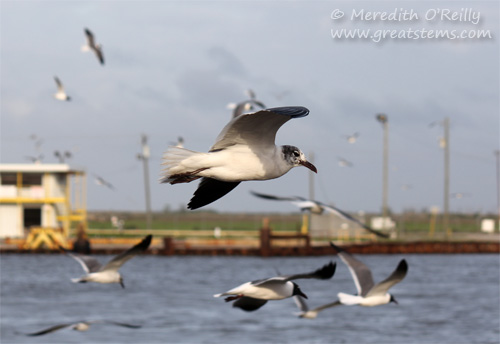
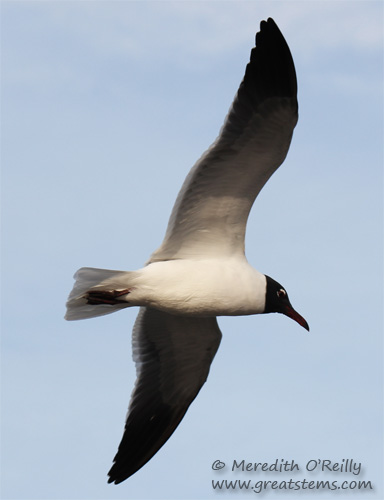 The gulls in particular followed the ferry en masse, hovering just off the back as the waters churned around us. Perhaps they hoped some people would toss them food, but they honestly didn’t seem interested in the humans on the ferry — maybe instead they were hoping to spot some fish in the waters behind the boat.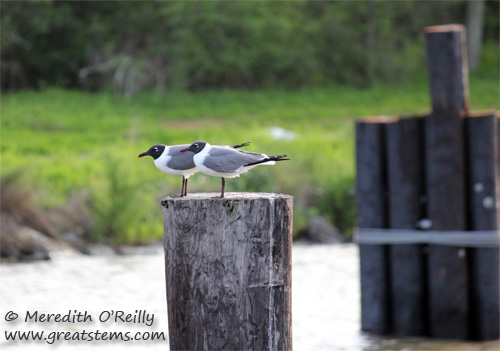
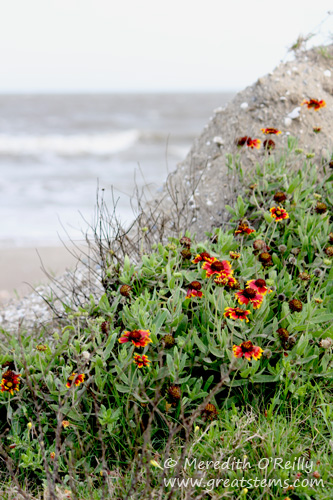 Soon after the ferry ride, we found ourselves driving along the beach. We pulled over to look for shells and found them we did — many were huge!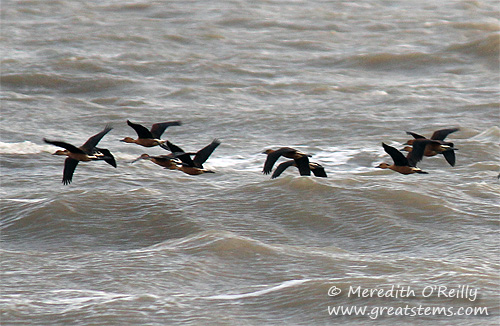
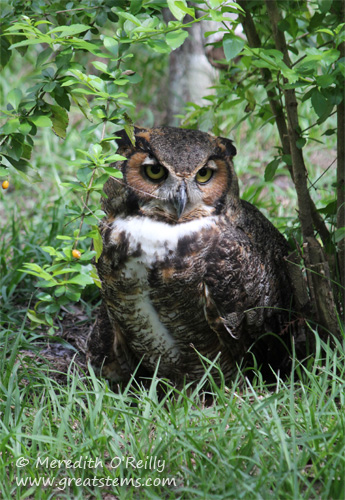
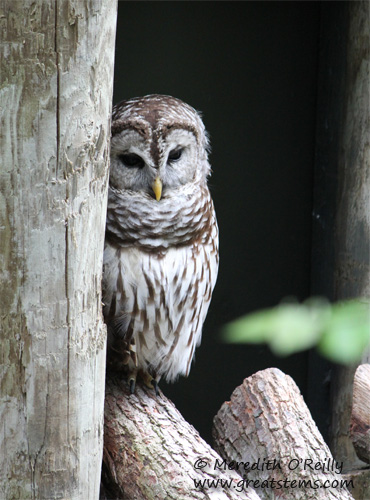 Barred Owl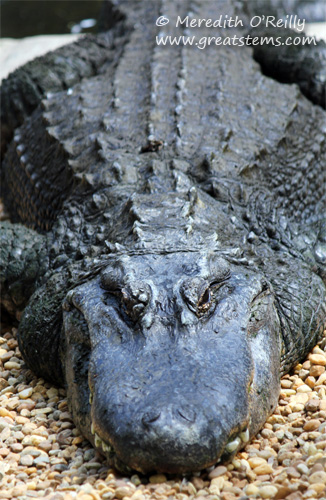
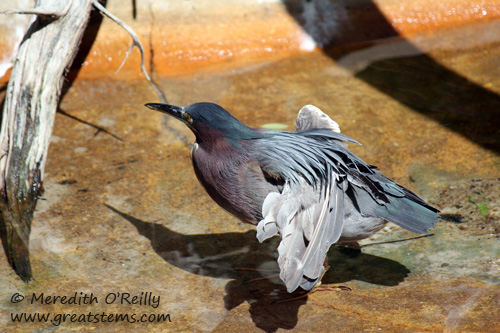 This Green Heron has a severe wing injury, and lucky for it, it has a home at the state park.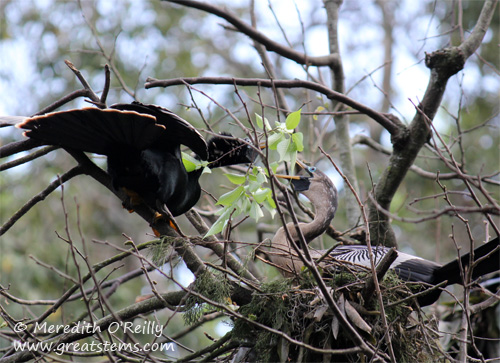
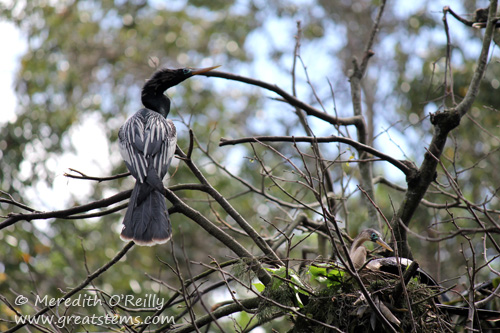 Eventually he got the branch in an acceptable spot.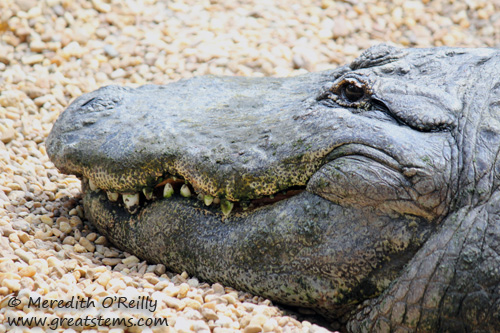
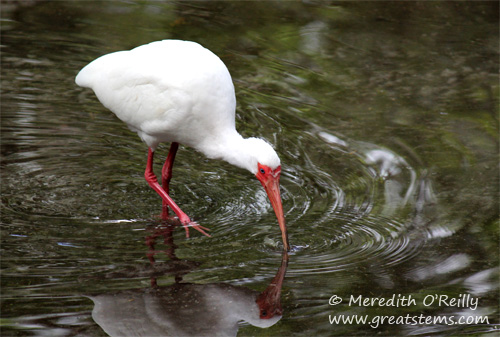
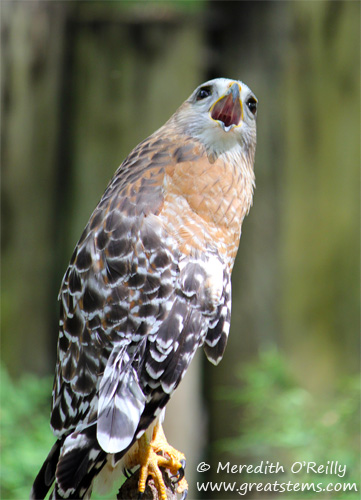
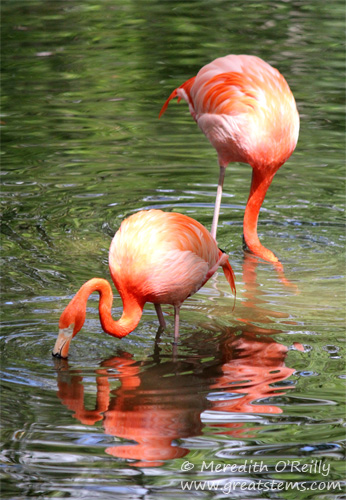
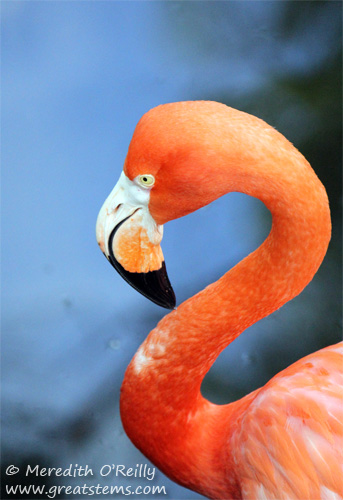 Flamingo
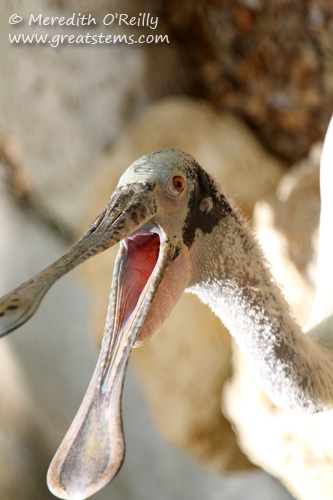
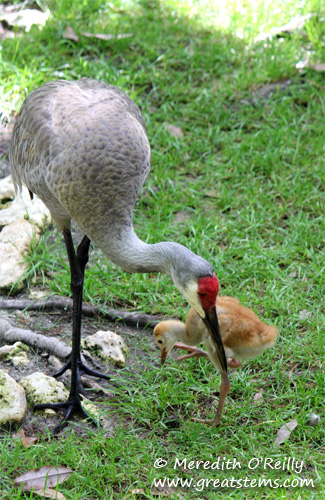
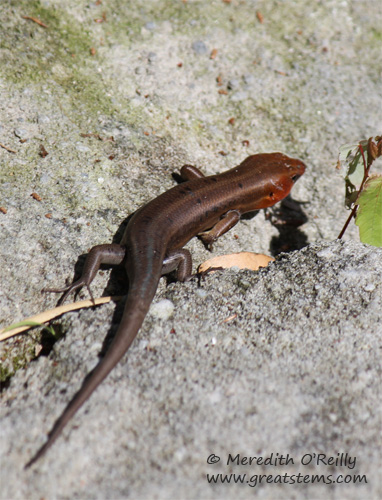
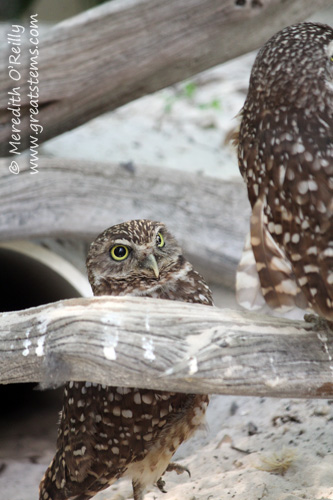
 One of the highlights of our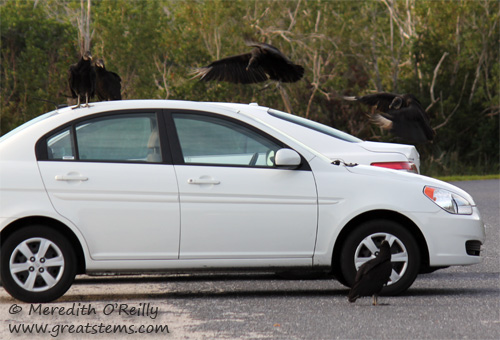
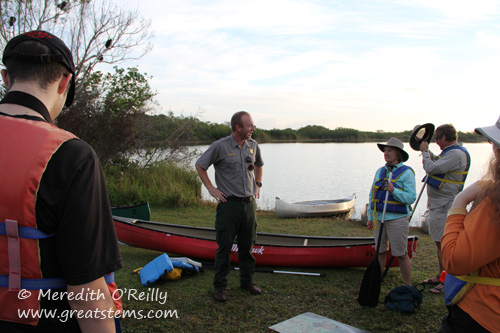
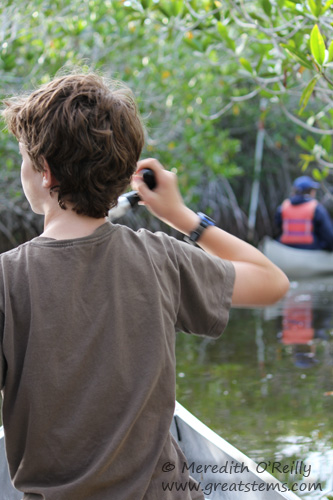 Sometimes we maneuvered through tunnels made from overhead arching branches, while the mangrove roots arched downward into the water. In case you are wondering why my son isn’t wearing a life jacket in the image above, the Park Ranger let us take them off once we were in the shallow waters of the mangroves. I opted not to “rock the boat.”
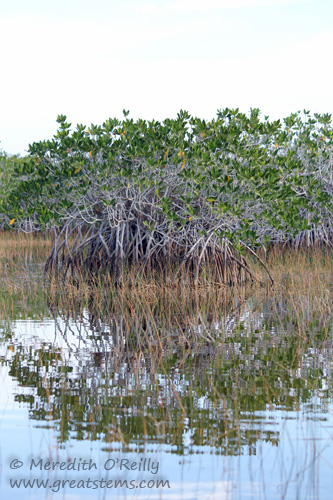 Red Mangroves create a community utilized by many different plants and animal species. Additionally, they serve as protection for the delicate ecosystem, especially during hurricanes.
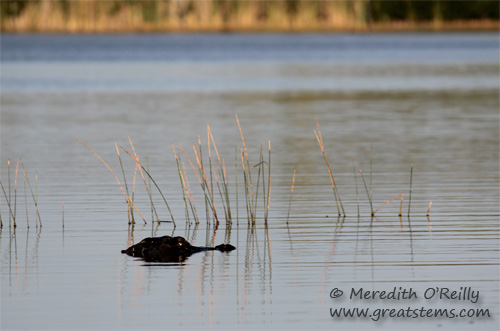
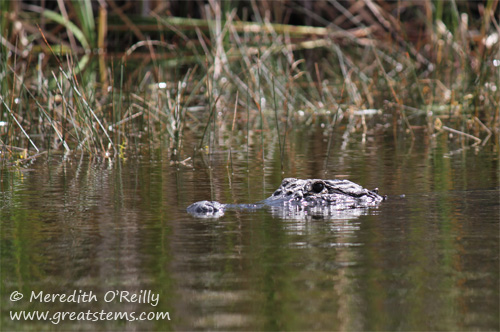
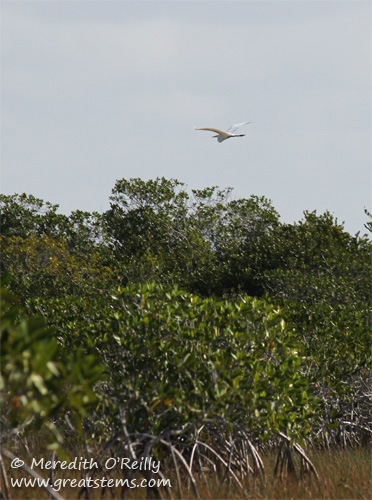 We saw the occasional alligator, and several birds took flight as we paddled our way around curves and corners.
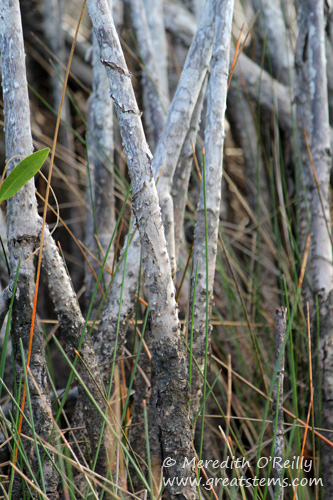 The upright Mangrove roots stood out of the water like stilts, supporting the tree above.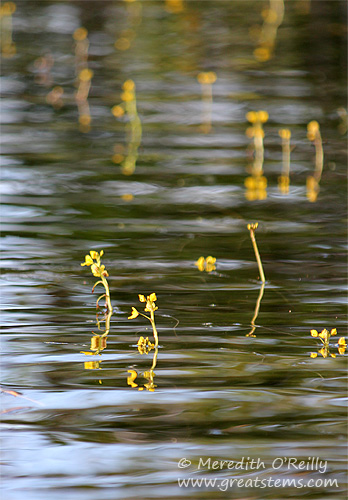
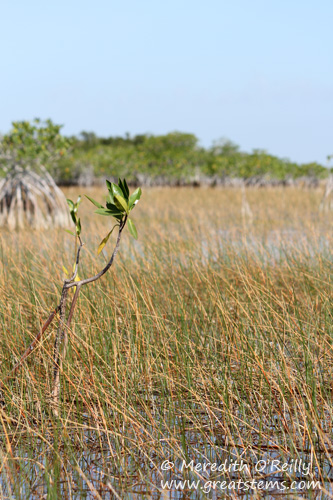
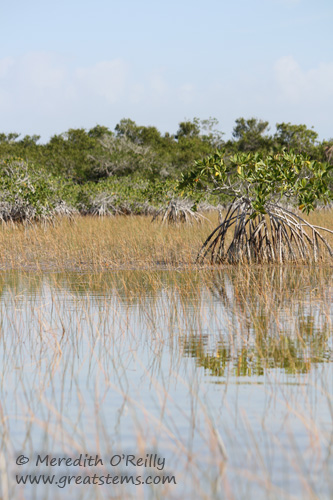 Out in an open area of Spike Rush and scattered Mangroves, our group paused to discuss the movement of water through the Everglades ecosystems and how wildlife adapts to the flow of water in wet and dry seasons.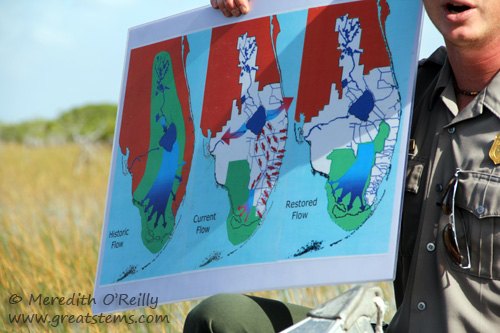
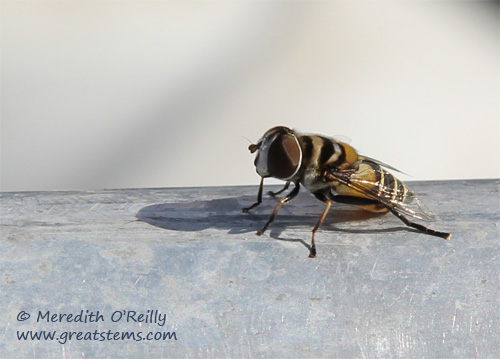
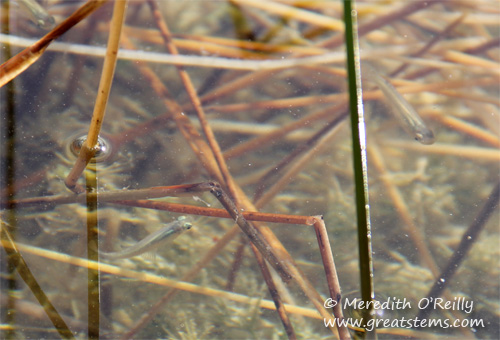 Below us, we only saw small fish, but much larger fish can be found throughout the fresh to brackish waters.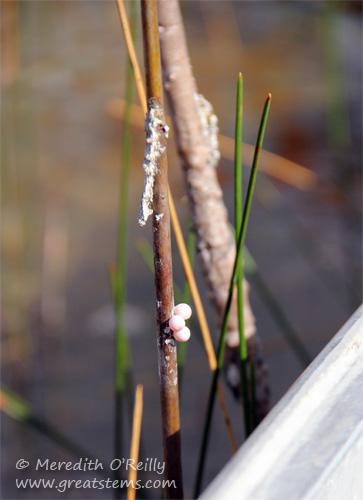
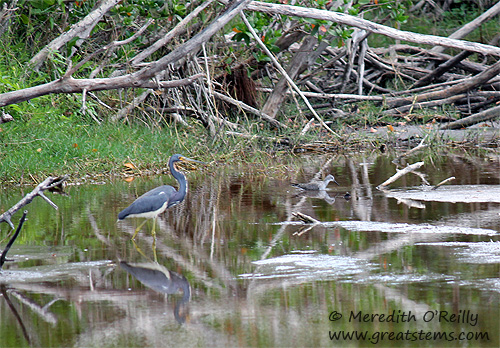
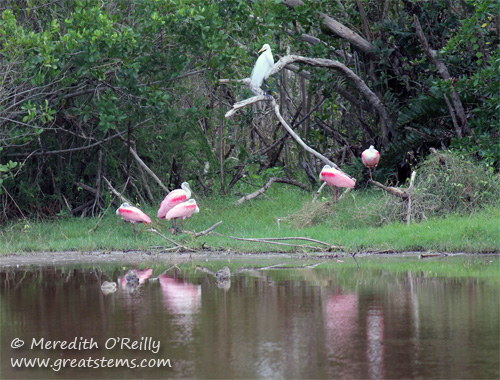 After leaving the 9-mile pond, we headed south toward Flamingo. Along the way we spotted Roseate Spoonbills and many other birds at Mrazek Pond, which as it turns out happens to be a prime birding location.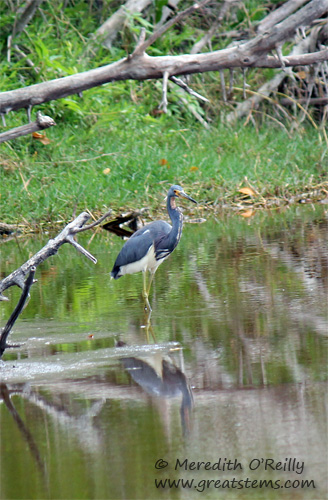
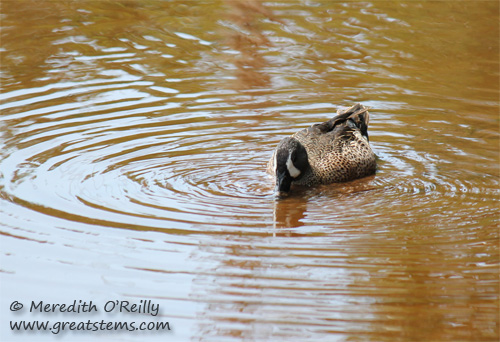 Blue-Winged Teal, Female
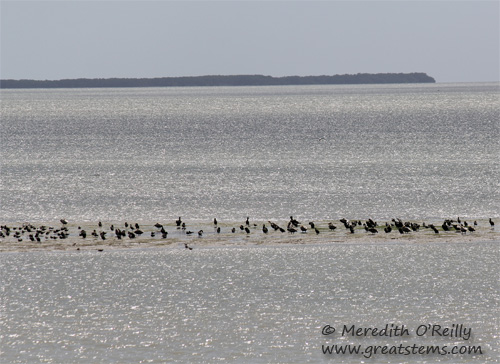 View from Flamingo, Southern Everglades
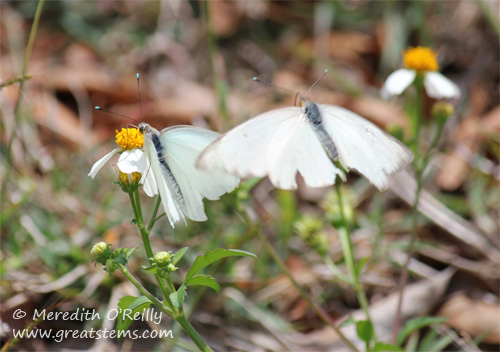 Down at Flamingo, we walked about the Visitor’s Center, enjoying sights of birds and butterflies. Manatees were mating at the marina, as well.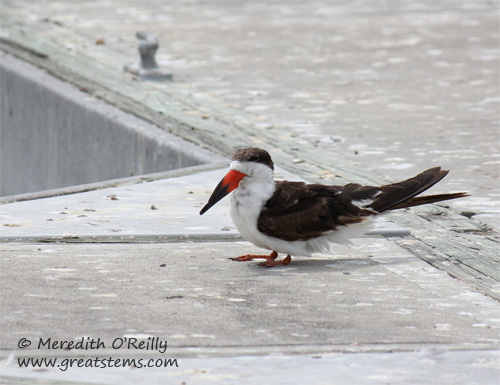
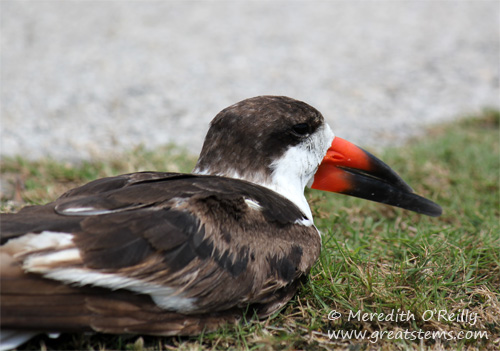 I fell in love with the Black Skimmers, especially fascinated by the elongated lower mandible that allows a skimmer to, well, skim the water for its food.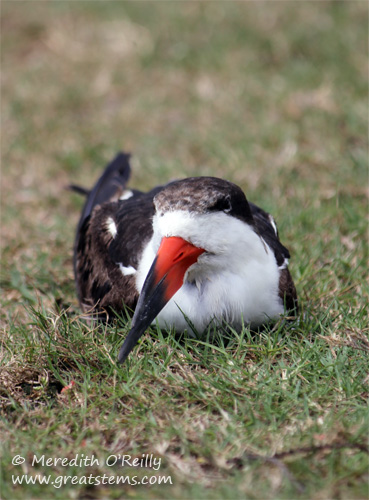
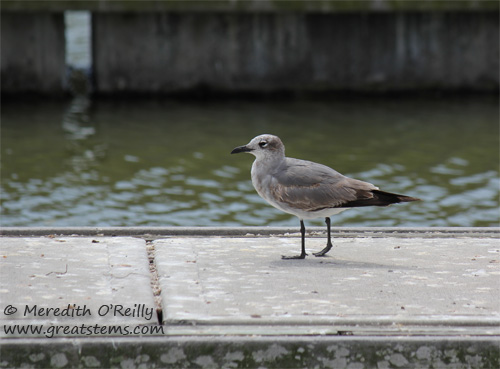
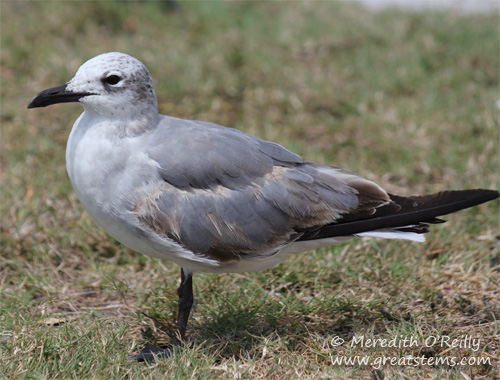
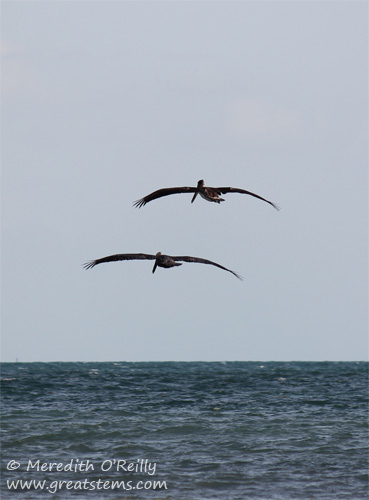
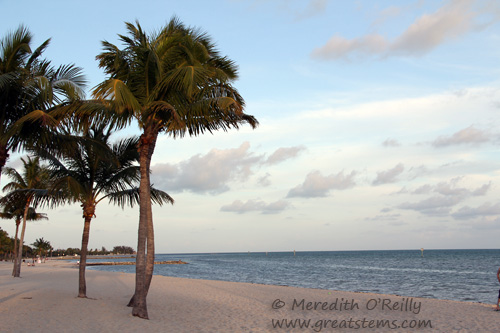 From this southernmost point, we pointed our car north again. It was time to head back toward Austin, but we still had a few stops to make during our journey home….
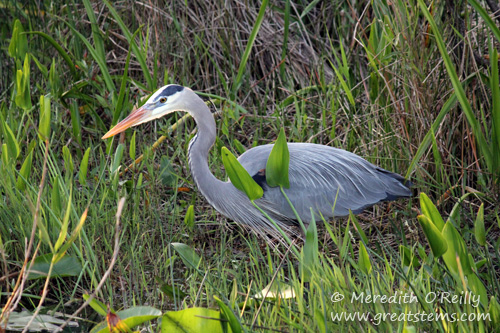 Continuing with the story about our
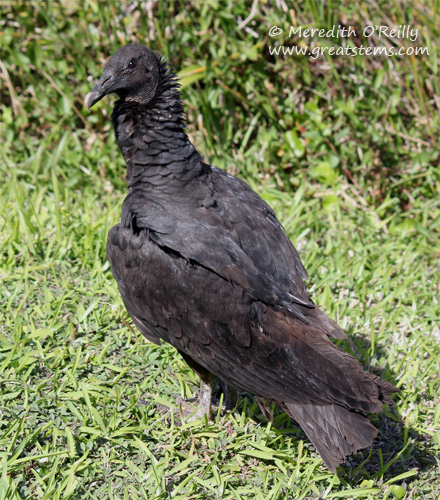
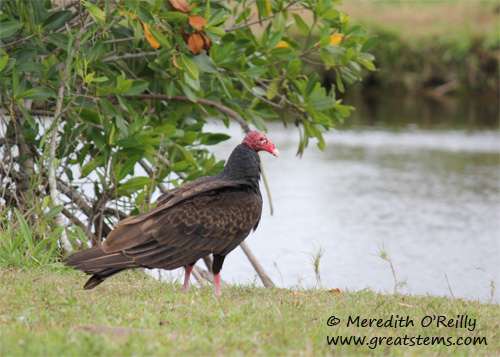
 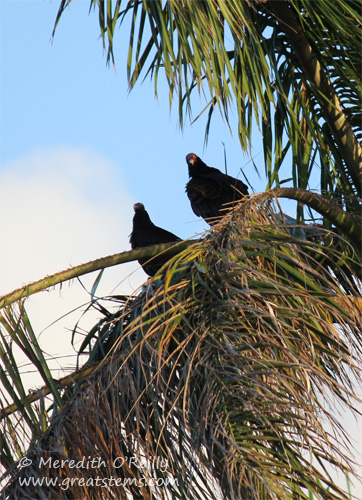 If the vultures that greet you as you arrive seem ominous, there’s a reason for it, but it’s not what you might think. I’ll explain in my next post — yes, more suspense!
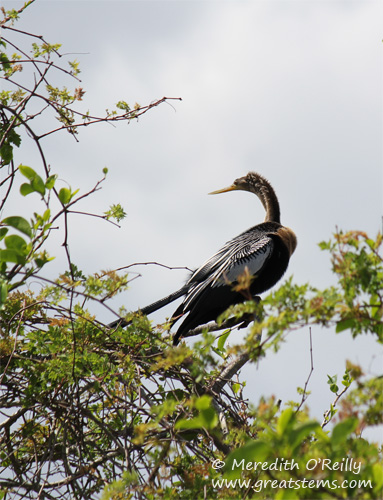 Anhinga
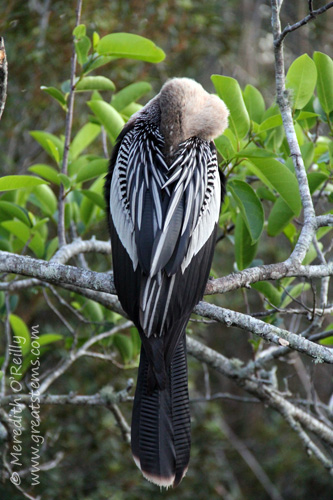
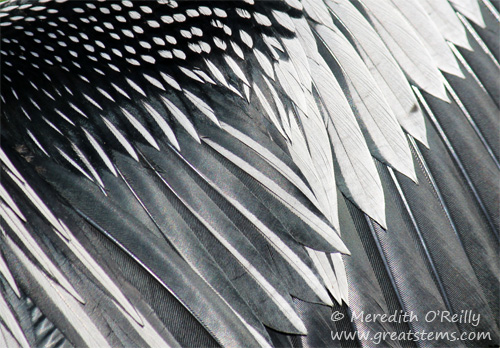 The Anhinga typically swims with most of its body submerged and only its neck and head above water, but it can also dive under the surface to search for fish. It is unable to use oil to waterproof its feathers the way ducks do, and as a result the feathers become waterlogged when it swims.
 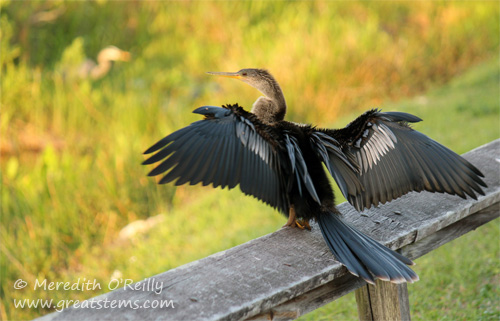 This is why Anhingas are often seen with outstretched wings drying in the sun.
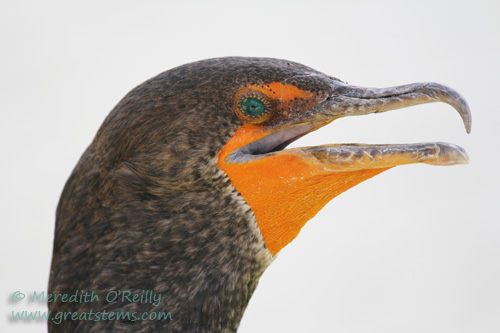 Double-crested cormorant, above and below
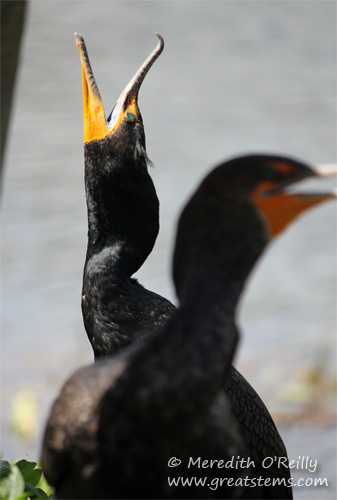 Another great underwater swimmer is the Double-Crested Cormorant, shown above. I got a glimpse of one swimming below the surface, but alas, I was too mesmerized to take a picture. Like the Anhinga, the cormorant often stretches out its non-waterproof wings in order to dry them.
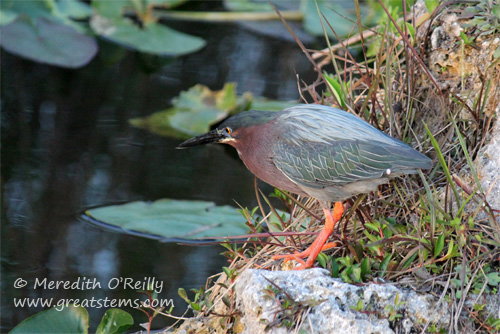
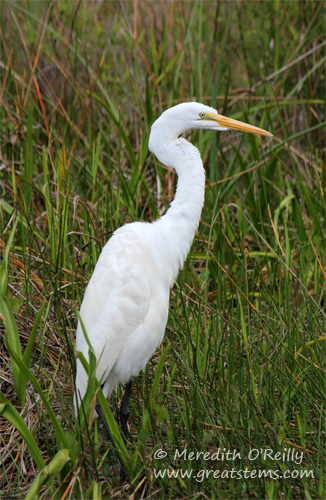
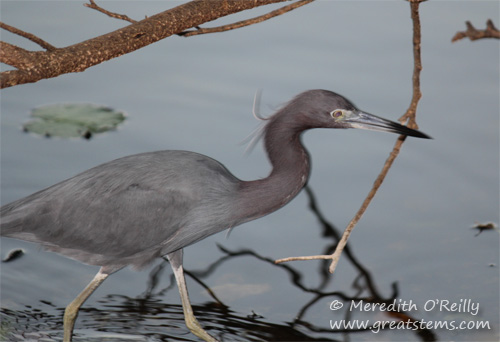 Little Blue Heron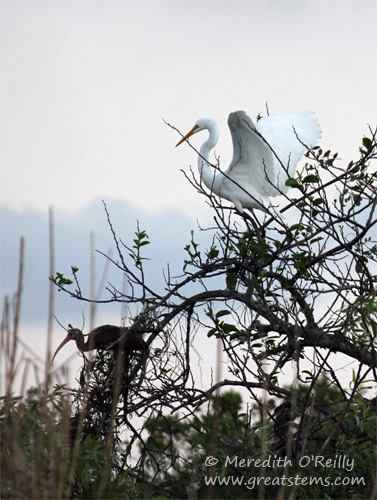
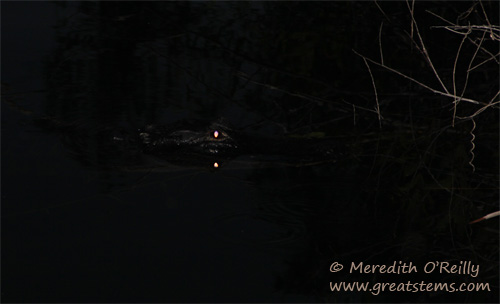
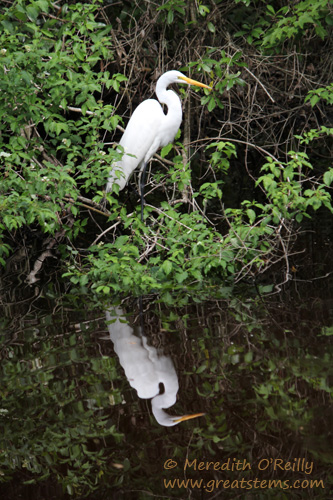 North of the Everglades is Big Cypress National Preserve, 729,000 acres that include a variety of habitat types — swamps, hardwood hammocks, pinelands, mangrove forests, prairies, and marsh. Considered a buffer between development and the fragile Everglades, it is also an important watershed for the Everglades. The preserve is filled with some of the most diverse tropical and temperate flora and fauna found anywhere in North America. Unfortunately, being a preserve doesn’t fully protect it — off-road vehicles, hunting, trapping, and even oil drilling can be found in places within the preserve — but overall it is a beautiful and valuable wildlife haven that is home to countless animal species, including the endangered Florida Panther and the threatened American Black Bear.
 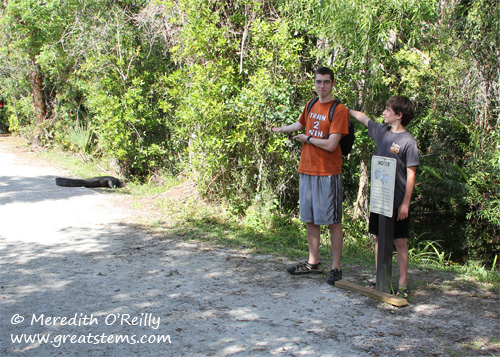 Walking toward the boardwalk, we encountered the first of many wildlife sightings along the trail.
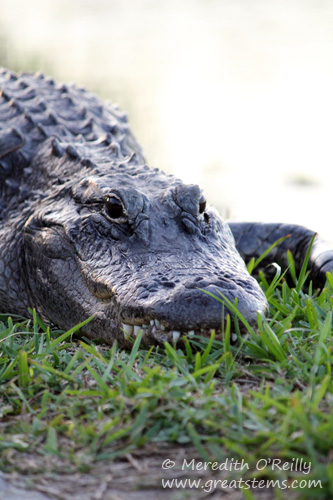
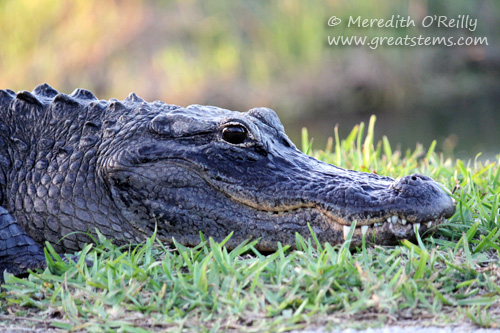
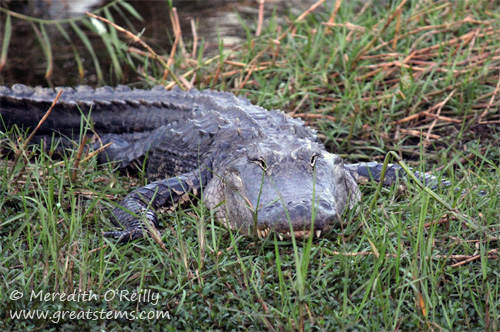
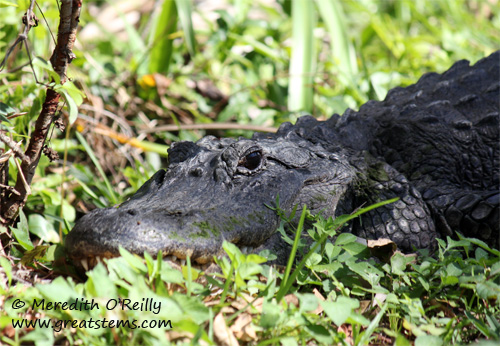
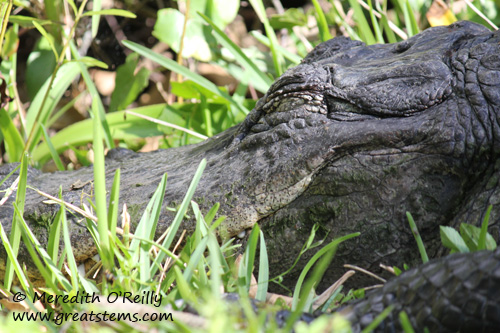 Since I was uncertain whether I’d have a chance for another great photo opportunity, I took a lot of photos of this American Alligator, especially because she was sleeping (until she was not… that story follows).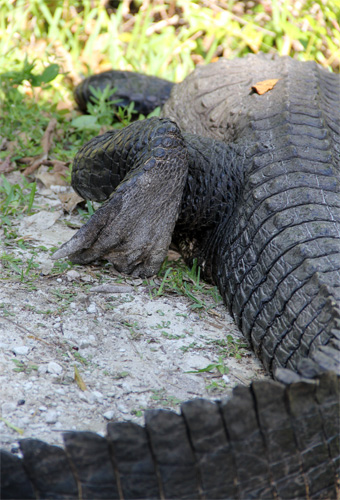
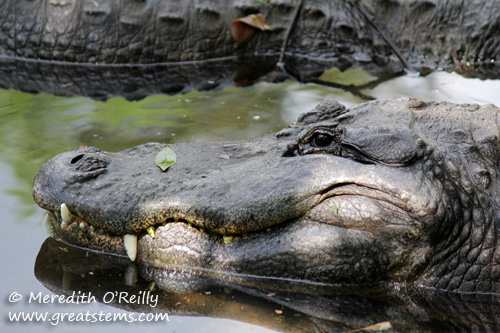
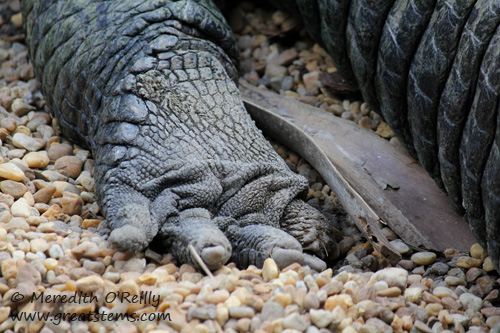
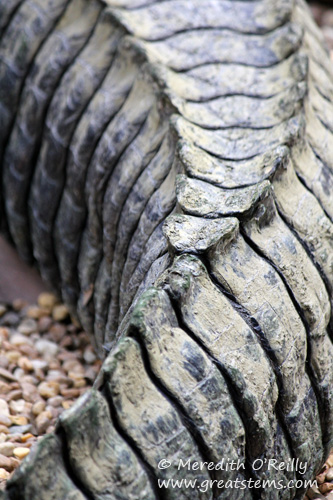
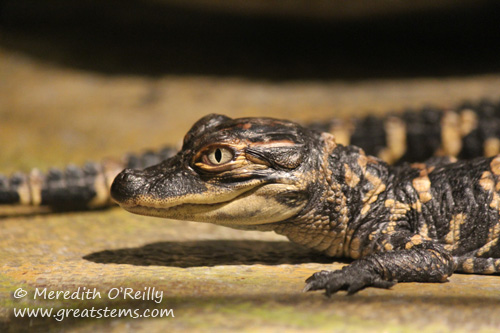
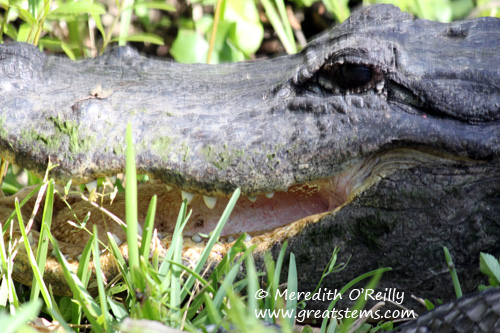
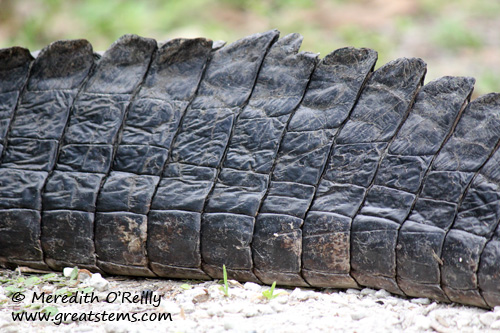 I’m utterly fascinated by crocodilian skin (alligators are part of the Crocodilia family). Of course, these images also bring to mind some of the longterm Floridian residents I saw at the beach. Their skin, damaged from decades of spending time in the sun, had wrinkles much like those you see here on this reptile. I find reptilian skin beautiful — wrinkled, sun-damaged human skin not so much.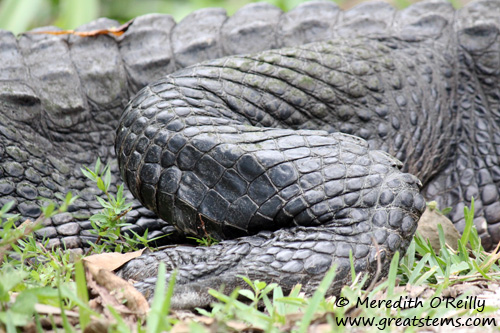
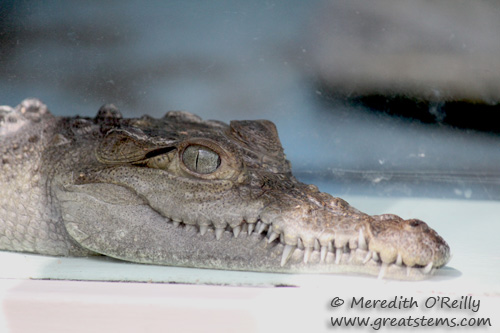
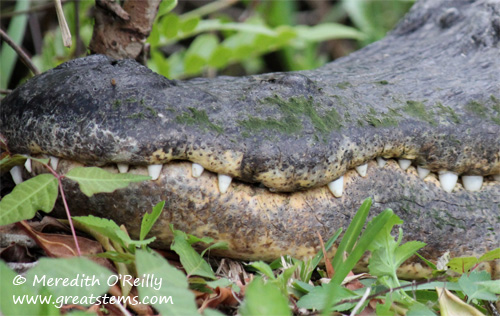 Those visible upper teeth are one way to tell an American Alligator from an American Crocodile. The latter have more of a zippered jaw look to their mouth.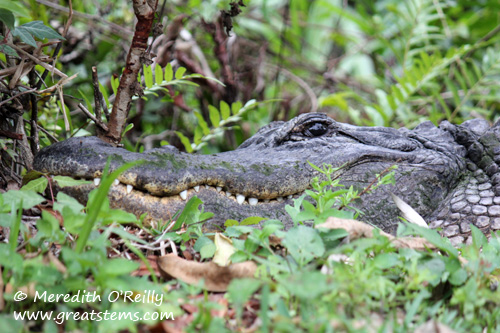
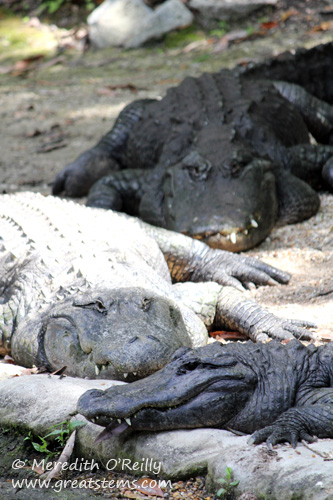
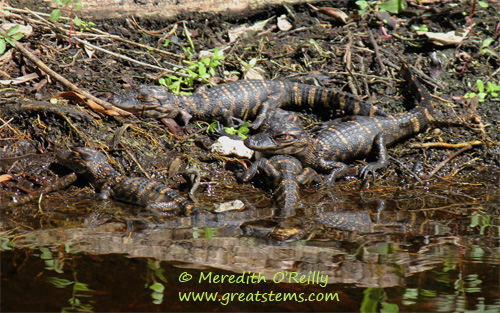 A little ways away was a little ‘gator pond of sorts. Across the pond were 6-month old alligators snoozing by the water’s edge. There were nine in all, apparently, but I could only see seven that day — the image shows four of them. I don’t know whether the big alligator on the trail was their Mama, but I called her that. Or maybe I called him that.
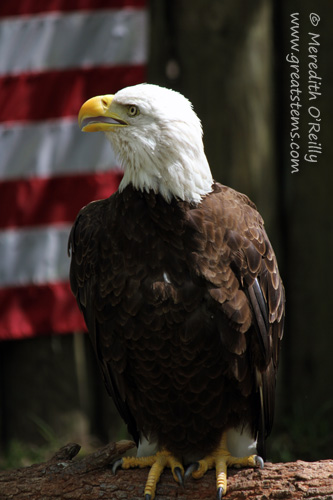
 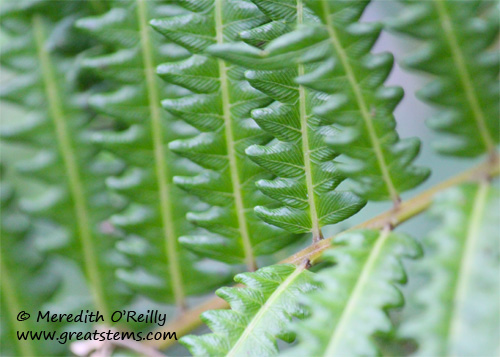 The boardwalk led us along swampier portions of the trail, with beautiful and unusual plant life, lots of ferns, and even a giant Bald Eagle nest that has been in yearly use since 1991.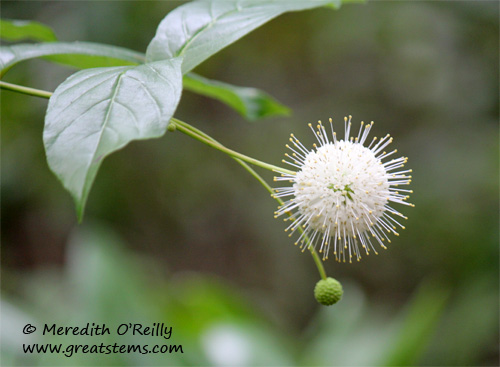
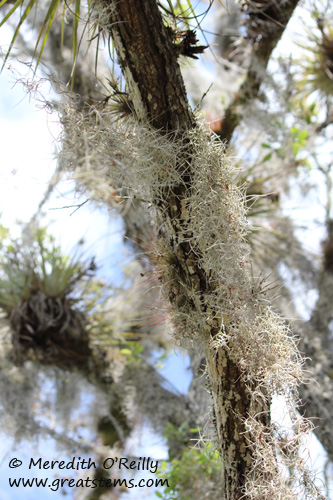
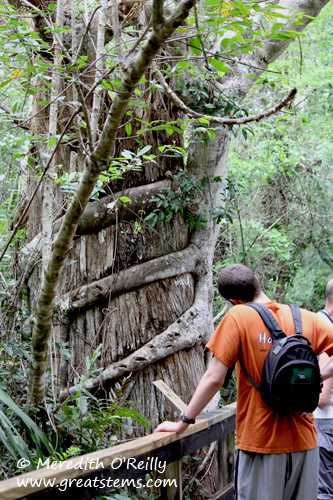 Another type of air plant that in time can cause the decline of a host tree is the Strangler Fig, and we saw examples of it along the Big Cypress path. Though it looks at first like a vine, it is actually a tree.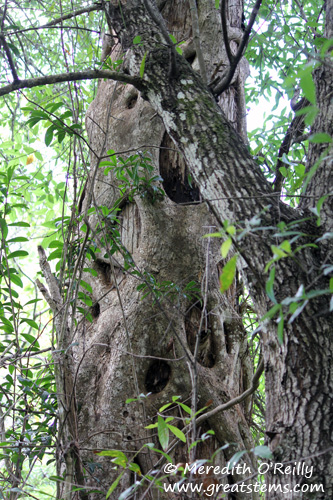
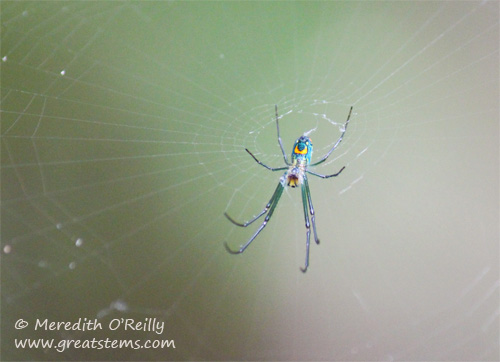
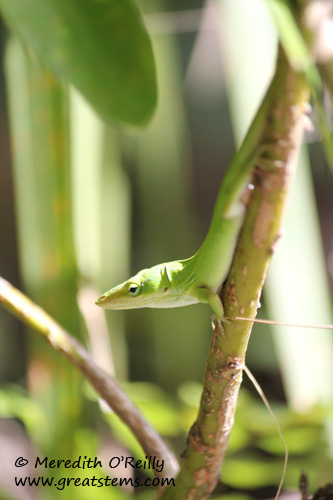
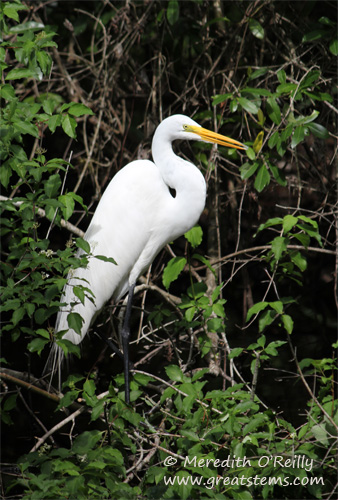
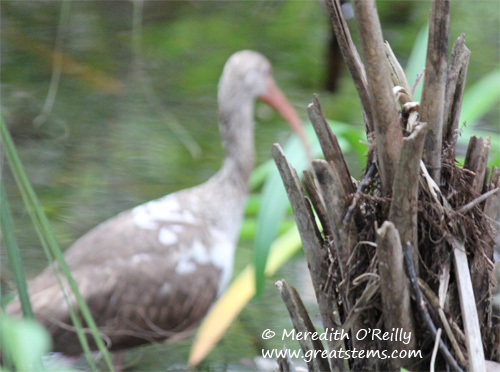
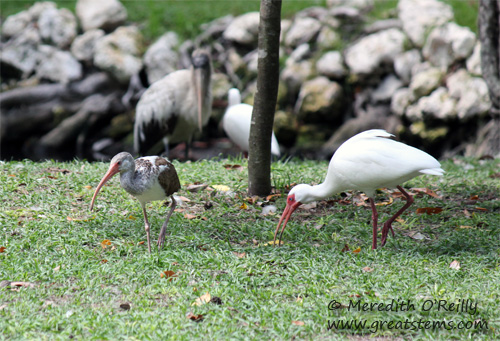
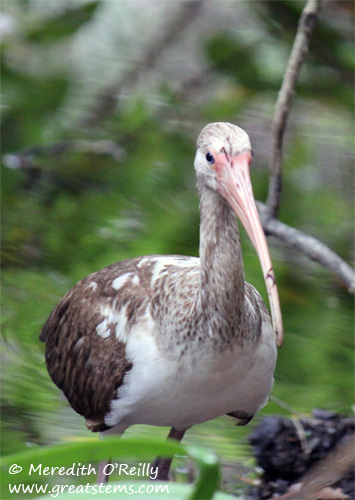 Specifically the bird is an immature White Ibis — in time almost all of its feathers will be completely white.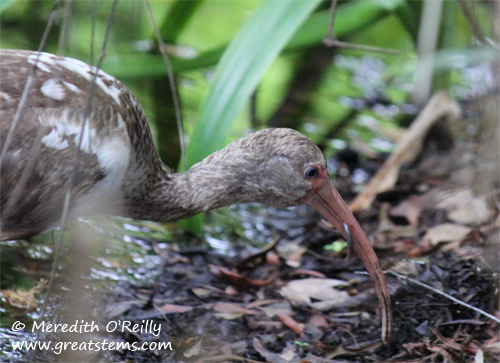
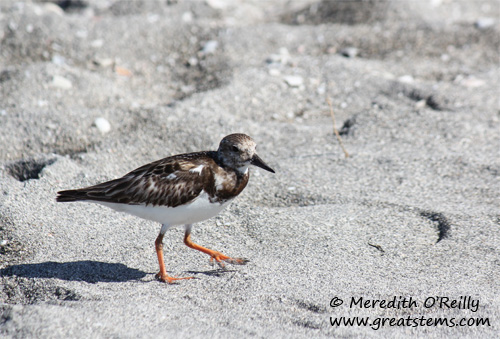
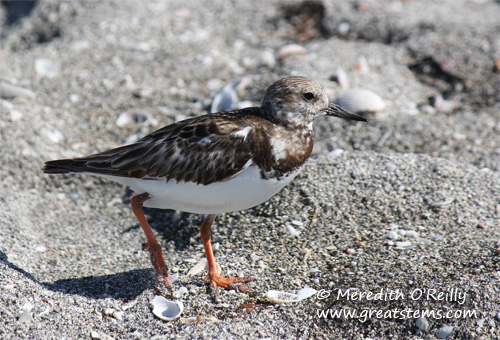
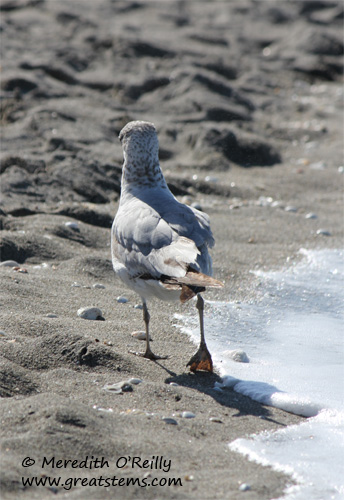
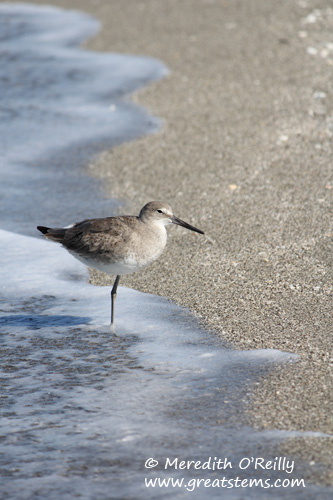 Continuing our journey south through Florida, we started our day with a trip to Turtle Beach, near Sarasota. Blue waters, near pristine yet gritty sand, plentiful birds, and few people — our kind of beach. Just down the road was the more popular white-sanded Siesta Key Beach, but we opted to avoid that, especially since all we wanted was a quiet walk along the water and not a lengthy stay in the sun.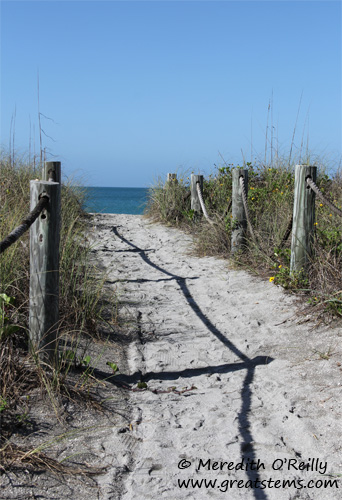
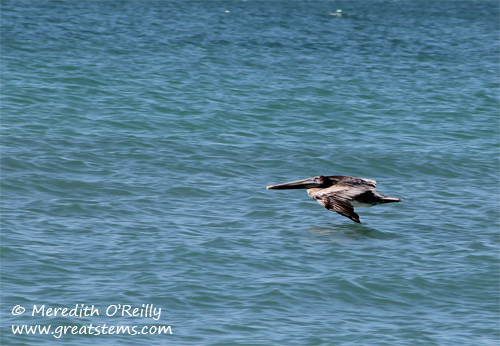 The waters were stunningly blue.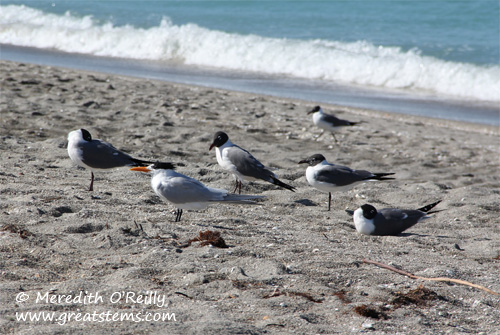
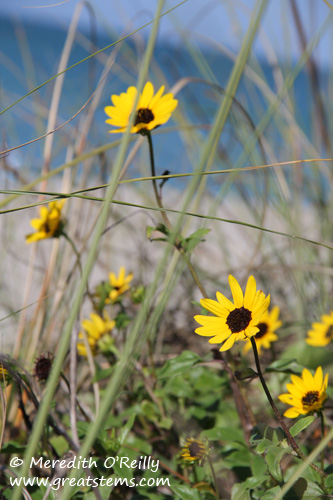
 The water was cool and refreshing, and while the sand might not have been what one would consider soft, it was quite comfortable to walk on.
 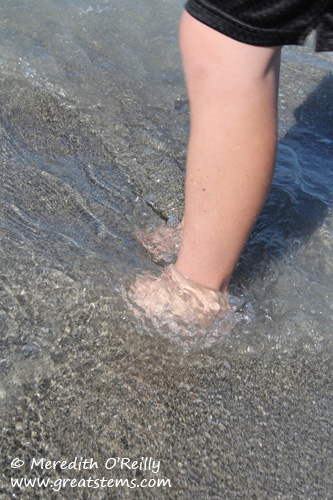 We left our flip-flops on the shore and walked barefoot for a good distance, looking for small shells and feeling the sand between our toes. It felt oh so good.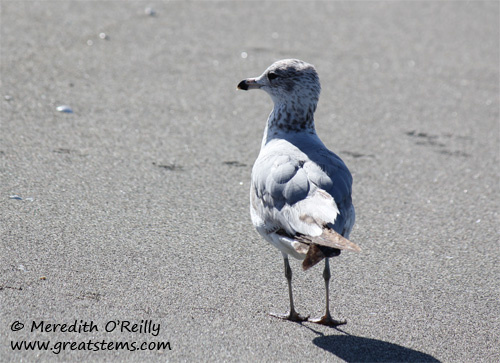
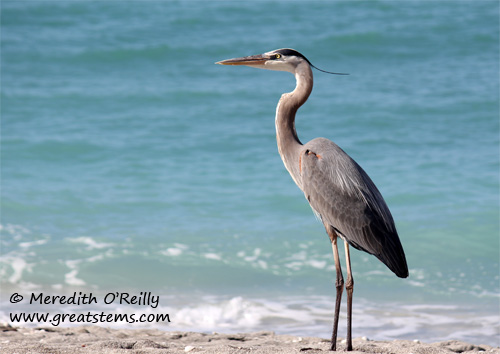
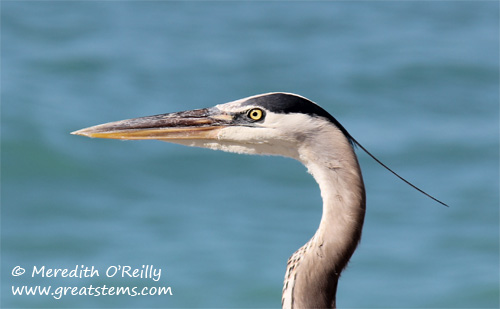
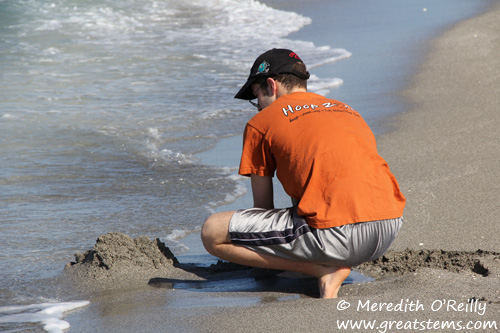 The sand wasn’t good for castles, of course, but it was good for digging.
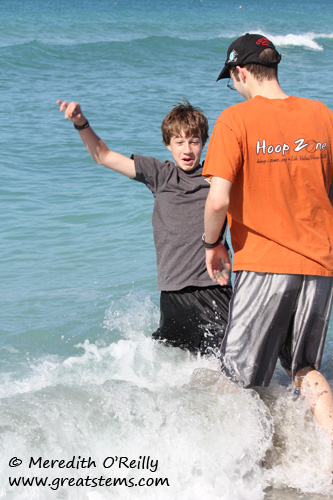 Just barely into the water, the level dips down quite a bit, and the undertow is immediately apparent. Add to that a brother ready to push you in, and you’ve got a wet splash in the making.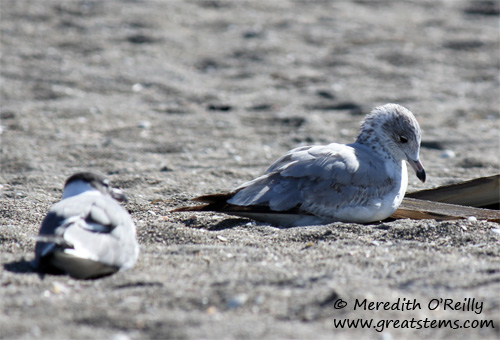
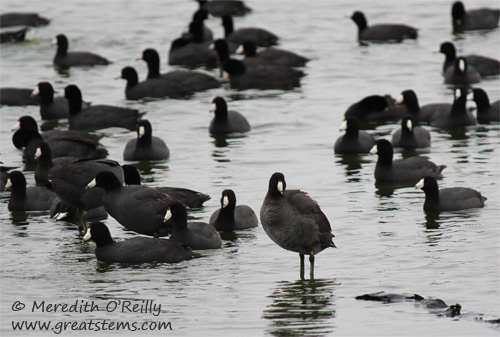
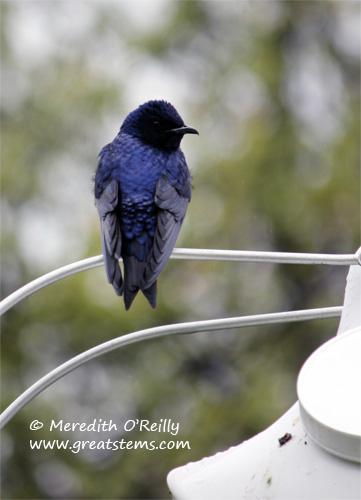 We actually set out from Austin’s own Hornsby Bend, where the CAMN class and I were having an afternoon of birding, and the boys joined in for the fun. Not just birding, mind you, but birding in the rain. This is how you encourage resolve and determine determination — and prove to your kids that they won’t melt in the rain. It was chilly, too — see how the male Purple Martin has fluffed up his beautiful iridescent feathers?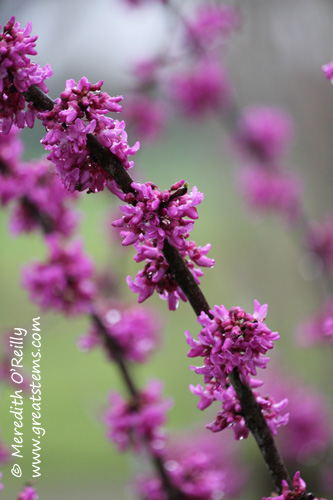
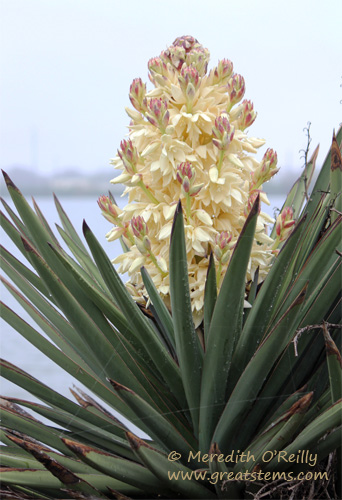 The dreary weather meant that I didn’t take many pictures that afternoon, but I couldn’t resist the lovely blooms of this yucca. Dreary, by the way, is one of my favorite words, not because of what it means but because of how it feels to roll the word off your tongue. Say it with me now: dreary. Dreary.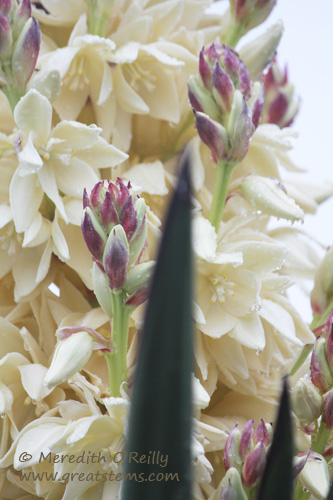
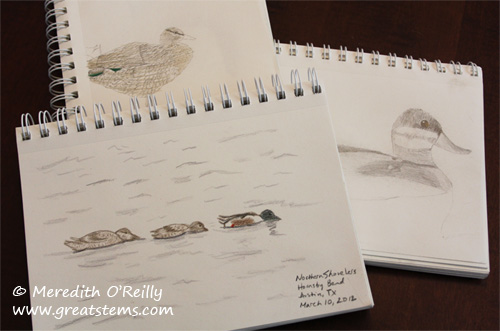
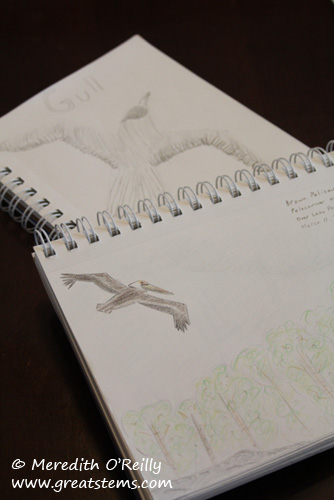 We spotted the first pelican of the trip as we crossed over Lake Pontchartrain, and gulls were plentiful, as well.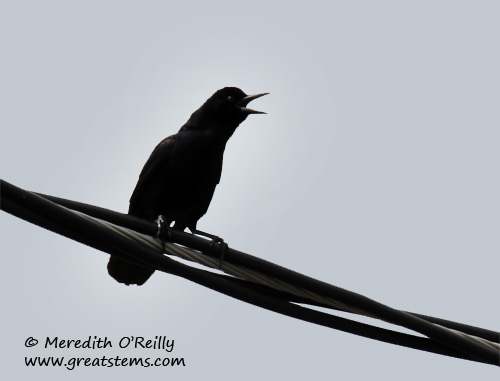
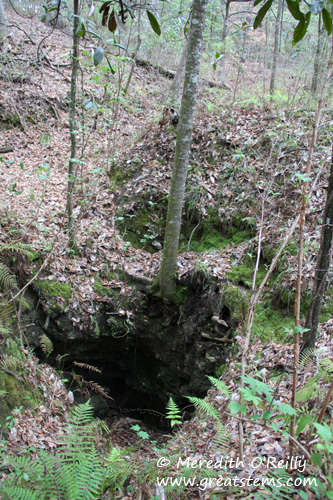
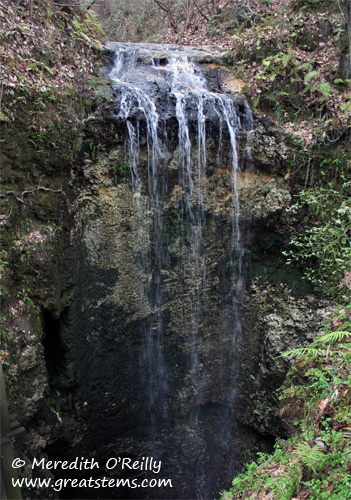
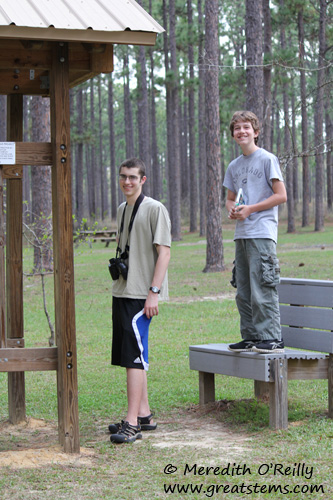 For our afternoon adventure in northwestern Florida, we stopped at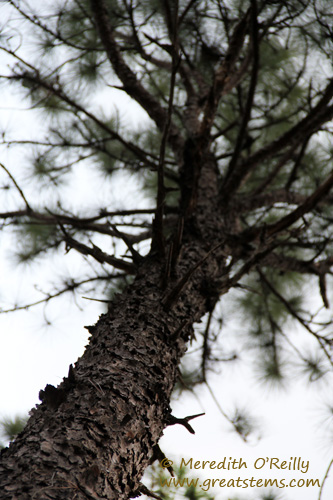
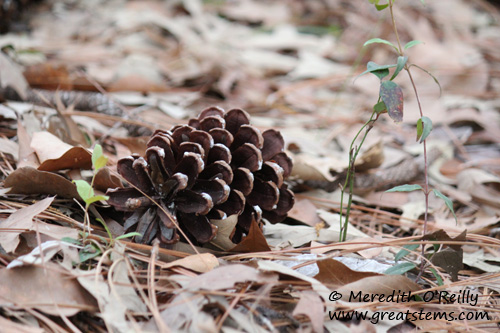
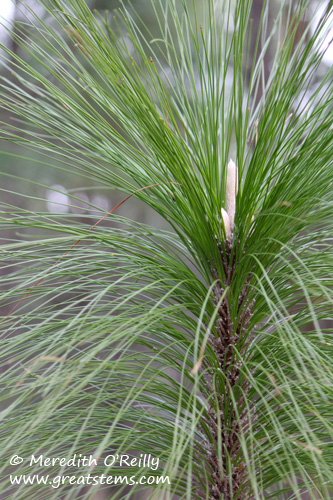
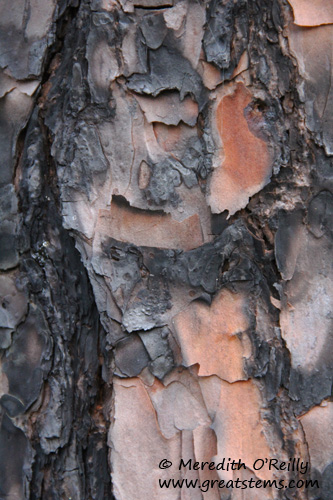 In order to protect the pine forest ecosystem, the park staff and volunteers work to control invasive plants and provide educational signs about native plants along the trails. They also regularly perform controlled burns, following nature’s method of using fire to encourage plant diversity and limit overgrowth.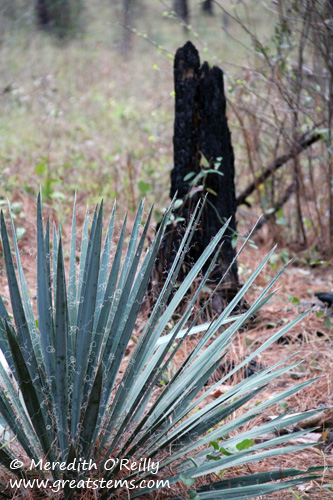
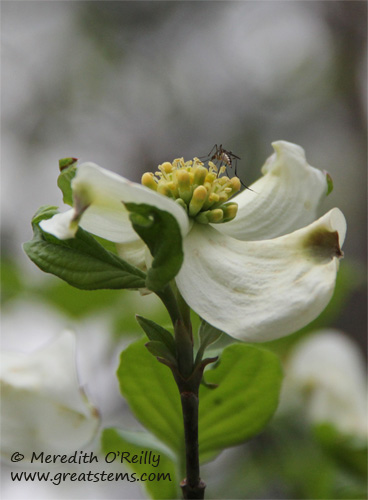
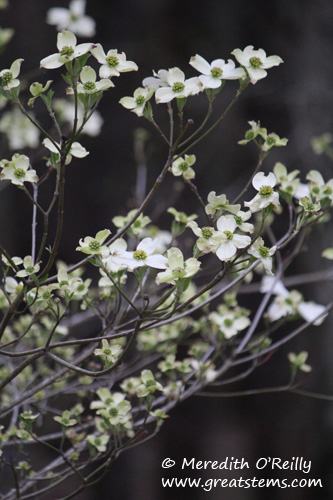 Understory plants like Flowering Dogwood, Redbuds, Buckeyes, and more have the chance to grow.
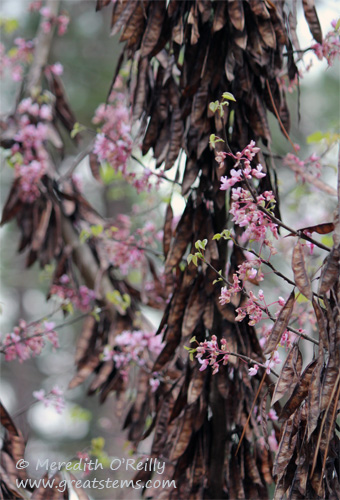 Compared to the Redbud we saw at Hornsby Bend (scroll back up to see the image), this one at Falling Waters was loaded with more seed pods than I have ever seen.