 A couple of years ago my boys and I went to Colorado with their grandparents, and we snuck out for a side-trip to beautiful Mesa Verde, a National Park in far southwestern Colorado, near the Four Corners. Mesa Verde is one of the most unique archeological sites in the world, for it was once the home of the Ancestral Puebloans who built hundreds of spectacular cliff dwellings along the mesa tops and within sheltered alcoves of the canyons. The Ancestral Puebloans lived there from A.D. 600 to A.D. 1300 and then mysteriously abandoned their homes at Mesa Verde.
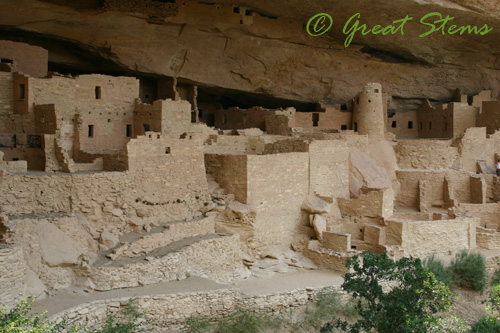
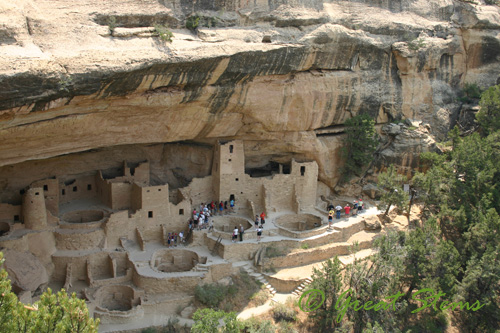
Cliff Palace is the largest cliff dwelling at Mesa Verde and in North America, and it is aptly named. Not only is it huge, with about 150 rooms, it was quite a trek down the cliff to reach it. There were many kivas, or ceremonial rooms, along with storage rooms.
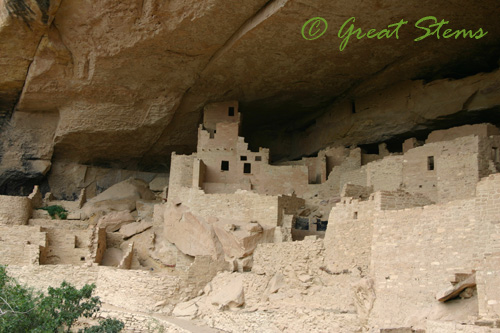 The temperature was very comfortable, and it’s easy to understand why the Ancient Puebloans took shelter in the cliffs, out of the hot summer sun and cold winters.The doorways of the buildings were quite small. At 5’5″, I would have been as tall as the tallest man.
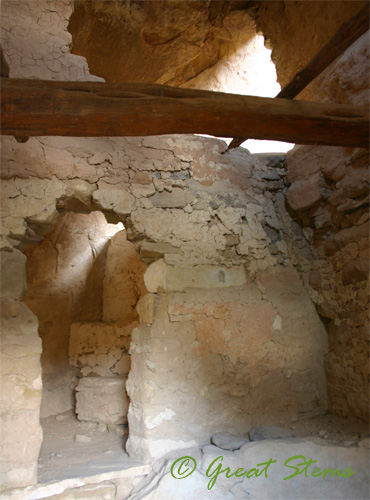
The Ancestral Puebloans were skilled masons, creating buildings of stone and wood that were sometimes two- or three-stories high. The wood is one of the ways the scientists dated the dwellings to about A.D. 1200.
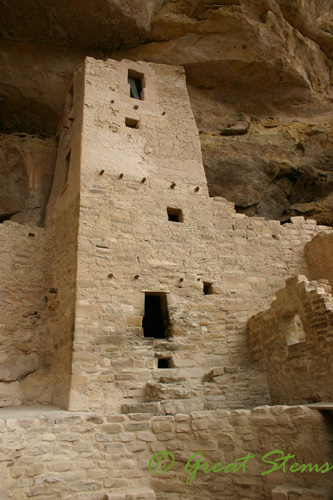
Spruce Tree House was named for a spruce tree climbed on by explorers when they found the ancient site. The ladders led into reconstructed kivas.
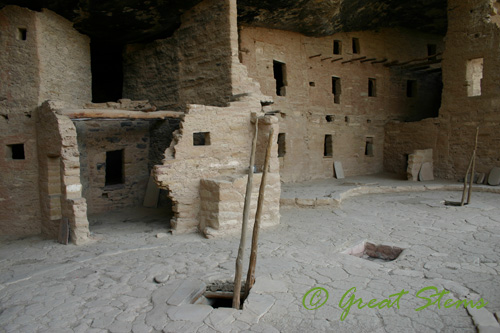
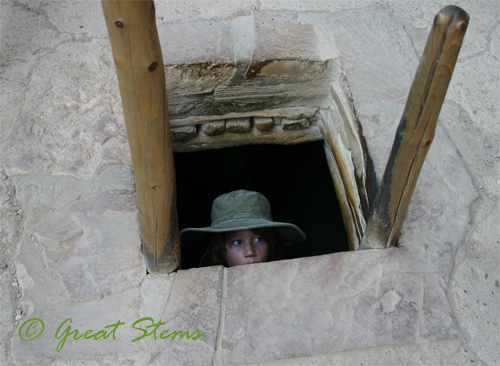
Park visitors are allowed to go in the reconstructed kivas at Spruce Tree House, but I found out later that kivas are very sacred to the Pueblo Indians. I rather wish the park had closed off all the kivas out of respect to the Pueblo people. Our entering it was only because we didn’t know better and it’s part of the park tour. I’m showing this image simply because it’s one of my favorites of my son, poking his head out from darkness into the brightness above.
 And then there is the Balcony House. This remarkable dwelling is only reached by climbing down stairs along a cliffside and then up a 32-foot ladder to get to the actual dwelling. Actually, it was one of three ladders we had to climb at Balcony House. If you think it sounds easy, then take a look at the picture below.
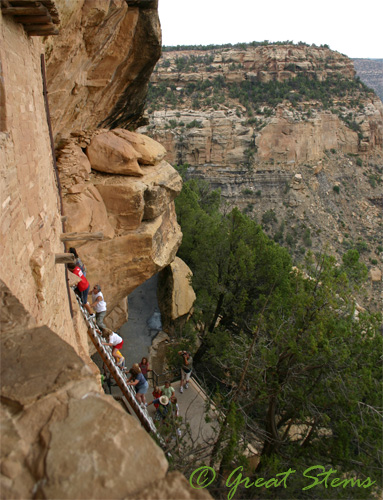
For those with a tendency toward acrophobia, climbing a tall ladder with what seems like only a small ledge keeping you from falling into the deep, deep canyon below definitely requires some incredible will and an ability to master one’s fears. I should add that we had waited out a thunderstorm with strong winds on the cliff above before the tour finally began, so I was already fairly alarmed that we were about to attempt such a climb with winds such as those blowing (it turns out the Balcony House was actually sheltered from the cliff winds). But because I was wanting my sons to enjoy something unique and spectacular without developing any of my awful fears, I kept my desire to panic very quiet and seriously practiced some breathing techniques to keep my calmness in check. But the ladder you see here will forever be known to me as the White-Knuckle Ladder. I actually don’t have a fear of heights per se — I love being up high — it’s just being at the edge of a cliff that gets me wobbly. And Mesa Verde is ALL cliffs, haha.
The trip will always be a memorable one for me — from the drive in to the drive out. For those with a strong fear of heights, it might not be the best park for you to visit. Even the 23-mile drive in was along the mountainside, with narrow turns and tight switchbacks, and while the views were incredible, I couldn’t take my eyes off the road to even glance at them. Add to it that I made the mistake of not getting gas in nearby Durango, and I was rather inwardly freaked out that we were going to run out of gas or fall off a cliff to the canyon far below. We did neither. Phew. But despite my racing heart, I’d go back there in a flash to visit again.
This glimpse back at my Mesa Verde trip was inspired by Pam at Digging who is hosting a bloggers’ tribute to national parks. Thanks for sending me on this trip down memory lane, Pam!
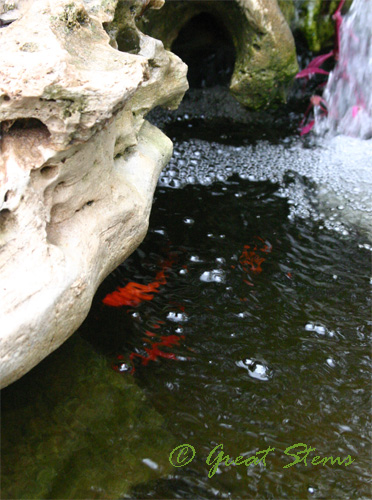
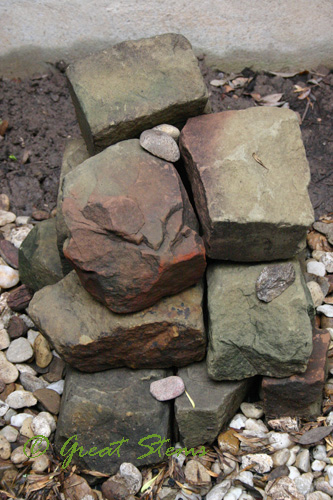
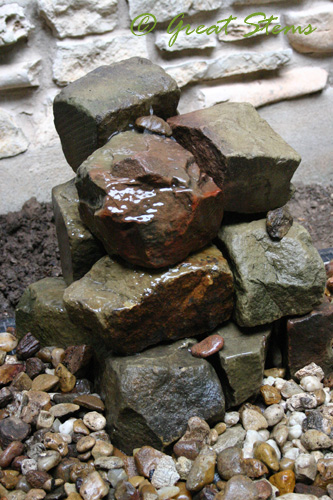
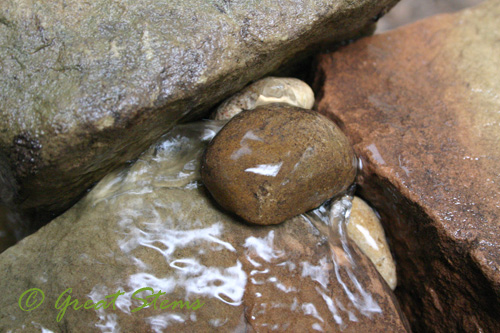
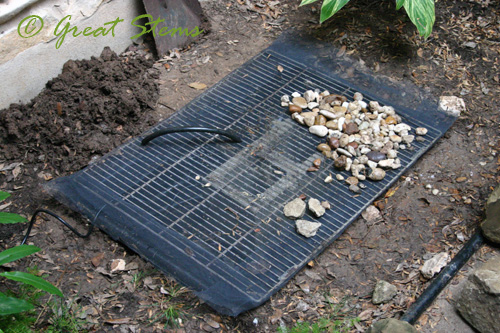
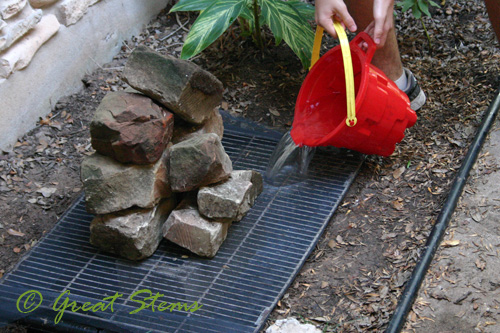
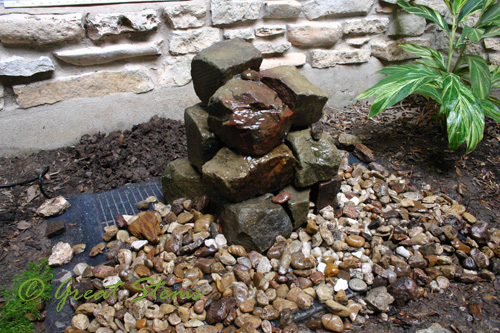
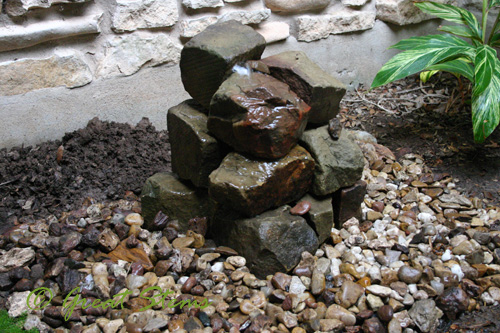
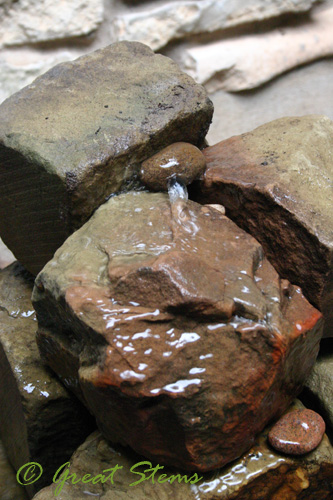
 Now for some good news — the disappearing fountain is back and functioning again! We never did solve the mystery of the shifted rock, which led to the unexpected emptying of our new disappearing fountain and potential pump damage. But happily the pump still functions, and our fountain still remains the $40 disappearing fountain! We changed up the rock structure, so hopefully it will be harder for some creature to displace the tube. That little rock is only there for interest, not for directing the water flow.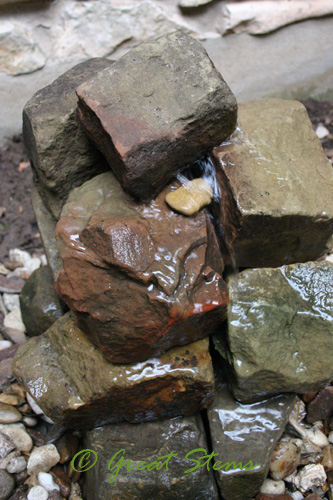
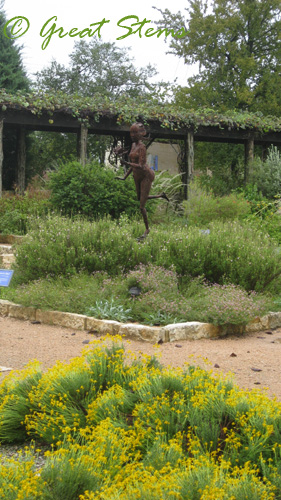 Spectacular combinations of colors and textures bring unconscious serenity to the viewer. Here the majestic Goldenrod really stands out against the wispy seeds and grasses of Big Muhly.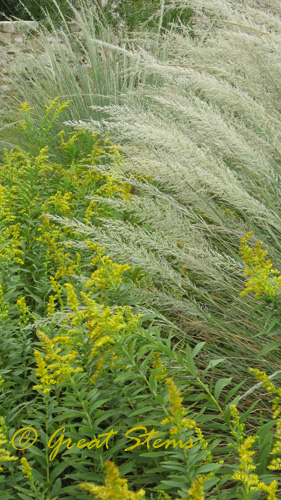
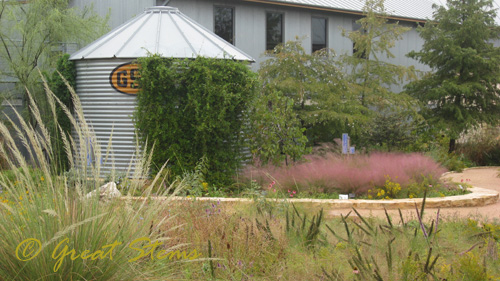
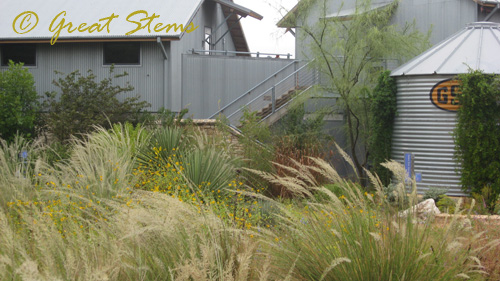 It was my husband’s first time to the Wildflower Center, so we did a quick little walkaround, but there wasn’t much time to take a thorough tour. There is so much more the center offers, from truly impressive rain collection systems to walking trails to green roof research to continuing education courses, and more.
 But twice a year, Texan gardeners get very excited about a special event that takes place at the Wildflower Center. The center hosts an outstanding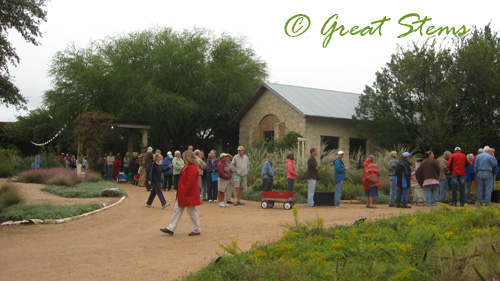
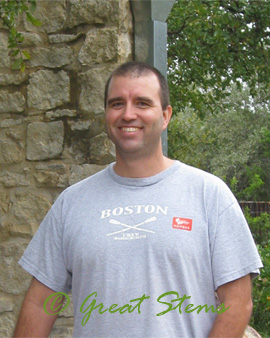
 Up near the front of the line, my husband and I chatted with our friendly line neighbors.
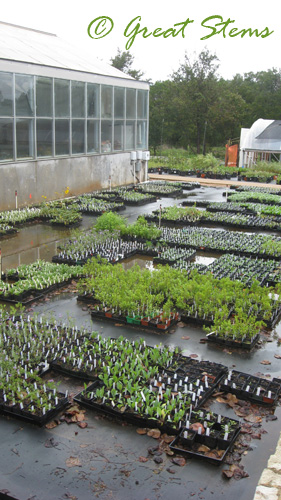
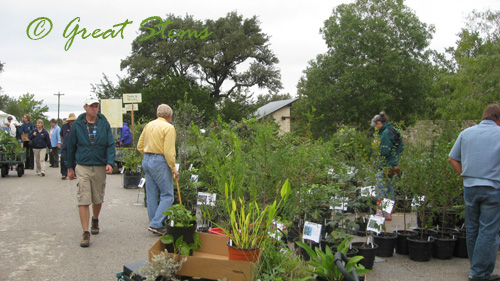
 Of course, when the ribbon was cut and the sale actually opened, we all said something along the lines of “It was so very nice talking to you! Now stay away from my plants!” (And at this point I stopped taking pictures, because the mad rush to find all coveted plants began. In fact, if you couldn’t tell from the images — these are from my pocket camera instead of my regular camera. I had to make sure I wasn’t overburdened when plants were at stake! Yes, at first it can seem like a frenzy, particularly for the rarer species. I didn’t start taking pictures again until all our plants were chosen, and by then many buyers had already cleared out, so this crowd looks small compared to the earlier blockade of people all trying to get their carts through the aisles while collecting as many plants on their list that they could).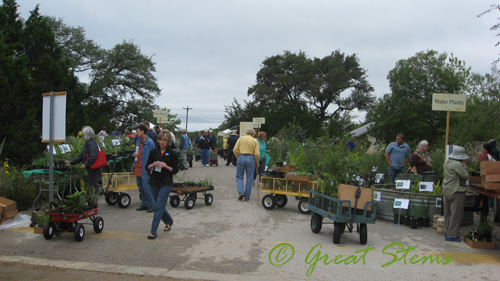
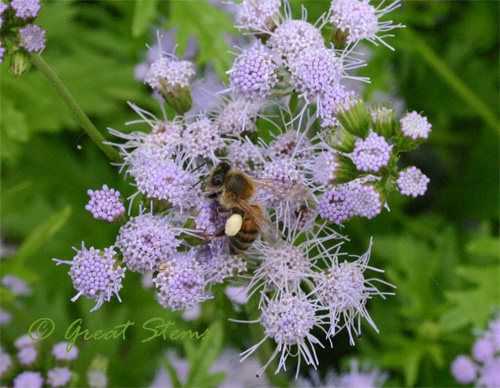
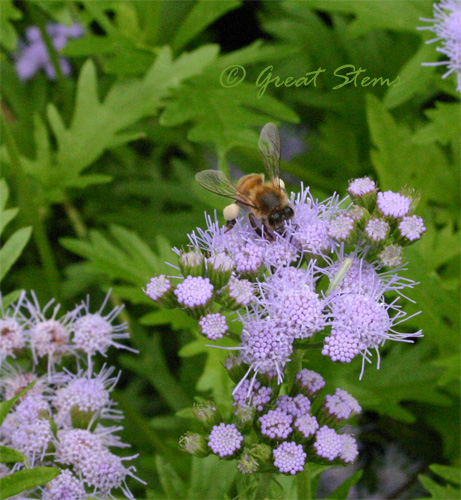
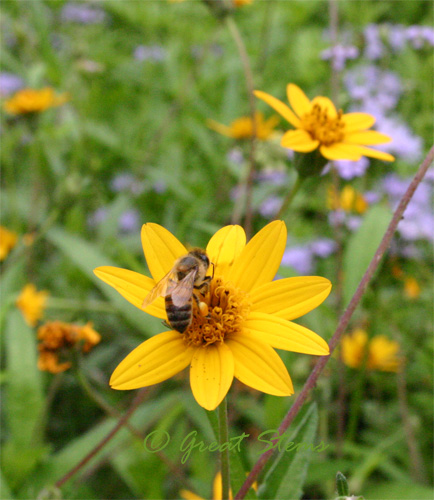
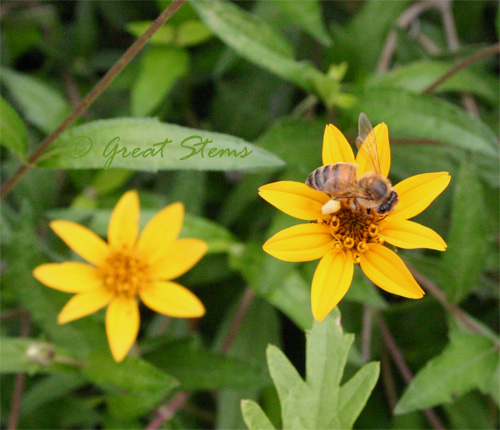
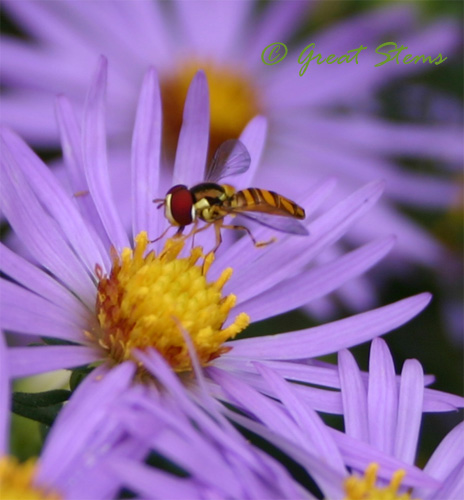
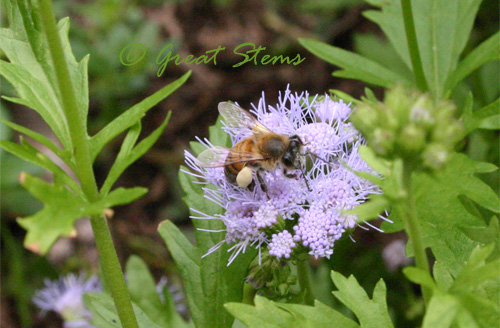 In the same patch of flowers, the honeybees on the Zexmenia had bright orange pollen baskets on their little legs.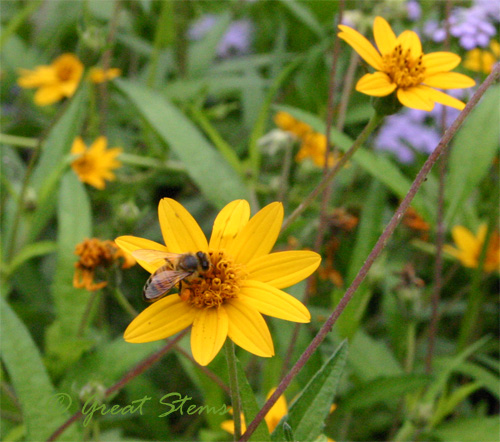
 ’cause this bud’s a dud.
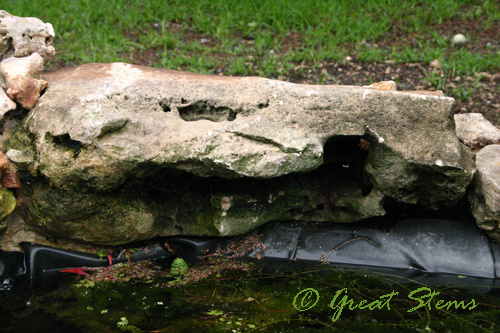
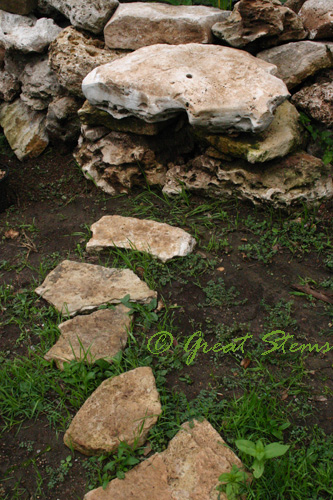
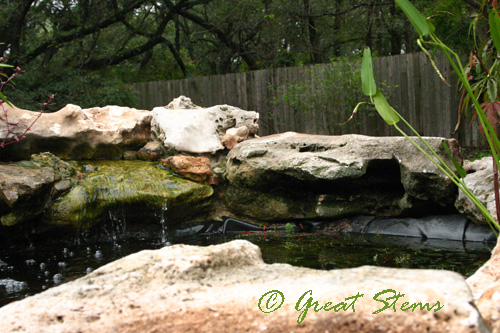 The rocks forming the back wall of the waterfall actually look like the back of an alligator — I forgot to get an angled shot to show you that a little better, but I’ll do that another time. Now I just need to figure out where to put my dwarf papyrus.