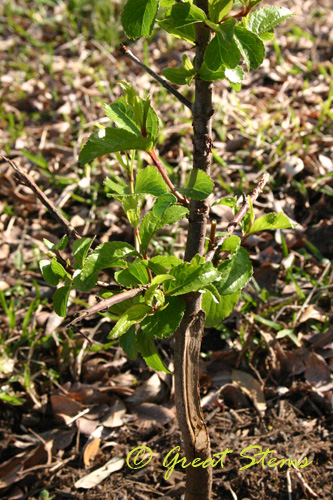
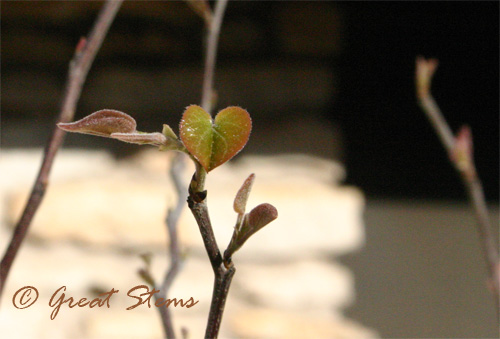
My husband and I completed an Urban Forest Steward training program this past weekend here in Austin. Going into the first class three months ago, I have to say I really didn't know what to expect. After all, I'd learned so much already about trees, so I thought. But without a doubt, I'm glad that I took the class with my husband, because we learned a tremendous amount. Most of the class was held indoors, but we occasionally ventured out for hands-on demonstrations on pruning, planting, etc.
 Here are several of the many facts and tips we learned:
Planting
When planting trees from containers, you really need to look deeper into the soil (pulling the tree out of the container) and look for girdling roots around the stem/trunk and encircling roots around the root mass. There's a method to cutting, but the main thing is that you want to cut girdling and encircling roots and redirect as many roots as you can to radiate out from the center, before you backfill with dirt. Don't be afraid to move aside some dirt to seek out those roots wrapping around the stem and main roots.
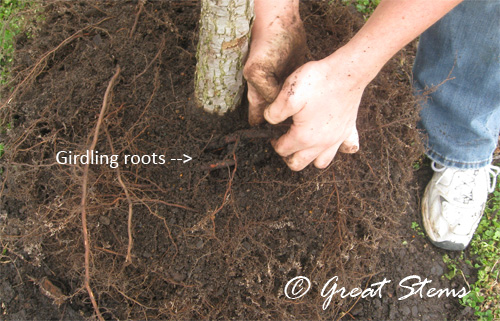
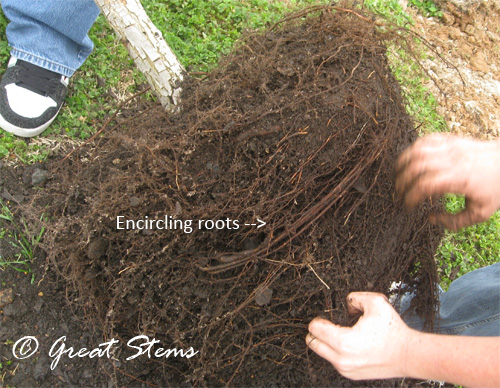 Don't amend the soil. This goes against what many old-school methods teach, but when you amend the soil in the planting hole, you discourage roots from venturing into the existing soil, and your roots will start to girdle and strangle each other, trying to stay in the "better soil."
Dig a hole twice as wide and no deeper than the height of the root flare -- it's better to plant high than low -- that root flare of the tree needs to stay visible. Sides of the bowl should be sloping and not smooth like ceramic (typically found when digging in clay soil).
Plant wisely -- learn the height and requirements of a tree before you plant it. Planting large trees under electrical wires or trees in other poor locations only leads to heartache later, not to mention time and money wasted.
Pruning
Every cut is a wound. Only prune when absolutely necessary. Always cut outside the branch collar, not flush against the tree.
There are methods to helping a wound heal better -- not necessarily "sealing" it -- so research this before you harm your tree. One method includes cleaning up the jagged edges of a wound with a sharp knife.
Prune from the outside, NOT from the inside of the canopy -- these inner branches are most critical to the tree's health. In other words, raising the canopy of a tree might be nice for humans, but it is an ill-fated practice in regard to the tree itself. And don't top the tree.
It's best do any pruning and shaping in the first year, and then leave the tree alone as best you can. Prune off suckers and secondary leaders as appropriate for the long-term shape and stability of the tree.
Mulch should extend as wide as the branches of the tree extend -- the root system often extends as far as twice as wide as the canopy of the tree, depending on the species.
Grass and trees don't mix. One affects the health of the other. Grass affects whether the roots of the tree can obtain oxygen and water, and it's the smaller roots farther away from the tree that do this work.
Oak Wilt
Oak wilt spreads via root systems in red oaks and live oaks, but it spreads by fungal spores as well for red oaks. This is why you find major live oak/oak wilt centers with infected trees surrounding them, but it's the red oak that can create the situations to spread out and create new oak wilt centers.
Looking at Trees in the Urban Environment
As a result of this class, our eyes have been opened to the great harm an urban environment causes trees. The way developers place asphalt, sidewalks, curbs, and raised beds shockingly cuts off the root systems of many urban trees, leading to the premature demise of these trees. Damage from lawnmowers and construction vehicles also severely wound trees. And then there's mulch. All around town right now, I'm seeing huge mounds of mulch at the base of trees, smothering the root flare and going several inches up the trunk, and this will lead to weakness and potential rotting of the tree base. Think about the costs involved in dealing with weakening trees, dying trees, and the replacement of once-old and massive trees. Urban development with thought and care might have let those beautiful trees remain healthy and standing for decades to hundreds of years to come.
Graduation and Leaf for a Leaf
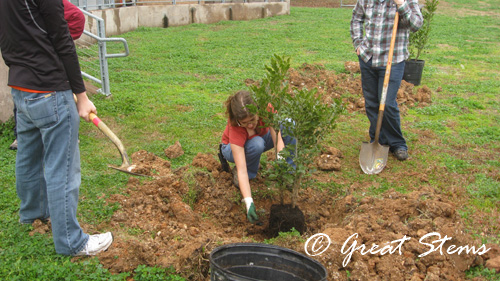
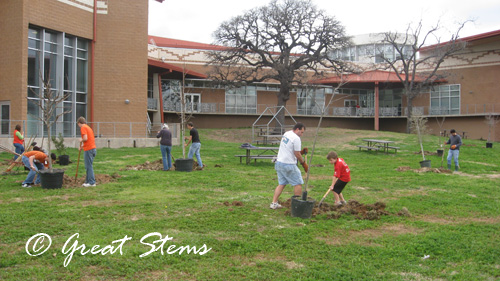 After the last class, in conjunction with the Leaf for a Leaf program at the city libraries, we helped plant trees at the Carver Library in Austin. With the planting of about 30 of a variety of trees, we helped turn what was once an open, high maintenance grass lawn into what will one day become a shade-offering "Growth Potential Grove," as the program calls it. Our son got involved and helped.
 We really are grateful for the knowledge we gained during this class, which was taught by several different foresters and arborists from Austin Parks and Rec, UT, Austin Urban forestry Board, Texas Forest Service, and other groups. It sure opened our eyes to look at trees in the city, forest, and home environments in a whole new way. And this weekend, we planted five more trees in our own yard. Mmmmm, oxygen.
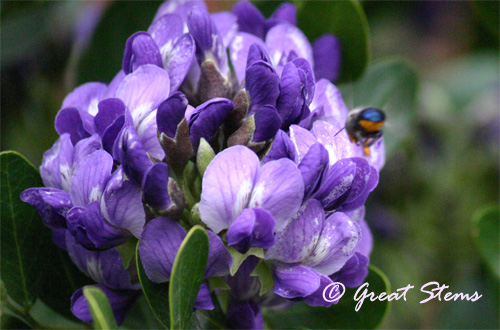
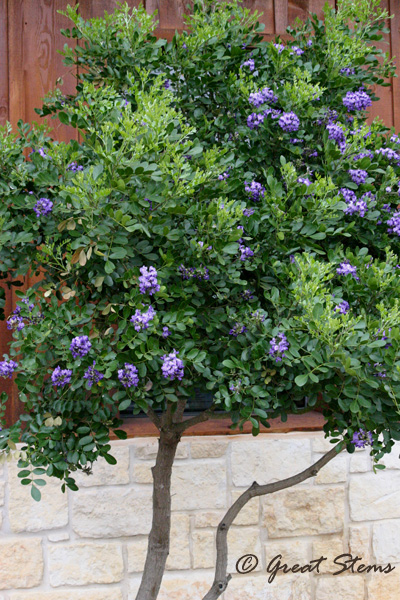 Beautiful mountain laurels in full bloom caught my eye during a recent visit to the Canyon Lake area, and I had to venture over to get a whiff of the grape-scented fragrance emitted by the flowers. Intoxicated by the scent, I paused to look around and realized that I wasn't the only one enjoying the blooms.
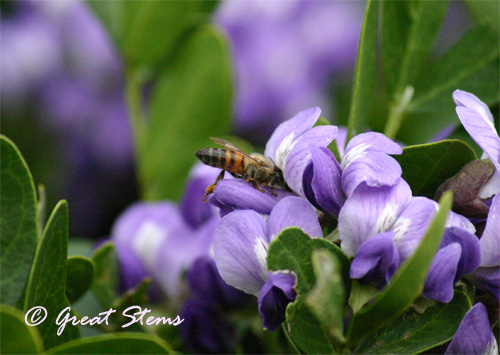 At first the honeybees caught my eye, especially as my ears sensed them, as well. They really had to push their way in to get at the nectar. If I were a bee, I would have worked hard to get in there, too -- it smelled divine.
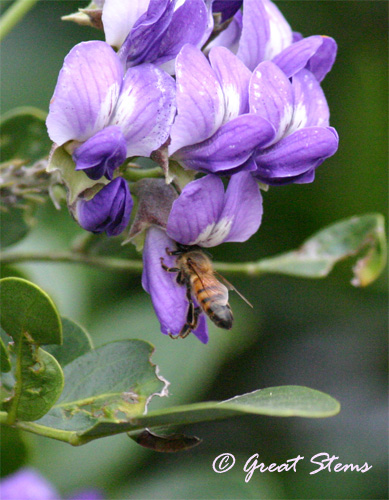 A hoverfly rested briefly on a seedpod.
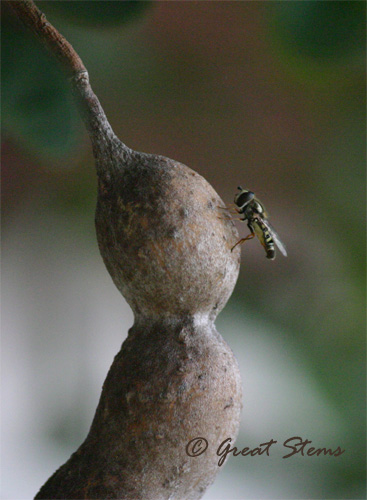 It was difficult to catch a picture of a hoverfly in the air -- they didn't hover much that day. Too busy trying to get energy refuels, I guess. But I'm fond of this motion shot, blurry that it is: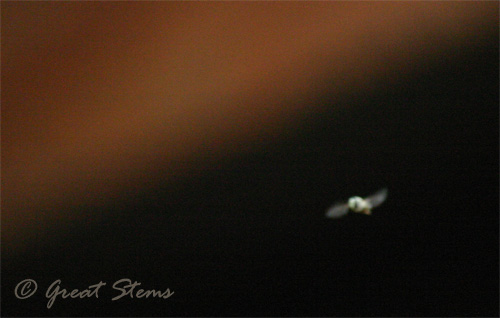
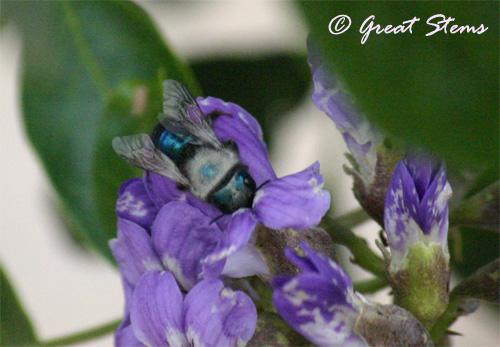
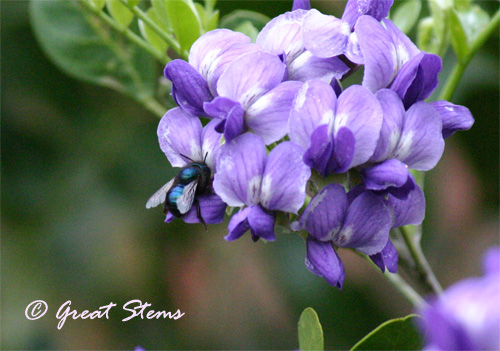 In the photo above, the bee has darker hairs on its upper thorax, while the bee below sports white pollen on her upper thorax and head hairs, with bonus yellow pollen "socks" (or at least "legwarmers")."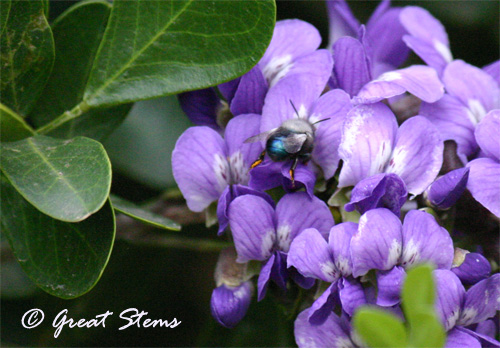
 According to Dr. Neff, these lovely blue leafcutters apparently like to utilize old organ pipe mud dauber nests for their own nests, and they'll chew leaves to make a green paste that they'll then use to plug the nest holes. Clever little natives.
 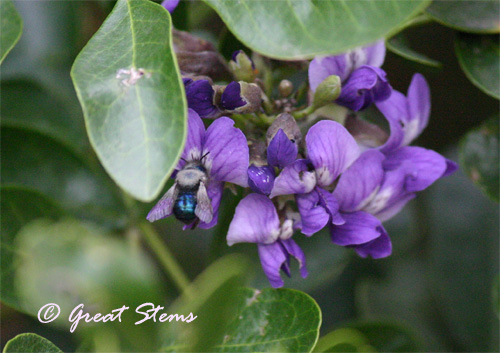 Beauties, these little bees. I feel lucky that I got to observe them for a time.
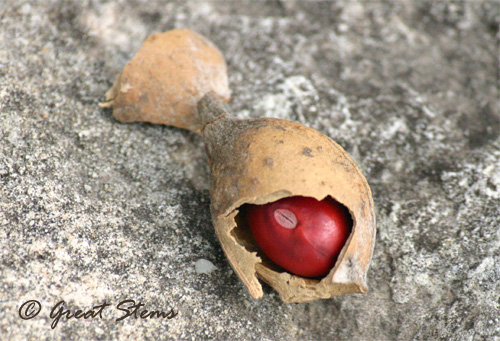
 Getting back to the Mountain Laurel, inside those seed pods are the Mescal beans, as the seeds are often called, and they're bright red and highly toxic. Some people like to take the seeds, rub them on a sidewalk to build up heat from friction, then burn the person next to them. Ouch.
 The Texas Mountain Laurel is a slow-growing, small, evergreen Texas native tree. It thrives in our Texas weather and soil and on "not being messed with" -- as in plant it and then leave it alone. Since this method of gardening works for me, I have three now and counting.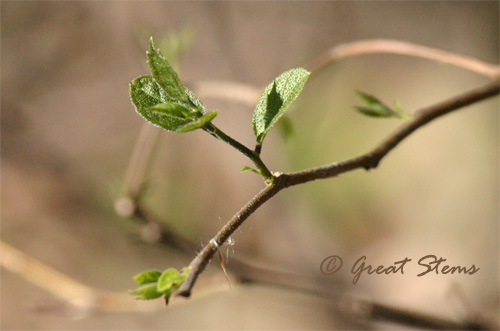
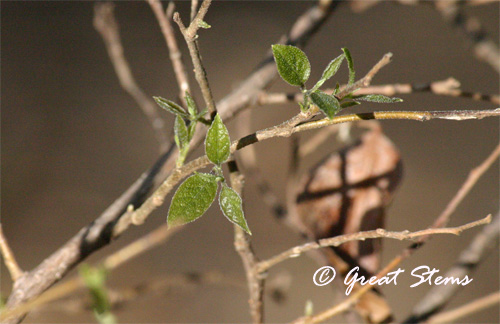 Hurray for my little tactile-pleasing sandpaper delights!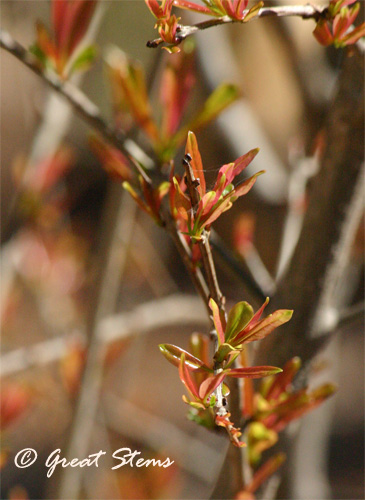
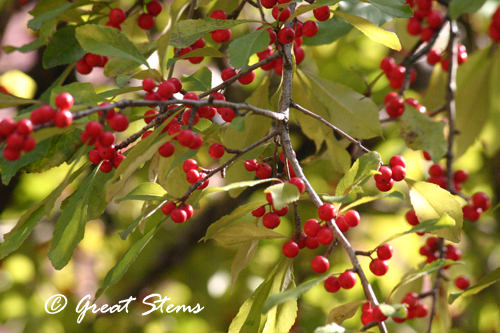
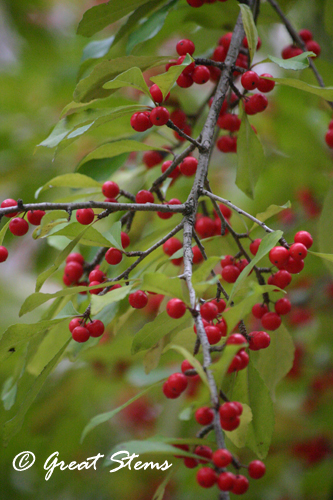
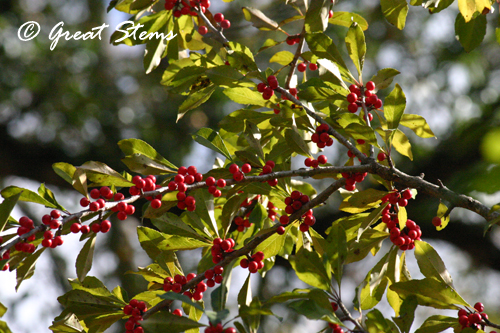 I think this tree must have had as much fun as I did with the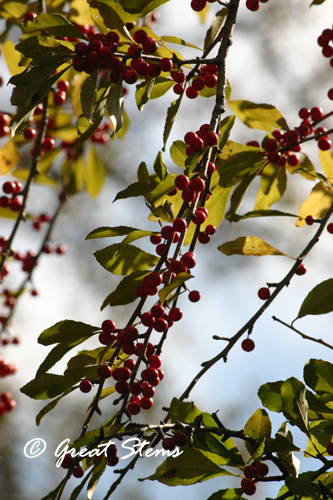
 We interrupt this post to show you this adorable Black-Crested Titmouse, seed in beak. These cute little birds don't like to sit still for pictures, so I'm amazed I got one. Oh my gosh, so cute.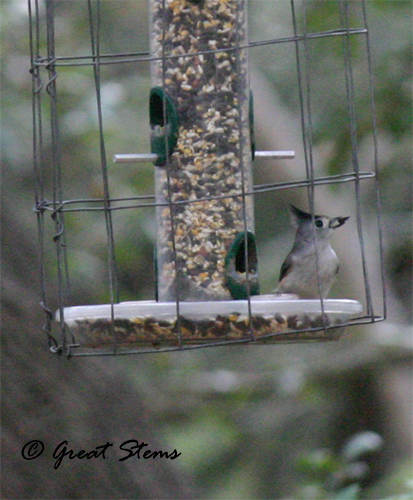
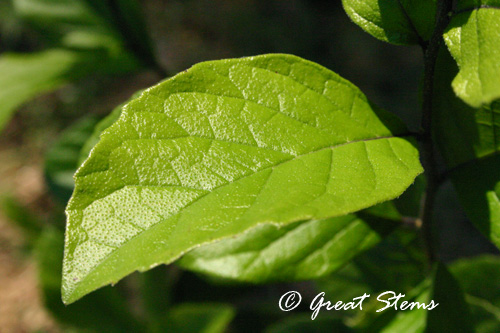
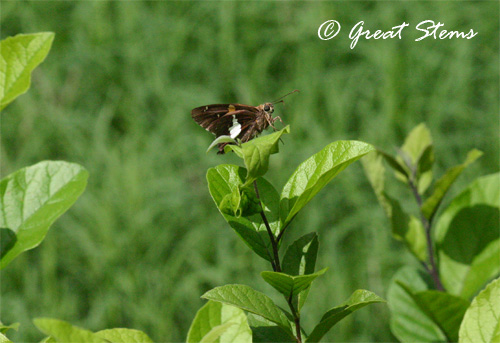
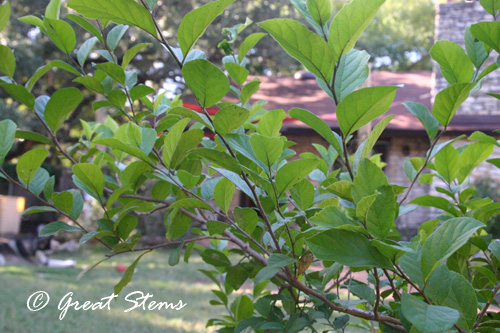
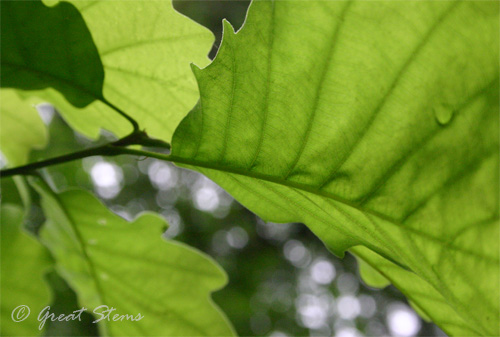
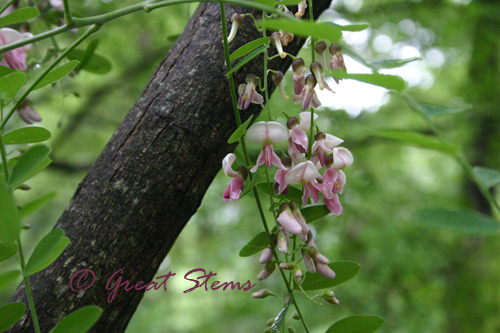
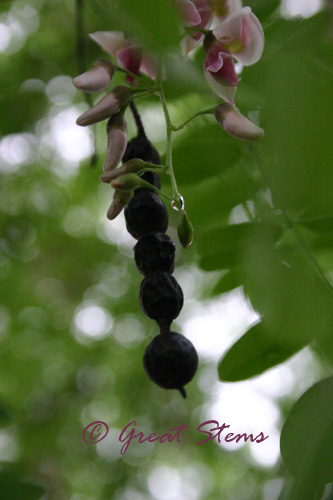
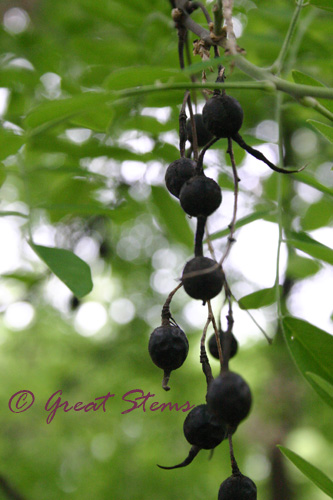
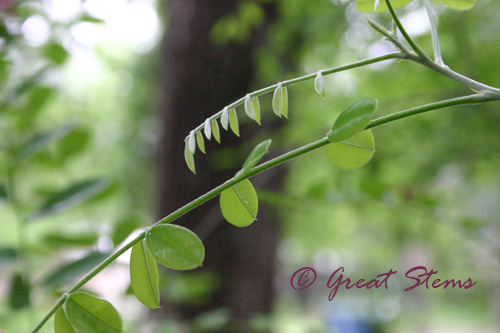
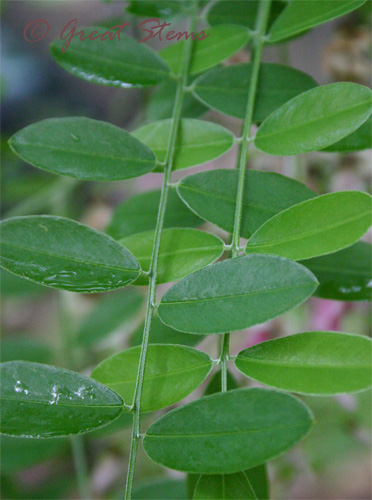
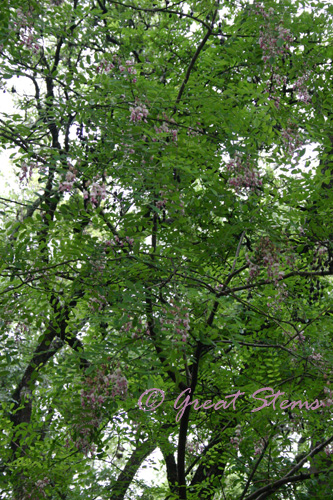
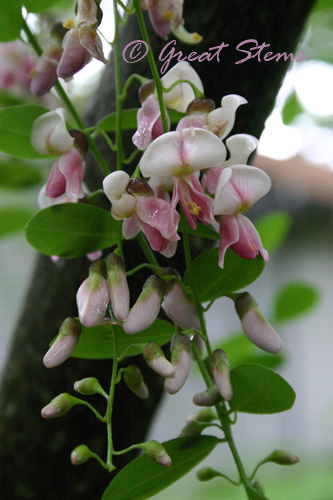 With more available sun, I know, it gets much denser and takes on the more classic tree look. It can also eventually reach 30 ft, but my tallest is about 15 feet, and I suspect it will always stay less than 25 feet tall due to its location under the much larger shade trees.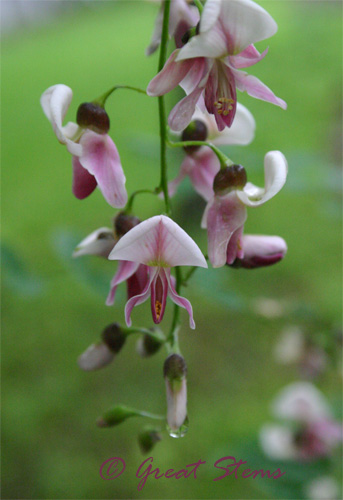
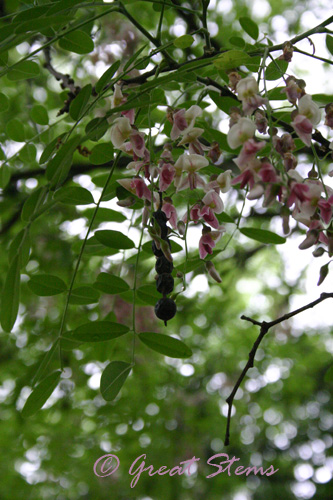 The tree has moderate deer resistance, but the deer in my neighborhood have left the saplings alone. It serves as a pollen and nectar source, and when dense enough it's a good nesting and cover site.