There's very little in nature that disturbs me. I can watch with fascination the way predators stalk their prey, study the little bones left behind in owl pellets, and look at snotty-faced hogs like they're as cute as bunnies.
I adore spiders, all of them.
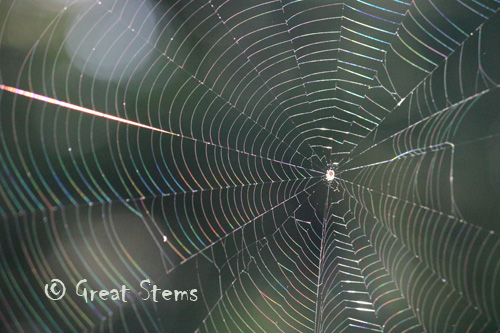
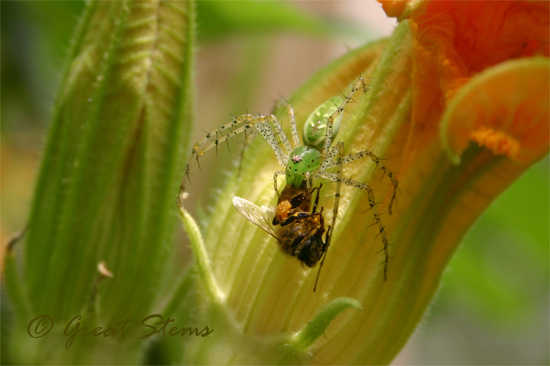 It would never occur to me to kill one, unless my family was in danger from a venomous one. Some of them make such beautiful webs -- incredible works of art and science and skill all rolled into one, though to the spider it's a just a normal way of life. I've walked into more webs and had more spiders in my big mass of hair than I care to admit, but I still love them.
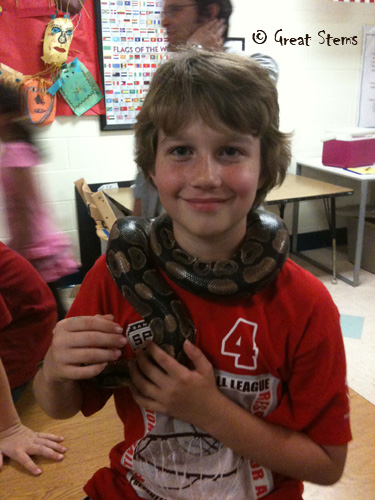
 I could cuddle with the biggest of snakes.
 I'd probably prefer not to have to outrun a taipan or to fall flat on my face in front of a rattler, but that's life or death -- and that's different. I guess I'm not a fan of ticks, either, but then who would be? They carry terrible diseases and suck your BLOOD. But they don't invoke fear in me. Not that feeling of panic that makes you shriek and want to flee far away. Well, there was that time in a deer grove near Uvalde that I looked down to see hundreds of ticks crawling onto my shoes -- I'll say that I did stare for a moment with fascination before doing the big "Get These Terrible Ticks Off Me" dance. None managed to reach my skin, thank goodness.
I study flies and bees and slugs with equal amazement. Animal carcasses you find on a trail? Gross, yes, but the stink would drive me away before the sight would.
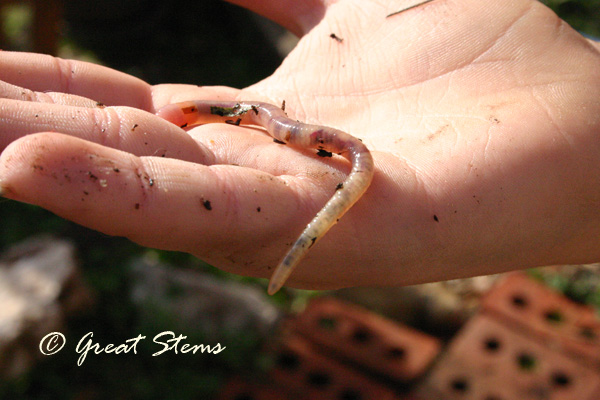
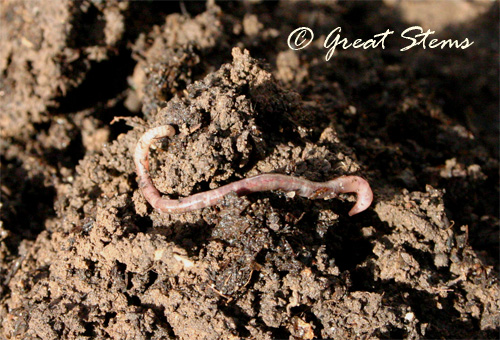
People say bats, and I run outside with a camera. I love the feel of slimy earthworms in my hand. I've been stung by a scorpion and lived to tell the tale. I've dealt with wasp hives and hornets and learned to appreciate the creepy-crawling of the zillion-legged centipede. I'd curl up with a lion if it wouldn't eat me.
But there is a creature that gets to me. Perhaps that's a poor way to word it.
The freak-out creature for me used to be a roach. I still remember the horror from my childhood of waking up in my room in the middle of the night, freaky shadows cast on the walls by oleanders outside the louver windows, their leaves and branches swaying eerily in the strong wind. In a moonlit spot on the wall, I saw a dark spot, and as my eyes adjusted I realized it was a the biggest roach I'd ever seen (and living in Corpus Christi at the time, I was no stranger to roaches). But this one was clearly the Big Bad Brown Roach from Dark Forces of Evil, and it was watching me. I could feel its little eyes staring at me from across the room.
 I stayed as still as I could, trying to muster the nerve to call out for my mom, or better yet flee. But it held me trapped by its dark gaze, long antennas wiggling all around, and I'd never felt such an intense moment in all the five years of my life. And instinctively I knew something was about to happen, and I grabbed the edge of my blanket in my hands just as that giant roach flew across the room directly at me. FLEW! I had never seen one fly, but this sucker did, and my screams of terror from under my blanket must have woken up the whole neighborhood and probably utterly panicked my poor mother who had to find out what was torturing and trying to kill her youngest daughter.
My grandmother's house had lots of roaches. Little ones and big ones. Driven by that roach's attack on my childhood innocence, I went after them with a vengeance whenever I was visiting and saw them. By the way, I can slap a mosquito with the best of them. Grandmother had an infestation of crickets, too, but I could tolerate them somewhat. That reminds me of the year of the grasshoppers, when swarms of giant grasshoppers covered northern Texas, and they'd fly at us across the water when we tried to go sailing, a big white target for long-legged flying green grasshoppers. Shudder. I remember my stepmother shrieking over and over again while holding up a big towel to keep them from landing on her. A few years later, it was the year of the crickets, and stores had to sweep them out by the thousands onto the sidewalks and streets. They'd make a wall look black as they crawled up the sides.
In a biology lab in college, I once had to dissect a live roach. Not those flat little scurrying things we all find to be pests from time to time. No, this was one of those big fat roaches from the southern U.S., Georgia as I recall. We had to basically dismantle it body part by body part, including the fat globs of marshmallow creme, until it was nothing but head and gut tract -- and it was still alive! Its little jaws just gnawed away. THIS is why roaches will outlive humans by millions of years.
In case you are wondering, I was a Zoology major in college. We weren't given a choice about dissecting things, and I won't list them all here. But the scientist side of me took care of business, and really, the internal organs were just as fascinating as the animals themselves. Bodies in general are works of wonder. Beyond that, I tried not to think too much about what I was doing.
I do recall the Giant Rat in high school. One night I was closing the curtains on our louver windows (I will NEVER willingly have louver windows in my adulthood, given the horrors they bring) when I saw a fat scaly tail hanging from the curtain where the drawstrings were. MOM! A giant rat! Neither of us wanted to try to get it out of there, and it wasn't budging on its own, and all we could see was that terrible tail dangling. So we decided to leave the door to the garage open to give it a chance to leave on its own (it probably came in through there). And we went to bed. Next thing I knew, my mom was nudging me awake, whispering that the giant rat was in her room. Why on earth she left her bedroom door partly ajar with such a monstrosity loose in the house, I'll never know. This time we went in with brooms in hand, ready to defend against and drive out the small intruder with giant freaky tail. It turns out that it wasn't a rat, neither giant nor little, but the cutest little baby possum (sharp teeth and all), and it was just as scared as we were. We gently helped it outside.
But while I might squeal at the sudden scurries of little mice or the unexpected appearance of a snake around a corner, none of it disturbs me, and my reaction turns fast to interest. But the creature of all creatures to utterly unnerve me is this. The Harvestman. The Bogeyman, if you ask me.
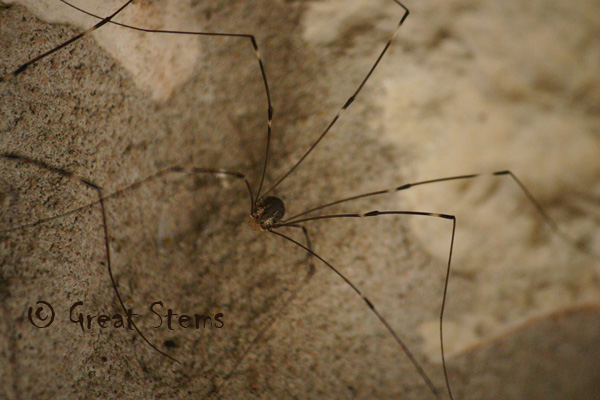 Some people call them daddy longlegs, or granddaddy longlegs. But whatever you call them, don't call them spiders. Because that's what they are NOT.
The harvestman is an arachnid, yes, but not a spider. Its body segments are closely joined to seem fused into a single oval.
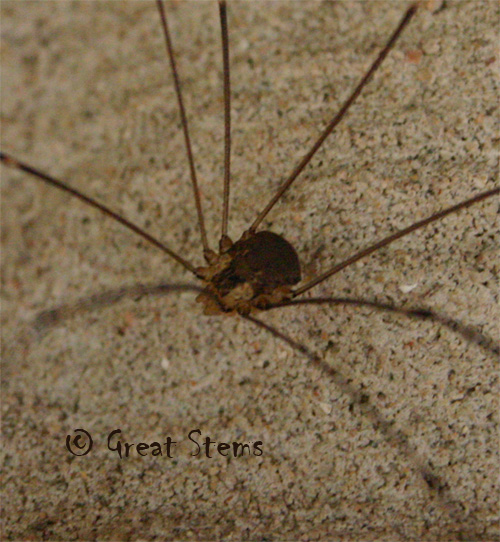 And they've got those freakily long legs. If they just stayed still, I could MAYBE get used to them. But...
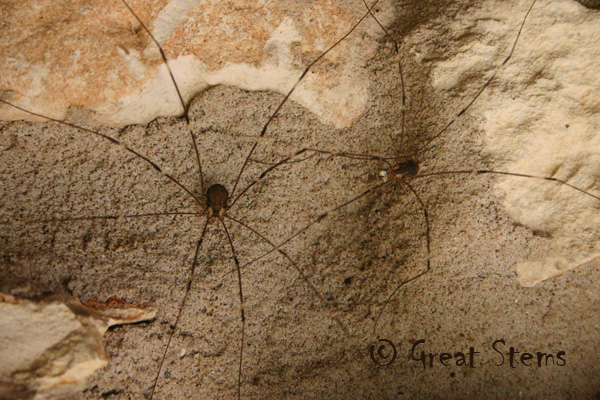 The way they bob up and down and quiver as they walk, they way they gather in black throbbing blobs on walls, the way they move their long legs around when threatened-- EEEEEK. I never really cared for them before, but visiting the narrow cave at Enchanted Rock in college and crawling in dark spaces only to look above and realize the ceiling is quivering, and then to realize with horror that you have thousands of pulsing harvestmen inches from ALL YOUR HAIR, and yeah, that's what did it for me. The word for the masses is "aggregation," a term you never want associated with creatures that freak you out.
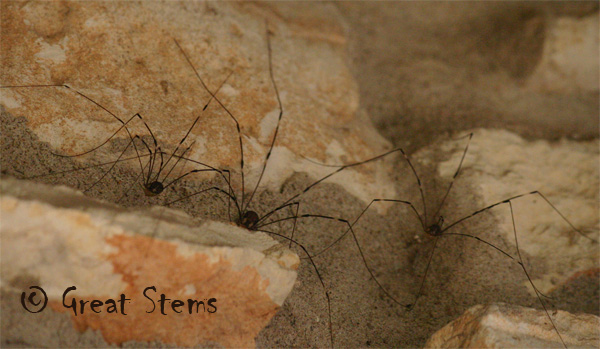 It's the quivering. It's the way they move. I really should capture a video, but I'm feeling pretty weirded out just by how close I had to get to take the pictures. Why? Because when I got close they started to move! They freaked out and started moving and pulsing up and down and then waved their long second legs around like antenna at me, and then I freaked out and I'm just lucky I didn't fall off the ladder I was standing on. Did you know that the legs can keep twitching after they are detached, due to little pacemakers in the first segment? I read that -- I did not try it out. Apparently detaching their twitching leg is actually a defense mechanism to help them escape from predators.
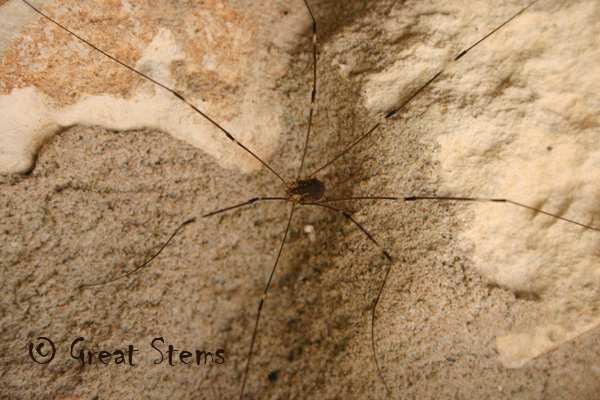 But in researching them, I reluctantly have to admit that they should probably maybe sort of go on the list of a garden's beneficial creatures. They are predators and scavengers both, and if they'd just stay out of sight, they'd be kind of sort of tolerated in my garden. They can't hurt me or my family, other than to give me a heart attack! But no, they are currently on my house, and if their numbers start to increase and my heart starts getting that fight or flight feeling too many times, they're going to have to go. I will not have big quivering wiggling black masses making me relive my cave experience over and over again! THIS IS WHAT NIGHTMARES ARE MADE OF, PEOPLE.
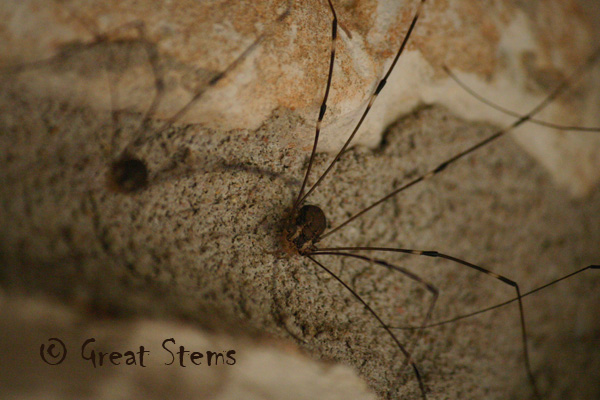 Let's jump right in with a new poem shall we?
O Harvestman, My Bogeyman
© 2009, Great Stems
I think that I should never see
A Harvestman coming straight at me
Even worse is what I fear
That thousands of them gather here.
Lurking, bobbing, on the wall
Legs that make them ten-feet tall
FYI, I'm not actually scared of the harvestman. I won't really run screaming in terror when I see it. But it does creep me out a lot, a LOT, and you won't catch me hanging out around it for long. They might creep me out, but I don't really wish them ill will. I just wish them a new location.
So I've told a long tale, and in it confessed my nature weaknesses. What in nature freaks you out?
-----------
EDIT, same day: A funny thing happened after I wrote this post. I finished saving it and got in the car to head to a swim meet. I was still all creeped out after writing the post and doing all those pictures, so I was still thinking about the effects the harvestmen have on me and I started thinking up new lines for the poem. Well, I was driving on a rather long empty road and a cop pulled me over. It was a beautiful blue snazzy "police chase" kind of car, too -- one of those new ones that make your jaw drop. Part of me thought it was kind of cool to be pulled over by the most awesome police car ever. Of course, I was in a mini-van -- not so cool. Well, the dialogue went something like this:
Ma'am, do you know why I pulled you over?
Ummmm... (serious pause here) maybe I was driving too fast?
Yes, ma'am -- that stretch of road is marked as 45, and you were going 60.
Oh. (pause) Well, I was thinking about something that had me freaked out. It was
those harvestmen, those daddylonglegs. And they were all on my house. And they were
quivering and bobbing, and I'm still creeped out by them. And I guess I didn't know
I was driving fast. I'm not a speeder by nature.
Please sign here, ma'am.
Here? Okay.
Thank you, ma'am. Well, this is just a warning about your speed. It would have been a ticket, but in all my years, I've heard lots of stories, and I've never heard one like that before.
By the way, Austinites, don't speed on McNeil, that part near the railroad as it heads toward Wells Branch. Mr. Cool Cop Car might be there waiting for you, but if he is, he's really nice.

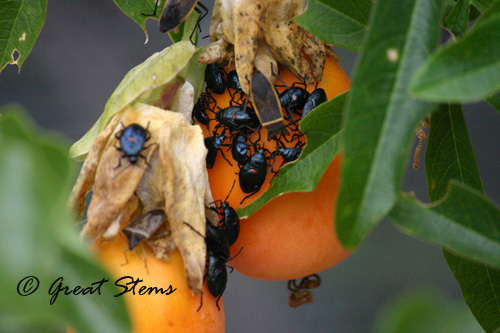 A thousand times ewwww...
 When you discover swarms of bugs in your garden and you need helpers to go after them, what better way to inspire a bunch of boys to go on the hunt than to offer video games of choice to the winner. Good thing we had a sleepover last night!
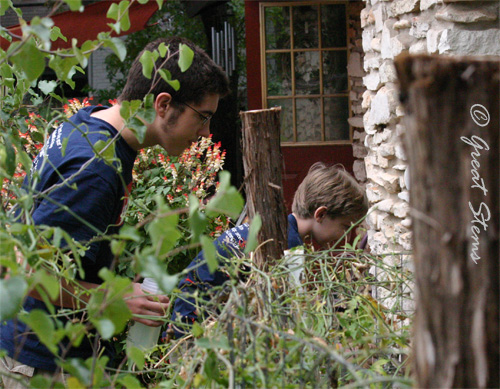 Cups of soapy water in hand, the five of us lined up for a fall pest-bug version of an Easter Egg hunt.
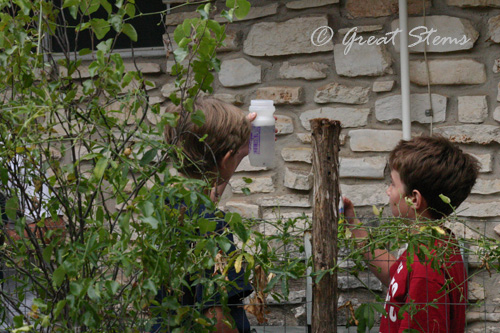 The bugs were everywhere, and apparently many of my plants have been suffering, including Turk's Cap, Passionflower, Salvias, and more.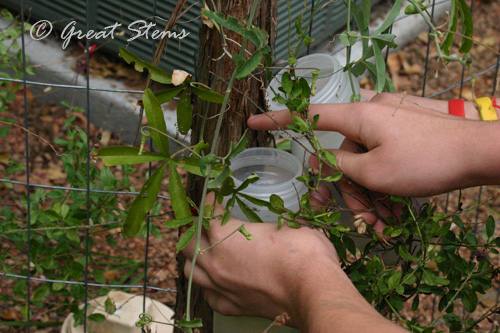
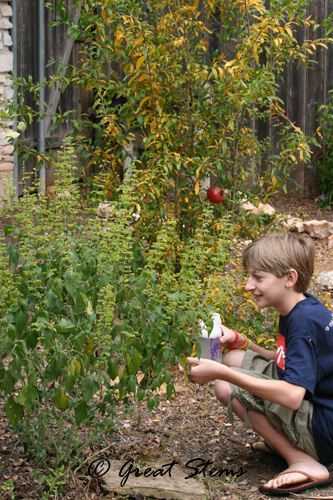
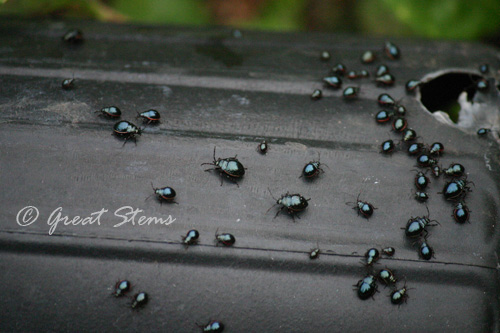
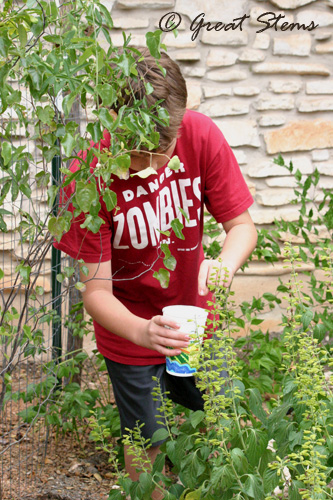 Entomologist Mike Quinn helped me out with the ID on the black bugs and the long bug with the orange outline. They are Largus bugs (Largus succinctus) in the Bordered Plant Bug family, in the same suborder as the Box Elder -- the black bugs are the instars. And there's a Brown Stink Bug in the mix. Good to finally know what these bugs are. Thank you very much, Mike! Reading more about them, they are not considered major pests, but the numbers in my garden are out of control, and the plants are clearly affected -- so no guilt about the bug hunt here.
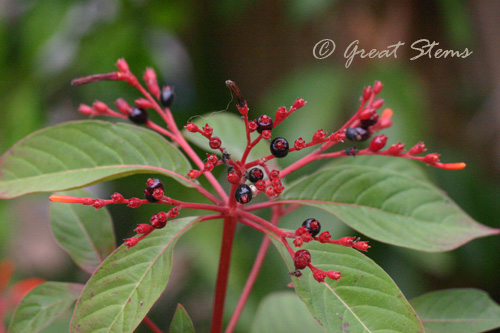
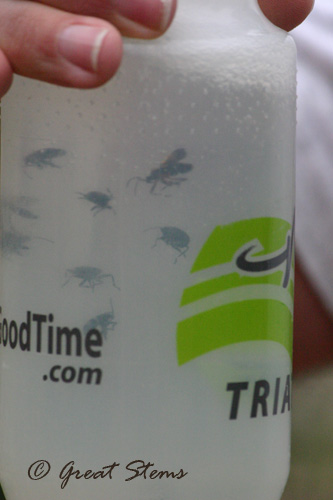 Sometimes we were tricked by dark berries that looked like the pest bugs, like these berries on the Firebush and the berries on the Texas Lantana.
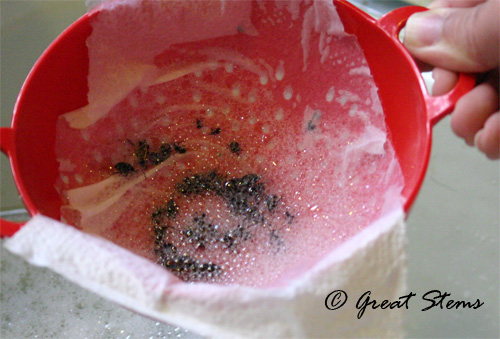
 When we all got too cold, we came inside to count our Easter eggs, I mean bugs. First we poured them into a paper-towel lined collander. Yum!
 And then counted them up.
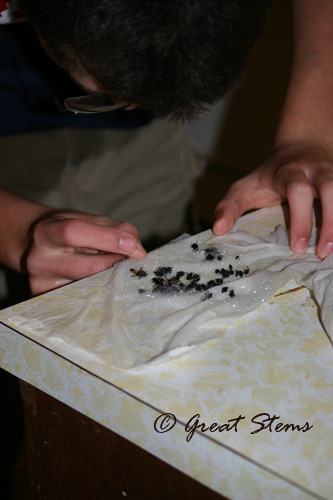 All in all, I think we caught some 200 bugs. We'll do a round again later when it warms up. We were all winners and everyone got to play video games (well, except me, who got to do a blog post instead -- yay!).

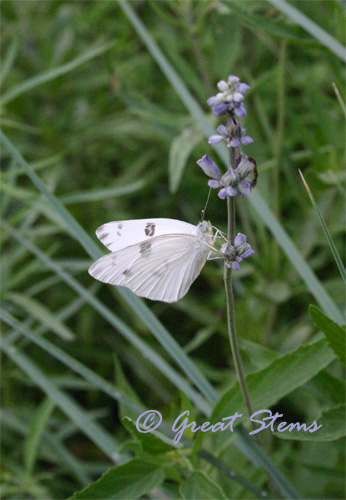
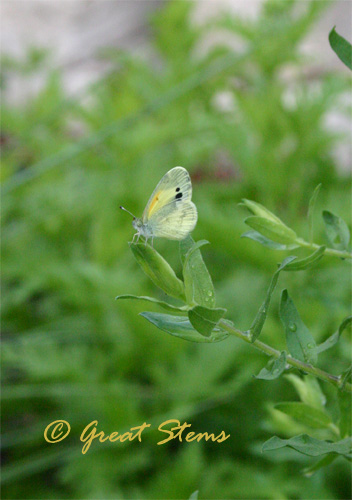
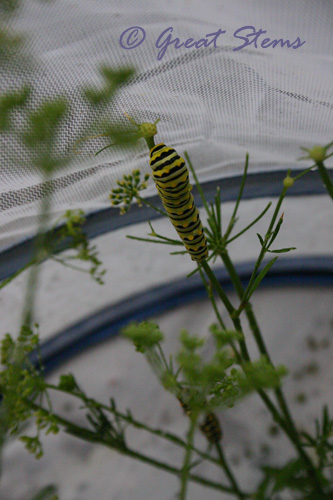
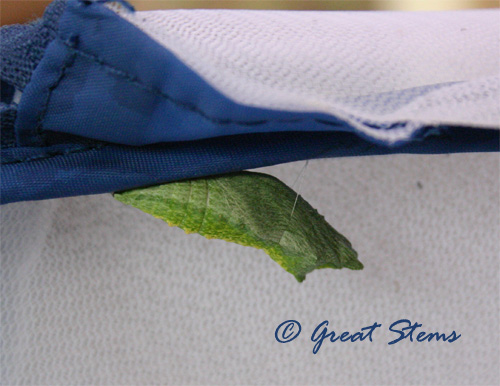
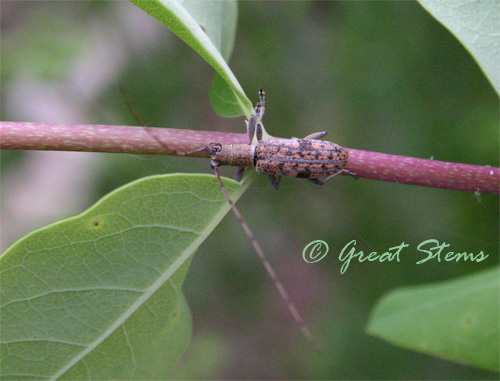
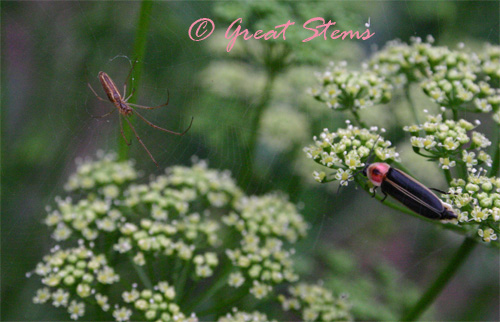
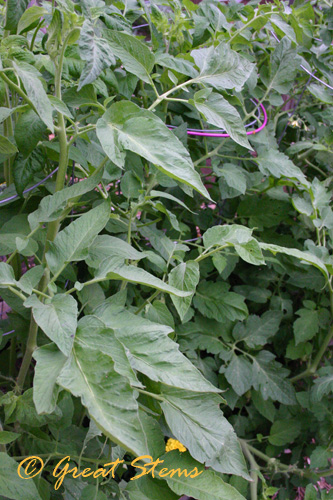
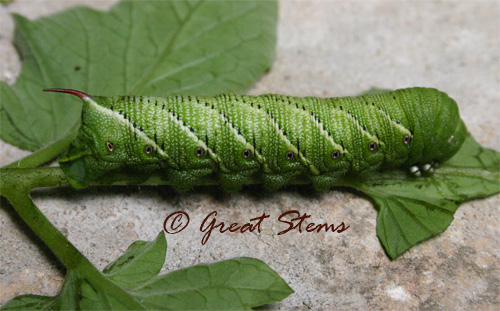
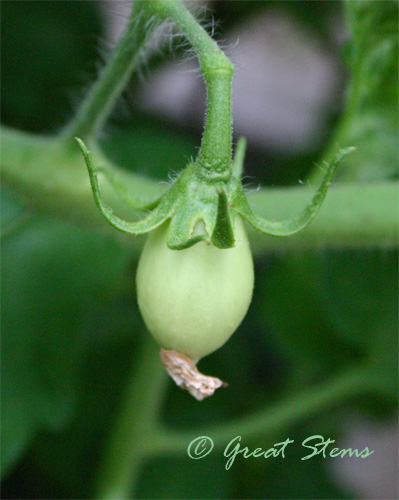 But the other night, a friend came over to share a birthday key lime pie I'd made my husband, and we ventured outside in the dark with flashlight in hand to view my enormous tomato bushes. My friend had been talking about a little green worm he'd found munching on his tomatoes at home, and wouldn't you know when he reached out to my tomatoes in the dark, he found a "squishy" creature on my tomatoes, too!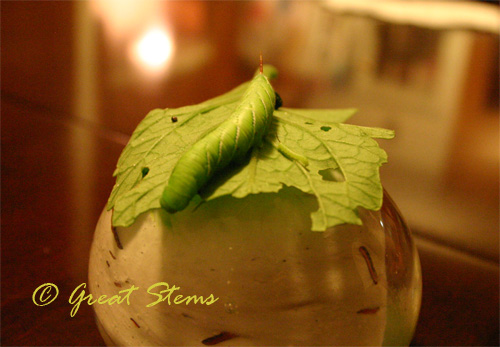
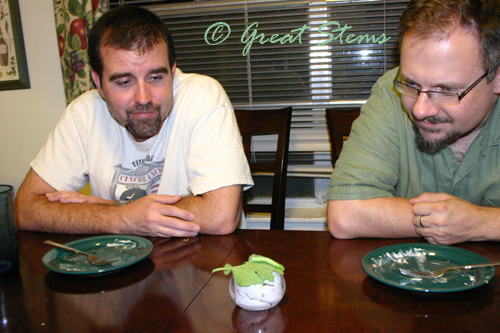
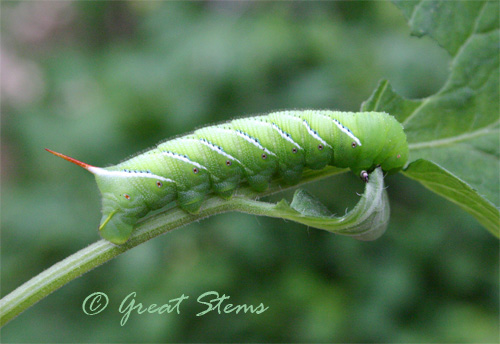
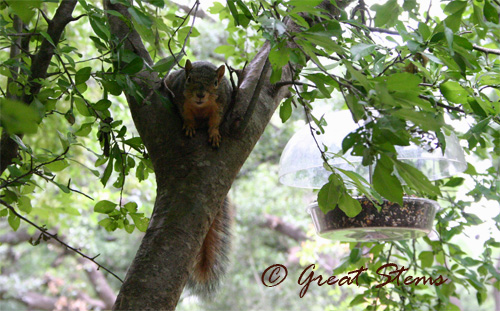
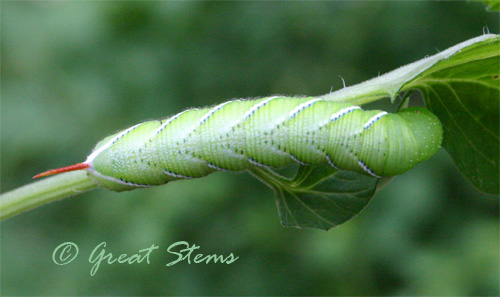 With sadness, this morning the caterpillar will go to the bird feeder tray. I can't bring myself to do the deed, but perhaps a bird will do the job for me.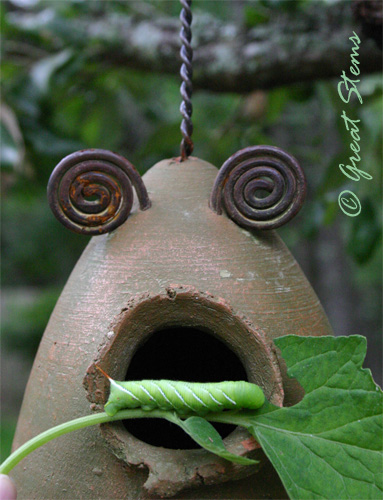

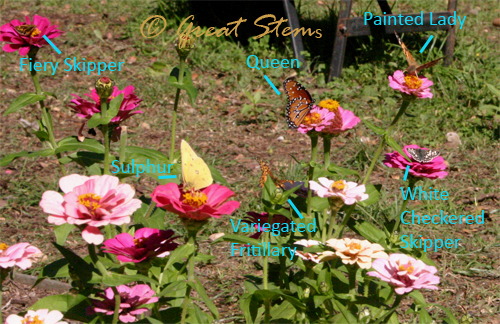
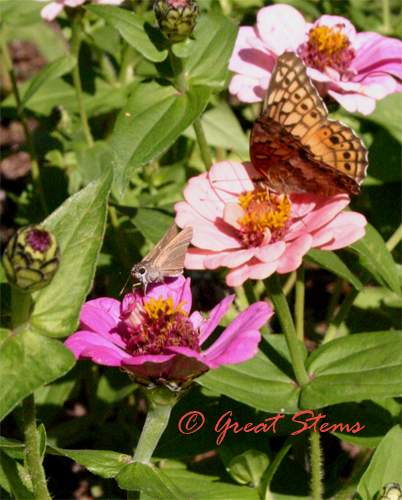
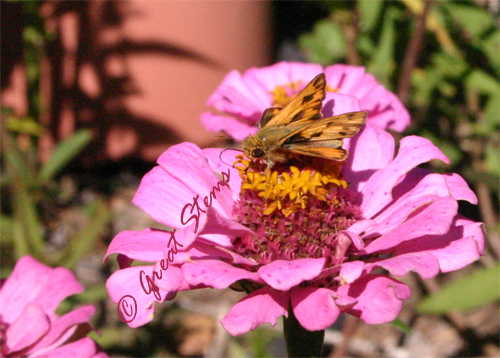
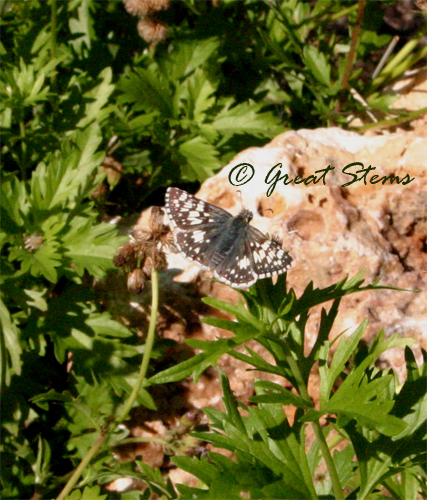
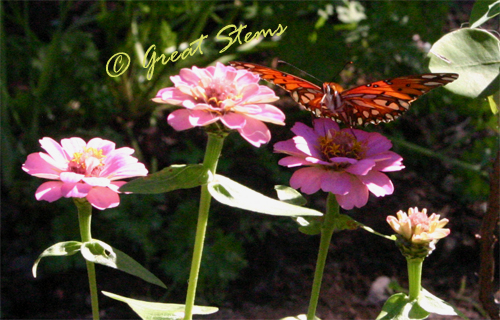
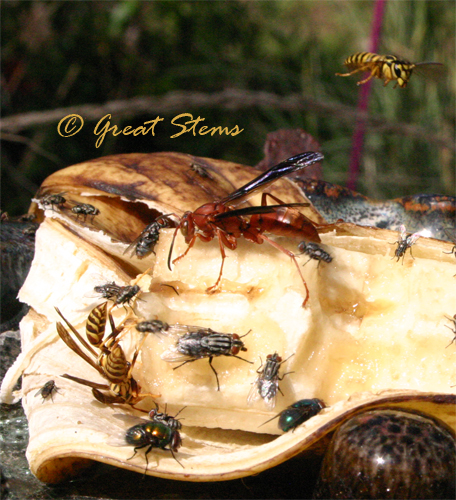
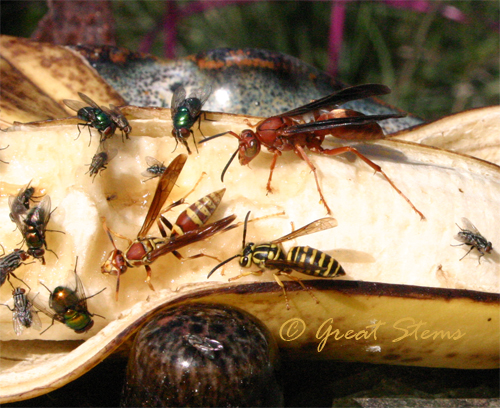
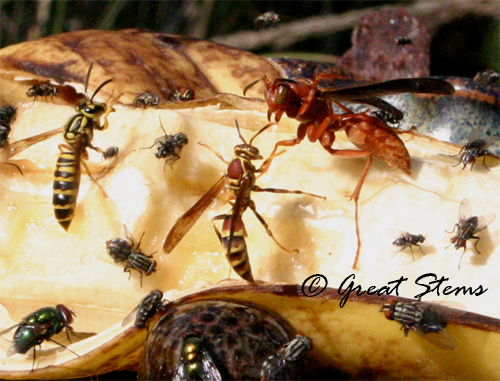
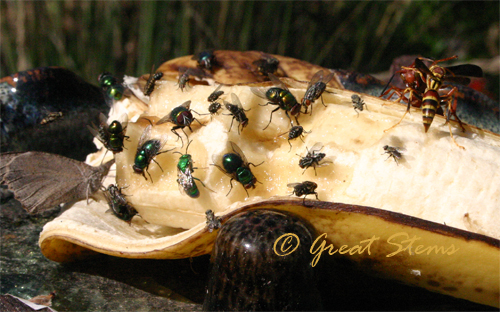 Do you see the beautiful metallic turquoise insect in the lower left corner? That's a Cuckoo Wasp -- the only one I can identify other than "fly" or "wasp."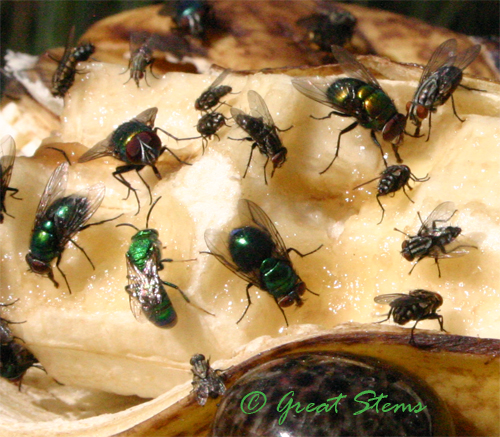
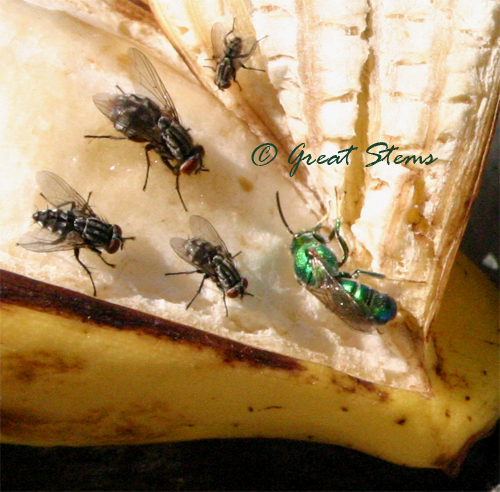
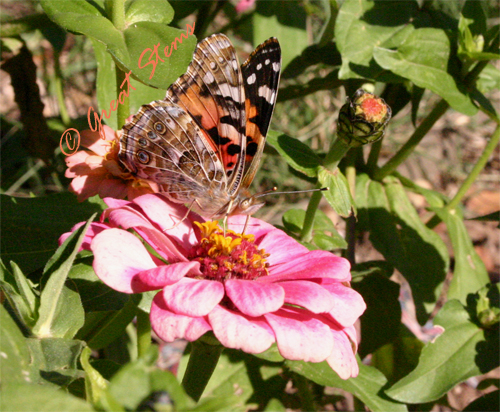
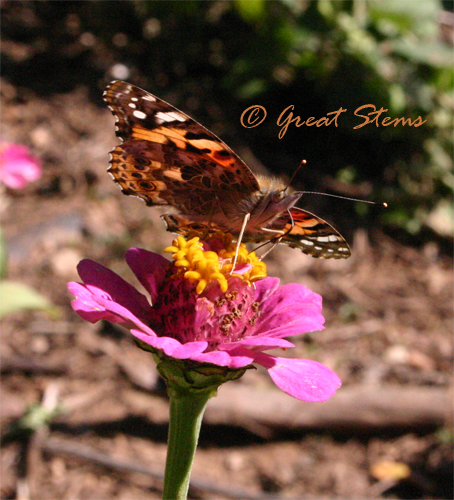
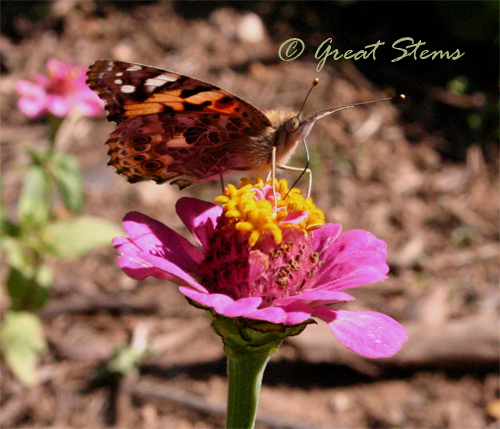
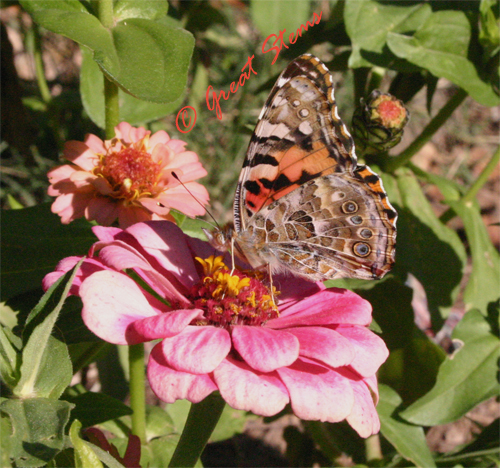
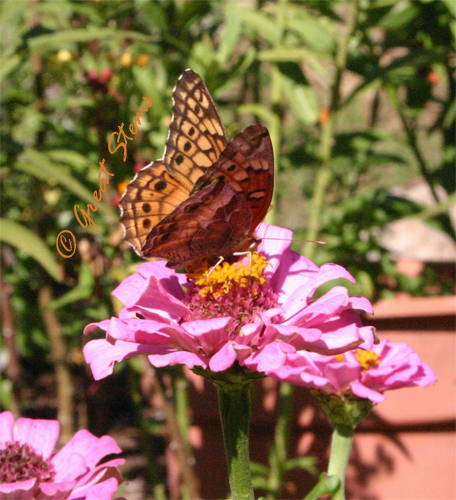
 And the flies and wasps weren't the only visitors to the bananas. Snouts began to venture over to the fresher banana, and today I found my first Red Admiral. What a beauty!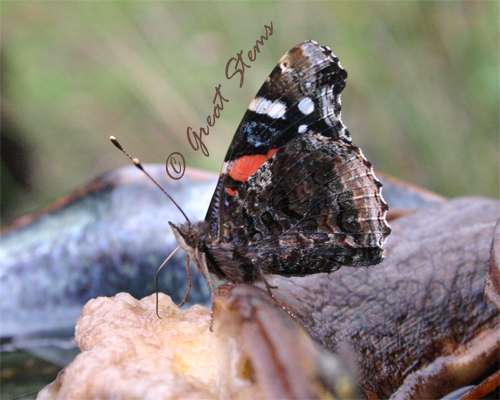
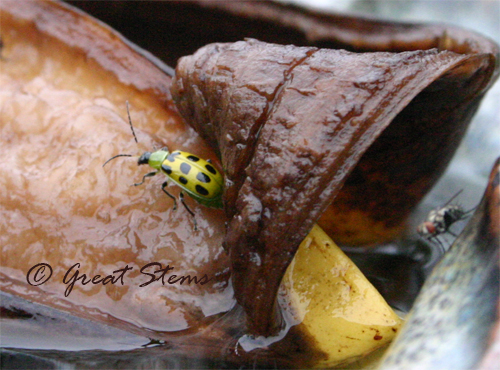
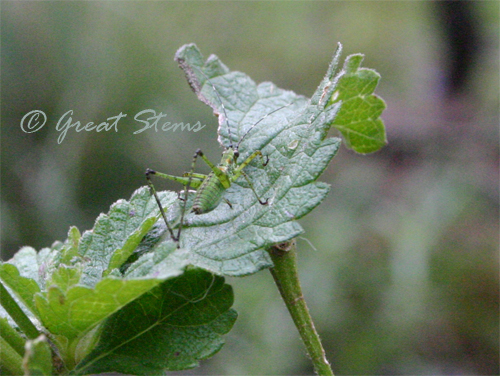 And off in the former pumpkin patch, where a few pumpkins and vines await me doing something about them, I found an icky green guy having a feast.
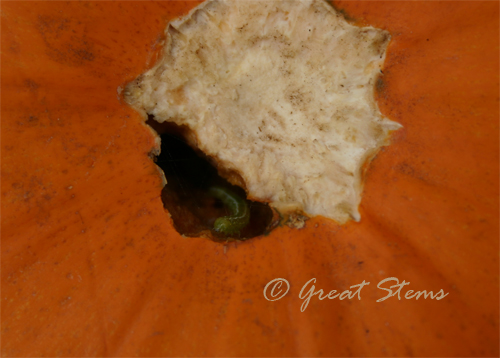 Enjoy it while you can, buddy.
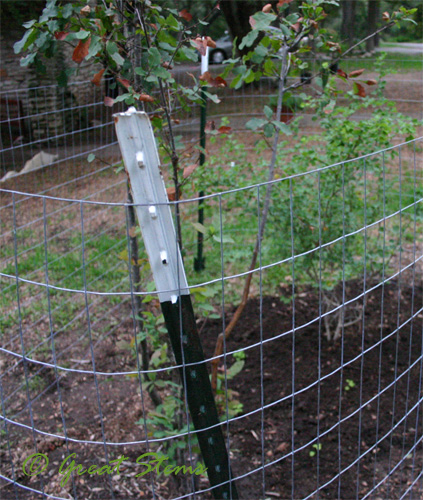
 Now for some good news -- the disappearing fountain is back and functioning again! We never did solve the mystery of the shifted rock, which led to the unexpected emptying of our new disappearing fountain and potential pump damage. But happily the pump still functions, and our fountain still remains the $40 disappearing fountain! We changed up the rock structure, so hopefully it will be harder for some creature to displace the tube. That little rock is only there for interest, not for directing the water flow.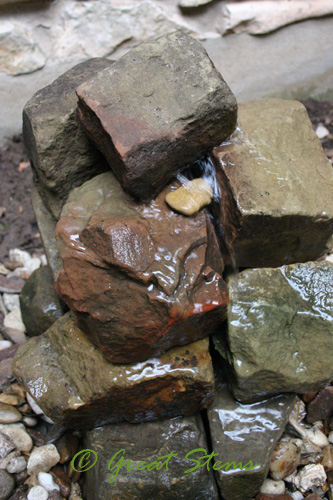
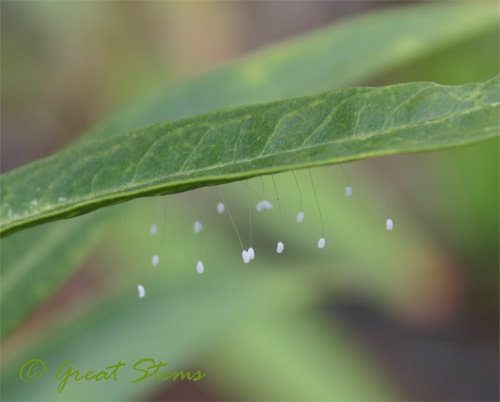 These are the eggs of green lacewings. As larvae, they are voracious aphid eaters. Yay, another ally in the garden! I need them because the aphids are worse than ever. I seem to have least three species now --- I'll call them green, yellow, and beige. The green I'm sure are corn leaf aphids. I have got to get out and tackle them TODAY. My veggies, my milkweed, and now my firebush plant are all having an aphid problem. The little pests took advantage of my time away from the garden during the rainy week and bred like rabbits. I'm starting to think that it's the other way around, and rabbits breed like aphids. Today I'm seeing wings on some. Gah, more colonization!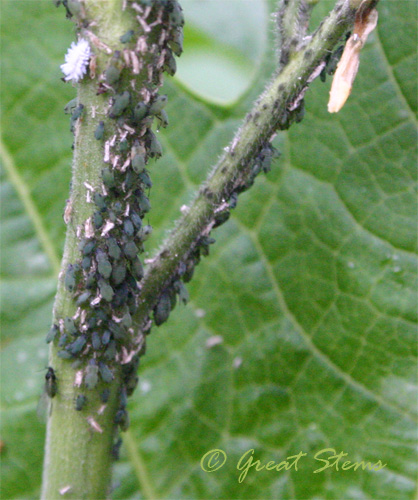
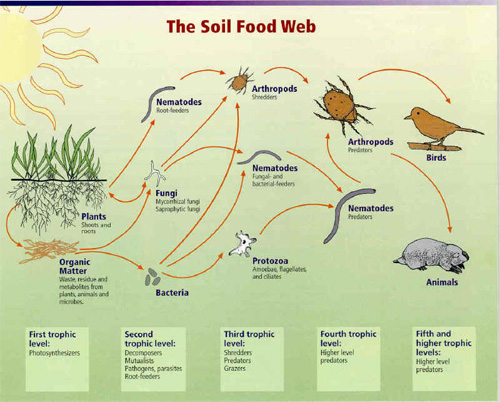
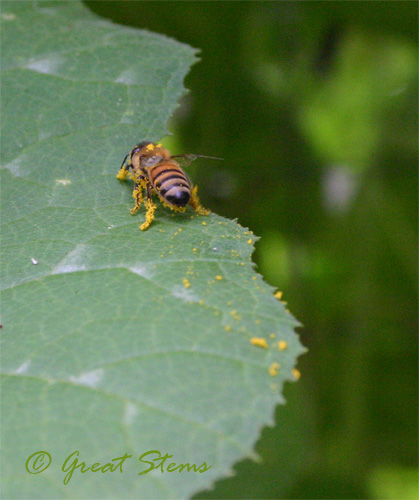
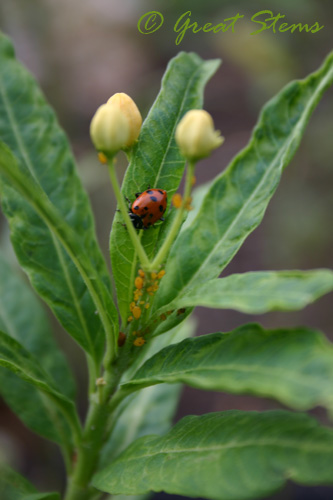 So I've got new lacewings arriving soon, and of course I've got ladybugs. More spiders are arriving, as are earthworms. The bees are getting plentiful, and I don't even have to do the veggie porn thing to pollinate my plants anymore. I truly love the way nature just naturally (ha) balances its ecosystems. Got organic wastes? Happy earthworms move in. Got flowers? Let's pollinate. Overpopulation of something? Here come the predators. And here come the predators to eat the other predators. Oh look, birdie treats. And then snakes. And hawks. Whee, life is grand.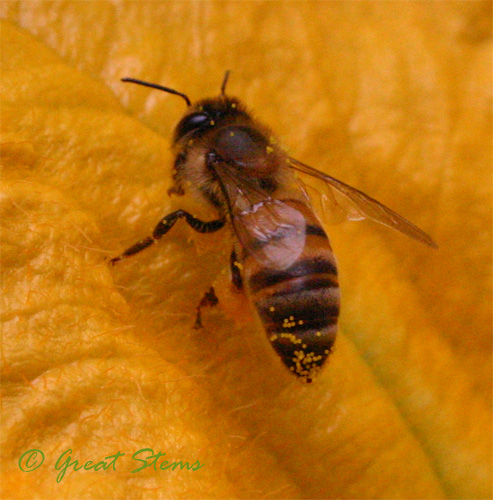
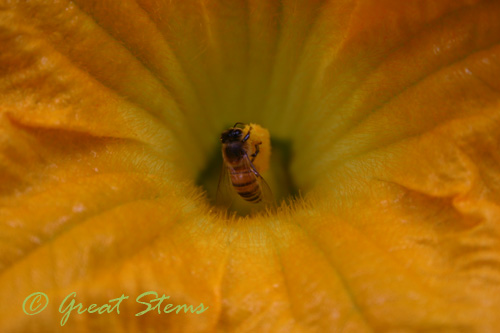
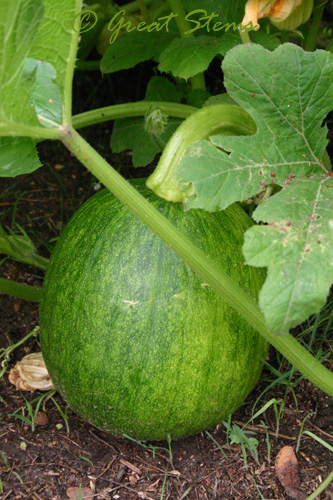
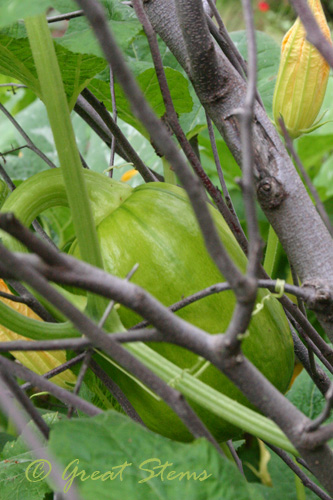 With the rain this week, the yard is a big mudfest for the dogs, and they took advantage of it -- digging where they shouldn't, trampling through the butterfly garden, and taking turns leaping over the pumpkin vines. I'm out there yelling, "This is not your playground!" And then I realized my neighbor must think I'm nuts, because of course it IS their playground. If I can manage it, I'll try to get a picture of the husky leaping in full gallop over the massive pumpkin plants (in between my yelling at him, of course). It really is a sight to behold.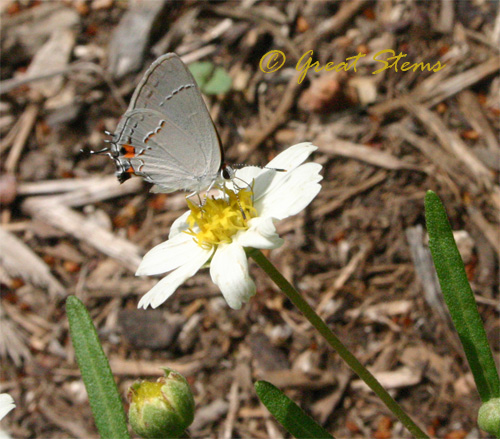
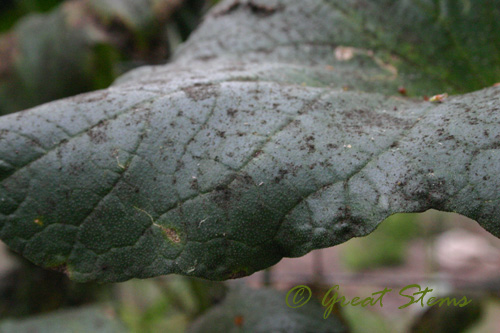
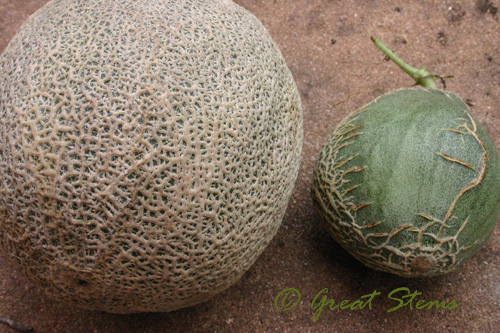
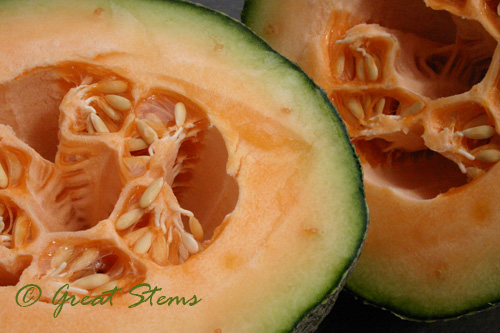 So I began the process of cutting up the fruit for the compost bin. By the way, ever wonder what the inside of a young cantaloupe looks like? Pretty cool.