Recently in flowers Category

Bittersweet

| 12 Comments

I'm having another Wildlife Lover's Moral Dilemma, but this time it's of a different sort. Up until now, my love of butterfly caterpillars has known no bounds, and I've gone out of my way to plant larval host plants and create a Caterpillar Hotel and so forth. But today caterpillars have rained on my parade, and my beloved caterpillars have come back to bite me, or at least my precious flower favorites.

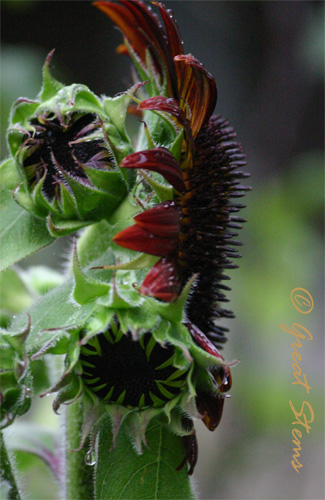
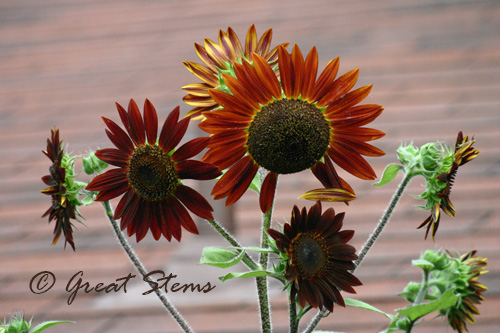
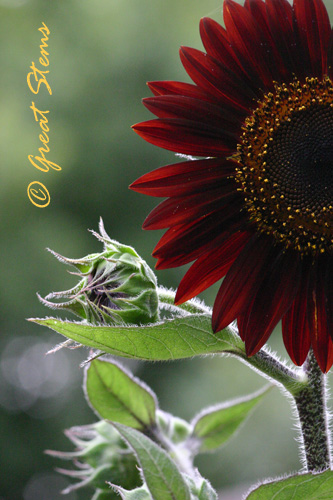
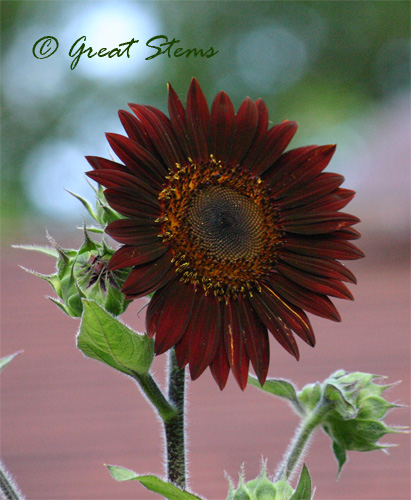
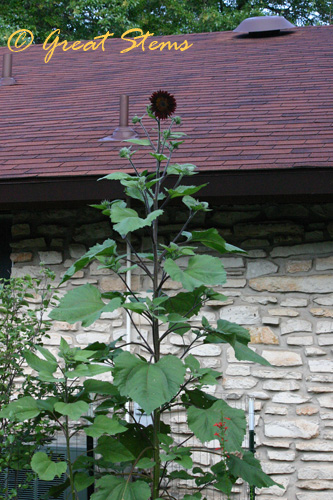
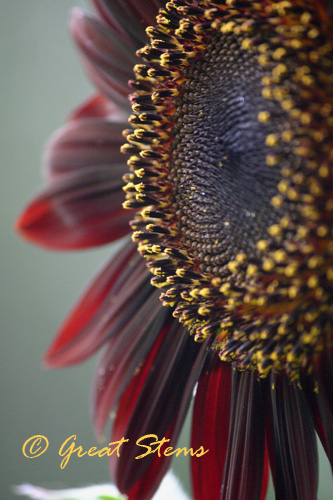
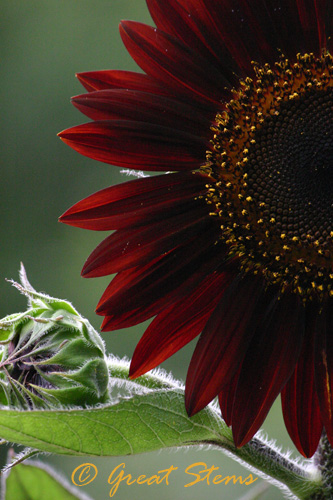
It's been raining a lot lately, and so I've not been in the garden too much, grudgingly recognizing that the nutsedge and bermuda are taking over again in the meantime. But a glimpse out my bedroom window got me excited -- blooms lower down on the tall Cinnamon Sunflowers meant I had a chance to take new photos of my dark red blooms. I rushed outside in a dry pause from the rain... to a horrible sight.

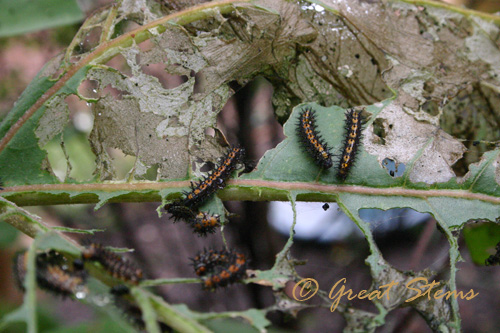
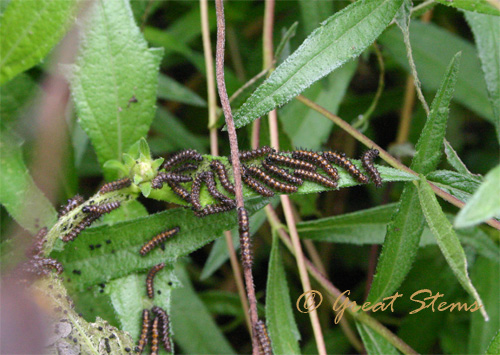
The first thing I saw from a mere glance was a mass congregation of black on the leaves of one of my yellow sunflowers. Caterpillars, and a lot of them.

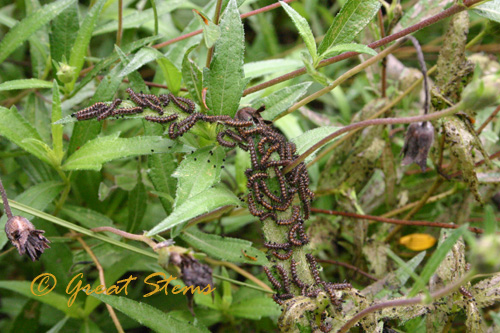
bordpatchcate07-02-10.jpgThen my eyes opened wider. There were more on the plant next to that one. And on down the short row. 

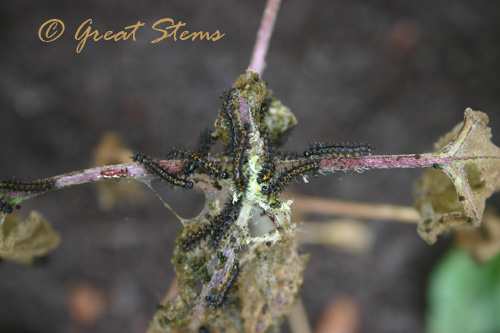
bordpatchcatb07-02-10.jpgThen I was hit with the realization that they'd completely defoliated many of the leaves of the yellow sunflowers, to the point that I'm not sure whether there's a future in sight for any of the already-struggling annuals.

In fact, I'm quite certain that two of the smaller plants are dead, or at least zombies. I hadn't even shown a photograph of a bloom from the poor traditional flowers -- I'd been waiting for them to get bigger. I felt such sadness.

bordpatchcatd07-02-10.jpg

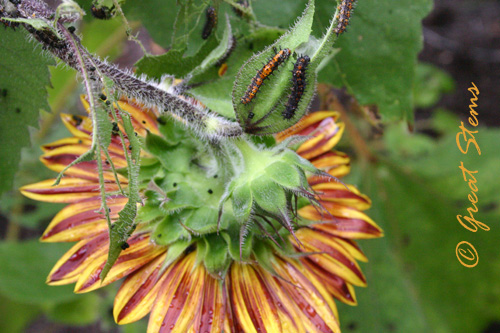
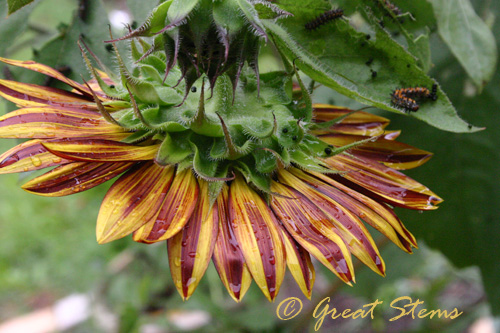
And then, like a scene in a horror movie, I turned slowly to look at my Cinnamon Sunflowers, dread gripping my heart.

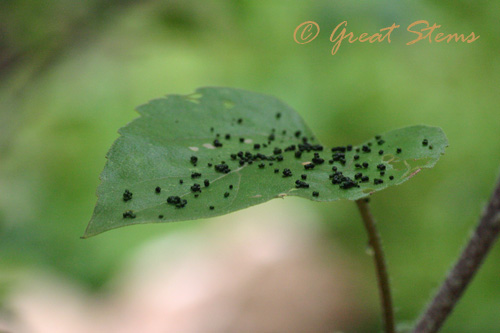
The first thing I saw was caterpillar poop, and a lot of it.

bordpatchcatc07-02-10.jpg

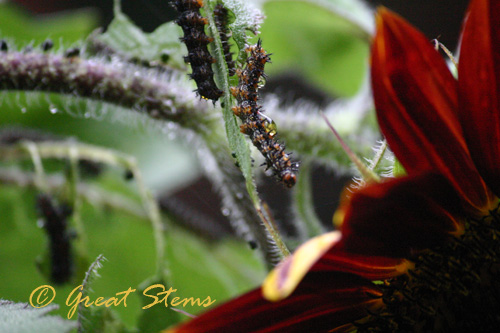
Ok, something's eating my Cinnamon Sunflowers. Looks like a few caterpillars. At this point, I'm still thinking it's ok -- I knew the flowers were larval hosts. I accepted that.

But as I opened my eyes beyond the poop to the damage and destruction above, around, and beyond, my heart started breaking.

bordpatchcata07-02-10.jpg

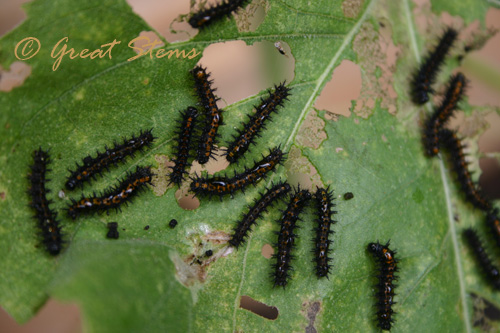
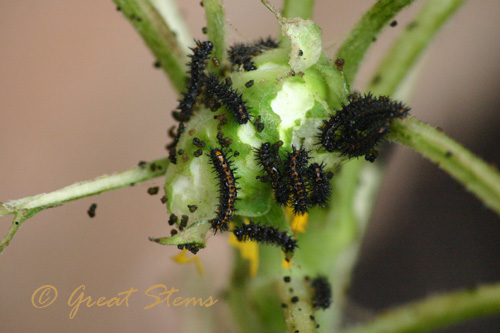
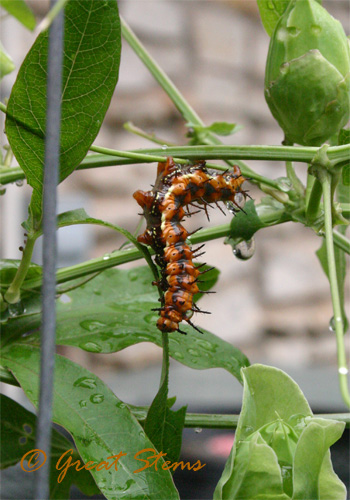
I have what I can't seem to call anything else -- an infestation -- of literally hundreds of caterpillars of all sizes. I knew by the spines that there was a good chance they were butterfly caterpillars, but still... in those numbers?

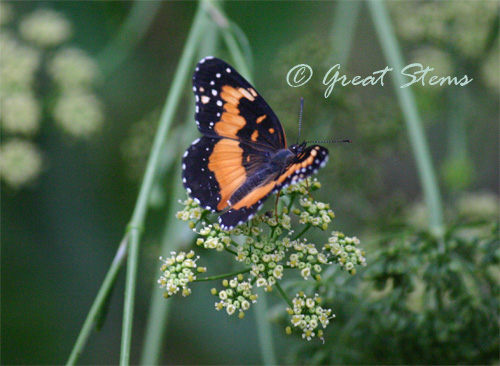
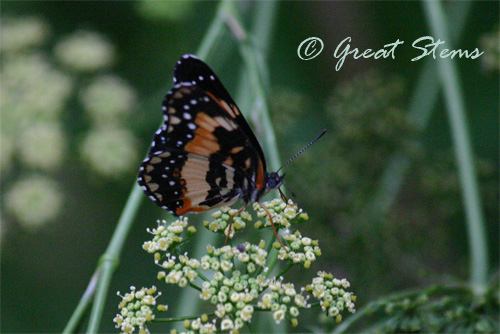
bordpatchcatf07-02-10.jpgPart of me wanted them to be something that I could consider pest caterpillars, so that my moral dilemma could be simpler to deal with and I could find a soapy bucket of water. But no, as near as I can tell, these are the larvae of the Bordered Patch Butterfly. At some point, I am going to have incredible numbers of chrysalises and several dead, once beautiful sunflowers. Was this gorgeous butterfly from just a few weeks ago one of the culprits?

borderedpatcha06-13-10.jpg borderedpatchb06-13-10.jpgDespite the destruction, I can't bring myself to dispose of the caterpillars, or feed them to the birds, nothing. Must... love... caterpillars.

bordpatchcath07-02-10.jpgI can't love the butterflies without supporting their eggs and babies. I guess I'm just going to have to watch them devour my plants and hope that the sunflowers, at least the larger ones, will recover.

bordpatchcati07-02-10.jpgI thought about moving the Bordered Patch caterpillars over to the Zexmenia, also a host plant. But that's when I discovered hundreds of caterpillars were over there, too. My beautiful Zexmenia, already getting eaten up, too. Gah! It's ok, Meredith, it's ok... planted as a host plant. All good.

borderedpatchcatsonzex07-02-10.jpg borderedpatchcatsonzexb07-02-10.jpgHere's what I want to know: when exactly did these Bordered Patch butterflies show up laying eggs? And OH MY GOSH JUST HOW MANY EGGS CAN THEY LAY? Holy cow. And where are my beneficial predators now, now that I need some ecoystem balancing? Hello birds, stop feasting on my seeds and get yourself some live protein. Leave a few so there's still a good population of butterflies, please. Why didn't anyone tell me that Bordered Patch butterflies and their cousins are the rabbits of the butterfly world?!!!

According to some sources online, Straggler's Daisy, or Horseherb, is a larval host plant for the Bordered Patch. I've got plenty of horseherb, so I did try moving some of the caterpillars over. They wouldn't eat while I was watching, and then the rain came again, so I'll have to monitor them for awhile before moving the rest over. Cross your fingers -- there's a glimpse of hope for the sunflowers if I can pull this off. I'm not holding my breath for too long, though, since so many other sites didn't list the little groundcover as a favorite host plant.

Between the masses of caterpillars eating my CinnSuns and the masses of nutsedge and weeds abounding in my garden, I just want to cry. And yet, I'm so happy we've had rain -- just an absolutely wonderful thing in central Texas during the summer. And I can still smile at the Gulf Fritillary caterpillars on the passionvine.

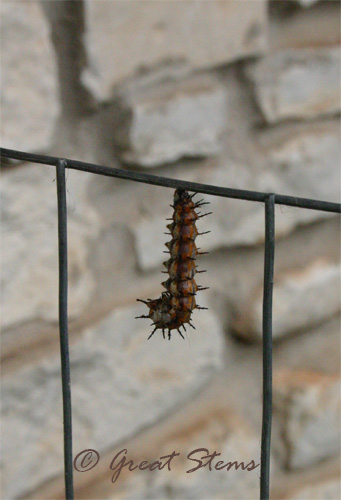
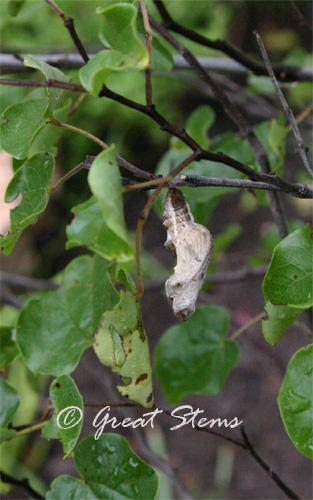
fritcat07-02-10.jpgI saw one starting its chrysalis stage today -- it's a J right now -- and I happily discovered a chrysalis hanging from a Mexican Redbud branch. (I also discovered a passionflower bloom in the redbud tree -- that pesky vine has done it again!)

fritstartingchrysalis07-02-10.jpg fritchrysalis07-02-10.jpgBut overall I feel like I'm being tested, and I'm not sure whether I'm passing or failing. Passing as a wildlife lover with a high level of tolerance for munchers; passing as a butterfly grower. Failing as a gardener who wants beautiful, intact plants around; failing my new sunflowers. This isn't my veggie garden-- with my tomatoes, it was a war I had to engage in, those hornworms and stink bugs. Now the line in front of me is blurry. Should I be thinking of the crazy numbers of caterpillars as pests or be happy that I'm supporting more butterflies?

No worries, it's still the latter. I just need to get used to this new concept of caterpillar quantity and re-evaluate my planting methods. Clearly I need more sunflowers so that my plants aren't so easily overtaken. That will work, right? Learn to share, butterflies!

Hang in there, sunflowers. I know this is tough love from mama.

cinnsun07-02-10.jpg

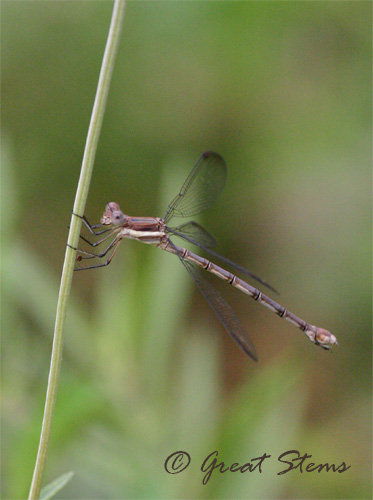
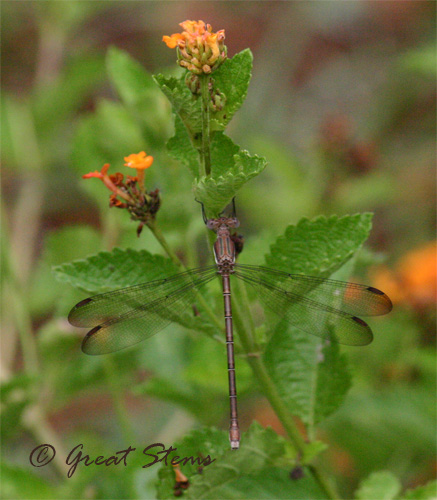
A smile from a damselfly to cheer us up...    :)

damselfly06-30-10.jpg

Bittersweet. That's what it is. Bittersweet.

Humming a Tune in the Garden

| 6 Comments

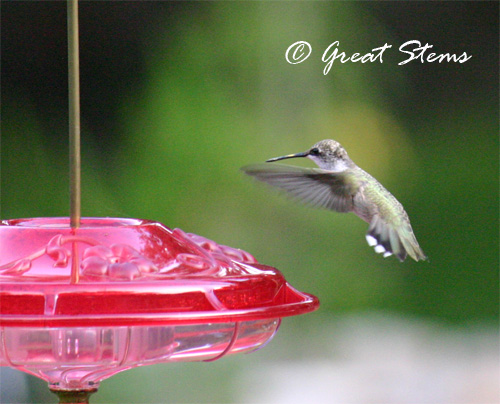
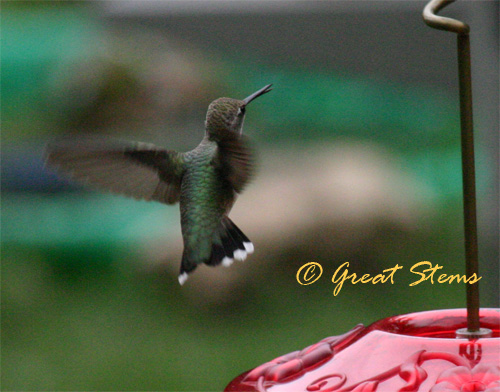
My aunt is going to be very pleased -- she gave me this hummingbird feeder, and look who stopped by to visit!

hummerb06-29-10.jpgThat's a Black-Eyed Susan vine climbing the trellis. I didn't realize how nicely matched it is with the pretty feeder. I mean, I did that on purpose. Yeah.

The other, more visibly red feeder often gets the most attention. But it holds less sugar water, so I'm happy that both are being used. 

hummera06-29-10.jpg   Do you see the pollen on the little hummingbird's beak above? Someone has been visiting flowers! Hurray for our flying, humming pollinators.

I've tried again and again to get a good picture of a hummingbird visiting one of our blooms -- usually they come out blurry because the birds dart off so fast. And then this morning...

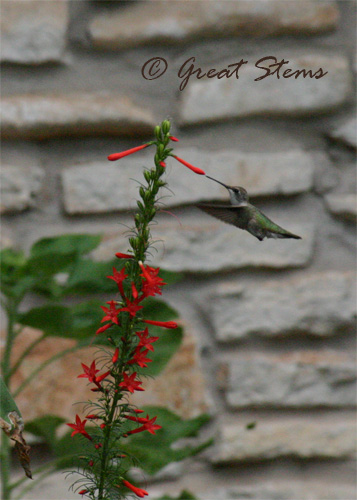
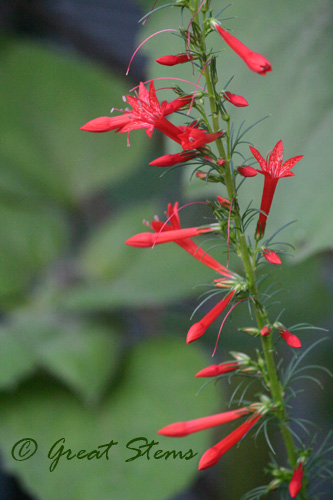
hummerc06-29-10.jpg The little lady usually doesn't let me get too close when she's at a bloom -- she is much more tolerant when she's at the feeder. Perhaps she's getting used to me and will let me get more flower shots, given the progress above. She used to visit the Salvias, but when the Standing Cypress started blooming, it became her favorite.

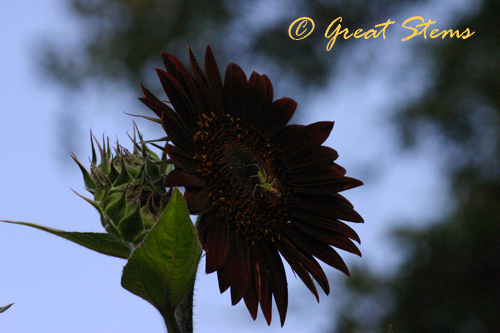
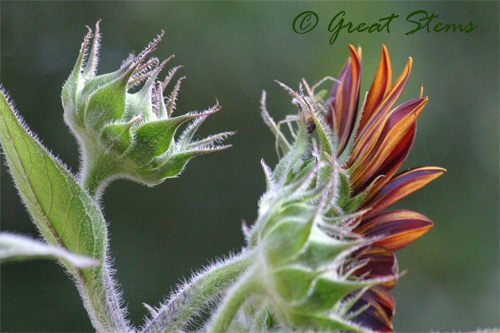
The Cinnamon Sun has produced a lovely bouquet. All the flowers are still above the roofline, though. I'm waiting for the lower buds to open up so I can really study the blooms easily.

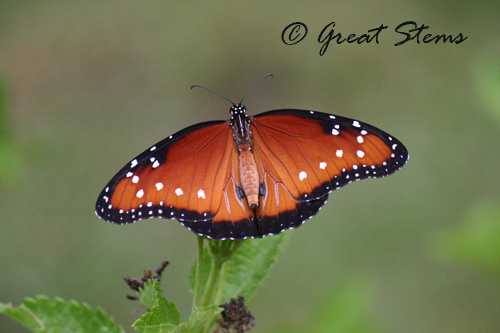
cinnsuns06-29-10.jpg We've had a bit of rain with the tropical systems happening in the Gulf of Mexico -- it made for a pleasant relaxed time in the garden. This male Queen butterfly took a long rest on a lantana.

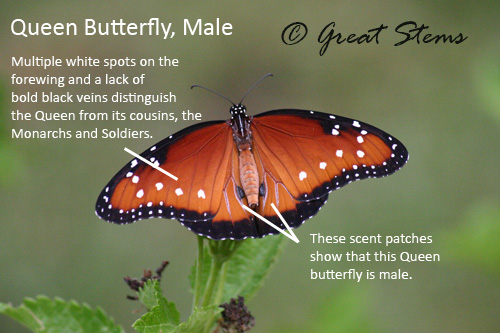
queenmale06-29-10.jpg How do you ID a Queen, and a male from female? Many people often mistake Queens for Monarchs, easy to do because they really are lookalike cousins. Soldiers make it even more confusing, and then there are the mimic Viceroys, too! Take a look at the photo again, this time with labels.

queenmaleID06-29-10.jpg If you'd like more info on IDing the lookalike cousins, click here.

Also resting on the Lantana was this handsome damselfly. I'm needing a nap, just watching these guys. Perhaps the overcast day has something to do with that, too.

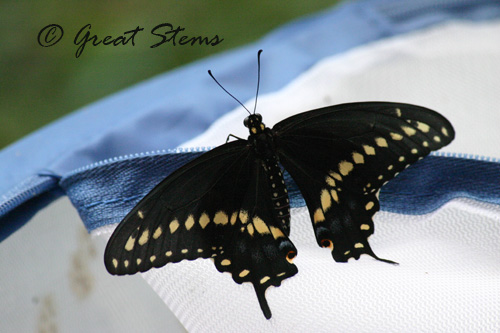
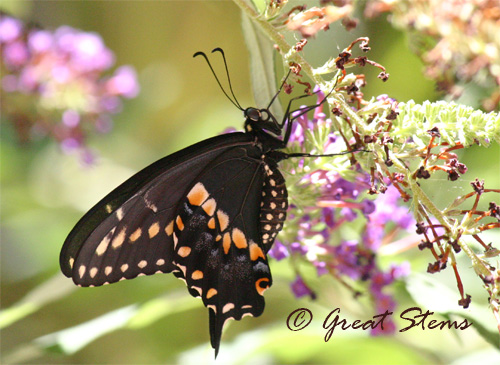
damsel06-29-10.jpg We've had another butterfly release from the Caterpillar Hotel! A black swallowtail emerged and took its time resting and drying its wings. I hope it came from the brown chrysalis from awhile back -- I was worried about it taking too long. Now I've got so many chrysalises that I can't tell which came first.

swallowtailb06-29-10.jpg Soon the swallowtail headed over to the butterfly bush for a longer rest. Within a few minutes later, it flew away for its grown-up adventures.

swallowtail06-29-10.jpg I'm eagerly watching for the Giant Swallowtails to emerge. How can they fit in such a tiny shape?

giantchrysalis06-29-10.jpg Good news on the tomato front. Over several days we devoured tons of homegrown Romas in homemade spaghetti sauce, and now the Brandywines are starting to produce.

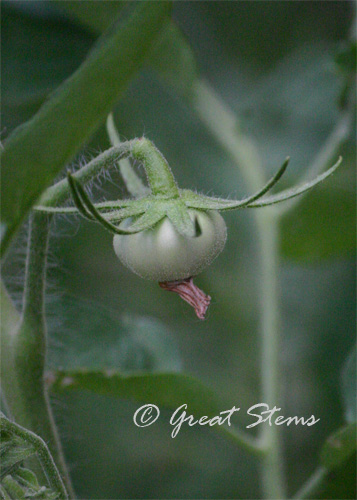
brandytomato06-29-10.jpg Is that crown an indication of how big the tomato will become? I won't eat these myself -- but I hope they'll turn out so I can give them to friends and neighbors. I'm a cooked-tomato kind of girl.

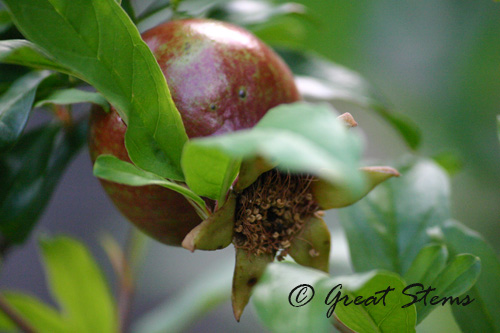
I'm also a pomegranate kind of girl! Lookee, lookee!

pomegranate06-29-10.jpg

Fun morning in the garden. Had me humming like the hummingbirds. Hoping for more rain, though!

I Should Apologize Now For All My "Cinns"

| 12 Comments

I might as well apologize now, because it's just possible that the rest of my photographs for the remainder of the fall and summer might all be of this, my new favorite flower.

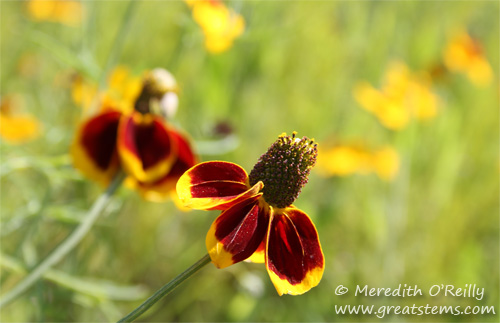
cinnamonsunflower06-24-10.jpgThe Cinnamon Sun sunflower is now blooming, and I can barely draw myself away.

cinnamonsunflowerc06-24-10.jpgI had a little trouble getting the pictures I really wanted, because this bloom is the first on the plant, and it's about 10 feet off the ground. I had to stand on a ladder. Oh, but there are so many more blooms getting ready to open... and they are much more accessible.

  cinnamonsunflowerd06-24-10.jpgNot only is the bloom gorgeous, but the colors are exactly the same as those on my house, not that you can tell from the back of the house. But might it be too matchy-matchy to have a flower match my house? I think not.

cinnamonsunflowerb06-24-10.jpg

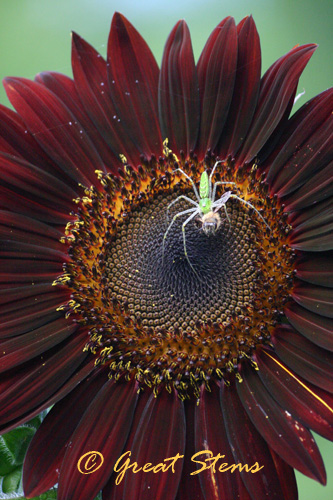
cinnamonsunflowere06-24-10.jpgAt times during the day, the flower appeared almost black -- in fact, the gloominess of the dark flower early this morning almost had me worried that I'd made a poor choice. Then the sun came up a bit more, and wow. Take a look at this next photo, where the flower appears dark. See what else showed up?

cinnsunspiderc06-24-10.jpgThat's a Green Lynx spider. I guess when I got so excited about it being Pollinator Week, the spider did, too -- but for a different reason. The last time I saw a Green Lynx spider, it was much better camouflaged.

cinnsunspiderd06-24-10.jpg

But then Ms. Spider today moved to the back of the sunflower, and there was her camouflage. I'm impressed with her capture, even if it is one of my bees. Can you see her?

cinnsunspiderb06-24-10.jpgI did manage to pull myself away from the sunflower long enough to capture a quick picture of a hummingbird before my battery died. I also successfully managed to take the picture without falling off the ladder. Must be my newfound ladder skills from painting the exterior of my house...

hummingbird06-24-10.jpg

I also caught a hummingbird today visiting the new blooms on the Standing Cypress. I always get a thrill of justification when I see hummingbirds at my flowers instead of just at the feeder -- like it was all worth it, this gardening stuff. Alas, I had no camera in hand at the time. But here are the blooms.

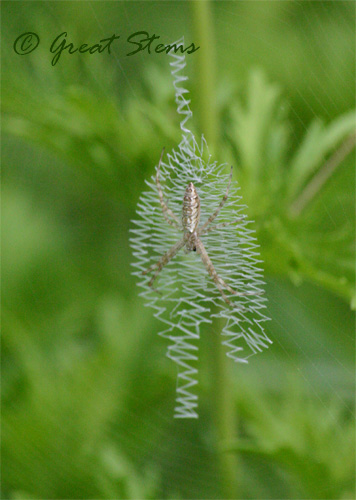
standingcypress06-24-10.jpgThis morning, over at the Gregg's Mistflower, I saw that this patch of flowers is becoming quite the spider hangout. Not too long ago a spider caught one of my beloved dragonflies in this popular insect hangout. Today I found another kind of spider waiting patiently on its zig-zag recliner. I think it's a male Argiope spider.  Edit: Having later found a larger Banded Garden Spider, I now wonder whether this is a juvenile female, species Argiope trifasciata.

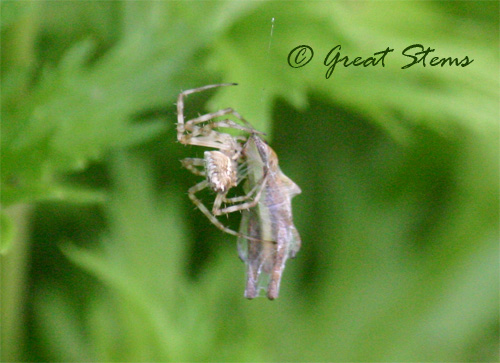
spidera06-24-10.jpgI think that if I were an orb spider, I'd go for this kind of web. That zig-zag is called a stabilimentum. It just looks extra secure and comfortable. On the other hand, the spider is probably more noticeable, but the rest of the web could barely be seen. Maybe that's a plus for the spider -- if the prey avoids the visible spider by flying to the side, it gets caught by the invisible web. Anyway, it worked, because the next thing I knew there was frantic movement going on in the web -- a grasshopper had made an unfortunate jump. Try focusing with a zoom lens on a spider that's moving and spinning and wrapping its prey -- what a challenge!

spiderc06-24-10.jpg

spiderb06-24-10.jpg spiderd06-24-10.jpgNow this time I can say yay for the spider -- it caught one of my nuisance grasshoppers. It can have all the grasshoppers it wants. I'm sure the green lynx spider eats grasshoppers, too, but so far I keep catching it with its paws in the honey jar, so to speak.

Enough spider pictures. Let's go back to the Cinnamon Sun, shall we? Oh to be a bee visiting that sunflower... well, preferably without the spider there, too.

cinnamonsunflowerf06-24-10.jpg

Growing Up

| 4 Comments

I love the rain. Everything just looks so green afterwards.
gardenc06-04-10.jpg

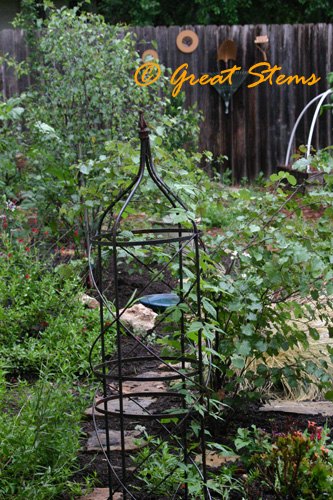
 But even without the heavy rainfall this week, which I was so grateful for (by the way Austinites -- you can thank me for the rain on Wednesday because it was my watering day and I got up and watered-- Murphy's Law was in full effect, because the rain showed up that evening... now if you got hail, too, that's not my fault...), this year we are enjoying massive growth of pretty much everything in the garden. I suppose that sounds reasonable, as in the plant world we are in Year 2, at least for some of our plants -- the rest are still young. Following the saying "Sleep, Creep, then Leap" -- it is clear that our plants are enjoying a growth spurt!
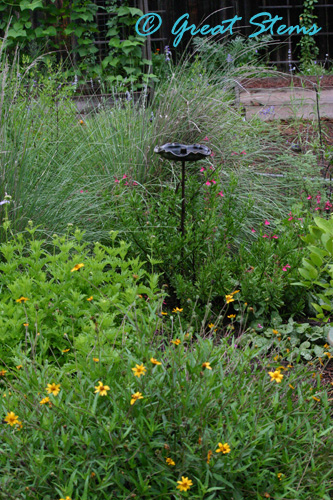
gardena06-04-10.jpgI am envisioning a garden of giants before long -- the thought crossed my mind that I might have to trim some of these back at some point. Whoa, that's too much for this girl to think about right now.

But take a look at this Rock Rose, one that I don't even remember planting in that spot. It's massive. Right now I'm just letting it do its thing, but I'm sure that other gardeners are wisely shaking their head, saying that I'm going to be dealing with lots of little Pavonia babies everywhere and soon. (Here's where I'll tell you that one of my other Pavonias already made lots of babies, as I discovered a couple of days ago. And it was a much smaller plant!)
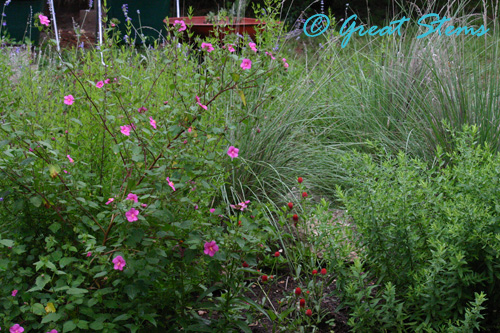
gardenb06-04-10.jpg  On the plus side, I hope that the natural shade that the larger plants in the butterfly garden will provide this summer will help the smaller ones get through the heat and sun. Downside is that right now everything appears to be the same height. Somewhere in the middle of all that is a Texas Kidneywood, as well as a Barbados Cherry, which at some point should provide the height variation the garden needs. They need to be in their Leap Year, too! 

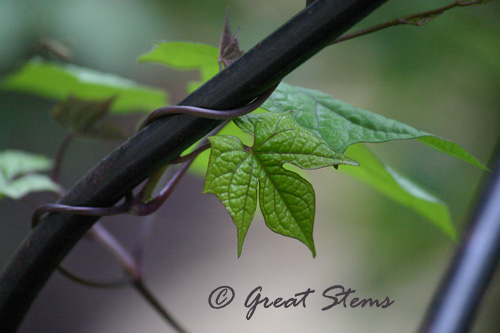
All around the garden, I've got new plants I'm excitedly watching. Exotic Love Vine, an annual vine from Mexico and Central/South America, still hasn't produced any flowers, but I find myself admiring its beautiful leaves everyday. I guess the love effect is already, well, in effect, even without the amazing blooms it hopefully will produce. Maybe they bloom in fall.
exoticlovevinea06-04-10.jpg

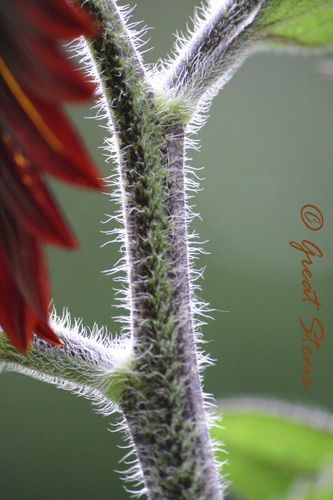
exoticlovevineb06-04-10.jpgNow check out this great stem -- hoho, Great Stem.
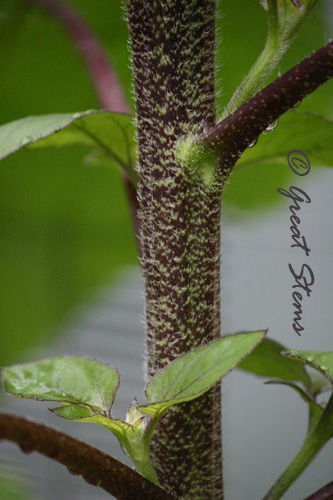
cinnsunflowerstem06-04-10.jpgNow at 4-foot tall, this Cinnamon Sunflower is already bigger than some of my trees. Still no evidence of blooms. The leaves themselves are the biggest leaves of any plant I have on the entire property. For comparison, I placed a Pomegranate leaf on one of the Sunflower leaves -- I still don't think it does it justice.
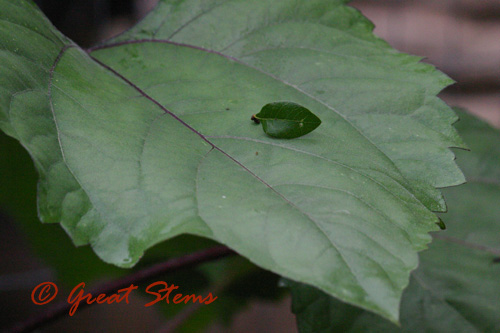
cinnsunflowerleaf06-04-10.jpgFor the record, the Cinnamon Sunflower's growth is putting the Giant Sunflower's growth to shame. I haven't taken pictures of the Giant yet, so it better do some catching up!

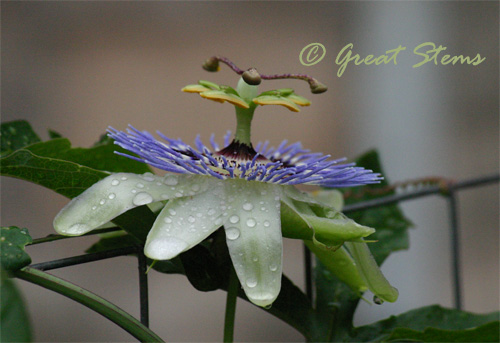
The Passionflower is blooming like mad. I'm still waiting for the Fritillaries to show up.
passiflora06-04-10.jpg

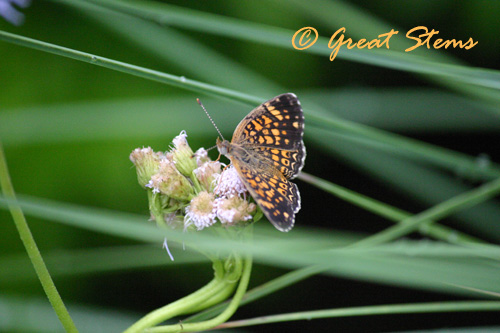
But here's a little Phaon Crescent come to visit.
phaoncrescent06-04-10.jpg

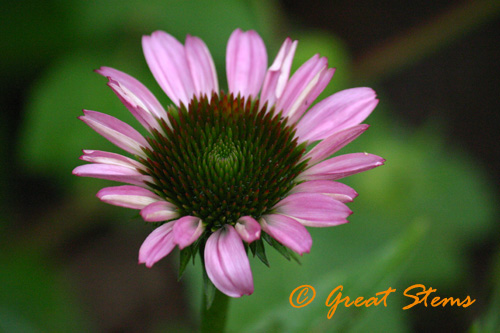
The Purple Coneflowers are doing some strange things this year, but at least they are officially blooming. Some big, some small, some tall, some flat, some wide, some droopy...
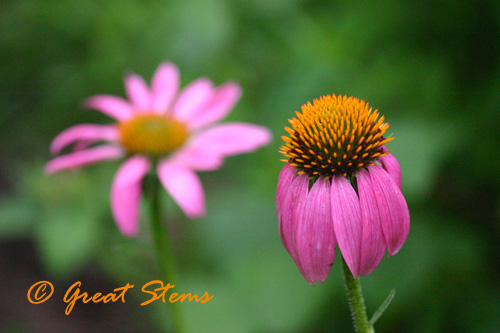
purpleconeflower06-04-10.jpgThis odd Coneflower has a striped appearance.
purpleconeflowerb06-04-10.jpgSpeaking of Great Stems (giggle), here's another one. Check out the thorns on this wee tree, a Toothache Tree, or Prickly Ash. The thorns are currently longer than the stem is wide!
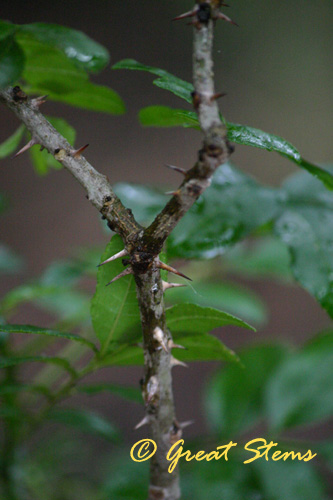
toothachetree06-04-10.jpgWe're fortunate to have two species growing -- Zanthoxylum hirsutum (shown) and Zanthoxylum clava-herculis (very much still a sapling). If you haven't heard of these trees, they're fun. Chew on a leaf and your mouth goes numb for a few minutes. Back in the old days, they served to help with toothaches, hence the name. Bonus -- a larval host for the Giant Swallowtail butterfly! I look forward to our trees getting bigger.

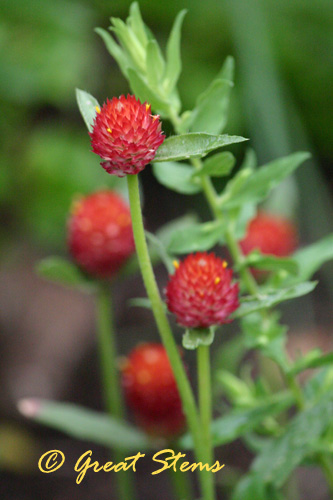
Venturing back to the butterfly garden, I paused to admire a strawberry-like annual, the Gomphrena, that I spur of the moment planted a couple of weeks ago. It's a dwarf compared to the older perennials, but I appreciate the red color that was needed in the garden.
gomphrena06-04-10.jpg

And ugh, a decision to make. This rogue not-native Lantana has popped up in the yard near the pond. Now I have to decide whether to pull it. This is why I stick to the native Lantana urticoides/horrida (Texas Lantana--has orange/yellow/red blooms) -- I don't want to contribute to the easily-spread other kind. I know where it came from, too -- my neighbor had one. Had. I notice she pulled it out this year.
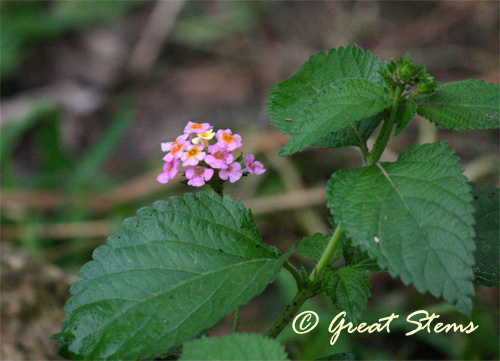
invasivelantana06-04-10.jpg

Over in the veggie garden, I discovered an abundance of peppers! Garden Salsa peppers, and they are inspiring the Mexican meal we will have tonight. I didn't even see them start out as babies, and here they are.
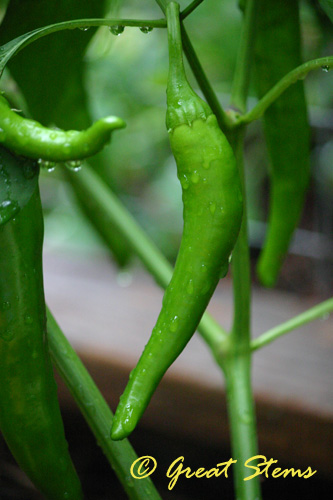
gardensalsa06-04-10.jpg

Meanwhile, their leaves are getting munched by these little culprits -- tiny (but pretty) grasshoppers. The admiration stops there. They are munching on my peppers, my tomatoes, and my Exotic Love Vine. Stop it, grasshoppers!
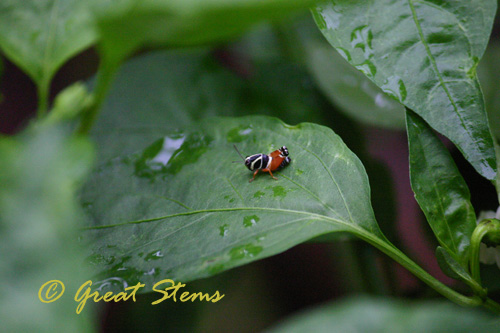
grasshopper06-04-10.jpgThe tomatoes are certainly growing up. They've outgrown their cages, keep trying to topple over, and so bushy I'm feeling a little concerned. Next time, I'm going for the big collapsible and way over-priced Texas cages.
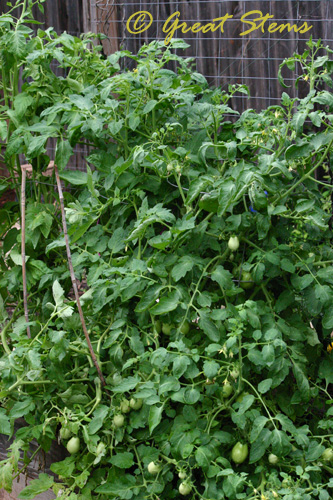
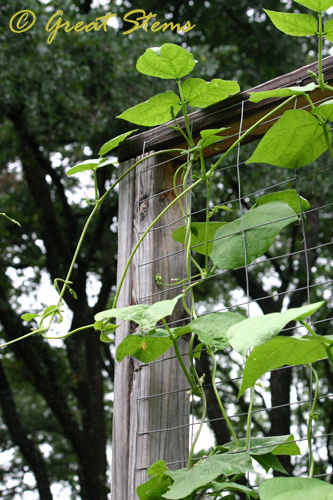
tomatoes06-04-10.jpgThe runner beans have grown up past the trellis. I'm hoping we'll actually get some beans before the heat of the summer really hits us. I feel we're pushing the season a bit.
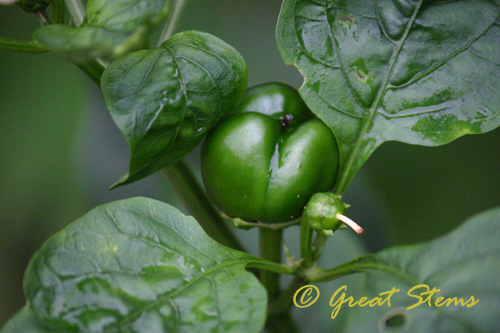
beans06-04-10.jpgAnd the perennial Bell Pepper is producing fruit again. I look at this plant in wonder -- it survived last year's terribly hot summer, made it through fall and winter without any attention from me, and here it is, still growing. I didn't know they could do that. Talk about pushing seasons!
bellpepper06-04-10.jpgPlants aren't the only things growing up around here. I'm about to have a teenager in the house (egads). And at 12, he's already 6-feet tall. We're going to do a final "kid" measure tomorrow, the day before he turns 13.

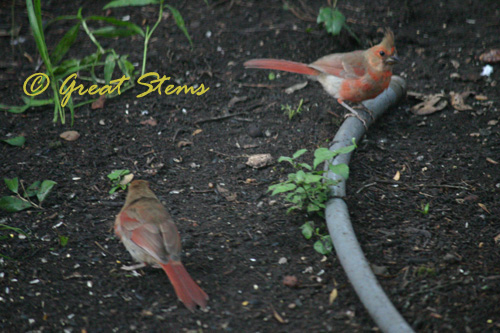
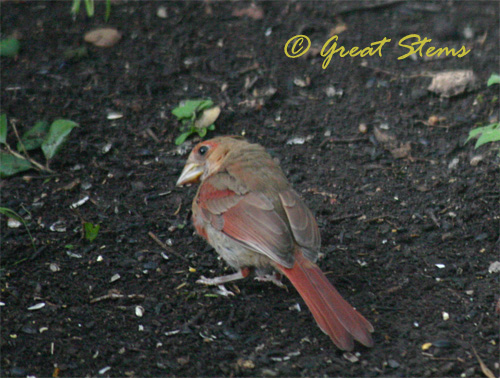
And these fledgling cardinals showed up this morning. Three of them. I love how their feathers are in transition. Mama and papa should be proud! You can tell my blood sugar was dropping at the time -- the camera was shaking! I'd eaten breakfast, but only just. Not enough time to hit the bloodstream, I guess.
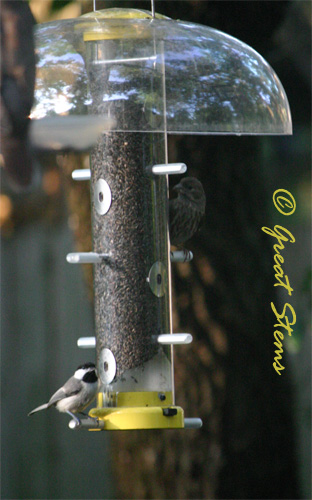
cardinalfledglings06-04-10.jpg cardinalfledglingb06-04-10.jpg cardinalfledglingc06-04-10.jpgI'm pleased that birds are finally starting to pay attention to the thistle feeder. I abandoned the thistle socks awhile back due to the damage the eager birds were doing -- I kept having to replace the feeders. But wow, they did love those socks. It's not off the project list -- I just needed a regular feeder to keep around constantly.
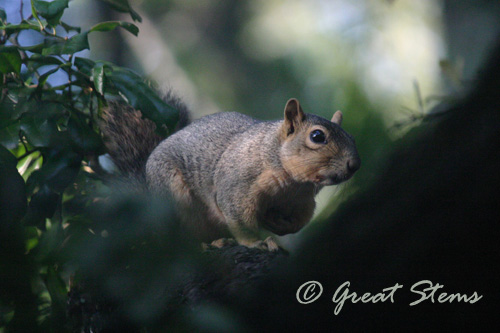
thistlefeeder06-04-10.jpgYeah, I see you squirrel. I know what you're up to. Yeah, I know you see me, too. And yes, I saw you on the birdfeeder this morning. I noticed the young squirrel nearby, too, watching you do it. Naughty squirrel.
squirrel06-04-10.jpg

So the organic garden is growing up. The birds are growing up. The squirrels are growing up. My kids are growing up. And I guess the evidence is there that this gardener is growing up, too. If I haven't already done it, I guess I have to do away with my newbie status officially, my crutch when I don't know what in the world is going on in my garden. But the greenery around means I must have done something right, newbie or not. If in doubt, add compost -- that's my motto! I'm loving it and ready for more.

For a look back at the garden beginnings through its first year, visit this page.
Whatnots

| 4 Comments

I just couldn't come with a title for this one. But I had fun taking photos!

The Cinnamon Sunflower is about 3 feet tall now, but still no blooms. Looking pretty snazzy even without the blooms, I must say.
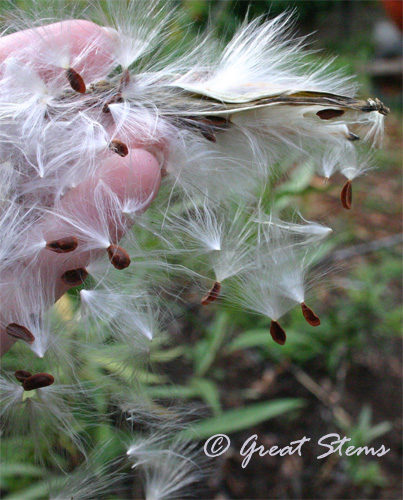
cinsunflower05-27-10.jpg I never realized how fun milkweed seeds are, fresh from a pod. Hopefully some of these will germinate -- I need more milkweed!

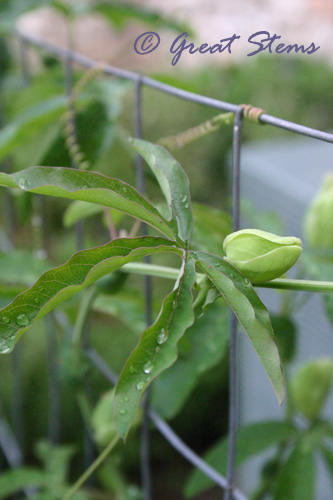
milkweedseeds05-27-10.jpg Still damp from a gentle rain, the Passionvine is happily entwining along its trellis. With luck it will hide our A/C unit soon, at least until the caterpillars start munching!

passifloraa05-27-10.jpg Passiflora flowers just might be the most bizarre flowers out there. I mean seriously -- how on earth did nature come up with that crazy design?

passiflorab05-27-10.jpg The tripod of a stigma at the top looks like some alien straight from a sci-fi movie.

passiflorac05-27-10.jpg The coneflowers are huge and teasing me with blooms to come.

purpleconeflower05-27-10.jpg I'm not sure whether it was the rain or the change in temperature, but I finally got a Checkered White butterfly to hold still for a photo.

whitebfly05-27-10.jpg

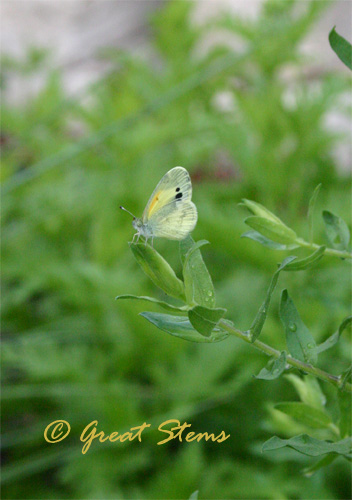
And a Dainty Sulphur -- both of these butterflies usually tend to dart around like mad if I get too close. Gotcha, little flutterbies!

daintysulphur05-27-10.jpg

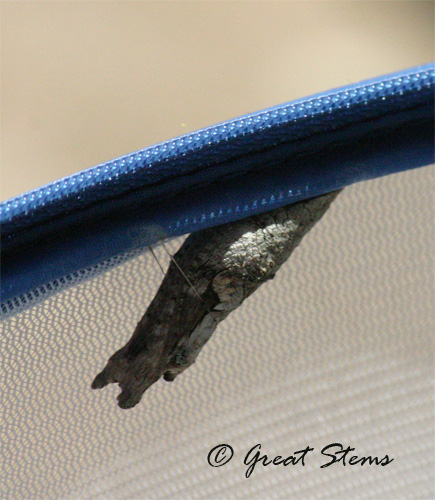
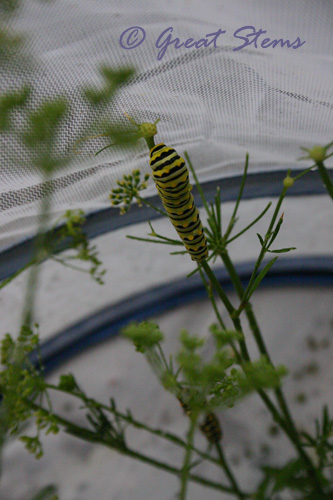
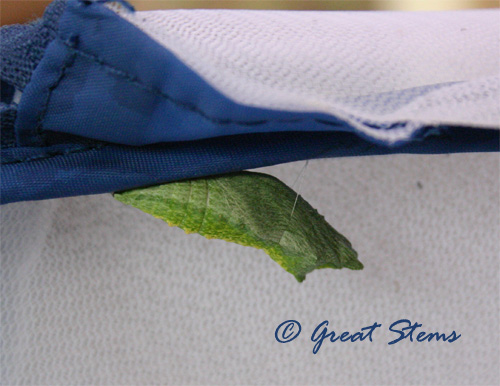
I've been noticing more wasps visiting the dill lately, and the caterpillar deaths have increased, so I decided it was time to create a butterfly tent. Within a day we had our first swallowtail chrysalis. The tent is a collapsible $9 laundry hamper -- much cheaper and much larger than the "butterfly kits" you can buy online and in various stores.

swcat05-27-10.jpg swchrysalis05-27-10.jpg    

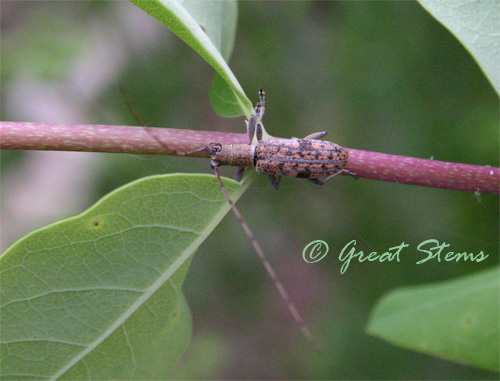
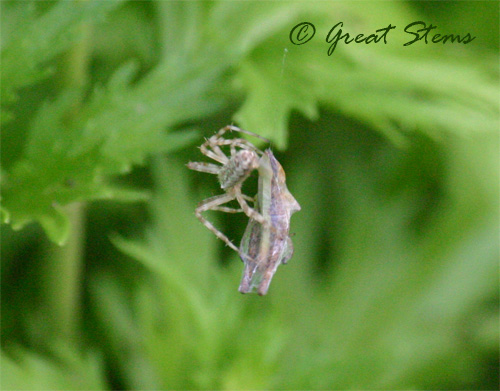
Okay, what's this bug? Good guy? Bad guy? Found him on my native White Honeysuckle bush. I guess I could go look him up.

bug05-22-10.jpg

In other news, I found little slimy larval stuff eating one of my tomato leaves. I took a picture, but they're gross and I decided that they messed with my pretty zen pictures, so I'm not posting it today. The slimy things are in the compost bin now. I don't know whether they're good guys or bad guys, but they were working as a team and my gut told me I didn't want more of them around. And there was a leaf-footed bug on another tomato leaf. Little booger got away. Gah. But at least I'm onto him.

Wonderful

| 8 Comments

I'm in love with my Wonderful pomegranate. No, really -- the variety is called Wonderful. And it's gorgeous. I planted it bare-root and leafless back in January, and now it's loaded with dark glossy leaves and bright tropical orange-red flowers --mega color. Love love love.

pomegranate05-08-10.jpg

pomegranateb05-08-10.jpg

It's just as well that the second pomegranate tree I planted at the same time did not leaf out -- that would have been a lot of pomegranates! It's interesting that I planted that second tree where my Mexican Anacacho Orchid was struggling, and the orchid tree I moved over near the same area as the Wonderful pomegranate. Well, the Mexican anacacho is doing better than ever in its new spot, and the place where it once struggled and the second pomegranate died has now been leveled and is (at least for now) considered the dead zone.

Also wonderful in my yard, this time with the lower-case "w," is my new Yarrow. I want more.

  yarrow05-08-10.jpg

And the Winecups are putting on their spectacular (dare I say, wonderful?) show before the heat gets unbearable.

winecup05-08-10.jpg

winecupb05-08-10.jpgThe Winecups always threaten to take over the world before the sun forces them back to a manageable size. Right now they are encroaching on the Texas lantana, and I love the combination of colors.

  winecuplantana05-08-10.jpgIt's just... wonderful!

Stumped By a Vine

| 10 Comments

All right, someone explain this one to me. My Carolina Jessamine for years had such beautiful bright yellow flowers every spring. This past winter, however, it suffered some during the winter freezes, and ended up looking a little sparse in the leaves but alive, at least. Some of the leaves became rather spotted, as I recall.

This spring I have this: 

carollinaa4-12-10.jpg


carollinac4-12-10.jpg carollinab4-12-10.jpgIt's a crossvine, though opposite in color pattern to my other crossvines. Totally snuck up on me. Whatever happened to my Carolina Jessamine? I apparently completely missed its demise.

War, Peace, and Bananas

| 15 Comments

It seems strange to post pictures of a bright sunny day while I listen to the lovely sounds of raindrops falling outside. But at least I'm dry.

Over the past couple of days, the garden was a green version of Grand Central Station. Butterflies, wasps, moths, flies, and other creatures all came to feast, rest, and feast some more. It was high noon when I took these, unfortunately, but beggars can't be choosers when there are masses of creatures about all at the same time! You just get the shots when you can.

varietybutterflies11-18-09.jpgAt last, Painted Lady butterflies have come to visit.

paintedlady11-18-0.jpg paintedladyc11-18-0.jpgpaintedladyb11-18-0.jpg paintedladyd11-18-0.jpg I love the hidden peacock feathers you see in their hindwings.

paintedladye11-18-0.jpg   Variegated Fritillaries have arrived, too.

variegatedfritillaryc11-18-09.jpgvariegatedfritillaryd11-18-09.jpg

variegatedfritillary11-18-09.jpg variegatedfritillaryb11-18-09.jpg     A Snout Butterfly rested on Big Muhly.

snoutbutterfly11-18-09.jpg

And Queens went back and forth between the Gregg's Mistflower...

queens11-18-09.jpg queensb11-18-09.jpg and the Milkweed.

queenmale11-18-09.jpg I have so many kinds of skippers I can't name them all.

skipper11-18-09.jpg skipperandfrit11-18-09.jpg I think this is a Fiery Skipper...

skipperb11-18-09.jpg and this a White-Checkered Skipper.

whitecheckeredskipper11-18-09.jpg

The Gulf Fritillary was a challenge to photograph -- it cared not for sitting still.

gulffritillarya11-18-09.jpg gulffritillaryb11-18-09.jpg And Sulphurs -- some big, some small. Is this a Southern Dogface Sulphur or a Cloudless Sulphur?

sulphur11-18-09.jpg sulphurb11-18-09.jpg Tiny yellow butterflies fluttered about -- they didn't sit still for long. Hmmm... Little Yellow or Mimosa?

yellowbutterfly11-18-09.jpg yellowbutterflyb11-18-09.jpg

The big butterfly attractors have been the milkweed, zinnias, and Gregg's Mistflower, but a few days ago I set out a banana for the butterflies. They do love a rotting banana, but the last time I did that, the banana just rotted all by its little lonesome. This time, I walked out to discover a Goatweed Leaf Butterfly enjoying a snack with a Snout Butterfly (and a fly).

goatweedleafandsnout11-18-09.jpgSo I decided to set out a fresher banana, as well, and -- whoa -- incoming. Suddenly my new banana became an experiment and a wildlife study. The first visitors were wasps and flies. I'm not even going to attempt to identify any of these, but there's quite the variety!

waspsb11-18-09.jpg

waspsc11-18-09.jpg The wasps didn't always get along. The big red hornet-like one was the bully you'd expect him to be -- not that the other wasps were friendly and gentle-like, mind you...

wasps11-18-09.jpg While the wasps were distracted with their quarreling, the flies zoomed in for some banana. I like how they naturally spread themselves out.

banana11-19-09.jpgDo you see the beautiful metallic turquoise insect in the lower left corner? That's a Cuckoo Wasp -- the only one I can identify other than "fly" or "wasp."

fliesandcuckoo11-18-09.jpg   Here's another pic.

cuckoowasp11-18-09.jpg

I didn't mind all the visiting wasps. It kept them distracted from my Queen caterpillars on the milkweed.

queencat11-18-09.jpg

queencatb11-18-09.jpgAnd the flies and wasps weren't the only visitors to the bananas. Snouts began to venture over to the fresher banana, and today I found my first Red Admiral. What a beauty!

red admiral.jpg See this "pretty" yellow, green, and black bug? Bad bug. Spotted cucumber beetle. You can mourn it if you like -- it and four of its friends. At least I found them on the banana and not in my veggie garden. That water in the pic is from today's rain.

spottedcucumberbeetle11-18-09.jpgThe only butterfly picture I didn't capture that first picture day was the lone Monarch I saw flying around. Have they started to move on? I'm keeping my eye out for caterpillars -- I did see a female Monarch laying eggs on the milkweed several days ago.

Elsewhere in the garden today, I discovered what I think is an assassin bug nymph. My last one was red, though, so I don't know.

assassin11-20-09.jpgAnd off in the former pumpkin patch, where a few pumpkins and vines await me doing something about them, I found an icky green guy having a feast.

greenworm11-20-09.jpgEnjoy it while you can, buddy.  

Pollination Fascination

| 9 Comments

While taking a stroll near the butterfly garden, the sound of busy bees caught my attention, and I realized that my little pollinating friends had moved from the pumpkin flowers over to a nice big batch of native plants, and my gardener's heart did a little pitter-patter.

But in observing them, I realized something I'd never noticed before. Gregg's Mistflower produces white pollen.

beeonmist10-07-09.jpg

My mind was boggled. In all my years watching wildlife, I never knew that pollen could be anything but yellow?

beeonmistb10-07-09.jpg

beeonmistc10-07-09.jpgIn the same patch of flowers, the honeybees on the Zexmenia had bright orange pollen baskets on their little legs.

beeonzex10-07-09.jpg beeonzexc10-07-09.jpg This little bee has been to both Mistflower and Zexmenia. His pollen is pale orange.

beeonzexb10-07-09.jpg

I was fascinated. Today was a day where nature just had me reeling.

When I could tear my eyes away from the bees, I noticed a beautiful male Queen butterfly keeping me company.

queenb10-07-09.jpg

And on the Fall Aster, newly blooming just on the other side of the Gregg's Mistflower, little hoverflies enjoyed a feast without getting the attention of the bigger bees nearby.   

hoverflyb10-07-09.jpg hoverflyc10-07-09.jpg Sure enough, these little flies can hover. Someone sure came up with a brilliant name for them! (Hey, guess what hoverflies eat? Aphids! Yay!)

Pollination inspiration, here's my poem for the day:


Flyby

© Great Stems


Fly little fly

Fly little bee

Queen be flying

But not Queen Bee


Love It or Leave It: Horseherb

| 27 Comments

Ah, Horseherb (Calyptocarpus vialis), also called Straggler Daisy. There doesn't seem to be much of a gray area on this one. People either truly love this little groundcover or hate it with a passion. I'm of the former variety. I adore this little plant.

horseherba10-02-09.jpgWhy do I love it? If you've ever walked past a field of horseherb, you are presented with an incredibly lush sea of green, with the daintiest of little yellow flowers throughout to catch your eye. I've seen some gorgeous fields, and each time I was mesmerized by the beauty and serenity of the scene. 

horseherbc10-02-09.jpg

Field of horseherb at Hornsby Bend

I almost don't want to walk on it -- it's so pretty in appearance -- but for a non-lawn groundcover, it can withstand some foot traffic. It only needs water in the worst of droughts, and it loves shade and sun.

Horseherb is also native to the southern U.S. on into Central America, and it makes a great alternative to the exotic and water-hogging Bermuda and St. Augustine grasses. I'd love to see it replace Asian jasmine, as well -- now THAT is a plant that will take over a garden bed and yard. Horseherb is considered semi-evergreen, blooming most of the year except in cold winter areas, and if you like you can mow it, or you can let it grow to its typical max height, which is about 8 inches. But as bonus, horseherb also attracts small butterflies, including sulfurs and skippers. And think of all the happy little lizards that will zip underneath the foliage!

horseherbb10-02-09.jpg

It's an eco-friendly solution to having a lawn without having to resort to heavy chemicals or fertilizers or ridiculous amounts of water to sustain it. Lawn irrigation tops the list on where our municipal water goes, and the time for water conservation is now, especially in Texas.

Why do some people want to leave it? Well, in some yards it can be a big nuisance. For those who keep a grass lawn, horseherb is a competitor, and it can be difficult to get rid of. And it can spread into garden beds, though I've found that so far it doesn't bother much with my well-mulched beds. In fact, one of the characteristics of this plant is that it supposedly doesn't do well in areas that have heavy leaves that take a long time to decompose. It spreads by both seeds and runners, which means that if the goal is to remove all of it, you're going to have a challenge. In a wildflower field, I have to imagine that it would be another competitor, but it's going to depend on the goals you have for your yard or area.

But for now I prefer to embrace its desire to spread. What I loathe is the Bermuda Grass and St. Augustine in my yard. I loathe the unnamed weeds that dominate my backyard. I love my buffalograss in the back, but it too is losing to the weeds, and in the drought, the buffalograss was dead most of the time, so I didn't end up loving it as much as I wanted to - I loved it when I could see it.

horseherbd10-02-09.jpg

What would you choose: spotty grass or spreading horseherb? 

Will I regret it? Some gardeners are going to shout out an absolute yes to that question. But I do regret having Bermuda and St. Augustine (not that I planted it; that was the previous owners), so it's not a big deal to switch from frustration with the grasses to frustration with another groundcover, unless I've got all three to deal with at the same time. At least horseherb is native. But I'm going for the complete wildscape, and I have a lot of ground to fill and a lot of grass to get rid of. In those bed areas I want to keep maintained, I'll do my best to keep horseherb in check. And love it everywhere else!

So how about you? Do you prefer to love it or leave it?


Meredith
Meredith is green-blooded
and gardening in northwest
Austin, TX, Zone 8b. She's proud to be a volunteer
Habitat Steward.


Powered by Movable Type 4.21-en
OpenID accepted here Learn more about OpenID