This year my kids got rocks for Easter.
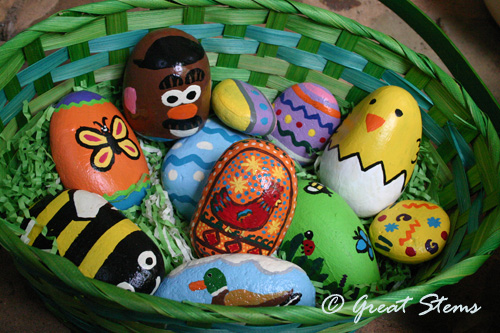 Lots and lots of rocks.
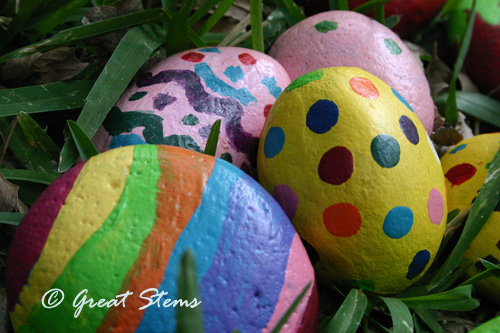 And furthermore, we made our kids work to get them. They had to help paint said rocks. And that's why our Easter rocks didn't always look so Easter-y.
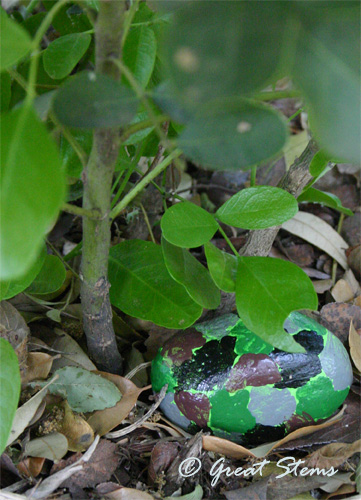
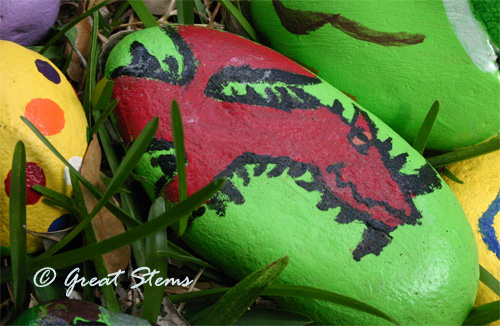 Nonetheless, we painted our Easter rocks with gusto. See, the problem with traditional egg hunting is that it only happens once a year, unless you play "find the stinky rotten egg" in the summer after you couldn't find all the hardboiled eggs in the spring. That's why we decided to paint rocks instead, so that we could enjoy year-round colorful-object hunting. I know, I know -- pure genius, right? Our friends brought their daughters over to join the fun.
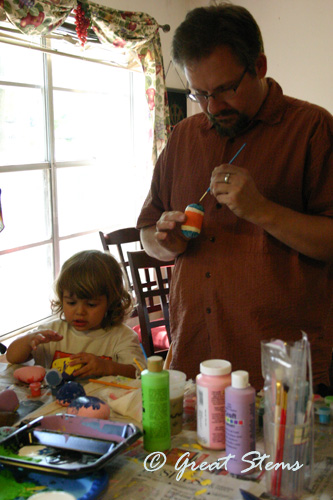
The steps were simple: Get river rocks. Wash river rocks and let them dry. Paint a base color using acrylic paint, then let dry. Paint details using more acrylic paint, letting stages dry. Coat rocks with a sealant that provides some UV protection. As you might guess, this is a multi-day project.
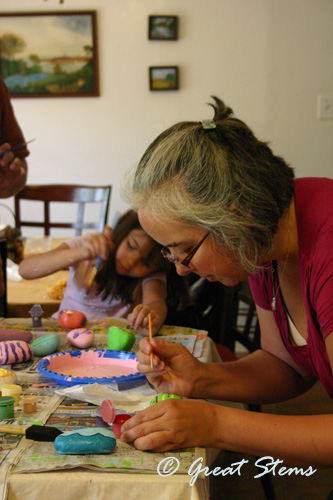 Between our two families, we painted 77 rocks. That's only a mere bucketful, mind you!
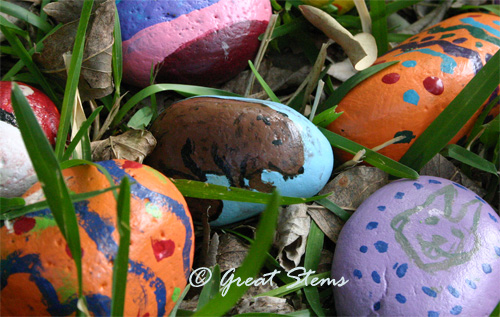
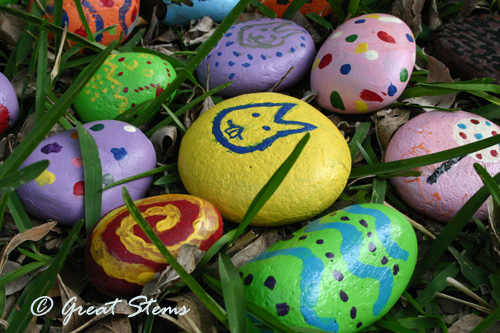
Here are some of our friends' rocks. Note Stepan's eyeball rock in the upper corner. Or rather, note that his rock is noting YOU.

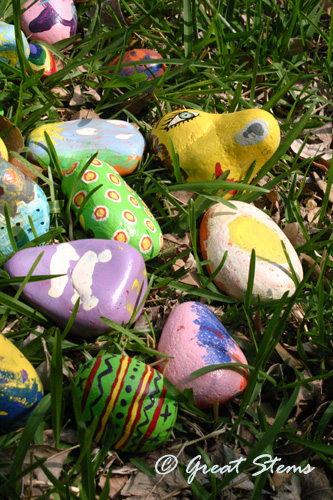 Jennifer's nose rock always had to stop to smell the flowers.
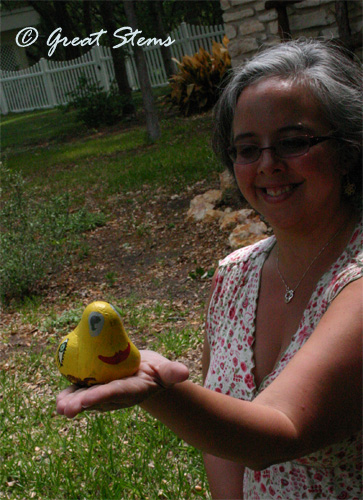
Young Magda was inspired by their resident cardinal fledglings to paint one.
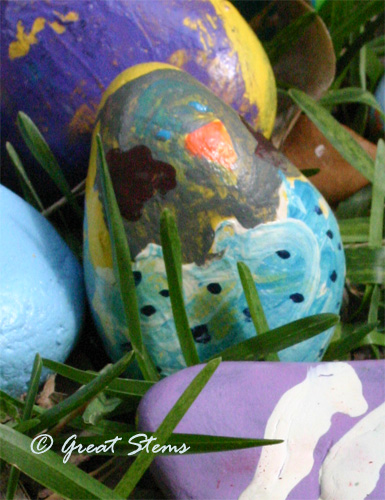
My husband Michael's rock was completely uncooperative, ducking out for a cool bath.
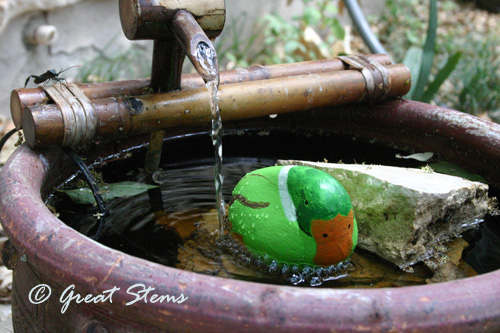
Don't even get me started on all the tasteless jokes Michael's beaver rock inspired. ><
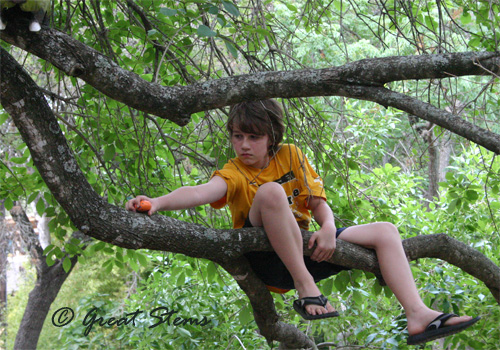
 It turns out that rocks can't climb trees, but kids can.
 Here's what we learned:
- Painting rocks is fun for the whole family, even for men who claim that they only sat back at the computer to "let a rock dry."
- Rocks have character -- you won't find any of them being conformists, like all those eggs out there.
- Boys are less interested in painting traditional Easter art, like bunnies, chicks, and "pastels" -- but ask for a dragon or camouflaged rock, and they are all over it! You might even get a couple of Pokemon balls.
- Easter Rock Hunting is just as fun as Easter Egg Hunting, except that you can't eat rocks or they'll break your teeth.
- Rocks make baskets very heavy or even useless. Thus, we invented Easter Rock Piles.
- Kids don't appreciate the humor of hiding an Easter Treasure Hunt clue in the dishwasher, making them empty the dishwasher to find it. But parents might appreciate the brilliance of it (for the record, my husband was the mean Easter Bunny clue-writer for that one!).
- Rocks don't melt like chocolate does. They also don't taste as good.
- Unlike eggs, rocks don't break if they fall out of your basket -- at least ours didn't.
- All our Easter rocks rock, but not all of them roll. That's actually a really nice thing -- you can hide rocks in more places than you can eggs, which all roll but not necessarily rock.
- Easter Rock Hunting is fun to do with your kids, but it's even more special with friends, too. Thank you for being a part of our holiday, S, J, M, S, P, E, J, K, and C!
 One of the girls at our Easter gathering was concerned that the Easter Bunny really hadn't come to our house. But we showed her proof, as E.B. left a note at our house:

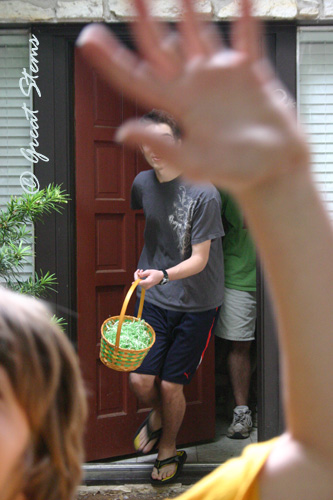
As it turns out, the simplest of clues can completely confuse our too-smart-for-their-own-good children, who apparently read far too much into things. But eventually they found their baskets and were then prepared to participate in the real fun -- hunting ROCKS.

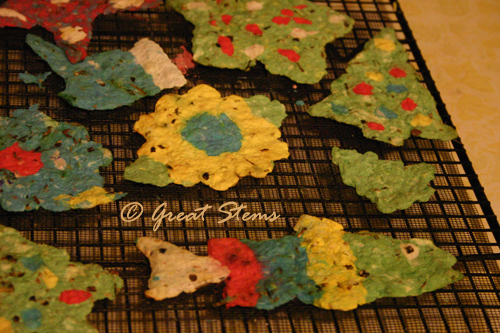 Materials needed: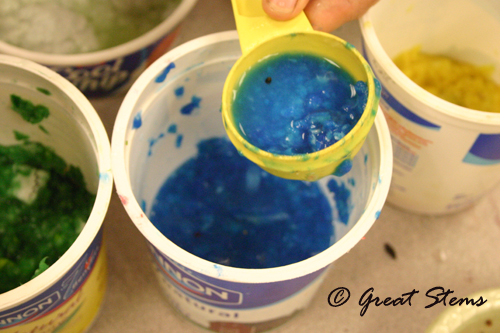
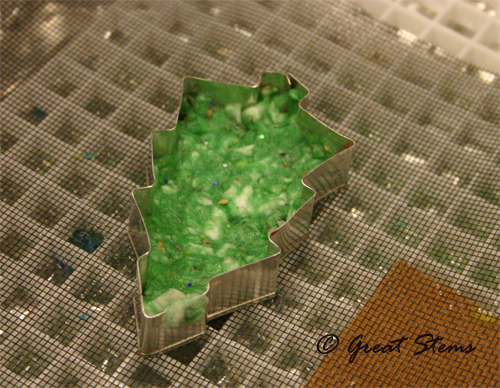
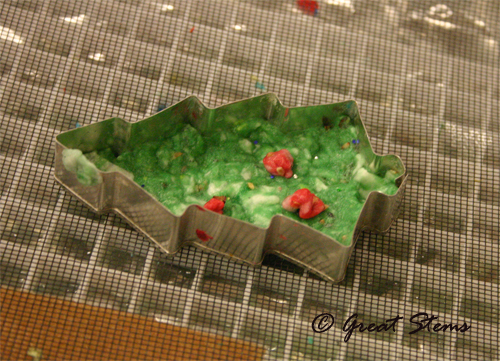 Once you've filled the cookie cutter, gently lift the cookie cutter, pressing the pulp down simultaneously to encourage it to remain on the screen.
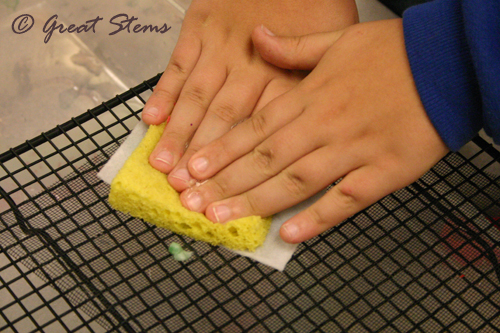 Remove the sponge and felt -- the ornament will be easy to transfer to another rack or screen for drying. Voila!
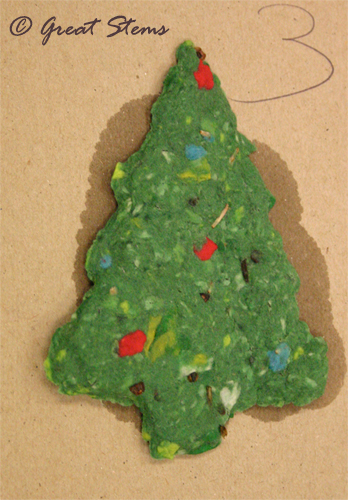 You can use the same process to make a card, with the "ornament" attached to a background piece of paper.
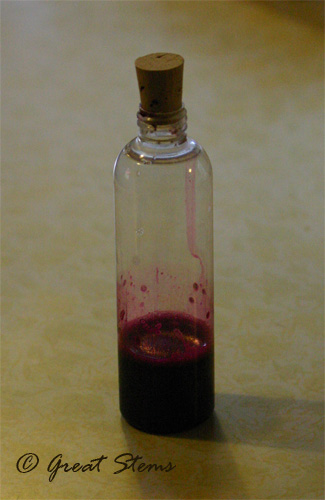
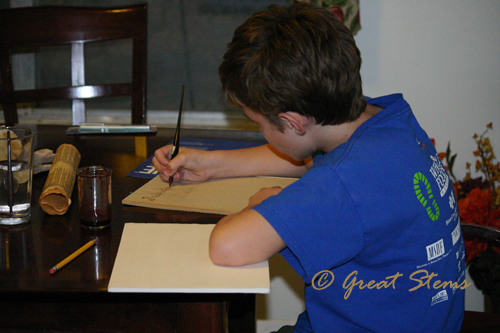
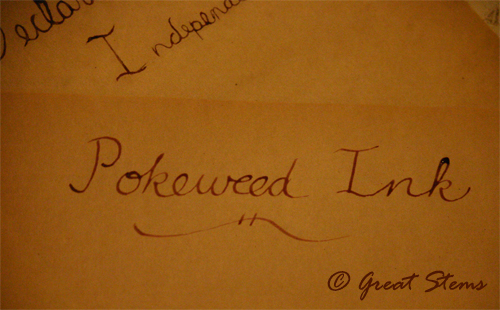
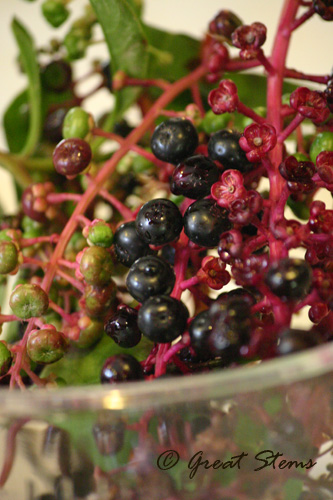
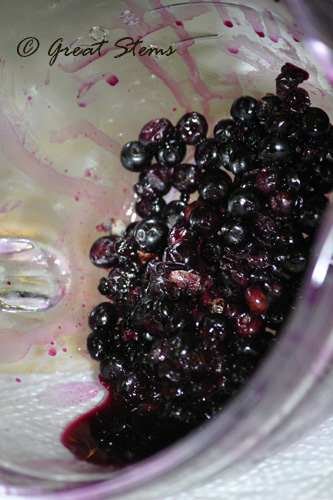
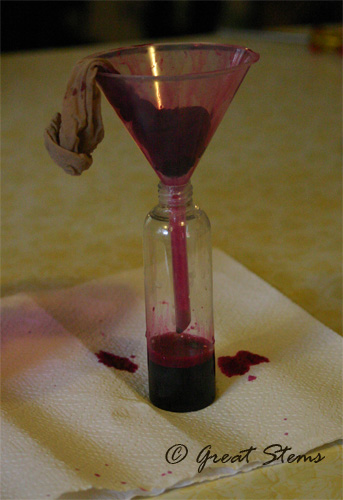
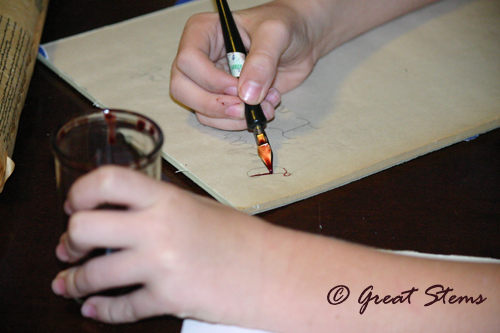 So today we had fun practicing calligraphy with both modern pens and with pen nibs dipped in the pokeweed ink. It's a lot harder than it looks, using a nib dipped in ink -- a modern calligraphy pen is so much easier, alas. But it's not as cool as using ink the old-fashioned way! However, for this particular project, we realized that doing any fancy writing wasn't really going to work, so my son stuck with cursive writing.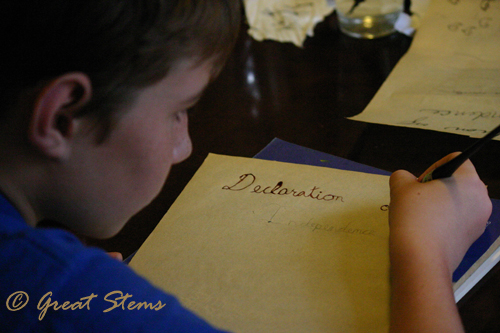
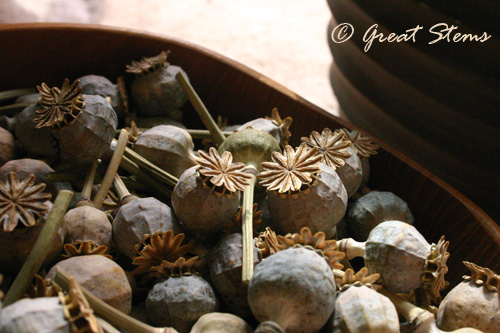
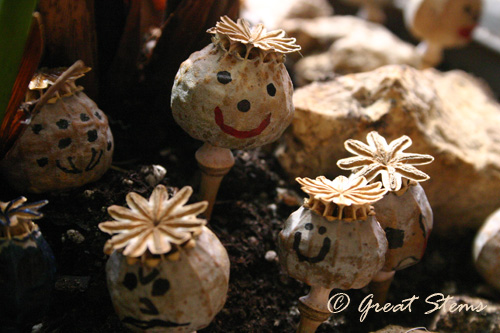
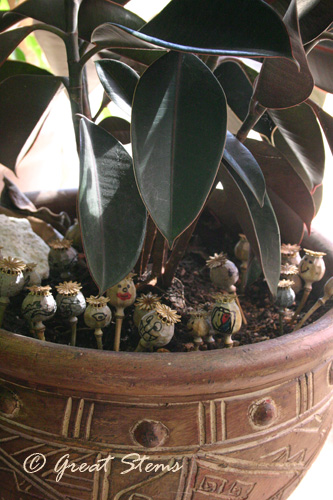
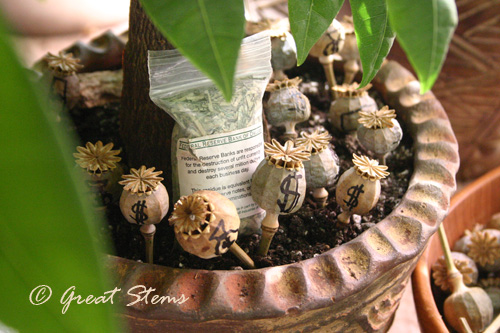
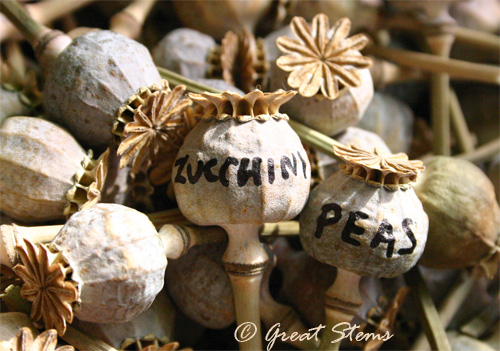
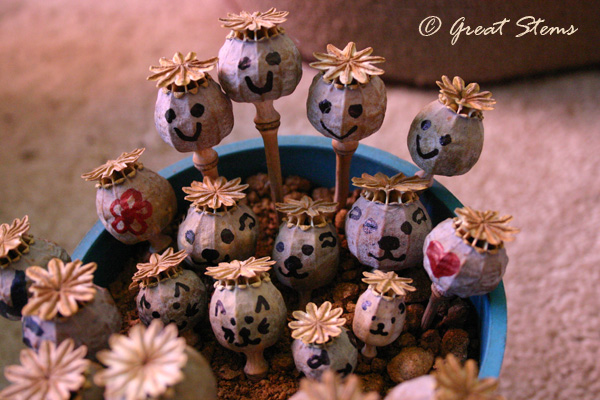
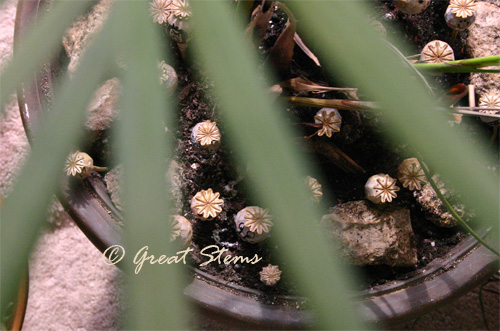 They stay planted in their belief that goodness will always prevail.
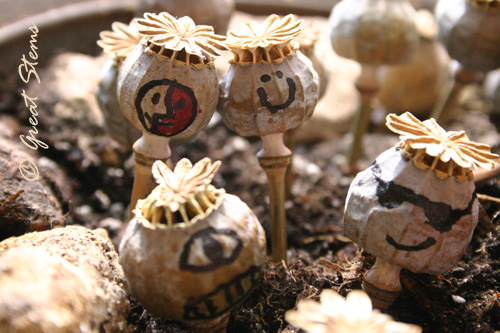 They encourage hope and inner peas to grow, and they root out evil.
 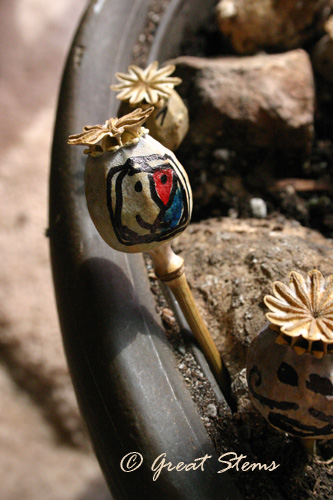 Most importantly, they defend our indoor plants from the villainous doings of alternative-litter-box-seeking kitties. Yes, they are anti-poop poppy pods.