Recently in wildlife habitats Category

Giving a Hoot

| 5 Comments

Just in time to meet our February goal, we finished making the screech owl house and even hung it up in the tree. It was also completed just in time for me to grab a picture before the sun completely went down, though it was a little too dark for a decent picture. I'm questioning whether it was done just in time for any owls to find it this season, but I'll just cross my fingers.

owlhouse02-28-10.jpg

My husband is making a second one for our yard (I read somewhere that it's good to hang two up), and he's also making one for a silent auction at our school's big fundraiser next weekend. And friends from our neighborhood put in a request as well when they saw him putting it together this afternoon. Ok, little owls, now it's your turn!

Bee My Valentine

| 4 Comments

Inspired by this day of love, it was a perfect time to complete a long desired project -- bee boxes to provide nesting places for our native Texas solitary bees.

beeboxa02-14-10.jpg beeboxb02-14-10.jpg We drilled several holes into an Ashe Juniper log obtained from a friend, and since we had an extra, we decided to replace the decaying hackberry branch holding up the habitat sign with yet another bee box.

beeboxc02-14-10.jpg beeboxd02-14-10.jpg We ended up making a third bee box, this time from pine and bamboo, the latter of which we cut down from the yard of our neighbor across the street. She was quite willing to share, as she loathes the bamboo that is encroaching into her lawn from the house next to her.

beeboxe02-14-10.jpg But won't it make such a nice resting spot and nesting spot for little bees in need?

beeboxf02-14-10.jpg

I heart bees. Thank you, hubby, for making these boxes for our little pollinating buddies. Happy Valentines Day, everyone!

Sustainable -- Loving and Living It

| 7 Comments

"Sustainable" -- it's the new catchword and the new black. It's a word I'm trying to reiterate over and over again with my family, and now that I'm leading a big habitat project at our elementary school, it's a term I'm making sure our students know, as well.

Doves, mind you, don't seem to understand the word "sustainable" nor the word "reduce," the little wasteful gluttons. But on occasion, they do lend themselves out for a nice winter picture, so for the moment I'll forgive them.

dove02-10-10.jpgIt warms my heart to see how many bloggers are spreading the word about environmental care by encouraging fellow bloggers to think, act, and make lifestyle changes in regard to taking care of Earth. Suzy at HipMountainMama is leading One Small Change, Dee at RedDirt Ramblings recently hosted a reel mower giveaway, and Jan at Thanks for Today has established the Garden Bloggers Sustainable Living Project.

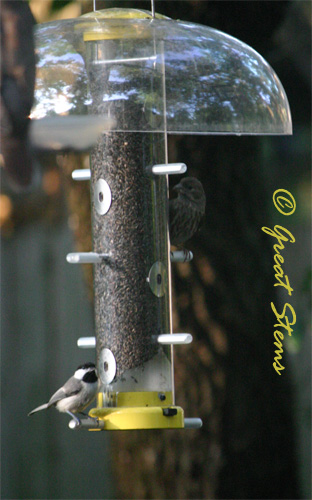
sustainableliving.jpgThis post is multi-purpose. One, I need to report on my One Small Change progress for January and February. Two, I want to partake in Jan's Sustainable Living Project, and three, I want to share all these bird photos I just got this morning! I've been trying to find woodpeckers in the trees for months, and I was shocked to finally see one -- at our birdfeeder!

rbwoodpkr02-10-10.jpgTaking all these shots, I was reminded that our kitchen window could really stand a good vinegar wash. 

 In my own garden, as many know, I'm dedicated to planting as many drought-hardy Texas native plants with organic methods as I can. My plants are like my children -- I want to nurture them when they are young, help them grow up big and strong, and guide them to being able to make it on their own. Someday, we might move away from this house, and if my plants aren't able to survive without care, they might not make it. I also long to be lazy -- the better my plants can establish, the less I'll have to do... one day.

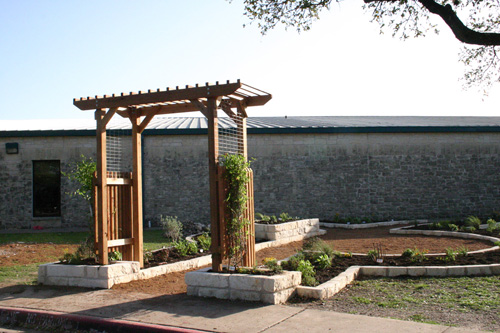
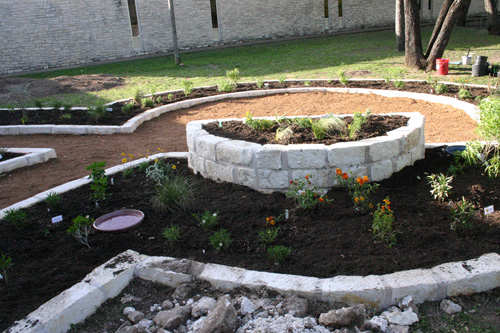
My biggest project at the moment is guiding our elementary school to become a Certified Schoolyard Habitat. We're putting in a new butterfly-hummingbird garden as Phase 1, and the list of Phase 2 environmental projects is growing -- we'll be putting a water collection system and more. Co-existing with this habitat project is another project for the 3rd- and 4th-graders -- learning about wildlife habitats and then teaching the community about them through 3-D murals. The excitement over habitats is spreading fast, and I feel so good helping our students become environmental stewards.

rbwoodpkrb02-10-10.jpgOn my sidebar, I call myself green-blooded. While my blood might *look* red, especially when I cut myself on a thorny spine or do some other clumsy thing in the garden, my heart and soul are always thinking about ways to protect the environment, and so my blood really runs green. If you put on your special Super-Enviro-Power goggles, you'll be able to see it. If you don't have any, then I'll just raise my hand in a Vulcan greeting. 

In January, for One Small Change, I did three primary acts for the environment: I removed all remaining nandinas from my property, sending the bushes to city mulch and throwing away the berries. I also took all our old leftover chemical products, bleach, and paint from our past to the Austin Hazardous Waste Facility, and some from two of our neighbors. We've been using natural cleansers for a long while now, and finally the evidence from our former lifestyle is gone, gone, gone. And finally, I've been learning many different organic products to help gardeners stay green. I feel more knowledgable about offering green solutions to problems in the yard. Understanding the soil food web was a big part of this. It all begins in the earth, and truly everyday is Earth Day in my book. (Officially, Earth Day is celebrated on April 22).

doveb02-10-10.jpg

This month, my son asked us to make something for the wildlife for our February change. We are going to make a bee box or two and a screech owl house. Looking ahead to March, I think I want to train my family to open blinds daily to let the light shine in, and I want to strategically place mirrors to help get more natural light across our house without having to turn on artificial lights. There's a tendency in this family to become inert in regard to opening/closing the blinds, and the result is way more "turning on the lights" than should be necessary. Right now my study blinds are open, and the cats are on my desk watching the birds outside, and the puppy is occasionally growling and barking at the hanging plant hovering outside. No, pup, it's not an evil threat, but it would look nicer if the plant in it hadn't died this winter.

I feel so hopeful this year that Earth is finally getting the kind of attention it so needs and deserves.

Take care of yourselves and our wonderful Earth this spring, and always. And live long and prosper. 

Hugs,

Meredith


School Habitat Project officially underway!

| 7 Comments

With students, teachers, and parents on board, my son's elementary school is officially getting focused on wildlife habitats. We've got a community project planned for the third- and fourth-graders for the Legacy of Giving program, and if all goes well we'll have a new butterfly and hummingbird garden planted in the spring, culminating in dedicating the school as a certified Schoolyard Habitat with the National Wildlife Federation on Earth Day.

schoolhabitatboarda.jpg

schoolhabitatboardb.jpgI've really been thrilled with the enthusiasm everyone has had about the habitat project. What makes me happiest is seeing how excited the kids are. Just wait until the wildlife finds about it!

War, Peace, and Bananas

| 15 Comments

It seems strange to post pictures of a bright sunny day while I listen to the lovely sounds of raindrops falling outside. But at least I'm dry.

Over the past couple of days, the garden was a green version of Grand Central Station. Butterflies, wasps, moths, flies, and other creatures all came to feast, rest, and feast some more. It was high noon when I took these, unfortunately, but beggars can't be choosers when there are masses of creatures about all at the same time! You just get the shots when you can.

varietybutterflies11-18-09.jpgAt last, Painted Lady butterflies have come to visit.

paintedlady11-18-0.jpg paintedladyc11-18-0.jpgpaintedladyb11-18-0.jpg paintedladyd11-18-0.jpg I love the hidden peacock feathers you see in their hindwings.

paintedladye11-18-0.jpg   Variegated Fritillaries have arrived, too.

variegatedfritillaryc11-18-09.jpgvariegatedfritillaryd11-18-09.jpg

variegatedfritillary11-18-09.jpg variegatedfritillaryb11-18-09.jpg     A Snout Butterfly rested on Big Muhly.

snoutbutterfly11-18-09.jpg

And Queens went back and forth between the Gregg's Mistflower...

queens11-18-09.jpg queensb11-18-09.jpg and the Milkweed.

queenmale11-18-09.jpg I have so many kinds of skippers I can't name them all.

skipper11-18-09.jpg skipperandfrit11-18-09.jpg I think this is a Fiery Skipper...

skipperb11-18-09.jpg and this a White-Checkered Skipper.

whitecheckeredskipper11-18-09.jpg

The Gulf Fritillary was a challenge to photograph -- it cared not for sitting still.

gulffritillarya11-18-09.jpg gulffritillaryb11-18-09.jpg And Sulphurs -- some big, some small. Is this a Southern Dogface Sulphur or a Cloudless Sulphur?

sulphur11-18-09.jpg sulphurb11-18-09.jpg Tiny yellow butterflies fluttered about -- they didn't sit still for long. Hmmm... Little Yellow or Mimosa?

yellowbutterfly11-18-09.jpg yellowbutterflyb11-18-09.jpg

The big butterfly attractors have been the milkweed, zinnias, and Gregg's Mistflower, but a few days ago I set out a banana for the butterflies. They do love a rotting banana, but the last time I did that, the banana just rotted all by its little lonesome. This time, I walked out to discover a Goatweed Leaf Butterfly enjoying a snack with a Snout Butterfly (and a fly).

goatweedleafandsnout11-18-09.jpgSo I decided to set out a fresher banana, as well, and -- whoa -- incoming. Suddenly my new banana became an experiment and a wildlife study. The first visitors were wasps and flies. I'm not even going to attempt to identify any of these, but there's quite the variety!

waspsb11-18-09.jpg

waspsc11-18-09.jpg The wasps didn't always get along. The big red hornet-like one was the bully you'd expect him to be -- not that the other wasps were friendly and gentle-like, mind you...

wasps11-18-09.jpg While the wasps were distracted with their quarreling, the flies zoomed in for some banana. I like how they naturally spread themselves out.

banana11-19-09.jpgDo you see the beautiful metallic turquoise insect in the lower left corner? That's a Cuckoo Wasp -- the only one I can identify other than "fly" or "wasp."

fliesandcuckoo11-18-09.jpg   Here's another pic.

cuckoowasp11-18-09.jpg

I didn't mind all the visiting wasps. It kept them distracted from my Queen caterpillars on the milkweed.

queencat11-18-09.jpg

queencatb11-18-09.jpgAnd the flies and wasps weren't the only visitors to the bananas. Snouts began to venture over to the fresher banana, and today I found my first Red Admiral. What a beauty!

red admiral.jpg See this "pretty" yellow, green, and black bug? Bad bug. Spotted cucumber beetle. You can mourn it if you like -- it and four of its friends. At least I found them on the banana and not in my veggie garden. That water in the pic is from today's rain.

spottedcucumberbeetle11-18-09.jpgThe only butterfly picture I didn't capture that first picture day was the lone Monarch I saw flying around. Have they started to move on? I'm keeping my eye out for caterpillars -- I did see a female Monarch laying eggs on the milkweed several days ago.

Elsewhere in the garden today, I discovered what I think is an assassin bug nymph. My last one was red, though, so I don't know.

assassin11-20-09.jpgAnd off in the former pumpkin patch, where a few pumpkins and vines await me doing something about them, I found an icky green guy having a feast.

greenworm11-20-09.jpgEnjoy it while you can, buddy.  

The Bulla Wildscape

| 13 Comments

As a special treat on Halloween, other recent Habitat Steward graduates and I had the honor of visiting the award-winning and very beautiful wildlife habitat of Dale and Pat Bulla here in Austin. 

bullahabitat10-31-09.jpgI had heard a lot about their spectacular wildscape, so when our Habitat Steward group was given the opportunity to have a tour, you know I jumped at the chance!

bullas10-31-09.jpgDale (left) and Pat (center) are also both Habitat Stewards with NWF, and preserving native Texas plant life is exceptionally important to them. They are leaders in conservation efforts in Austin and Texas, and they were a primary force in helping their neighborhood win Austin's Community Wildlife Habitat challenge in 2008 with the highest number of certified wildlife habitats.

bullahabitatc10-31-09.jpgPat and Dale have lived on their property since 1998, building their home on a rocky limestone slope overlooking the Balcones Canyonland Preserves. Their efforts to create a natural landscape since then have paid off -- paths of natural materials such as mulch, rock, and cedar lead visitors through peaceful woods and past pocket seeps.

cedarpath10-31-09.jpgMany of the plants were placed there by the Bullas, but many more were delivered by birds and other creatures. The result is a wonderland of native Texas species.

bullahabitatb10-31-09.jpg

bullahabitate10-31-09.jpgmexbushsage10-31-09.jpgesperanza10-31-09.jpgPat told me that the plants on their property are about 95% native, with the remaining being well adapted plants such as rosemary and winter-blooming germander.

txsmoketree10-31-09.jpg

shrubbyboneset10-31-09.jpgmexolive10-31-09.jpgchilepequin10-31-09.jpg goldeneye10-31-09.jpg germander10-31-09.jpg It being the end of October, we were able to see many species just beginning their fall fruit or fall color stages.

evergreensumac10-31-09.jpgrustyblackhaw10-31-09.jpgtxbarberry10-31-09.jpg carolinabuckthornb.jpg silktassel10-31-09.jpgAs we toured the Bulla wildscape, Dale and Pat identified many of their favorite trees, shrubs, and perennials, sometimes sharing stories about certain plants. We tasted the leaves of a Toothache Tree (Zanthoxylum hirsutum), and after a couple of minutes I felt my gums tingle, as if they were going numb. I want one of these trees for the pure fun of it.

The Bullas are fortunate to have many rare or unusual plants, such as the Lindheimer's Crown-Beard (Verbesina lindheimeri), a plant so rare and special that the Wildflower Center collected seeds from the Bulla plants and sent them to the Millennium Seed Bank in London. Other plants, not necessarily considered rare, can still quite difficult to find in nurseries. 

ladiestresses10-31-09.jpgantelopehorns10-31-09.jpg

virgsnakeroot10-31-09.jpgsilverpuff10-31-09.jpg

brickellbush10-31-09.jpgThe Bullas study the soil, light, and water conditions of their property in order to best place plants. With a combination of rocky slopes, natural seeps, sun, shade, woods, and open areas all on their property, it seemed to me that they had an advantage in being able to plant a little bit of everything!

Bluebonnet seedlings, Tropical Sage, Little Bluestem, and other plants were interspersed in the Buffalo grass of the Bullas' front yard mini-prairie.

bullahabitatd10-31-09.jpg

Amazingly, the habitat is home to six different kinds of native Texas passionflower vines.

passionflowerlutea10-31-09.jpg passiflorac10-31-09.jpg passiflorad10-31-09.jpg The Bullas have a knack for creating functional habitat features that blend in with the natural setting, including a manmade seep-like water source, beebox (with nesting holes for solitary bees), and rock man.

seepb10-31-09.jpg

beebox10-31-09.jpg statue10-31-09.jpg Dale and Pat's home serves as an example to others about how to minimize their carbon footprint. Not only is their carbon footprint exceptionally low due to natural paths, water collection systems, zero lawn, and minimal water usage, the Bullas also use solar panels that produce enough electricity to actually return some back to the city.

bullasolar10-31-09.jpgAnd of course, the wildlife love the Bullas' habitat, too. Unfortunately for the Bullas, however, this includes destructive feral hogs that visit the property from the BCP during the night, occasionally tearing up pathways and plants while looking for grubs, roots, and tasty vegetation. Deer prevent Dale and Pat from planting certain delectable species and veggies, too. But birds, butterflies, lizards, and other creatures call the Bullas' habitat home. We enjoyed watching the Queens and Monarchs fluttering about, but I was truly mesmerized by this Buckeye. I have yet to see a Buckeye in my yard!

buckeye10-31-09.jpgIt's no wonder the Bullas' habitat is designated as a Green Garden by the City of Austin. An award well deserved!

Inside Austin Gardens Tour 2009

| 14 Comments

Yesterday, my boys and I did a whirlwind tour of the beautiful yards of this year's Inside Austin Gardens Tour. There was something special about each and every home, and we thank the homeowners for opening their yards to the community. Each yard was a certified wildlife habitat, and we even got to see some wildlife at a few of them!

iagtour2009c.jpg

We zoomed through so very fast due to our overbooked afternoon schedule. But even in our few minutes of touring, we found inspiration. From mixed yard/habitat homes to luscious looming tropics to sheer vastness in variety of plant species to pure folly, we saw it all.

As is typical of me, I was drawn to the use of native plants and whimsy in the garden, as you can see in these select photos. But without a doubt, I saw some very unique and beautiful plants at all the homes. I greatly appreciate the lists of plants available at every location! And there was such creativity in layout and design and decor.

iagtour2009f.jpg

iagtour2009g.jpg

iagtour2009e.jpg   iagtour2009d.jpg iagtour2009a.jpg iagtour2009h.jpg

These little glimpses don't give much in the way of overview, I know. I regret that I'm posting so few pictures, but  I encourage you to visit Pam's blog at Digging, MSS at Zanthan Gardens, Jenny at Rock Rose , and Linda at Patchwork Garden for exceptional details and photos of the tour (so many of our pictures are of the same plants and garden wows, and I shamelessly admit that I'm taking advantage of the fact that they beat me to the blogging punch). I've got so many projects looming over me at the moment, but if I don't get something out, I'll get nothing out, if that makes sense. Life just isn't stopping still and letting me catch up! What's up with that?

Reflections on the First Year

| 20 Comments

Has it really only been a year? So much progress has been made in our first year of gardening that it's hard to believe it happened in a mere 365-ish days. Hey, I only about destroyed my back and my husband had to have knee surgery, but what does that matter when our yard is such a pleasant place to be now? (Ok, my husband just pointed out that we can't really blame gardening for our failing bodies, but it sounded good.)

What started it all? The felling of one very dead hackberry that was dangerously leaning over our house.

reflections2009x.jpgWhen that tree fell, I had no idea that I was about to embark on a gardening endeavour of massive proportions. But I looked around my yard and hated what I saw. It was time, after 13 years of doing nothing, to do something. Even if I had no clue whatsoever about what to do. 

But apparently I figured a few things out. The rest will come when I figure those out.

Here are a few tidbits of how our outdoor world has changed. Now be warned, the overgrown state has to do with all the rain we've finally been getting -- I haven't been able to clean anything up. At least things look more green...

The backyard, before and after:

reflections2009a.jpg

reflections2009zh.jpg The pond, before and after:

reflections2009zc.jpgreflections2009zg.jpg The back porch, before and after:

reflections2009f.jpg reflections2009zl.jpg The front garden bed, before and after:

reflections2009v.jpg reflections2009zza.jpgThere's a lot more to our yard than what you see here, and I invite you to see more. We have a long way to go, but it's fun to take a look at how far we've come. You can also hear more about the story that got us on our gardening journey.

Upcoming: Inaugural Texas Native Plant Week Oct 19-23

| 1 Comment

I'll try post about this again at the appropriate time, but I wanted to announce that the third week of October is now being recognized as Texas Native Plant Week. Here is the information passed on to me from Keep Austin Wild; more details can be found on the City of Austin site at the link below. There will even be designated Plants of the Day throughout the week, with certified habitats hosting activities.


Texas Native Plant Week October 19th-23rd

In June 2009 Governor PerrOn June 16, 2009 Governor Perry signed a bill into law that will recognize the third week in October as Texas Native Plant Week. The bill is intended to emphasize the role of native plants in conservation efforts and to be used as incentive for the Texas education system to teach school children about the importance of native plants. The Native Plant Society of Texas teamed with State Representative Donna Howard to present the bill to the State Congress. The bill passed unanimously in both houses.

To mark this inaugural Texas Native Plant Week the City of Austin, in partnership with State Representative Donna Howard's Office, the Lady Bird Johnson Wildflower Center, and the Native Plant Society of Texas, will host activities and educational opportunities for the public to learn more about our amazing Texas native plants.


Thursday, October 15th, 5:30pm
Event: City Council Proclamation to announce Texas Native Plant Awareness Week. Mayor Lee Leffingwell will present Native Plant Society of Texas with proclamation.

Location: Austin City Hall Council Chambers, 301 W. Second Street Austin, TX 78701


Monday, October 19, 10:00am:
Event: Austin Parks and Recreation Department (PARD) demonstration habitat garden certification ceremony and media kick off for Texas Native Plant Week. Habitat Garden Tour to follow press conference.


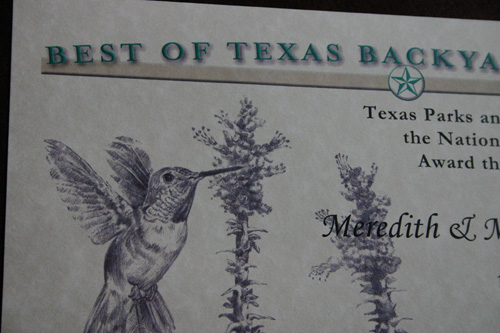
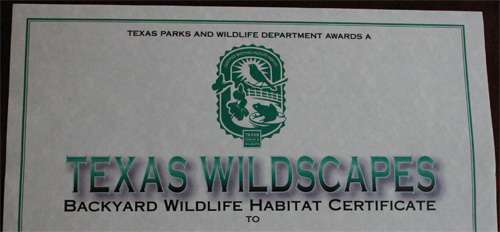
The Parks and Recreation Department's main office demonstration habitat garden will be recognized by the National Wildlife Federation and Texas Parks and Wildlife Department as a Best of Texas Habitat site.  This is the highest level of wildlife habitat certification in Texas and is bestowed upon landscapes that use a majority of native plants, provide wildlife food and water sources year round, and practice at least six resource conservation measures.  PARD's main office habitat is the first City of Austin habitat site to receive this more stringent level of certification.


This demonstration habitat garden serves as a place people can come to learn about what wildlife habitat is and how to create a place for butterflies, songbirds, and hummingbirds at their own homes using beautiful native plants. Austin Mayor Lee Leffingwell, State Representative Donna Howard, Parks and Recreation Department Director Sara Hensley, Lady Bird Johnson Wildflower Center Executive Director Susan Rieff and others will participate in the habitat certification ceremony and native plant week kick off celebration.


Location: City of Austin Parks and Recreation Department Main Office, 200 S. Lamar Blvd, 78704.


For more information visit http://www.ci.austin.tx.us/parks/nativeplantweek.htm or call the Parks and Recreation Department's Wildlife Austin Program at 512-327-8181x29.


Please help us spread the word about Texas' first Native Plant Week!


If you live in Austin, consider attending one or both events, and if you live in Texas, support our beautiful state by planting native plants!


The $40 Disappearing Fountain

| 16 Comments

fountaing10-03-09.jpgFor some time, we'd been wanting a little fountain in one of our front entryway beds, a sort of zen moment of trickling water as one approaches our front door. But getting a classic planter-style container with reservoir would have cost us more than $500, and it wasn't really my style anyway. So I wanted to see how cheaply we could make a disappearing fountain using as many materials from home as we could. We could have probably made it for $21, but we decided to be "practical" and buy a couple of other items. It actually cost us less than $40 -- I rounded up for the sake of the title. I'm not counting the cost of the electrical outlet, as we were going to be putting one out there anyway, not just for a fountain, and we already had a bunch of those parts anyway.

fountainh10-03-09.jpgMoney spent: We bought a large tub normally used for mixing cement ($11), as well as a small 130 gph pump (about $21). We also ran out of window screen, so I bought some more aluminum screen material ($7), but the rest will be used for plant containers, so I'm not really sure whether to add the cost in -- regardless, that's still less than $40. We seriously considered not using the basin and using other items we had at home, but in the end, we decided this might be best. 

Materials gathered: An old grill from our neighbor's uncle's junk he was having hauled off, leftover block-style rocks from our other neighbor that we had used to circle a tree in the backyard, a concrete block, and little colorful rocks we found in the backyard.

At this point, I have to give out kudos to my 12-year-old son. This was more or less his pet project, and while I gave some guidance in regard to the plan (he had some rather far-fetched ideas and I had to bring him back to Earth a bit), he did the bulk of the work.

The first step was to dig out the plants from the area and give them new homes in the front yard (that really did a lot to make our front yard better, too). And then the hole for the basin was dug. The basin we chose turned out to be ideal for the job -- the rock under the soil would have prevented the use of a deeper reservoir. (Please ignore the plastic edging in these photos -- it came with the house, and at some point it will go away, because I can't stand it.)

fountaina10-03-09.jpg

The concrete block is there to support the weight of the rocks on top of the grill, and we stuck some rocks underneath to let water flow. The ones we settled on are in the leveling picture below.

Dad helped with the leveling (and he also got to play electrician to put in the outdoor outlet).

fountainb10-03-09.jpgWe wrapped the window screen around the grill and cut a little hole for the pump tube.

fountainc10-03-09.jpgThen we poured in some water collected from the recent rains (the change in rocks in the images had to do with some adjustments we made regarding the pump placement).

fountaind10-03-09.jpgAnd the rest was just building the rock feature and collecting the little rocks for the base. Simple as that! Here's a picture of the rock work in progress...

  fountainf10-03-09.jpg

I love that it's a little rock statue, and while I envisioned something like it, it came out even better than I imagined. Now I just need to choose some plants to go around it! I'll probably end up spending more on those than I did on the fountain itself...

fountaini10-03-09.jpgThank you to my son for all his hard work and dedication to getting the job done, and thank you to my husband for the electrical work that I'm sure he'll get finished soon (hint, hint).

Now, I should point out that disappearing fountains are technically a no-no during our city's Stage 2 water restrictions. We'll turn it back off when water is an issue again, but right now we have so much rainwater gathered that we actually have to find a place to put it all -- the grounds are saturated and the bins are overflowing. This fountain is only going to be filled with rainwater from the roof or gray water, NOT hose water. And I think it looks wonderful whether water is flowing or not, so when it has to be turned off, it's still going to make me happy. The water just gives that nice trickling sound, and I'm hoping we'll see some wildlife visit on occasion, too.

 fountaine10-03-09.jpg


Meredith
Meredith is green-blooded
and gardening in northwest
Austin, TX, Zone 8b. She's proud to be a volunteer
Habitat Steward.


Powered by Movable Type 4.21-en
OpenID accepted here Learn more about OpenID