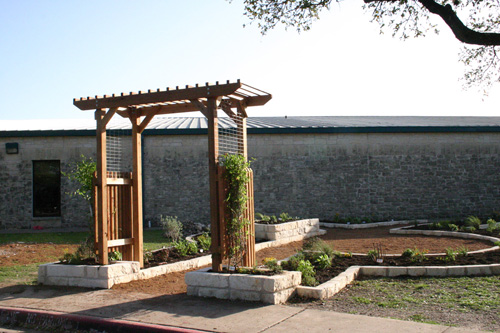
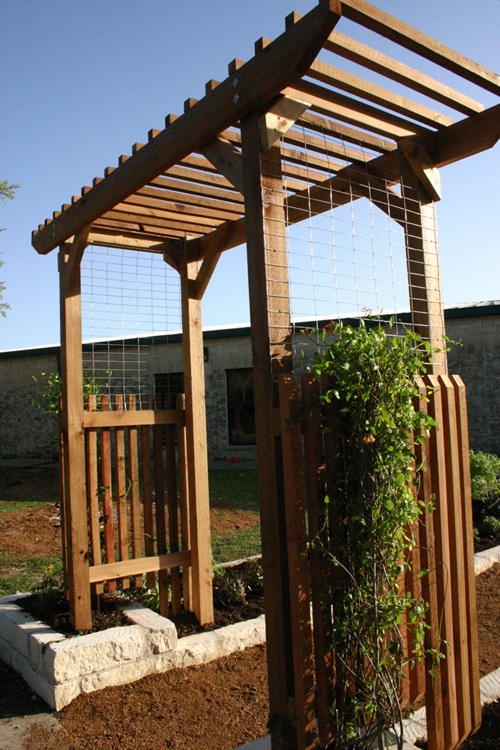
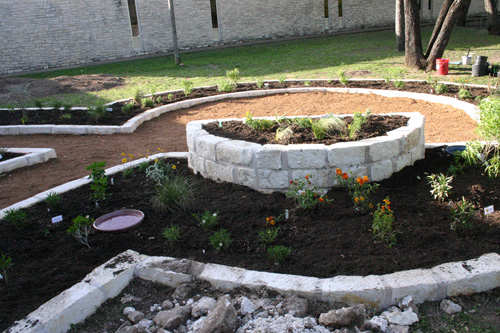
This weekend's habitat event was helping install wildlife-friendly native plants to create a beginning wildlife garden at the Austin Groups for the Elderly building, known locally as the AGE building. This non-profit organization "empowers caregivers, the elderly and their families through education, advocacy, resources and support" and is a daytime care and resource facility for older members of our community.
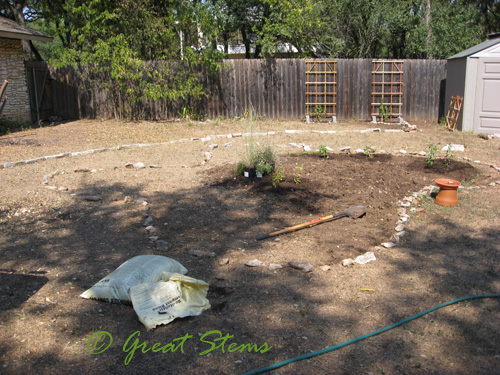
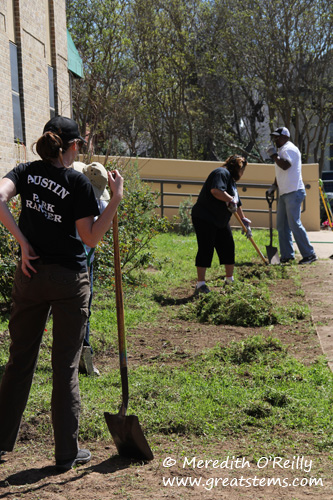 Habitat volunteers from the City of Austin, Travis Audubon, and NWF, along with friends and family and AGE staff, got right to work. The first task was scraping out clover and grass from the future beds.
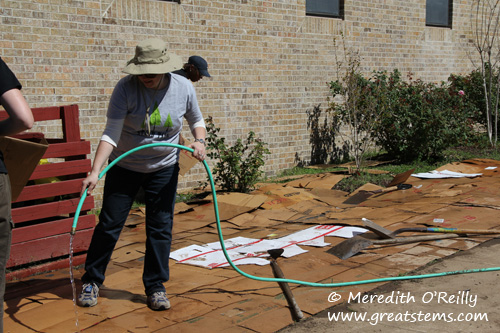 Next, volunteers watered the soil a bit, then placed a carefully arranged layer of cardboard, which also was made wet.
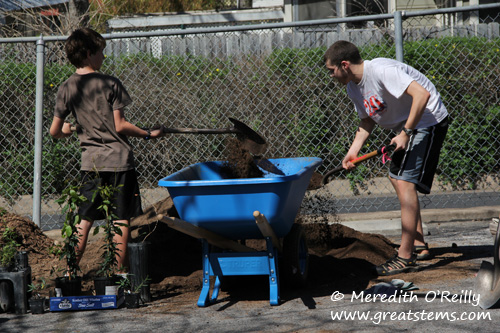
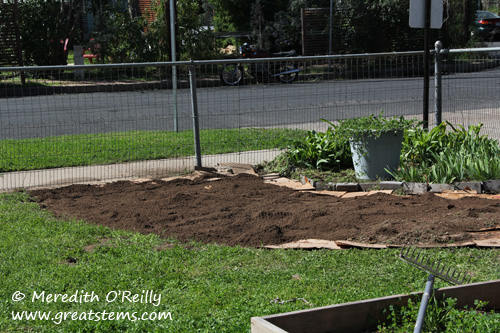 On top of that, we layered soil where necessary, and topped it all with single-shred mulch, kept thin under the trees. This method of lawn reduction is effective and remarkably simple.
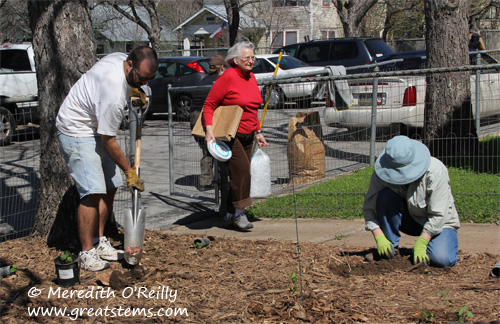
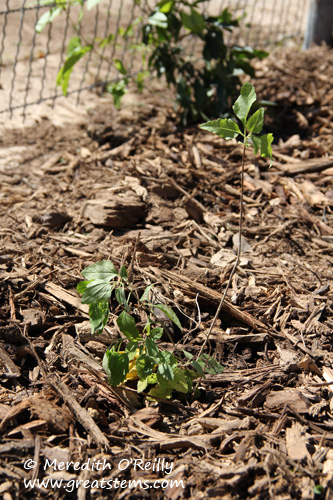
The final step was adding plants, including Mexican Buckeye, Shrubby Boneset, Texas Mulberry, Evergreen Sumac, Turk's Cap, Crossvine, and others. The plants were small, but small is all it takes!
 The garden is a favorite sitting area for many AGE members, and the new habitat will attract many butterflies and birds for visitors' viewing pleasure. The building also houses our Travis Audubon office -- so we're extra glad to have a new habitat right outside!
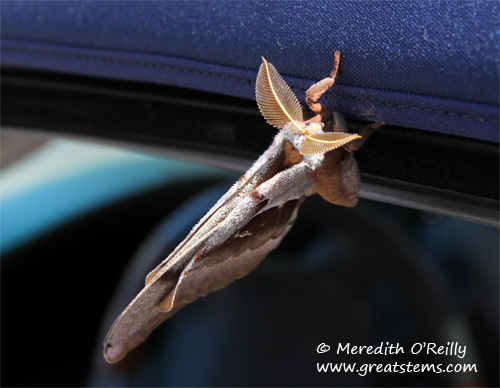 As we were getting ready to leave, my husband called me over to see a creature hanging upside-down from the car of a volunteer. It turned out to be a gorgeous Lepidopteran.
The volunteer was quite concerned, and to be honest, from a distance it really did look like a bat was hanging from his window. But I rushed right over to rescue it, and it proved to be a stunning, yet frail, Polyphemus moth. Those bushy antennae you see are an indication that this moth also happened to be male.
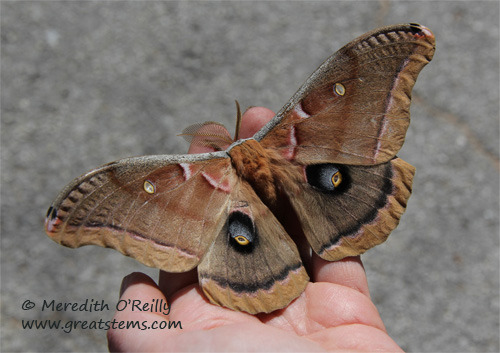
There are a number of threats to this beautiful species, but at least they have a variety of host plants, as well as those spectacular and "scary" eye spots, to give them a better chance at making it. The tiny little upper spots on the forewings are actually transparent. We checked.
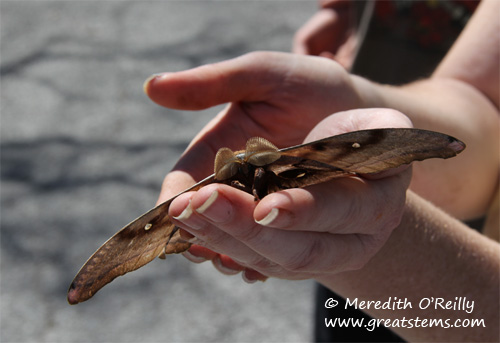
As it had trouble flying, It seemed to me that this little (big) moth was on its last wing, so to speak, so I gently kept it protected and decided to bring it home with us. As it turns out, the moth wasn't as frail as we thought.
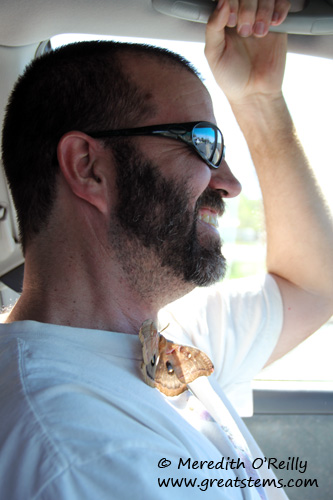 Perhaps because it was darker in the car, the moth came to life once we got moving on the road. By the time we were on the highway, it was fluttering all about, making for quite an interesting drive home. At one point, the Polyphemus moth decorated my husband as a bowtie.
For its own safety, we didn't want to release the moth until we actually arrived home to our wooded habitat, but in the meantime, it kept us busy in the car, as we had to make sure it stayed safe there, too.
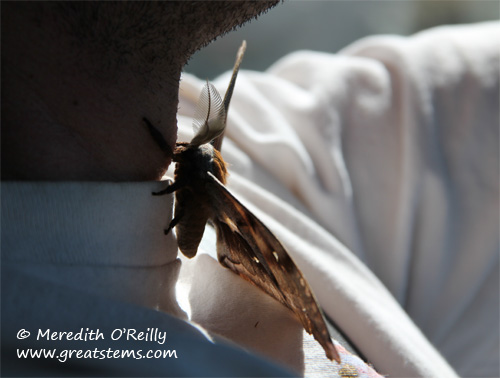 For quite a bit of the drive, the moth seemed particularly fond of my husband (who was under strict orders not to react to the tickling sensation, nor to panic and cause a wreck). My husband replied, "Finally, there's an animal who's not afraid of me!" How my husband manages to seem fearsome in our happy zoo is beyond me, but our skittish cat Cricket in particular still gives him the wary eye. Not many men can boast that they've had a Polyphemus moth rest on their Adam's Apple, but my husband can. Let me just add that driving in a car with a fluttering giant silk moth is perhaps a "Don't Try This
 at Home in Your Car" scenario.
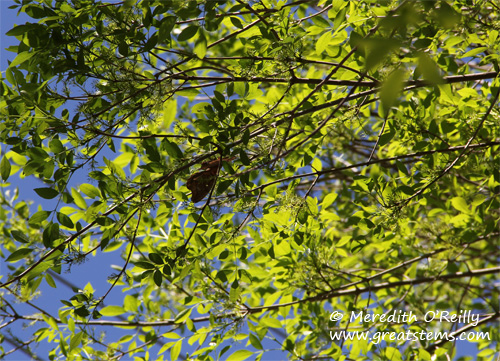 Upon our return home, I carefully gathered up the Polyphemus moth, bid it a fond farewell and good luck, and opened my hands to the sky. The moth flew up to the ash tree above, where it rested for much of the afternoon. What an adventure we all had!
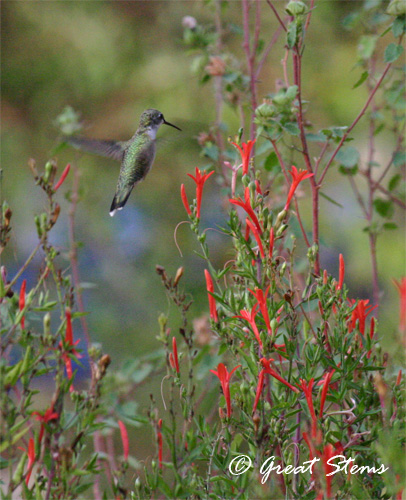
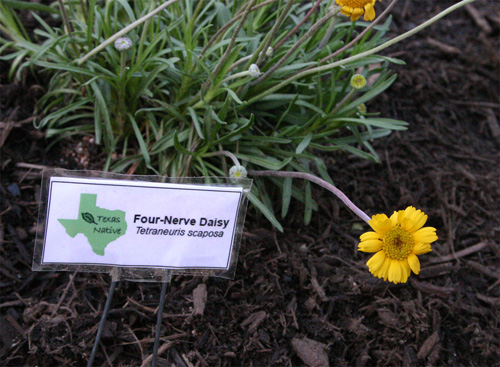
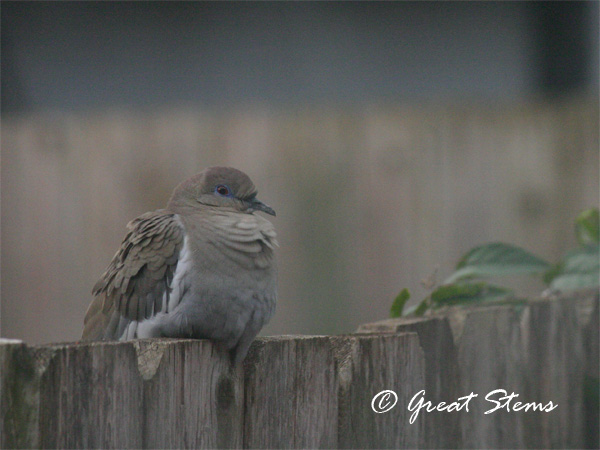
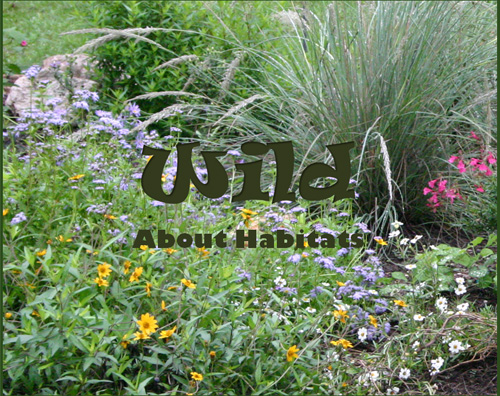 I want to thank all my fellow Austin Garden Bloggers who generously sent me photographs of wildlife in their garden so that I could put together a very unique and special presentation. As I go through the slide show each time, I know where each photograph came from, and I feel as though all these wonderful people are right there with me helping our students love and appreciate nature. Thank you, my friends!
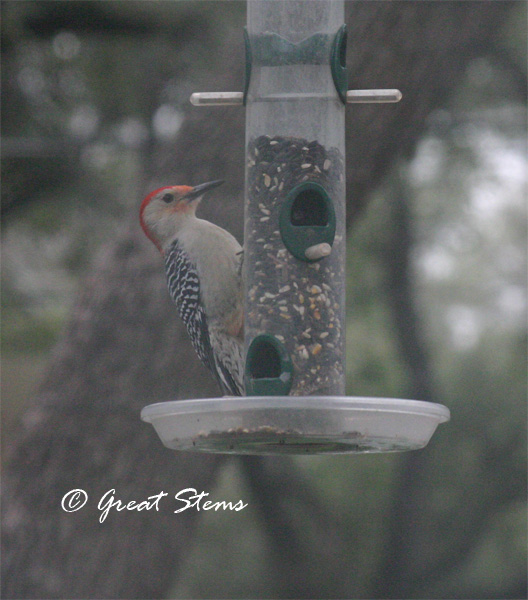
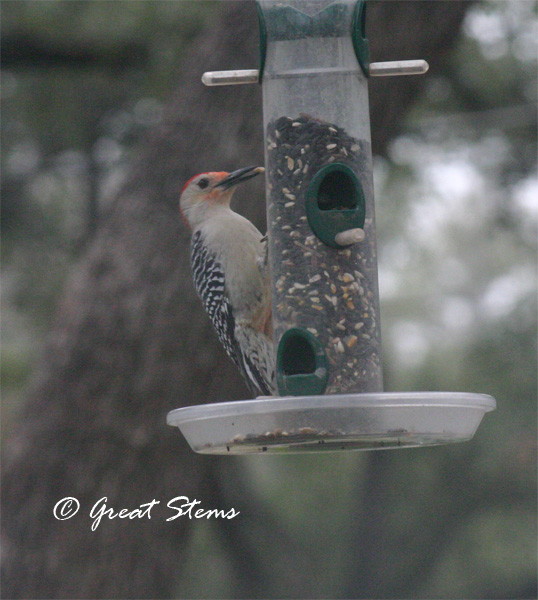
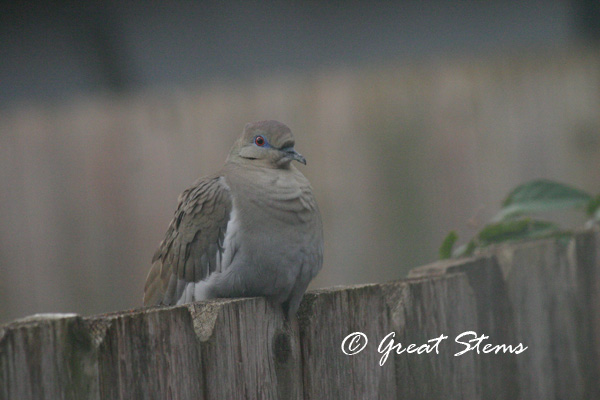
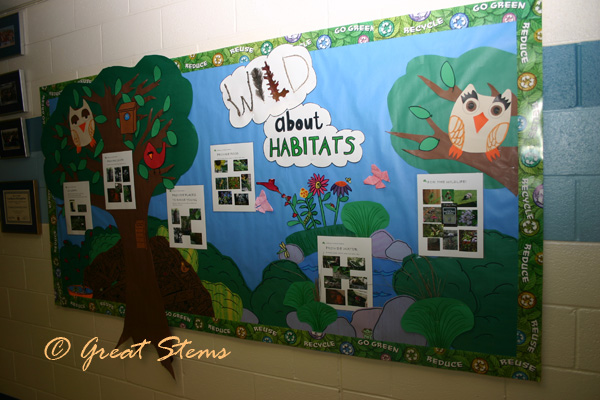
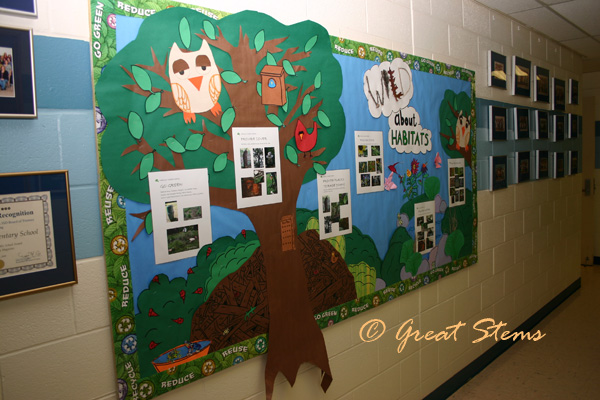 I've really been thrilled with the enthusiasm everyone has had about the habitat project. What makes me happiest is seeing how excited the kids are. Just wait until the wildlife finds about it!
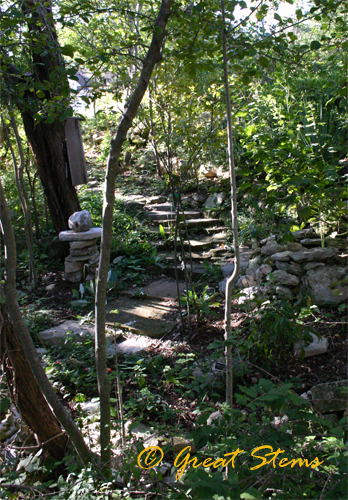 I had heard a lot about their spectacular wildscape, so when our Habitat Steward group was given the opportunity to have a tour, you know I jumped at the chance!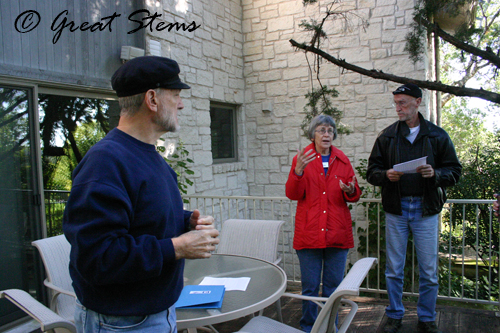
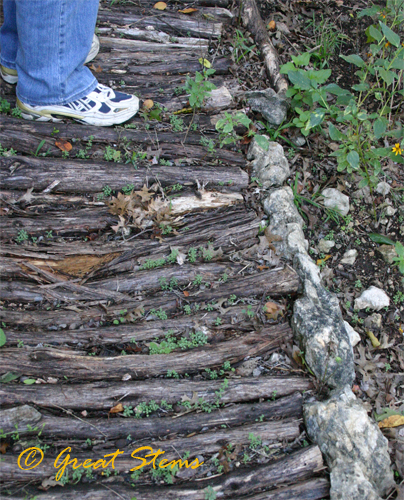
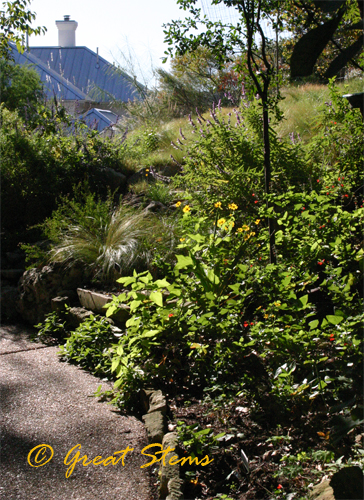 Pat and Dale have lived on their property since 1998, building their home on a rocky limestone slope overlooking the Balcones Canyonland Preserves. Their efforts to create a natural landscape since then have paid off -- paths of natural materials such as mulch, rock, and cedar lead visitors through peaceful woods and past pocket seeps.
 Many of the plants were placed there by the Bullas, but many more were delivered by birds and other creatures. The result is a wonderland of native Texas species.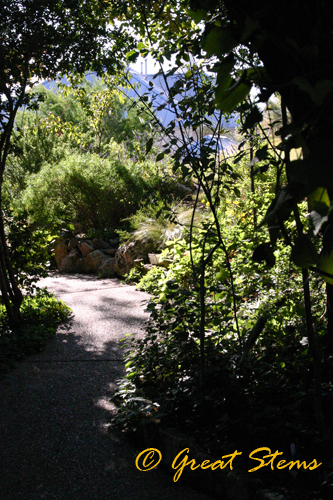
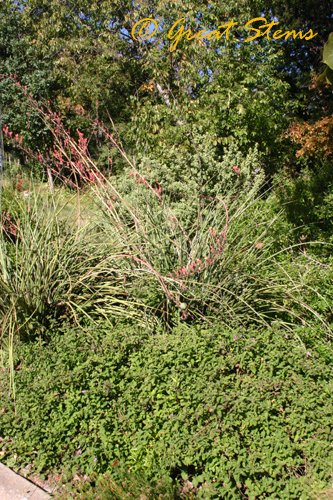
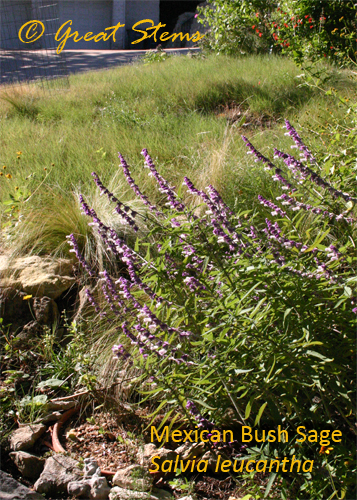
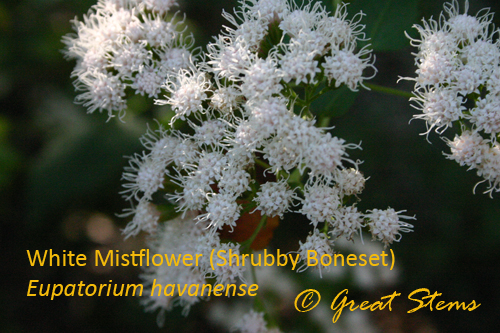
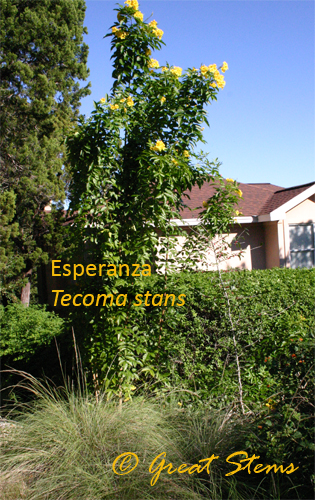 Pat told me that the plants on their property are about 95% native, with the remaining being well adapted plants such as rosemary and winter-blooming germander.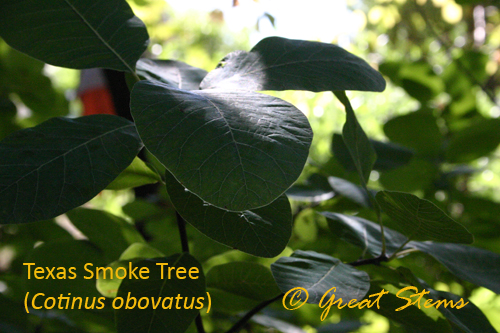
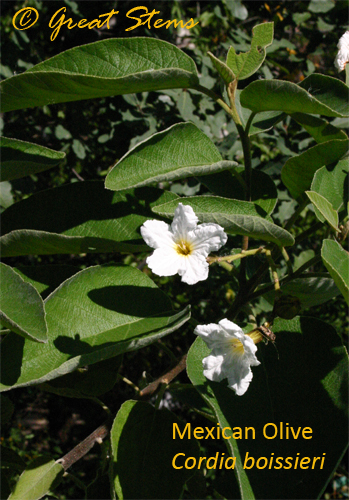
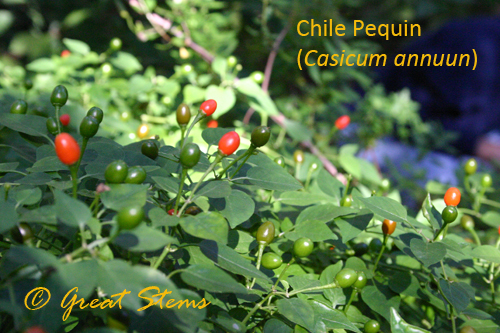
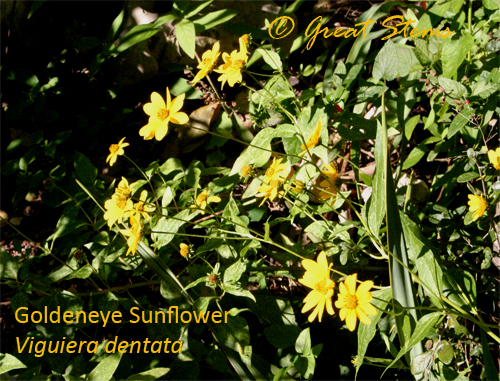
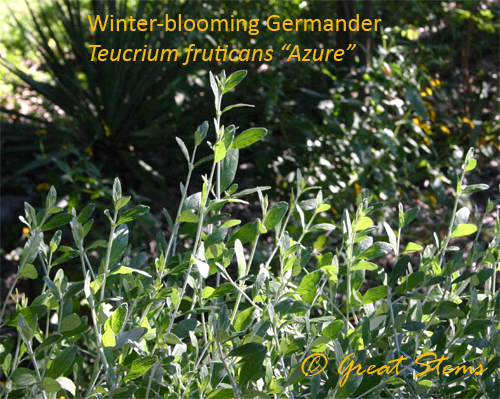
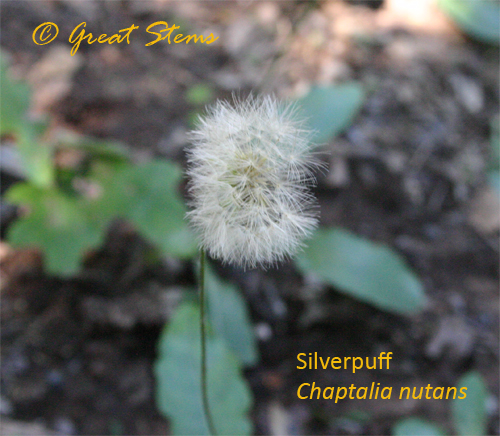
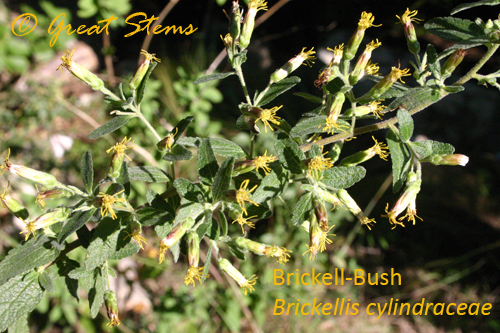
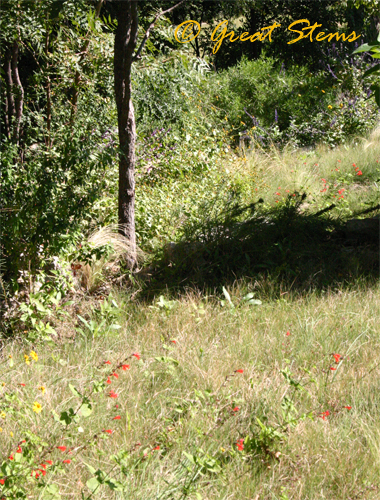
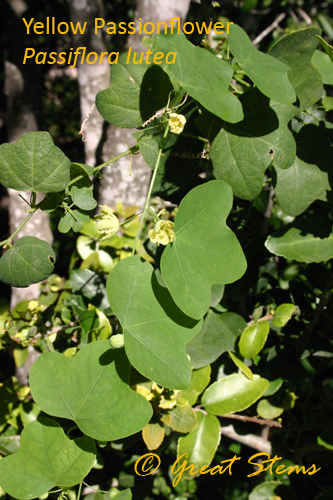
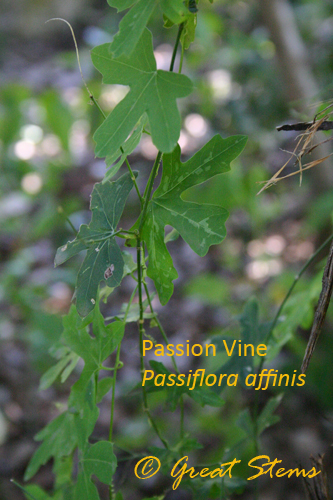
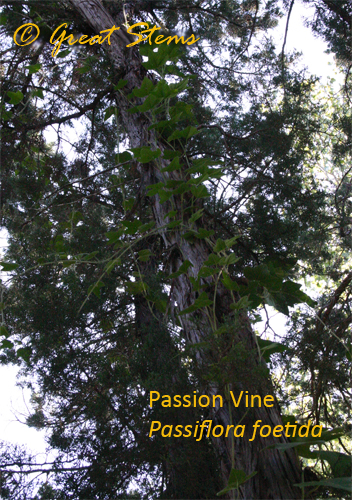
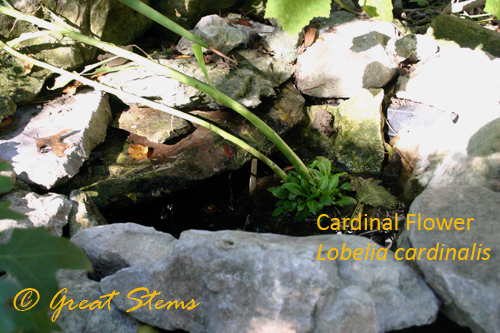
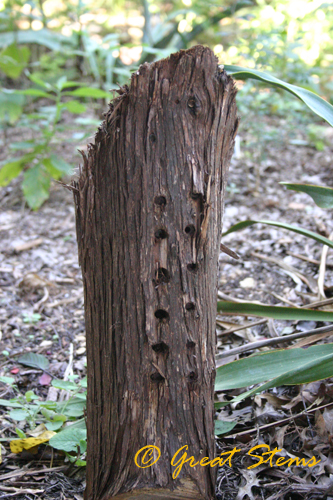
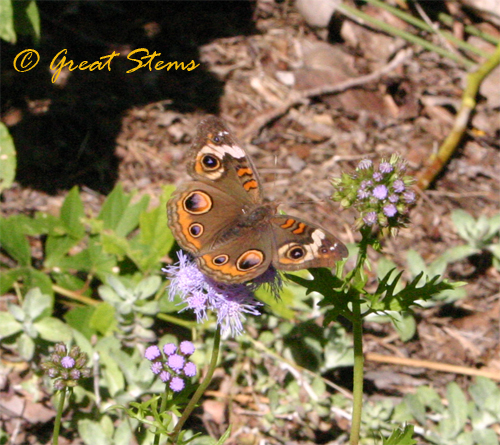
 And of course, the wildlife love the Bullas' habitat, too. Unfortunately for the Bullas, however, this includes destructive feral hogs that visit the property from the BCP during the night, occasionally tearing up pathways and plants while looking for grubs, roots, and tasty vegetation. Deer prevent Dale and Pat from planting certain delectable species and veggies, too. But birds, butterflies, lizards, and other creatures call the Bullas' habitat home. We enjoyed watching the Queens and Monarchs fluttering about, but I was truly mesmerized by this Buckeye. I have yet to see a Buckeye in my yard!
 It's no wonder the Bullas' habitat is designated as a Green Garden by the City of Austin. An award well deserved!
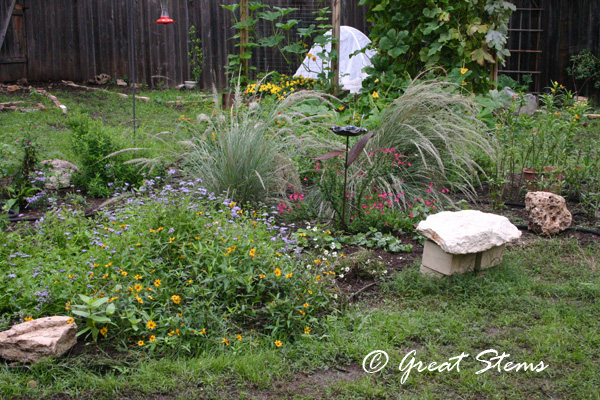
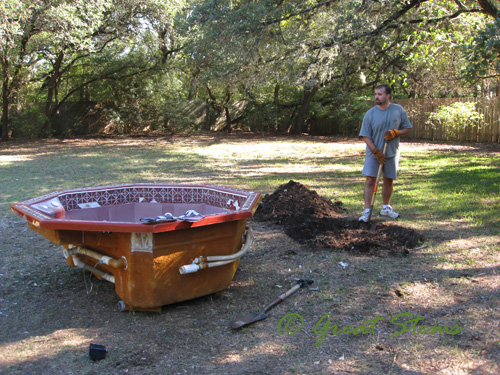
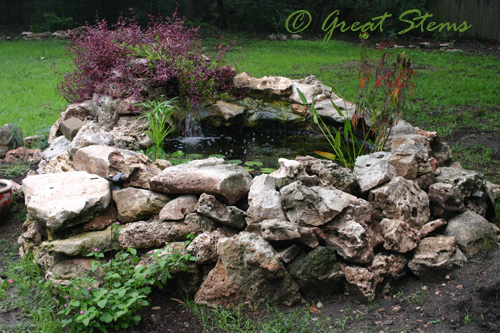
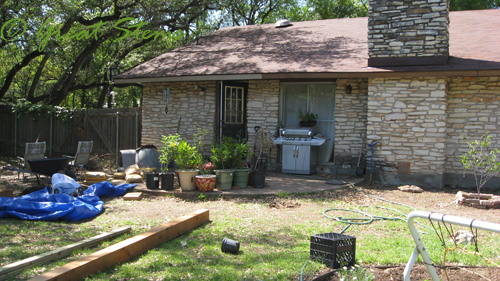
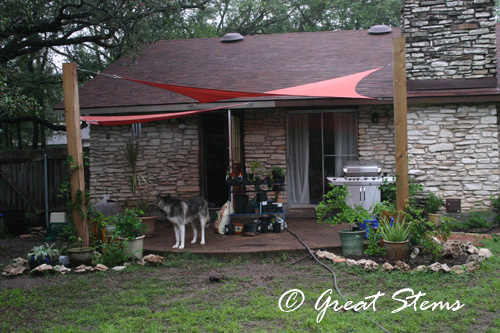
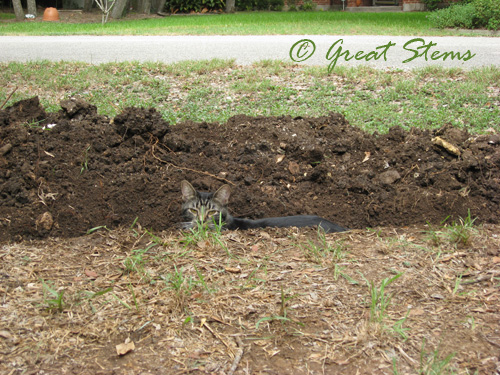
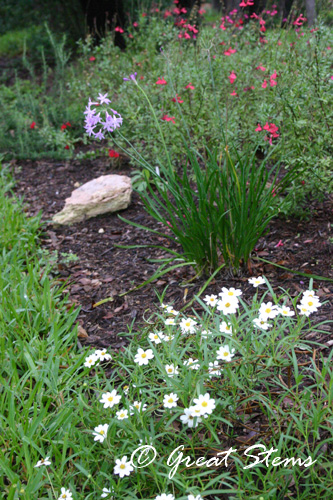 There's a lot more to our yard than what you see here, and I invite you to
 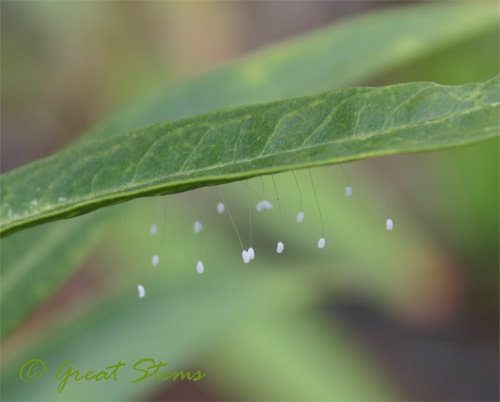 These are the eggs of green lacewings. As larvae, they are voracious aphid eaters. Yay, another ally in the garden! I need them because the aphids are worse than ever. I seem to have least three species now --- I'll call them green, yellow, and beige. The green I'm sure are corn leaf aphids. I have got to get out and tackle them TODAY. My veggies, my milkweed, and now my firebush plant are all having an aphid problem. The little pests took advantage of my time away from the garden during the rainy week and bred like rabbits. I'm starting to think that it's the other way around, and rabbits breed like aphids. Today I'm seeing wings on some. Gah, more colonization!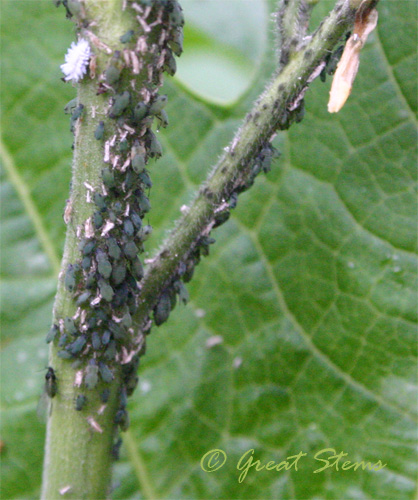
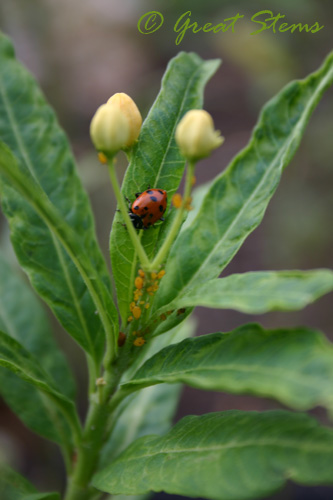 So I've got new lacewings arriving soon, and of course I've got ladybugs. More spiders are arriving, as are earthworms. The bees are getting plentiful, and I don't even have to do the veggie porn thing to pollinate my plants anymore. I truly love the way nature just naturally (ha) balances its ecosystems. Got organic wastes? Happy earthworms move in. Got flowers? Let's pollinate. Overpopulation of something? Here come the predators. And here come the predators to eat the other predators. Oh look, birdie treats. And then snakes. And hawks. Whee, life is grand.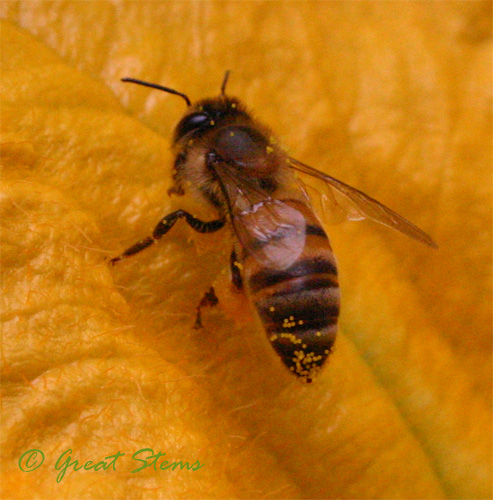
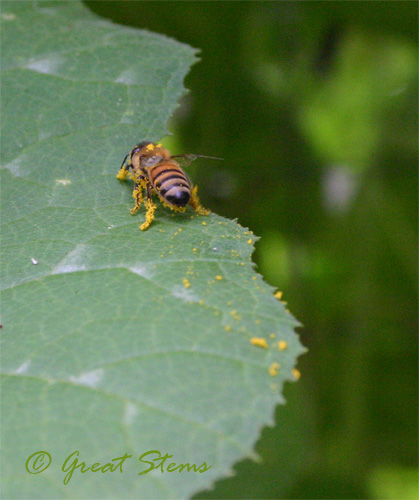
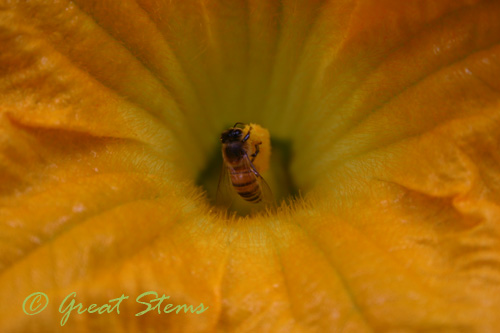
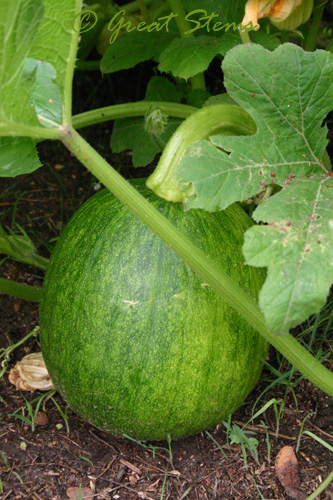
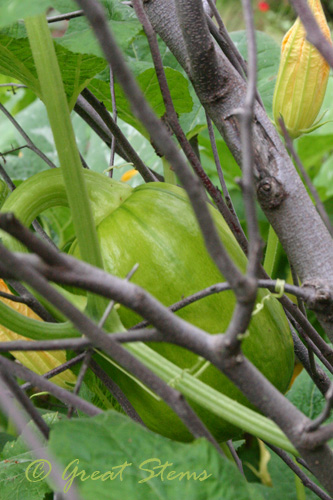 With the rain this week, the yard is a big mudfest for the dogs, and they took advantage of it -- digging where they shouldn't, trampling through the butterfly garden, and taking turns leaping over the pumpkin vines. I'm out there yelling, "This is not your playground!" And then I realized my neighbor must think I'm nuts, because of course it IS their playground. If I can manage it, I'll try to get a picture of the husky leaping in full gallop over the massive pumpkin plants (in between my yelling at him, of course). It really is a sight to behold.